
The Sagalassos team intends to fulfill its responsibility for the creation of a management plan for the long-term preservation of the site. The methodology of the process entails following steps: 1. definitions: – define the area and the scope of the plan, – define the objectives – identify the stakeholders and decision makers 2. data […]
Read full post »Site Management: 2010 Aims
Friday, July 9, 2010Macrobotany: 2010 Aims
Friday, July 9, 2010Introduction Macrobotanical remains, consisting of seeds, fruits and wood charcoal will be collected in the trenches and in the sieves, and will be identified. Aims The aim of the research is to reconstruct the former environment and to document the exploitation of that environment by the inhabitants of the site for food and as a […]
Read full post »Geophysical Survey: 2010 Aims
Friday, July 9, 2010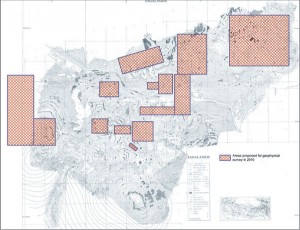
Introduction Since 2002 the urban area of Sagalassos is surveyed with various geophysical techniques with excellent results. We would like to continue this research during the 2010 campaign in a selected number of areas. Aims & Methodology As a measure of preparation the application of geophysical techniques at the site may involve the clearance of […]
Read full post »Geomorphology: 2010 Aims
Friday, July 9, 2010Introduction The geomorphological approach on the site of Sagalassos involves: 1) the study of the geomorphological characteristics of the different terrain units where the town is build and the different buildings are situated, and 2) the study of the impact of geomorphological processes on the site during and after the occupation. Aims The aim of […]
Read full post »Geological Survey: 2010 Aims
Friday, July 9, 2010Archaeometrical study of the craft activities at Sagalassos Introduction A wide range of mineral resources was exploited at Sagalassos, including ores, clays and natural building stones. Aims The aim of the archaeometrical studies at Sagalassos is therefore to characterise artefacts produced by the different crafts, the identification of the raw materials used and the reconstruction […]
Read full post »