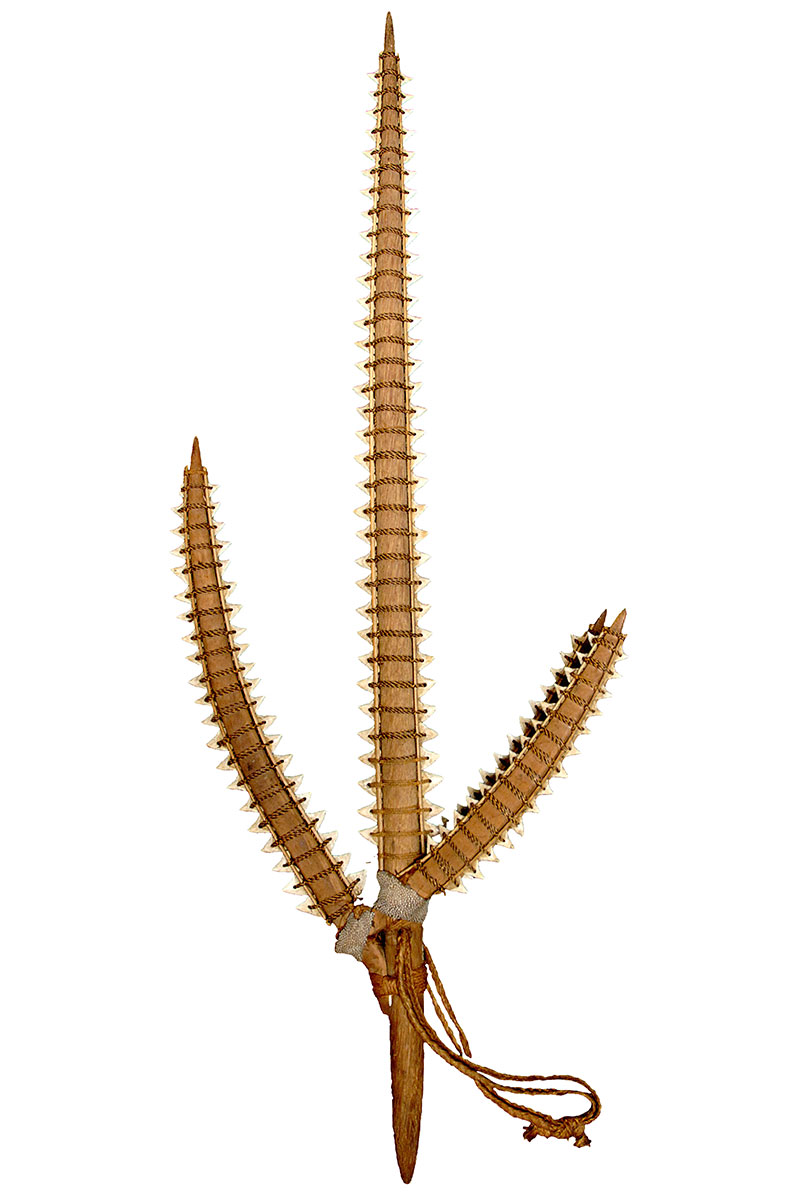
What is it?
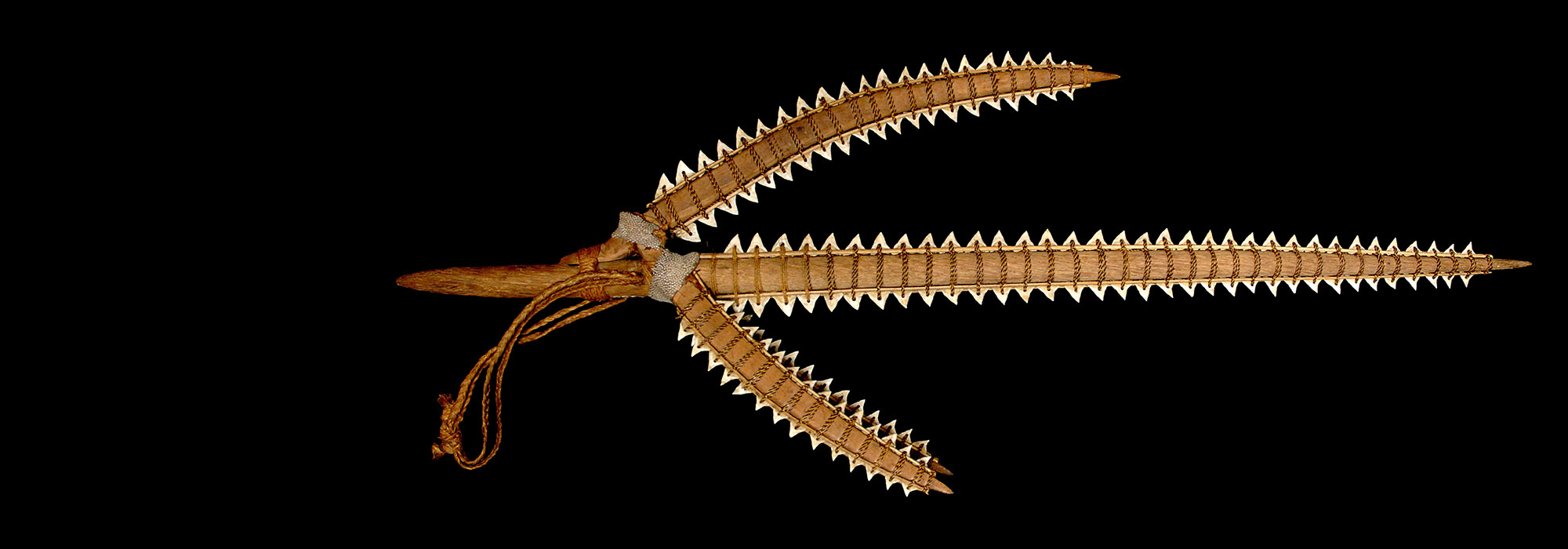
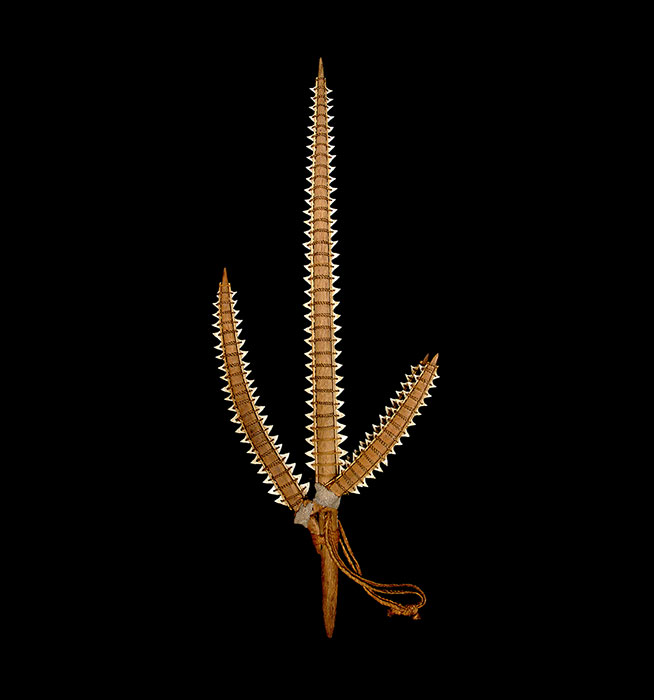
Trident
Material
Palm wood, shark teeth, vegetal fiber, human hair, shark or stingray skin
Date
ca. 1855
Found
Collection assembled in the Gilbert Islands, Republic of Kiribati
Dimensions
28.03 inches long
Currently Located
The Field Museum, Chicago
Archaeological artifacts create not only a record of human behavior, but can also record past environmental conditions. By identifying the teeth of 19 different shark species that Gilbert Islanders used to make weapons, conservation biologist Joshua Drew of Columbia University discovered that two species of sharks that once swam in the surrounding waters are no longer found within several thousand miles of the islands.
Drew is certain that spotfin and dusky sharks were once local, since there is no ethnographic, linguistic, or material evidence for long-distance trade between the Gilbert Islands and any other place where the sharks might have lived. He is less clear about what caused their disappearance from these waters, but suggests it may have been depopulation as a result of the practice of finning, the removal of the animal's fin. Sharks are particularly susceptible to overfishing as they have long gestation periods and only a few pups are born with each pregnancy. "If we hadn't looked into these collections," says Drew, "our perception of what a healthy coral reef in the southern Pacific would have looked like would be totally different—and wrong. We would have had no idea these sharks were ever even there."