

PIERRE, SOUTH DAKOTA—Erosion of the banks of the Missouri River uncovers artifacts left behind by people ranging from prehistoric villagers through nineteenth-century fur traders who fueled the beaver hat craze. Evidence of prehistoric trade includes Knife River flint from North Dakota, obsidian from the Yellowstone area, and exotic materials quarried in other parts of South Dakota. Archaeologists also find fishhooks, squash knives, and hoes made from bison bones. “People now gravitate to the same areas for the same reasons that people for millennia have gravitated toward those areas—shade, shelter, resources. It provided a source of food and water,” said archaeologist Richard Harnois of the U.S. Army Corps of Engineers and the Omaha District’s Oahe Project Office.
High Waters Erode Artifacts from the Missouri River’s Banks
News August 19, 2013
Recommended Articles
Off the Grid September/October 2026
Xunantunich, Belize
Learning to draw monkeys at an ancient Maya art academy

Letter from Ireland September/October 2026
A War Between Friends
How IRA volunteers survived the Irish Civil War in a secret mountain hideout

Features September/October 2026
A Change in Fashion
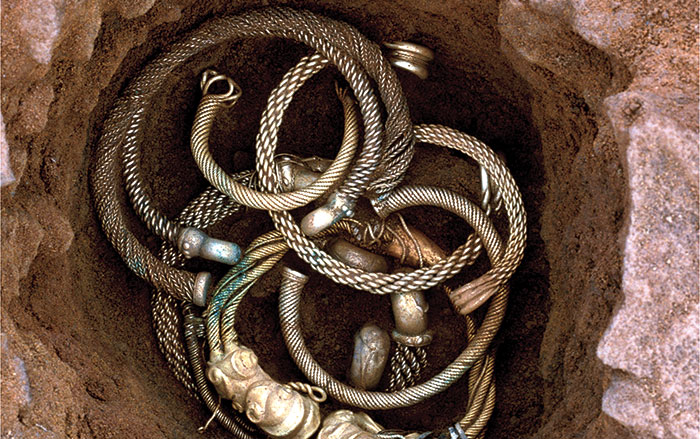
Hoards of lavish gold and silver neck rings buried on an English hill reflect dramatic social change
Features September/October 2026
Cultivating Fields of Stone
Peru’s ancient farmers used intricate rock maps to plan for the future

More to Discover
-
Features July/August 2013
The First Vikings
Two remarkable ships may show that the Viking storm was brewing long before their assault on England and the continent
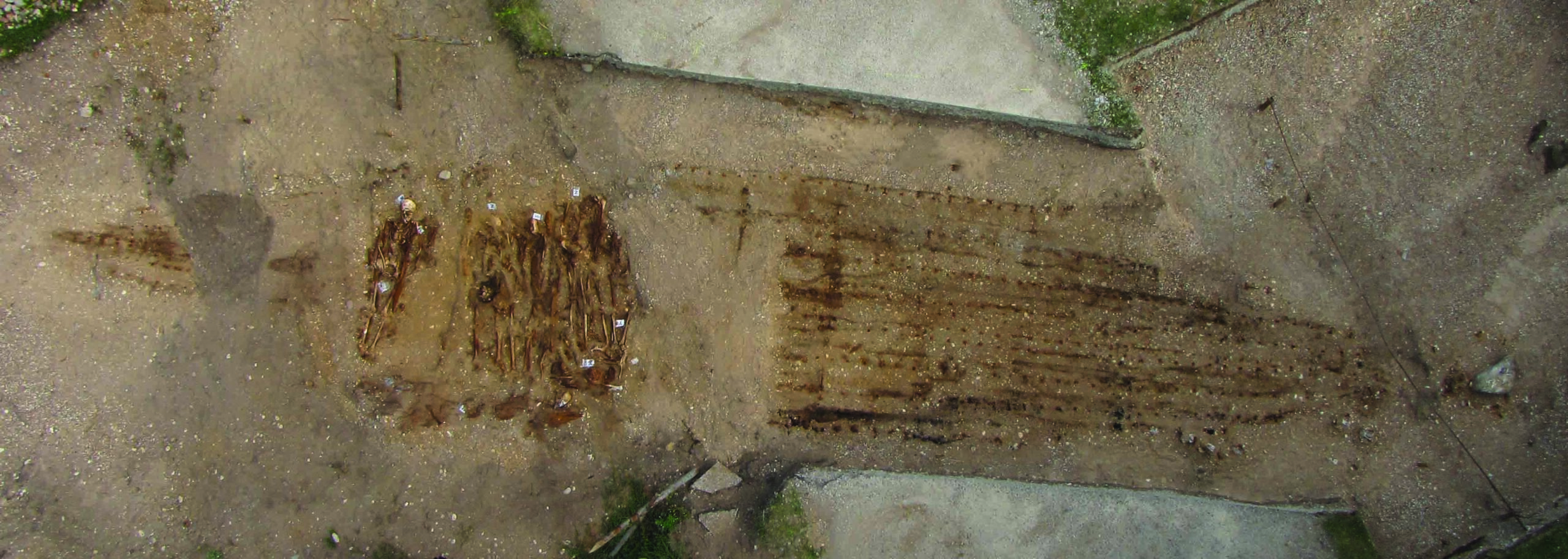 Courtesy Liina Maldre, University of Tallinn
 -
Features July/August 2013
Miniature Pyramids of Sudan
Archaeologists excavating on the banks of the Nile have uncovered a necropolis where hundreds of small pyramids once stood
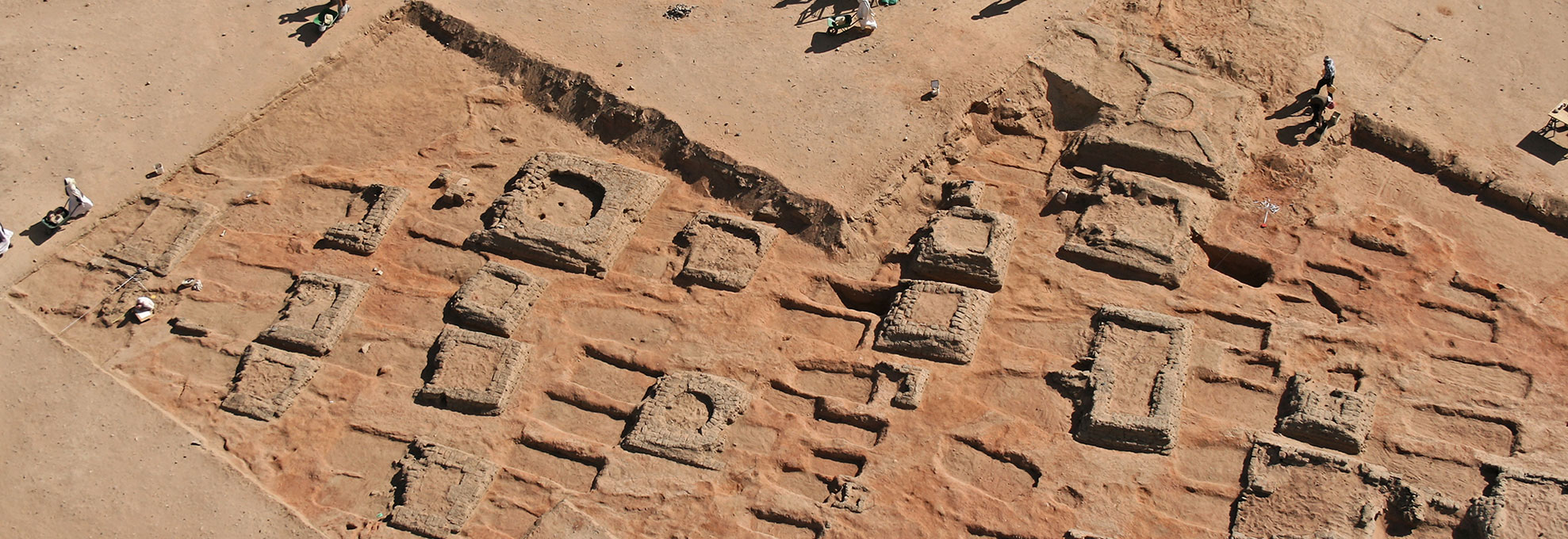 (Courtesy B-N Chagny, SEDAU/SFDAS)
 -
Letter from China July/August 2013
Tomb Raider Chronicles
Looting reaches across the centuries—and modern China’s economic strata
 (Courtesy Lauren Hilgers, Photo: Anonymous)
 -
Artifacts July/August 2013
Ancient Egyptian Sundial
A 13th-century limestone sundial is one of the earliest timekeeping devices discovered in Egypt
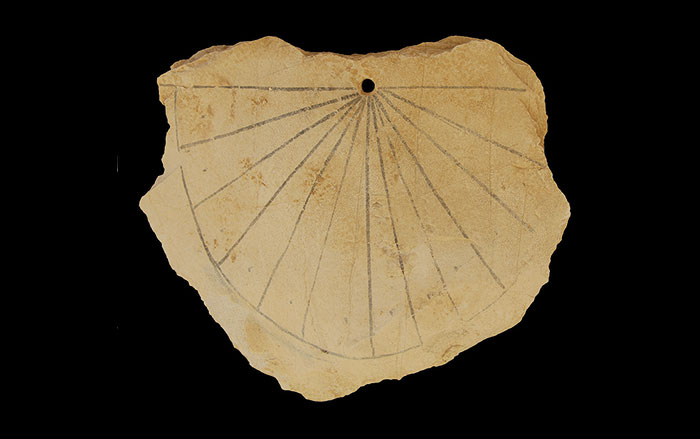 (© The Trustees of the British Museum/Art Resource, NY)