

AMSTERDAM, NETHERLANDS—According to a statement released by the Government of the Netherlands, Dutch officials have handed over seven artifacts recovered from a private collector to Hisham Al Alawi, the ambassador from Iraq. The Mesopotamian artifacts include foundation cones, which are made of clay and inscribed with cuneiform texts, and are usually found in building walls or temple foundations; a figurine depicting a ram that may have been used as an amulet or a seal; a figurine representing a goddess; and an inscribed clay tablet. These types of artifacts are all listed on the International Council of Museums’ lists of items that are vulnerable to theft, plunder, and illegal export. To read about cuneiform tablets that record taxes paid to a short-lived dynasty of Mesopotamian kings, go to "Ancient Tax Time: Spoils of War."
Mesopotamian Artifacts Repatriated to Iraq
News May 10, 2021
Recommended Articles
Off the Grid September/October 2026
Xunantunich, Belize
Learning to draw monkeys at an ancient Maya art academy

Letter from Ireland September/October 2026
A War Between Friends
How IRA volunteers survived the Irish Civil War in a secret mountain hideout

Features September/October 2026
A Change in Fashion
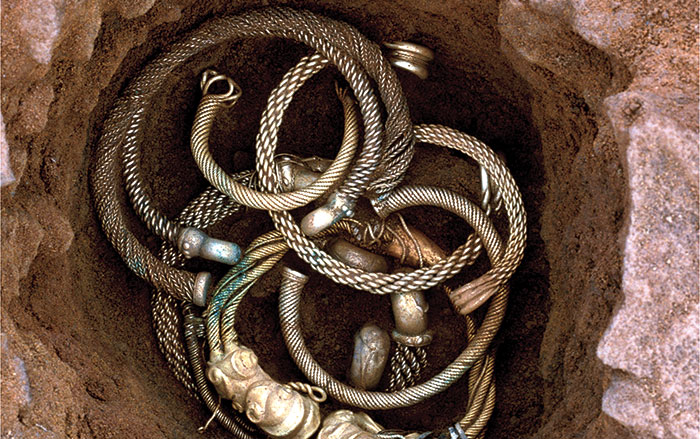
Hoards of lavish gold and silver neck rings buried on an English hill reflect dramatic social change
Features September/October 2026
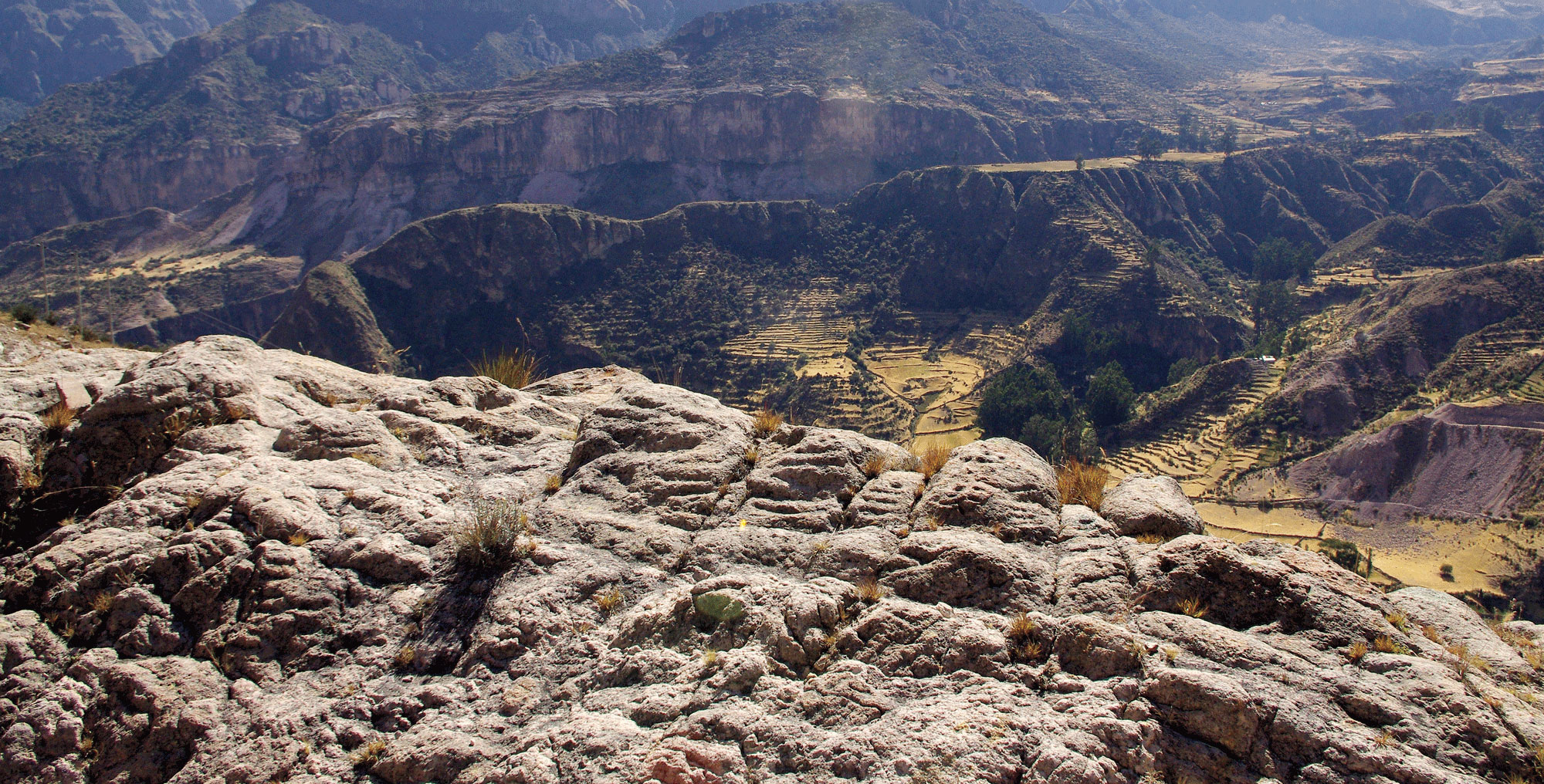
Cultivating Fields of Stone
Peru’s ancient farmers used intricate rock maps to plan for the future
More to Discover
Features March/April 2021
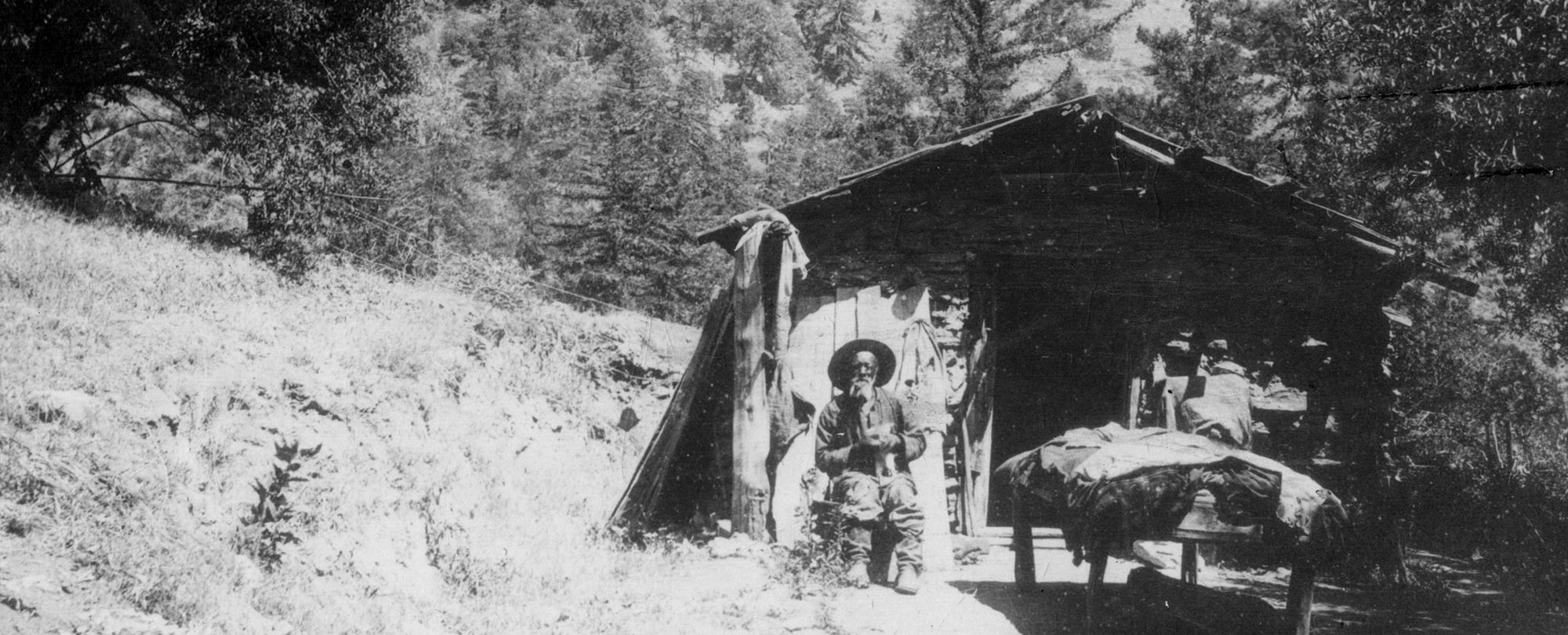
The Amazing True Story of Nathan Harrison
Excavations of a mountain cabin uncover the hidden life of a formerly enslaved man who became a California legend
-
Features March/April 2021
The Visigoths' Imperial Ambitions
How an unlikely Visigothic city rose in Spain amid the chaotic aftermath of Rome’s final collapse
 Yil Dori
 -
Letter from Chihuahua March/April 2021
Cliff Dwellers of the Sierra Madre
A recurring design motif found in northern Mexico’s ancient mountain villages reflects complex cultural ties between distant peoples
 (Photo by Stephen H. Lekson)
 -
Artifacts March/April 2021
Subeixi Game Balls
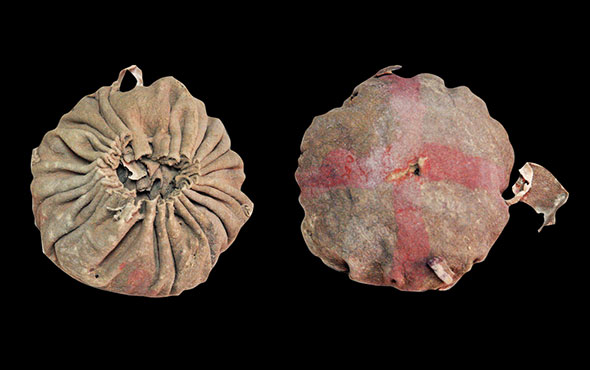 (Courtesy Patrick Wertmann)
 -
Digs & Discoveries March/April 2021
An Enduring Design
 Courtesy Durham University