|
|
Excavating a Ming Dynasty Castle
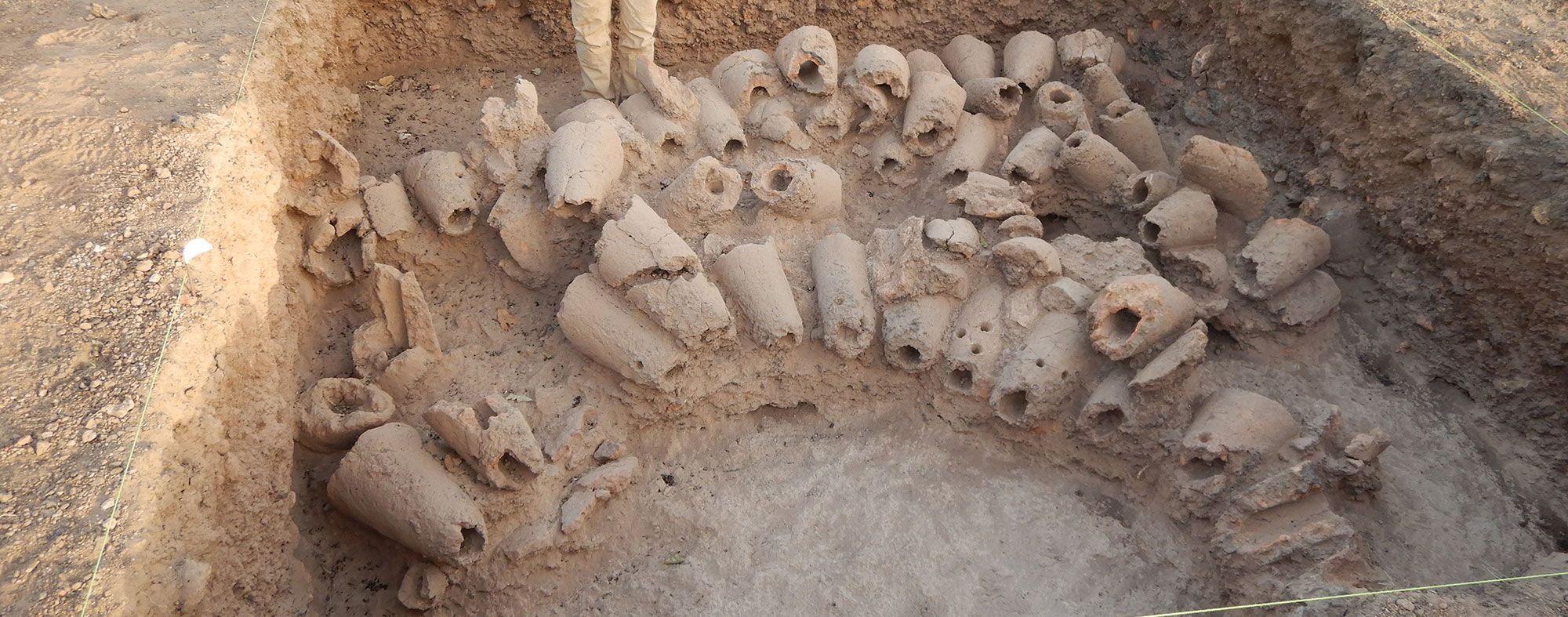
ZUNYI, CHINA—Archaeologists from the Chinese Academy of Social Sciences have surveyed Hailongtun Castle, established in 1257 and destroyed by war in 1600. Excavations have focused on the newer of two palaces, but a treasury, a pavilion, a quarry, and watch towers have also been found. Bricks, tiles, and roof sculptures in the shape of dragons were probably fired in nearby kilns. Inscribed steles have provided information about the history of the castle and its administrative system. Other finds include porcelain cups, dishes, bowls, plates, and stemmed cups; coins; glass wares; iron locks and fittings; copper armor scales; ceramic pipes for water; and ink stones. Haichao Monastery was built on the site in 1603 and later renovated in 1645.
TÜBINGEN, GERMANY—A new analysis of the rate of genetic mutation in samples of ancient mitochondrial DNA from Europe and Asia suggests that early human ancestors first left Africa between 62,000 and 95,000 years ago, dates that “agree with what we know from archaeology,” said biologist Alissa Mittnik of the University of Tübingen. The study, led by Johannes Krause of the University of Tübingen, used samples ranging in age from the Paleolithic era, including those from the famed triple burial of Dolni Vestonice in the Czech Republic, to the medieval period. A slower rate of genetic mutation had been calculated in a previous study of nuclear DNA, which meant that genetic differences in modern humans would require an “out of Africa” date of more than 200,000 years ago.
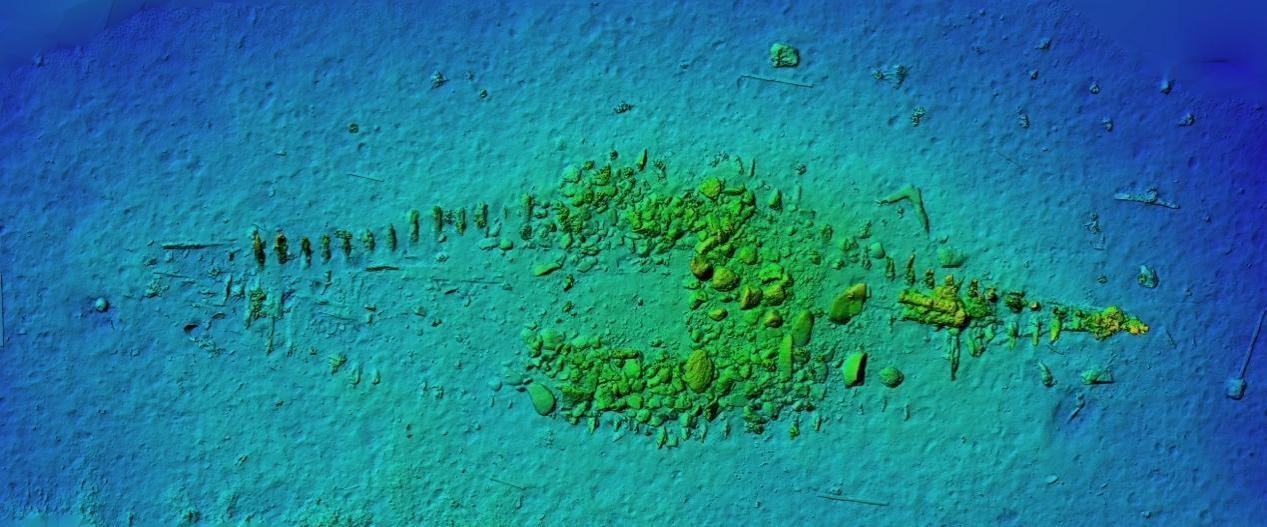
GOTHENBURG, SWEDEN—Joakim Wehlin of the University of Gothenburg and Gotland University has examined Bronze Age stone monuments that sit along Sweden’s Baltic Sea coasts. It had been thought that the monuments, which resemble stone ships, were used primarily as grave sites. Wehlin, however, thinks that they were used by maritime groups trading in metal objects. “It seems like the whole body was typically not buried in the ship, and some stone ships don’t even have graves in them. Instead, they sometimes show remains of other types of activities. So with the absence of the dead, the traces of the survivors tend to appear,” he explained. The monuments may have been used to mark ports, waterways leading inland, and potential meeting places.
19th Century Slaughterhouse Found in Virginia
ALEXANDRIA, VIRGINIA—Archaeologists have found the brick-lined foundations of a nineteenth-century slaughterhouse at a construction site for a new school building. Located on the outskirts of Alexandria’s Old Town, the land was also used as a cattle run. An industrial archaeologist will be consulted about some machinery that was also unearthed. “It’s really the only site where we’re going to find anything out about a nineteenth-century butchery. It’s just really something that came as a surprise,” said acting city archaeologist Fran Bromberg.
Possible Maori Skull Found Under Parking Lot
WHAKATANE, NEW ZEALAND—A human skull has been uncovered during renovation work at Whakatane Hospital. The area was once a traditional cultivation site for the Ngati Awa people, so the land had been blessed before construction work began. The skull, which is thought to be of Maori origin, will be reburied.
Mexico Demands Sotheby’s Stop Sale
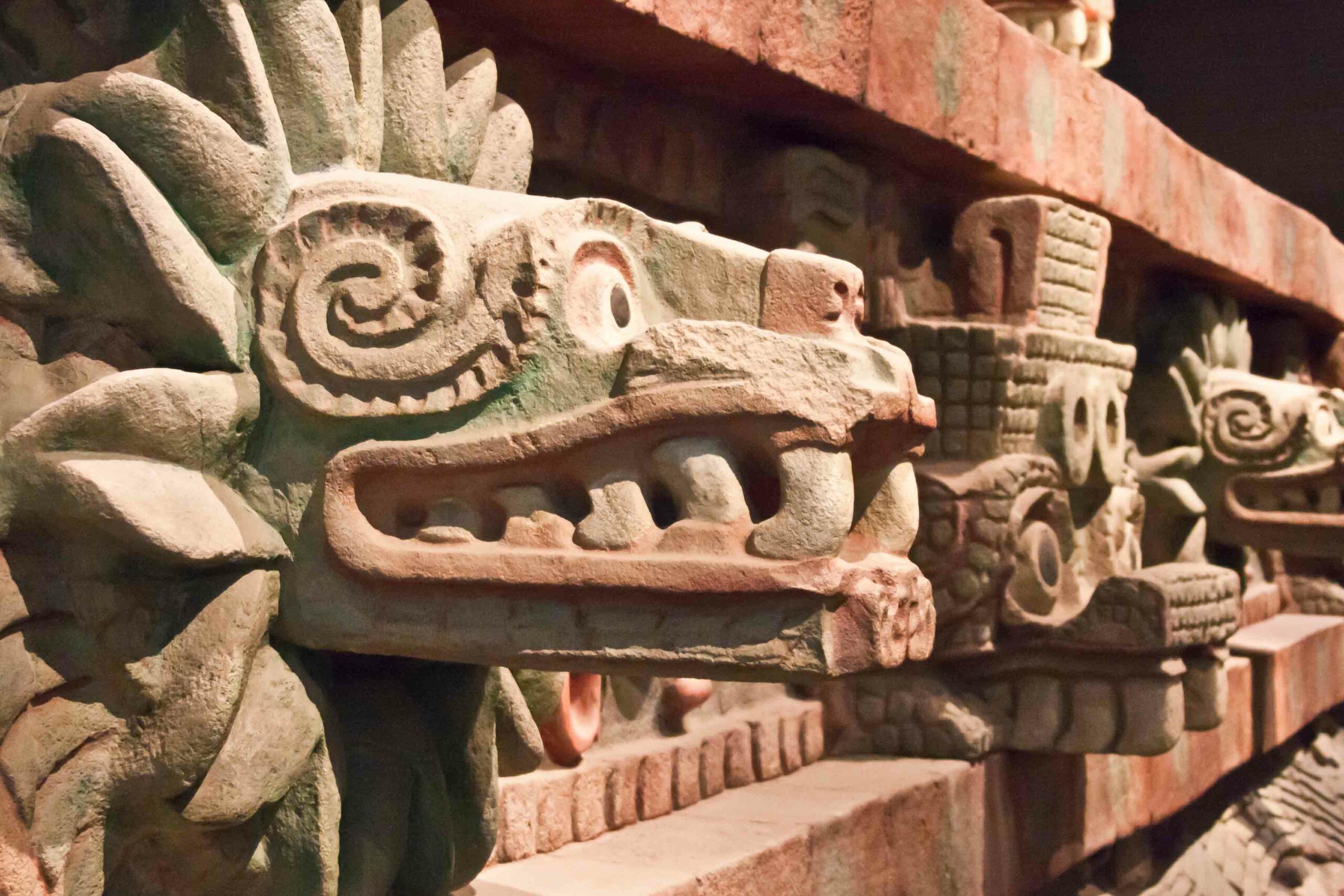
MEXICO CITY, MEXICO—According to an announcement made by the National Institute of Anthropology and History, Sotheby’s plans to auction 130 pre-Columbian objects, most of which the government of Mexico says are fakes. “Of the 130 objects advertised as being from Mexico, 51 are archaeological artifacts that are (Mexican) national property, and the rest are handicrafts,” read the statement. Mexico has asked Sotheby’s to stop the sale and has asked the French government for assistance, but a Sotheby’s spokeswoman has said that the sale will go forward as planned. The sale, which is scheduled to take place in Paris, is of a collection started in Paris in 1920. The article states that Mexico has prohibited the export of archaeological artifacts since at least 1827.
Glaciers Retreat, Revealing Rare Artifacts
OSLO, NORWAY—More than 1,600 ancient objects have been found in southern Norway as its glaciers retreat. Some of the artifacts are made of rarely preserved organic materials. One such item is a tunic made of greenish-brown lamb’s wool in a diamond pattern. It has been dated to A.D. 300, and may have been lost along a Roman trade route. “The tunic was well used—it was repaired several times,” said Marianne Vedeler of Norway’s Museum of Cultural History. Researchers wonder why someone would have taken off the tunic while traveling so close to a glacier.
Researchers Publish New Neanderthal Genome
LEIPZIG, GERMANY—A team of scientists from the Max Planck Institute for Evolutionary Anthropology has published a new, highly accurate sequencing of a Neanderthal genome. The sample was taken from a toe bone discovered in a Siberian cave. “The genome of a Neanderthal is now there in a form as accurate as that of any person walking the streets today,” said lead geneticist Svante Paabo. The information will allow researchers to compare the Neanderthal genome with those of Denisovans and modern humans.
Apollo-Era Technology Recovered From Sea Floor
CAPE CANAVERAL, FLORIDA—Jeff Bezos, founder of Amazon, assembled a team that has recovered pieces of the powerful Saturn V moon rocket engines from the floor of the Atlantic Ocean, more than 13,000 feet underwater. None of the engines are complete—the impact of hitting the water at a high rate of speed mangled them, and salt water has corroded many of the serial numbers from the components. Bezos’s goal had been to recover the engines from the Apollo 11 flight, but without serial numbers, it will be impossible to identify the specific rocket propelled by the engine parts. The team will try to reassemble one or two complete engines from what is available for museum display. The engines remain the property of NASA. For video of a Remotely Operated Vehicle at work recovering an Apollo F-1 engine, visit the Bezos Expeditions website.
When Did People Reach South America?
SERRA DA CAPIVARA NATIONAL PARK, BRAZIL—Sharp-edged stones, found at Brazil’s Toca da Tira Peia rock shelter, have been dated to 22,000 years ago using luminescence techniques. Geochronologist Christelle Lahaye of the University of Bordeaux and archaeologist Eric Boёda of the University of Paris think that the stones are tools made by humans. “We have new, strong evidence that the Clovis-first model is out of date,” said Lahaye. Similar tools have been found at Chile’s Monte Verde site. Tom Dillehay of Vanderbilt University estimates that Monte Verde was settled by 14,000 years ago, and perhaps as early as 33,000 years ago. The Toca da Tira Peia rock shelter is located in the same national park as the Pedra Furada rock shelter, where sharp-edged stone tools and bits of burned wood have been dated to 50,000 years ago. If people were living in South America at this time, “this is the type of archaeological record we might expect: ephemeral and lightly scattered material in local shelters,” commented Dillehay.
Desert Dwellers Started Farming Earlier Than Previously Thought
AVDAT, ISRAEL—Inhabitants of Israel’s Negev Desert may have started farming 5,000 years earlier than previously thought, claims Hendrik Bruins of Ben-Gurion University of the Negev. Radiocarbon dates taken from bones, animal manure, and burnt food scraps show three periods of agricultural activity, the earliest beginning in 5000 B.C. Bruins adds that ancient farmers managed their water carefully and probably grew grapes, olives, wheat, and barley.
Plants Processed for Food and Medicine Before Farming Began
STANFORD, CALIFORNIA—Traces of millet and other grains, yams, beans, and roots have been found on three grinding stones from China’s Yellow River region. The residues suggest that people may have been using the plants for food and medicine long before they started cultivating them, since the earliest archaeological evidence of crop cultivation in China is just 11,000 years old. “We can never know for certain why a plant was ingested, but I think these early people probably had a detailed knowledge of the plants they selected and used,” commented Karen Hardy of the Catalan Institution for Research and Advanced Studies.
Scientists Return to the Antikythera Shipwreck Site
WOODS HOLE, MASSACHUSETTS—Last fall, a team of researchers from Woods Hole Oceanographic Institution and Greece’s Ephorate of Underwater Antiquities investigated the deep, treacherous waters surrounding the Greek island of Antikythera, where the bronze clockwork device known as the Antikythera Mechanism was discovered by sponge divers at the turn of the twentieth century. They found that artifacts, including a lead anchor stock, a pipe that may have been used to drain water from the ship’s deck, and an intact amphora, still litter the shipwreck site. There are also objects that look like they could contain bronze fragments. “I’m intensely curious about what’s in the sediments,” said Brendan Foley of Woods Hole. Be sure to view these pictures from the recent dives and images of other Antikythera artifacts that are housed in the National Archaeological Museum in Athens.