A publication of the Archaeological Institute of America

Archaeological Headlines By JESSICA E. SARACENI
Tuesday, March 19

Ancient Planned City Found in India

NEW DELHI, INDIA—Archaeologists suspect they have found a city spread over five acres in the central state of Chhattisharh. Pottery, coins, seals, and terracotta figurines have been recovered from four mounds, along with evidence of reservoirs and roads. The styles of the pottery and the coins suggest that the city dates from the fifth to third centuries B.C. “We’ve just given them permission for this dig, and I think it will be some time before we understand how important this is, said Arun Raj of the Archaeological Survey of India.

Bones Given Jewish Burial

NORWICH, ENGLAND—In 2004, the skeletons of 17 people were recovered from a well during an archaeological survey. Historical records suggest that the skeletons, including 11 children, represent the victims of a late-twelfth-century massacre of Jewish residents. The bones were stored by the Norfolk Museums and Archaeology Service. Further testing of DNA samples may tell scientists more about them. “Nothing is 100% certain, but the historical evidence leads us to believe the remains are of Jewish descent,” said Clive Roffe of the Board of Deputies of British Jews. The bones were buried today in a Jewish ceremony.

Artifacts Stolen From Lebanon Museum

JBEIL, LEBANON—Thirty artifacts were stolen from the archaeology museum in the town of Jbeil. The thieves broke into the museum during the night and carried off the small objects. Culture Minister Gaby Layoun has been joined by local officials to inspect the scene. Police officers are investigating the crime.

Genetic Abnormalities Appear in Early Human Fossils

ST LOUIS, MISSOURI—A new study of early human fossils concludes that they exhibit a high frequency of congenital abnormalities, perhaps indicating that Pleistocene populations were small and isolated. As an example, fragments of a 100,000-year-old skull unearthed in northern China show evidence of a disorder known as “enlarged parietal foramen,” caused by a genetic mutation that is rare in current populations. “It remains unclear, and probably un-testable, to what extent these populations were inbred,” noted the study, which was led by Erik Trinkhaus of Washington University in St. Louis.

Monday, March 18

Salvage Excavations at Buddhist Monastery in Afghanistan

MES AYNAK, AFGHANISTAN—Filmmaker Brent Huffman wants to document the historic significance of the Buddhist monastery site at Mes Aynak, which sits on top of massive copper reserves, in an attempt to save it—or at least record what happens to it. Afghanistan’s Ministry of Mines sold the rights to the copper to the China Metallurgical Group four years ago, but time is running out and archaeologists could be forced to leave the site as early as June. Their salvage excavations have recovered many Buddha statues, engravings, manuscripts, icons, coins, tools, and pots from the ten percent of the site that has been investigated. Experts estimate it would take at least 30 years to excavate 5,000-year-old Mes Aynak properly if an agreement can be reached. “Mes Aynak can become a model case with a win-win outcome, pioneering methods for the extraction of resources in a way that is ecologically, culturally and historically responsible while meeting the needs of social development and the global economy,” according to last year’s report by the Alliance for the Restoration of Cultural Heritage, a non-profit group.

Burial Mounds May Still Be Intact

FRANKLIN, TENNESSEE—The Tennessee Division of Archaeology is working with students from Middle Tennessee State University and the Native History Association to preserve two 1,800-year-old burial mounds. The small-scale excavations could show that the two man-made hills, known as the Glass Mounds, are intact and therefore eligible for the National Register of Historic Places. Scientists are concerned that farming, mining, and nineteenth-century excavations may have caused too much damage, but so far, archaeologist Aaron Deter-Wolf thinks that the mound still holds undisturbed burials. “For the Native American community, whether (the site) gets on the National Register or not, it’s still a sacred place. Our feelings about it won’t change,” commented Toye Heape, vice president of the Native History Association.

Northern Ireland's Crannog Dig Extended

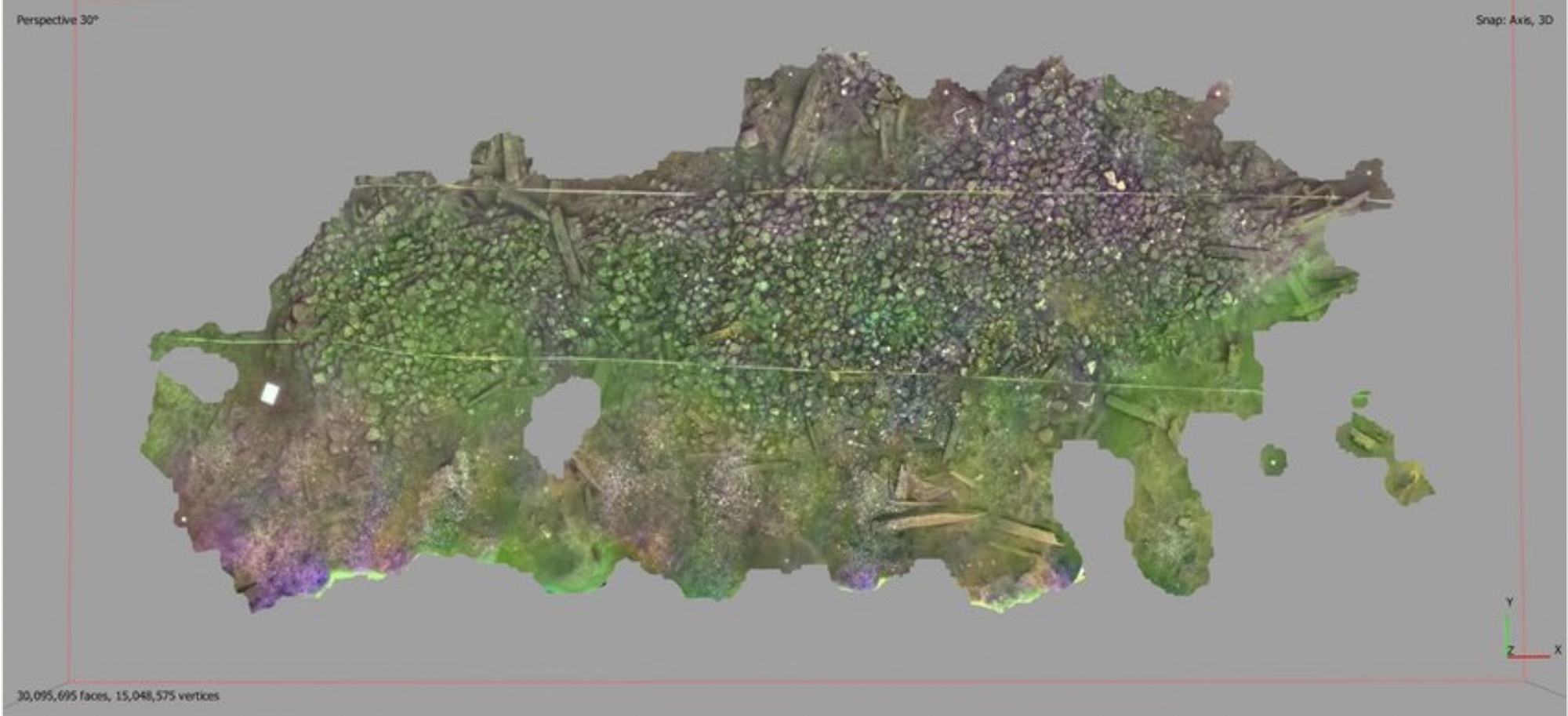
BELFAST, NORTHERN IRELAND—The government has given a new extension to the archaeologists excavating a dense medieval island settlement, or crannog, that sits in the way of road construction. The team will now have until April 15 to continue excavations, which have revealed that the crannog was occupied for far longer than archaeologists had initially supposed. "There is the possibility that hundreds of years of history could still be uncovered," says project archaeologist Jean O'Dowd. For ARCHAEOLOGY's previous coverage of the public effort to support the extraordinary crannog excavation, click here.

Climate Change Threatens England’s Rock Art

NEWCASTLE, ENGLAND—Warmer, wetter weather could accelerate the deterioration of the cups, rings, and grooves that were carved into slabs of sandstone in northern England between 4,000 and 6,000 years ago. A team of researchers from Newcastle University is developing a toolkit that landowners could use to protect their Neolithic and Bronze Age rock art by improving the drainage around decorated panels. “If we want to keep them, we need to start looking at how we can preserve them now,” said David Graham of the university’s School of Civil Engineering and Geosciences.

Ancient Chinese Coin and Trade Between Africa and Asia

MANDA, KENYA—A Chinese coin discovered at the Kenyan island of Manda suggests that trade existed between Africa and Asia as far back as 600 years ago. The copper and silver coin, known as a Yongle Tongbao, has a square hole punched in it and was issued during the Ming Dynasty reign of Emperor Yongle, who ruled between A.D. 1403 and 1425. The age of the coin predates the voyages of European explorers, such as Vasco de Gama, by several decades, indicating trade routes might have existed before these men set sail. 

Friday, March 15

Lost Roman Sculpture Found in Castle Cupboard

WINCHCOMBE, ENGLAND—An archivist cleaning out a basement cupboard at Sudeley Castle in the Cotswolds of southwestern England has rediscovered one of only seven known depictions of Apollo Cunomaglos, a local Roman deity. Dating from A.D 150 to 300, the sculpture shows Apollo Cunomaglos wearing a conical cap and holding a bow and arrow. First discovered in the nineteenth century by one of the owners of Sudeley Castle, the figure's whereabouts had been unknown for decades. "The authentication of the subject as Apollo Cunomaglos with his bow and arrows is of major significance in furthering our understanding of Roman religion in western Britain," says archaeologist Martin Henig, who had previously recorded the artifact as "lost" in a book on Roman sculpture.

High-Speed Rail Project Uncovers Black Death Burials

LONDON, ENGLAND—While constructing a section of Crossrail, a 73-mile high-speed railway set to connect far-flung parts of London in 2018, workers stumbled upon a pit in the Charterhouse Square section of the city that contains several burials which scientists believe are tied to the early years of the Black Death. The skeletons, 13 so far, were found along with ceramics that date to the middle 1300s, when the plague was arriving at its peak. The bodies, which are arranged in two neat rows within the 18-foot shaft, could help scientists learn about the lifestyle of mideval Londoners, as well as offering an opportunity to learn about the spread of the pandemic.

Remains of Teutonic Knights Identified

WARSAW, POLAND—Polish archaeologists have identified the remains of three grand masters of the Teutonic Knights, a medieval religious and military order that ruled much of the Baltic coast in the late Middle Ages. The skeletons were discovered in 2007 in a crypt underneath a cathedral in the Polish town of Kwidzyn. "Anthropological and DNA testing has enabled us to back up the theory that these are the remains of the grand masters," says project archaeologist Bogumil Wisniewski. "We can be 96 percent certain." The three men, Werner von Orseln, Ludolf Koenig, and Heinrich von Plauen, led the Teutonic order at the height of its power, from 1324 to 1413. To see images of the excavation and artifacts recovered from the crypt, visit Wisniewski's website (in Polish).

Early Egyptian Sundial Discovered

VALLEY OF THE KINGS, EGYPTArchaeologists from the University of Basel have unearthed one of the earliest sundials ever found in Egypt. Dating to the 13th century B.C., the flat piece of limestone is covered with black lines describing a semicircle divided into twelve sections. It would have been inserted with a bolt that cast shadows that showed the hours of the day. The team discovered the artifact amid the remains of stone huts that were occupied by workers who built lavish tombs nearby. The archaeologists speculate that the laborers used the sundial to keep track of the hours they worked.