A publication of the Archaeological Institute of America

Archaeological Headlines By JESSICA E. SARACENI
Thursday, February 07

Study Recommends New Preservation Techniques for China’s Terracotta Warriors

XI’AN, CHINA—A new study by a team led by Zhoa Lin Gu recommends measures to protect exhibits of archaeological artifacts in large, open spaces, such as the Museum of Qin Terracotta Warriors and Horses. For example, weather and pollution could be blown away from the pits holding the museum’s terracotta figures with the use of an air curtain, and cool air pumped into the bottom of the pits could help mimic the stagnant air that preserved the artifacts for more than 2,000 years. Environmental factors have contributed to the deterioration of many of the more than 1,500 artifacts recovered from the tomb of China’s first emperor, Qin Shi Huang, so far.

Small Pyramids Unearthed in Sudan

SEDEINGA, SUDANAt a crowded 2,000-year-old necropolis in Sudan, archaeologists from the French Archaeological Mission to Sedeinga have found at least 35 small pyramids that had been constructed over a period of hundreds of years. Several of the unusual pyramids feature a circle in the center, which is connected to the corners of the pyramid with cross-braces. Team member Vincent Francigny of New York’s American Museum of Natural History thinks the circles may have evolved from a local tradition of tumulus construction, combined with the more fashionable pyramids. Plundered graves have been unearthed from beside the pyramids. “Because it lasted for hundreds of years they built more, more, more pyramids and after centuries they started to fill all the spaces that were still available in the necropolis,” added Francigny.

Mint-Condition Coin Found Beneath York Minster

YORK, ENGLAND—A test pit dug beneath the cathedral known as York Minster has yielded human bones from the age of the Vikings, Norman foundations, and a silver Anglo-Saxon coin dating to the early ninth century. The coin is in excellent condition, suggesting that it was never in circulation and may have been minted at a nearby location. “The presence of a mint confirms York’s position of power and authority in the Anglian Kingdom of Northumbria and indeed, the country, during what has been thought of as a period of decline,” said Ian Milsted of the York Archaeological Trust. The presence of human bones also indicates that the land had been used as a burial ground by generations of different ethnic groups.

Hominin Jawbone Discovered in Serbia

WINNIPEG, CANADA—The jawbone of an ancient human ancestor or relative with three intact teeth has been discovered in a cave in Balanica, Serbia. The fossil, which resembles the jaw of Homo erectus, has been dated to at least 397,000 years old, and is perhaps more than 525,000 years old, making it the oldest-known hominin fossil found in Southeastern Europe. Research team member Mirjana Roksandic of the University of Winnipeg thinks that Neanderthals may not have evolved in this region at this time as they did in Western Europe, which was isolated by rising glaciers. “So there is no pressure on them to develop into something different,” she said.

Wednesday, February 06

Cremations Found in Northwest Mexico

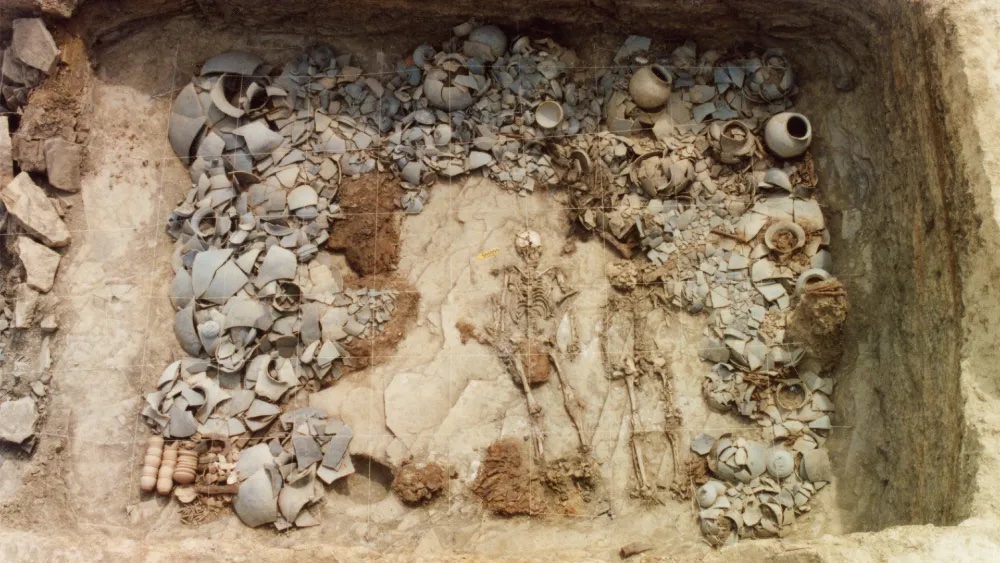
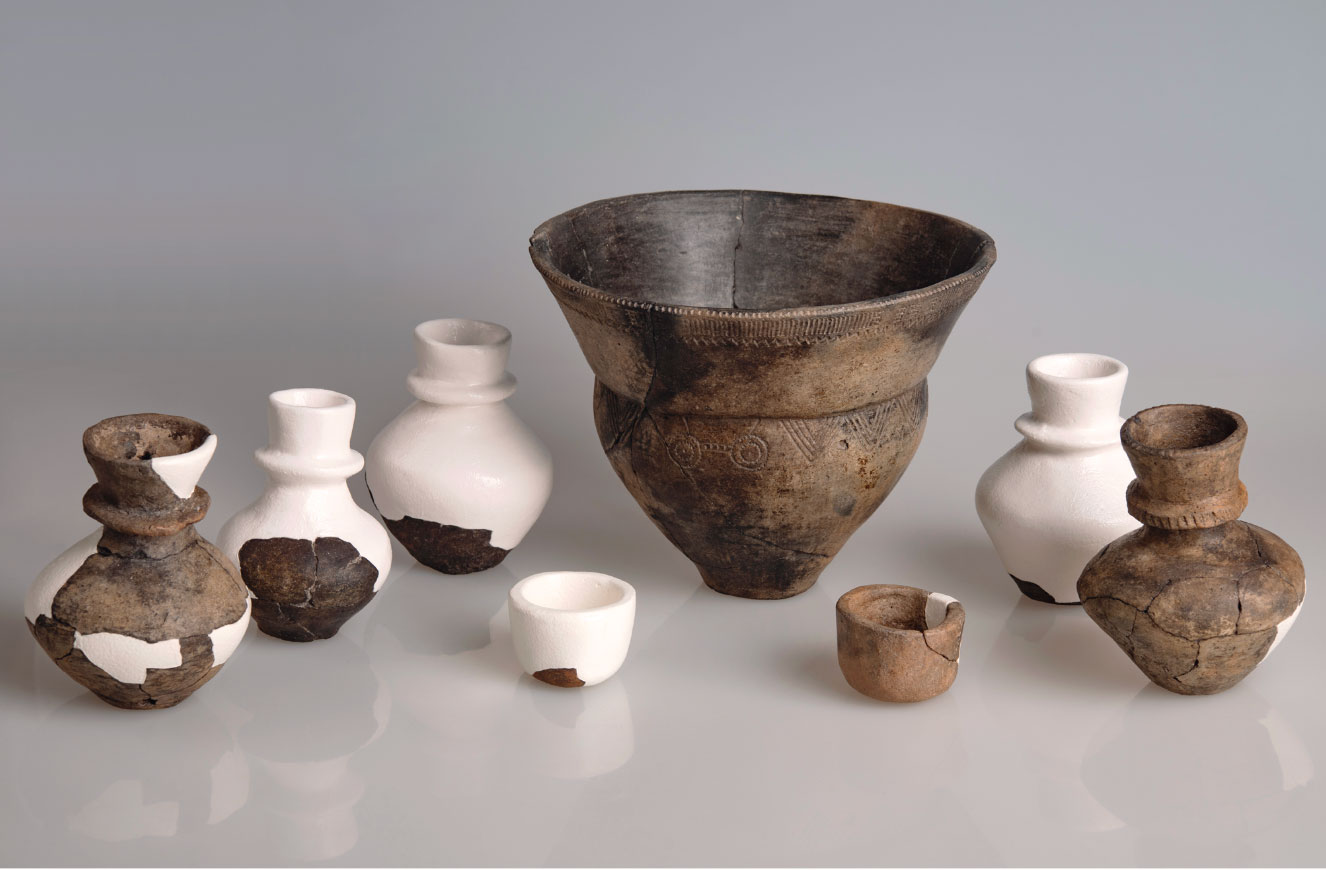
MEXICO CITY, MEXICO—More than 140 pots containing cremated human remains have been found at the 700-year-old site of Cerro de Trincheras, by researchers from Mexico’s National Institute of Anthropology and History. The pots, some of which were shaped as pumpkins, ovals, or with long necks, also held incinerated rock beads, crystal quartz, and jewelry. The team, led by archaeologist Elisa Villalpando Canchola, found two cremation pits and the location of a pyre that had been placed on the ground, the bones of animals, and pottery bowls.

London’s Temple of Mithras Waits for New Home

LONDON, ENGLAND—A Temple of Mithras dating to 240 A.D. that had been taken down in the City of London for the construction of a new corporate building is still in storage. The dig is taking longer than had been expected because of the extensive Roman-era remains at the site. “The ground conditions are perfect for preserving organic remains and hundreds of metal, wood, bone, and leather artifacts and wooden structures are being recovered and recorded. These finds will contribute to our understanding of life in this part of Roman London and will help to tell the story of the development of the Mithras site,” said a representative of Museum of London Archaeology.

Happy Birthday, Mary Leakey

MOUNTAIN VIEW, CALIFORNIA—Google celebrates what would have been Mary Leakey’s 100th birthday today with a Google Doodle. She is credited with the discovery of Proconsul africanus in 1948; Zinjanthropus boise, now known as Australopithecus boisei, in 1959; and human ancestor Homo habilis in 1960. She also uncovered the 3.6 million-year-old Laetoli Footprints, which show an early human walking upright, in Tanzania’s Olduvai Gorge. Mary Leakey died in 1996 at the age of 83.

New Restoration Project Underway at Pompeii

POMPEII, ITALY—A new conservation project estimated to cost $142 million began at the Croptoportico and the Casa dei Dioscuri in Pompeii today. The repairs are intended to protect the site from exposure to weather, reinforce the Roman buildings, restore frescoes, and increase security measures. “It’s a first small step to revamp the whole area. It is absolutely necessary that we have a program to revamp cultural sites in Italy,” said Johannes Hahn, European Regional Policy Commissioner. Yesterday, Italian police placed the head of a restoration company that had received contracts to work at Pompeii in the past under house arrest while she is being investigated for aiding abuse of office, corrupting a public official, and fraud. Five other officials and engineers are also under investigation, including the former special commissioner appointed to oversee the ancient city. A state of emergency was declared at the UNESCO World Heritage Site in 2008 because of its dilapidated condition. 

Tuesday, February 05

Questions Arise on Richard III DNA Results

COPENHAGEN, DENMARK—A few archaeologists have noted that researchers from the University of Leicester held a press conference to announce the DNA identification of the remains of Richard III before the results were reviewed by their peers. DNA from ancient sources is very susceptible to contamination. “The DNA results presented today are too weak, as they stand, to support the claim that DNA is actually from Richard III. …It seems to me that osteological as well as archaeological evidence is stronger,” commented Maria Avila of the Natural History Museum of Denmark. Avila adds that mitochondrial DNA can be shared by people who are not otherwise related. She would like to know how common this particular DNA profile is in the United Kingdom.

Three Looting Suspects Arrested at First-Century Site in Israel

EMEK HEFER, ISRAEL—The Israel Antiquities Authority announced the capture of three suspects using digging tools at a first-century burial chamber near Kibbutz Metzer in central Israel. The authorities think the suspects are responsible for a wave of archaeological thefts in the area. “Unfortunately, the cave and desert fortress was badly damaged,” said Nir Distelfeld of the IAA robbery prevention unit.

Tiny Shoes May Have Been Worn by Pauline Bonaparte

ABERDEEN, SCOTLAND—A petite pair of shoes labeled “Pauline Rome” has been discovered in the collections of the University of Aberdeen. Crafted from silk and leather, the early nineteenth-century slippers may have been worn by Princess Pauline Borghese, sister of Napoleon Bonaparte. The shoes had been given to the museum by Robert Wilson, who was known to have been friendly with the princess. “Letters from him to Pauline show a close friendship and in his diary he describes how she spent a lot of time with him traveling in Italy and gave him many gifts,” said museum staff member Louise Wilkie, who found the shoes in a chest of clothes.

New Dates for Spain’s Neanderthals

OXFORD, ENGLAND—New radiocarbon dates for Neanderthals fossils from southern Spain, an area thought to have been a last Neanderthal homeland, suggest that these human cousins may have died out 10,000 to 15,000 years earlier than previously thought. “What our research contributes is that in southern Spain, Neanderthals don’t hang on for another 4,000 years compared with the rest of Europe. And the hunch must be that they go extinct in the south of Spain at the same time as everywhere else,” said Thomas Higham of the University of Oxford and a member of the international team that conducted the research. The new dates were obtained using a technique called “ultrafiltration,” which washes out modern carbon contaminants and degraded ancient molecules. If accurate, the earlier extinction indicates that modern humans and Neanderthals did not co-exist in southern Iberia.