|
|
Budget Cuts Close Florida’s Little Salt Spring
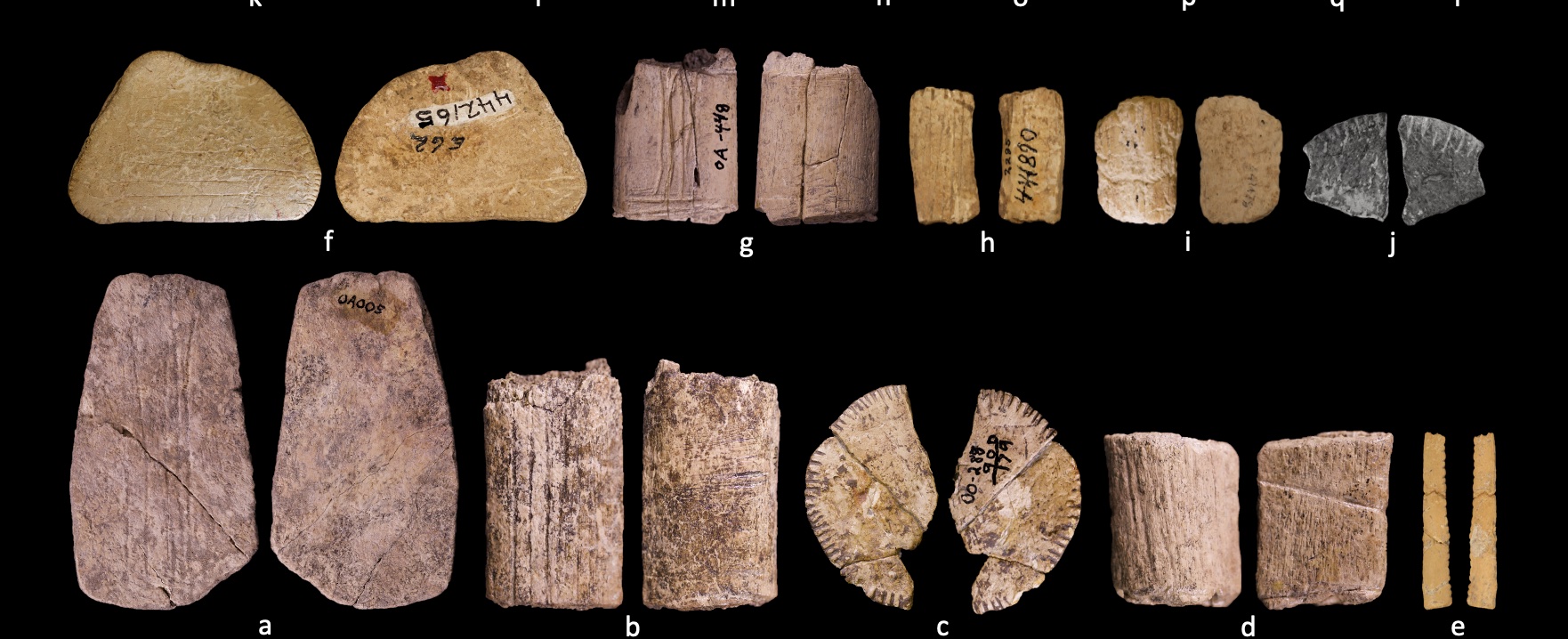
TAMPA, FLORIDA—Budget cuts at the University of Miami will lead to the closing of Little Salt Spring, a microbe-free sinkhole located on the west coast of the state. Ancient tools and weapons made of wood and bone, including a 10,000-year-old deer antler incised with 28 parallel marks, have been found in the spring. Such rare artifacts offer an opportunity to study the earliest human occupation of Florida. “There are all kinds of possibilities of what people were doing there. They were using it as a freshwater source, and also possibly as some sort of trap. They were driving animals like deer over a blind and into the water, drowning them and pulling them out,” said archaeologist John A. Gifford, who began studying Little Salt Spring in 1983.
World War I Mines Discovered on Welsh Beach
ST DAVIDS, WALES—A woman walking along Caerfai Beach during low tide spotted three submerged mines dating to the First World War. “At first I thought it was some sort of Roman pottery,” said Julia Horton Powdrill, who happens to be an archaeologist. “Personally I think the sea has been so rough and swirly recently that it’s likely the sand covering them has been washed away,” she added. Powdrill had been out foraging for seaweed when she made the discovery.
Possible Location of Pilgrim Meeting House Found
DUXBURY, MASSACHUSETTS—A ground-penetrating radar scan has revealed trenches that could be part of the First Meeting House in Duxbury, Massachusetts. Built in 1634 by Pilgrims who moved away from the original settlement and did not want to travel back to Plymouth for required Sunday worship, the structure was located in the center of their new community. “These soil trenches appear to occur in an E-pattern that could be interpreted as the remains of foundation sill trenches associated with a structure,” said Craig Chartier of the Plymouth Archaeological Recovery Project. Potential grave sites were also found near the site.
Leicester Skeleton Is Richard III
LEICESTER, ENGLAND—DNA tests have confirmed that the skeletal remains discovered beneath a parking lot last year are those of Richard III, the last English king to die in battle. It was known that Richard III was killed in 1485, during the Battle of Bosworth, and buried at the church of the Greyfriars. But the church was eventually torn down and the grave lost. The bones, which are of a slender man is his late 20s or early 30s, show that he suffered from scoliosis and potentially fatal injuries to the skull. They have been carbon-dated to between 1455 and 1540. “There is a DNA match between the maternal DNA of the descendants of the family of Richard III and the skeletal remains we found at the Greyfriars dig. In short, the DNA evidence points to these being the remains of Richard III,” explained Turi King, a geneticist for the University of Leicester project. “Beyond a reasonable doubt it’s Richard,” added lead archaeologist Richard Buckley. The remains will be reinterred in Leicester Cathedral.
Cluster of Tombs Unearthed in Western China
XINJIANG, CHINA—A cluster of more than 100 tombs dating to the Tang Dynasty (618–907 A.D.) has been uncovered on the Pamir Plateau in western China. Many of the tombs had been built for infants. Archaeologists found wooden caskets covered with felt, in addition to stoneware, pottery, and copper artifacts. Some of the burials also contained utensils made from gourds. “The burial custom is the first of its kind to be found in Xinjiang,” said Ai Tao of the Xinjiang Archaeological Institute.
Tip Leads to Return of Stolen California Rock Art
BISHOP, CALIFORNIA—An anonymous tip has led to the recovery of a series of 3,500-year-old rock carvings that had been stolen from a sacred Native American site in California’s Sierra Nevada. The carved images of hunters, animals, and geometric designs, which are protected under the Archaeological Resources Protection Act and listed on the National Register of Historic Places, had been sheared off the sides of boulders in an area known as Volcanic Tableland with power saws. No one has been arrested for the crime at this time.
ULM, GERMANY—New radiocarbon dates for bones found in the same strata as the "lion man" indicate that the Ice Age figurative sculpture is 40,000 years old, or 8,000 years older than previously thought. Carved from mammoth ivory, the first fragments of the lion man were discovered in 1939 in Germany’s Stadel Cave, just a few days before the outbreak of World War II. Archaeologists hastily filled in their trenches to protect the site and stored the sculpture in the City Museum of Ulm, where it was first reassembled in the 1970s. Recent excavations by Claus-Joachim Kind have recovered another 1,000 bits of mammoth bone that are now being added to the sculpture using computer-imaging techniques. The Ulm Museum plans to unveil the refurbished lion man in November. See ARCHAEOLOGY’s “New Life for the Lion Man” for an in-depth look at the process of reconstructing the Ice Age masterpiece.
Goodwill Vest Donated to Burke Museum
SEATTLE, WASHINGTON—Staff members at a Goodwill store in Seattle decided that a beaded Native American vest they received as a donation should be passed on to the Burke Museum of Natural History and Culture at the University of Washington. Based upon the color of the beads and its velvet lining, the vest probably dates to the early 1900s and was eventually sold to a tourist. “We have to make the decision, what’s the best use of the donation. In this case because it’s of cultural significance, it seems it would be best to be accessible to everyone,” said Katherine Boury of Goodwill.
New Scanning Technology Produces 3-D Images of Artifacts
SOUTHAMPTON, ENGLAND—A high energy, high resolution CT scanner and visualization software are being used at the University of Southampton to create detailed, 3-D images of artifacts still encased in soil. This technology helps archaeologists plan ways to excavate fragile artifacts safely, or even to study them while keeping them in their protective layers of earth. Graeme Earl and Mark Mavrogordato of Southampton University and Alexandra Baldwin of the British Museum describe how the technology helped them analyze one of the 13 cauldrons unearthed in Chiseldon, Swindon, in this BBC video.
Historic Hospital Site Excavated in Edinburgh
EDINBURGH, SCOTLAND—Archaeologists have begun to dig at Edinburgh University’s High School Yards where the Royal Infirmary, built in the eighteenth century, and the Blackfriars Monastery once stood. The monastery occupied on the site from 1230 until 1558, when it was destroyed by a mob. “You can already see seventeenth and eighteenth-century remains from the short trenches that that have been dug. There is also some backfill that looks even earlier than that. I’m sure some more stuff will be uncovered as the dig progresses,” said John Lawson of the Museum of Edinburgh. In 2011, eighteenth-century lab equipment used by pioneering chemist Joseph Black was found at a nearby site.
Ancient Glass Workshops Discovered Near Naples
NAPLES, ITALY—Heavy rains in Italy have led to the discovery of a series of glass-making workshops along the ancient Clivius Vitrarious. The artisans of these first-century A.D. workshops were well known for their glass-making skills.