A publication of the Archaeological Institute of America

Archaeological Headlines By JESSICA E. SARACENI
Tuesday, January 22

New DNA Analysis Technique Aids in Study of Early Human Migrations

LEIPZIG, GERMANY—A new technique that identifies ancient human DNA even when large amounts of DNA from soil bacteria are also present has been used to study a 40,000-year-old modern-human leg bone. The findings suggest that the remains, which were found in China’s Tianyuan Cave in 2003, came from an ancestor of present-day Asians and Native Americans. The DNA tests also indicate that this ancestor had already split from the ancestors of present-day Europeans. “More analyses of additional early modern humans across Eurasia will further define our understanding of when and how modern humans spread across Europe and Asia,” said Svante Pääbo of the Max Planck Institute for Evolutionary Anthropology.

Rare Tumor Discovered in 1,600-Year-Old Woman’s Skeleton

LLEIDA, SPAIN—While excavating a necropolis at the site of La Fogonussa in Spain, archaeologists have found the 1,600-year-old skeleton of a Roman woman who had an ovarian teratoma, the first to be recorded in the ancient world. Such benign tumors originate from germ cells, which normally become human eggs and so can form other body parts. This particular tumor had calcified in her pelvis and contained bone and four deformed teeth. “We suppose that, at least during a long part of her life, she was completely unaware of this tumor. Depending on the eventual complications, she could have suffered, but there is no evidence of this,” read a statement by researcher Núria Armentano.

Turkey’s “Cultural War”

ANKARA, TURKEY—The Turkish government continues to pursue the return of artifacts illegally excavated from its soil that are currently housed in museums in New York, Paris, and Berlin. And while more than 4,000 artifacts were returned between 2002 and 2012, archaeologists point out that archaeological sites in Turkey such as Allianoi and Zeugma have been flooded by large dam projects. The Marmaray Tunnel Project in Istanbul has uncovered a Byzantine harbor and 8,000-year-old human remains, but construction delays could reportedly force the archaeological work to a premature end. “I don’t understand the attitude of the government. This contradiction is truly mind-boggling,” said an unnamed Turkish archaeologist.

Fragment of Nineteenth-Century Ship Found on Cumberland Island

SAVANNAH, GEORGIA—A large fragment from the midsection of a nineteenth-century ship has been found on a beach at Cumberland Island, which is located off the coast of Georgia. The ship had been held together with wooden pegs, and some of its wooden siding remains. National Park Service archaeologist Michael Steiber has been working on identifying the wreckage. He thinks the ship may have been delivering supplies to a Southern plantation, or it may have been a Civil War blockade runner. “This has been a high-traffic area ever since the Spanish and the British started colonizing. There are a lot of possibilities,” he said. The wreckage has been reburied in order to protect it.

Will It Be Possible to Clone Neanderthals?

CAMBRIDGE, MASSACHUSETTS—Geneticist George Church of Harvard University thinks that it will soon be possible and even beneficial to bring Neanderthals back from extinction, if human cloning ever became acceptable in modern society. “Well, Neanderthals might think differently than we do. We know that they had a larger cranial size. They could even be more intelligent than us,” he explained.

Friday, January 18

Cleaning Reveals Ancient Graffiti Within the Colosseum

ROME—Restoration work to remove dirt and calcified rock from the walls of the only intact internal passageway within the Colosseum has revealed frescoes painted in blue, red, and green, as well as lewd graffiti. The passageway, which is located in an area between the second and third floors, will be opened to the public next summer.

No Spitfires Found at Three Proposed Dig Sites

MYANMAR—A quest to find 140 British warplanes rumored to have been buried in Burma at the end of World War II has only turned up bundles of electric cables and water pipes, according to a news conference held by the team searching for the single-seat fighter planes, known as Spitfires. The team, including 21 archaeologists, has been searching in three different locations, including one next to Rangoon Airport, where ground-penetrating radar revealed a heavy concentration of metals. Spitfire enthusiast David Cundall, who has been leading the search, thinks the team must be looking in the wrong places.

Medici Warrior Died of Gangrene

PISA, ITALY—Testing of Giovanni de’ Medici’s bones has shown that the mercenary soldier died of gangrene, and not an improperly amputated leg, as had been rumored. Known as Giovanni of the Black Bands for the black bands of mourning he wore after the death of Pope Leo X, he was hit be a cannon ball during a battle when he was 28 years old. “The leg was already partially amputated by the cannon ball, so the surgeon simply completed the amputation by cleaning the wound and smoothing the stump,” said Gino Fornaciari of the University of Pisa.

Ancient Caddo Indian Artifacts Ready for Texas Museum

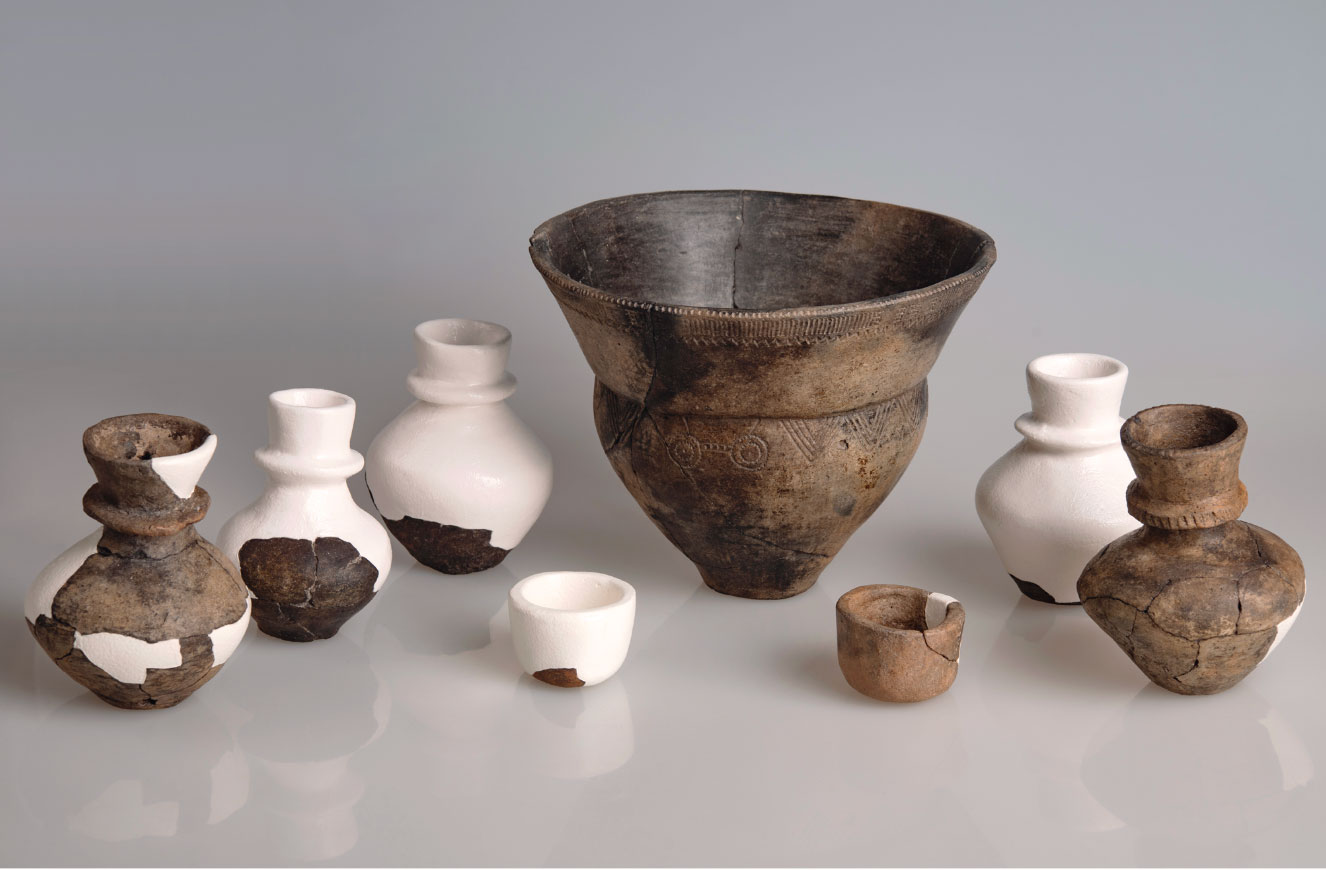
GILMER, TEXAS—Tens of thousands of Caddo Indian artifacts excavated in the 1990s have been analyzed, photographed, and cataloged for display at Stephen F. Austin University. The Caddo people were hunters and farmers who lived in Texas from 700 A.D. to the mid-fifteenth century, leaving behind pottery, arrowheads, tools, pipes, houses, and burials. The largest cemetery found as part of the project had been looted in the 1970s. “The sites we dug were all probably part of a large extended dispersed village where people would live close enough to be in communication,” said archaeologist Mark Parsons.

Thursday, January 17

Nineteenth-Century Graves Protected from Body Snatchers

WEST BROMWICH, ENGLAND—While moving a nineteenth-century cemetery in the West Midlands, England, to make room for a new road, archaeologists found that some of the bodies had been buried with protective devices to deter grave robbers. At the time, fresh bodies could be dug up and sold to medical schools. One of the devices, called a mortsafe, was a metal cage fixed around the coffin of a young woman who suffered from a skin and bone disease. Her condition would have made her corpse desirable. Another grave contained a brick coffin with a false bottom that protected two bodies. “The simplest method of protecting the graves was to employ a guard. However it appears from records in other towns that the money paid for a fresh body, which could be over £25, that these guards were often bribed to turn a blind eye,” said Frank Caldwell, Sandwell Council’s Museums Manager.

Mass Graves From 1928 Hurricane Sought in Florida

PORT MAYACA, FLORIDA—In 1928, a massive hurricane washed out Florida’s Lake Okeechobee, killing as many as 3,000 people, many of whom were migrant workers from the Deep South or the Caribbean. The bodies had to be buried quickly, however, and it is unclear exactly how many died and where they were buried. Archaeologist Shawn Patch is using ground-penetrating radar at a possible mass grave site in Martin County. “I wouldn’t expect to see individual bodies or body parts. What I’d see is loose sand, and then there’d be a massive disturbance in the soil,” he explained.

Tombs Discovered at Maya Site of Xtojil

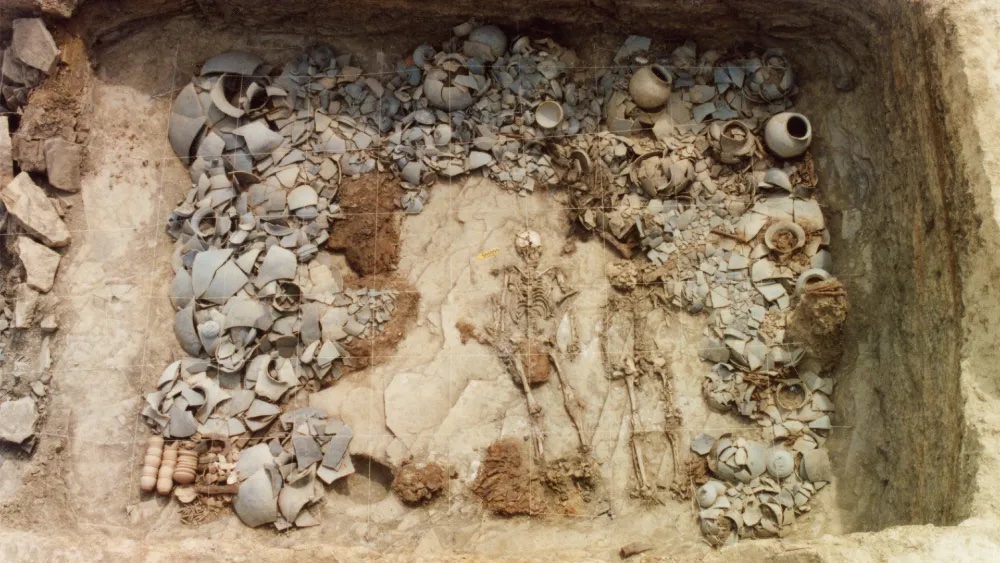
MEXICO CITY—Ten 1,200-year-old burials have been discovered at the Maya site of Xtojil, some 12 miles from Chichen Itza, by archaeologists from Mexico’s National Institute of History and Anthropology. The tombs, or cistas, are rectangular in shape and covered with stone slabs. They contained poorly preserved skeletal remains and ceramics such as plates, bowls, pots, pans, and cups. Obsidian razors, jade beads, and shell earrings acquired through trade with other Mesoamerican people were also found. Road construction prompted the excavation.

Cosmetics Used in Teotihuacan to Honor the Important Dead

VALENCIA, SPAIN—A study of rare prehispanic cosmetics found in funerary pots at Teotihuacan has shown that they were used in rituals to decorate deceased nobility buried under the floor. “The priest would go to the home and would pay homage to the deceased with the family present. Cosmetics were used by the priest carrying out the ceremony and formed a part of the ritual,” said María Teresa Domenech Carbo of the Polytechnic University of Valencia. Some of the pigments had been imported from other regions. “No surprise since this city dominated the entire Mesoamerican region,” added the archaeologist.