A publication of the Archaeological Institute of America

Archaeological Headlines By JESSICA E. SARACENI
Tuesday, April 09

Food Cans Exonerated in Franklin Expedition Deaths

LONDON, ONTARIO—In 1845, British explorers led by Sir John Franklin set out for the Arctic in two ships, the Erebus and the Terror, only to become icebound. All 128 men were lost—the graves of some of them were eventually discovered on Beechey Island and King William Island. Chemist Ron Martin of the University of Western Ontario re-examined some of the bones of the Franklin expedition officers and crew. It had been thought that solder on poorly made cans of food, or even the lead water pipes in the ships, contributed to the poor health and confusion of the crew. But Martin says that the lead levels in the bones were too high to blame on the expedition’s stores. “The lead distribution is essentially uniform as might be expected from lifetime lead ingestion. There is no evidence for a sudden massive increase in lead during the latter part of any individual’s life,” he said.

Study of Patent Medicines Reveals Their Ingredients

NEW ORLEANS, LOUISIANA—Chemist Mark Benvenuto of the University of Detroit and his team employed X-ray fluorescence to analyze the contents of patent medicine bottles from the collection at the Henry Ford Museum. They found that a majority of the samples contained calcium, iron, and zinc, but many also contained lead, arsenic, and mercury. “What we’re looking at is a group of people who were getting towards what we now consider modern medicine; they were taking the first steps. I believe some were systematically going about trying to cure some disease or another—but in that mix there was probably a huckster or two,” he said. The research was presented at the annual meeting of the American Chemical Society. 

Traces of Norman Castle Found

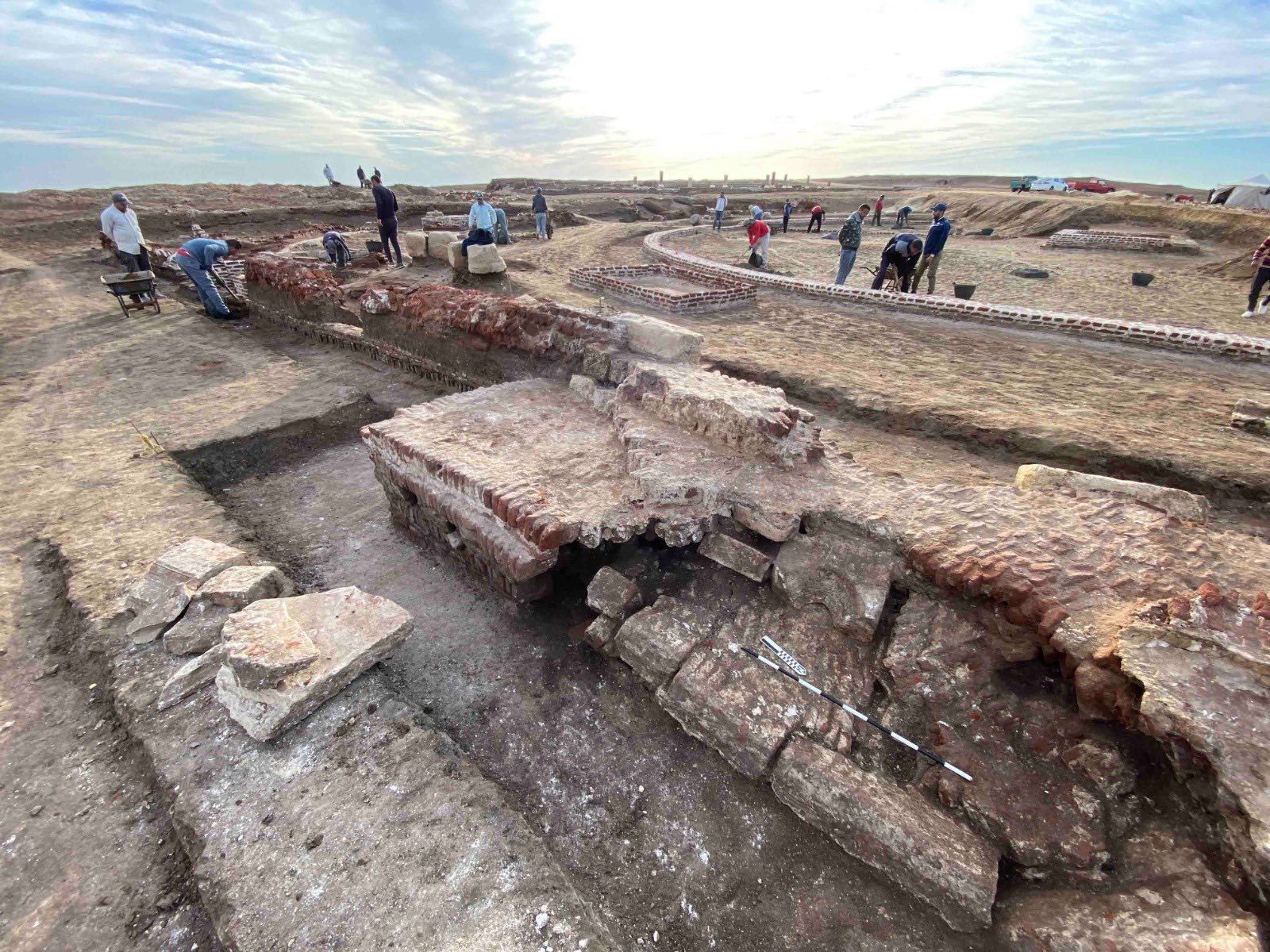
NORTHAMPTON, ENGLAND—Construction of a new railway station has uncovered three walls from the outer bailey of a twelfth-century castle. “The royal apartments were on a higher level than this. The royals may have walked down here at some point, but they would have spent most of their time up in the main royal areas,” said archaeologist Tim Upson-Smith. Pottery and animal bones, including a dog’s jaw, have also been found in the medieval level at the site. The castle, which had been used as a seat of Parliament, was demolished in 1662 under orders from King Charles II, and the site was cleared in 1859 to build the railway station.

Scottish Livery Badge Found at Battle Site

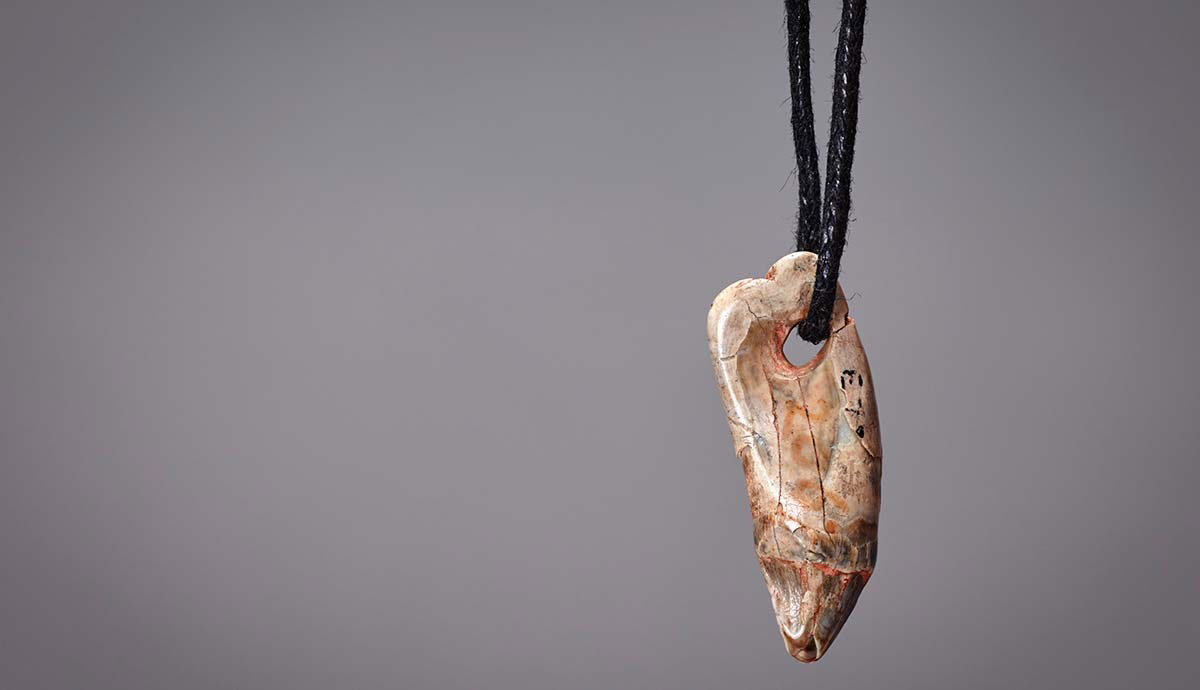
NORTHUMBERLAND, ENGLAND—Archaeologists have conducted a survey of the site of the Battle of Flodden, which took place on September 9, 1513, between England and Scotland. The English defeat of the invading Scottish army, led by King James IV, culminated in his death and the loss of 15,000 soldiers. On the last day of the project, archaeologists discovered a crown-shaped livery badge thought to have been worn by a messenger from the Scottish army. “Badges such as these showed allegiance on the battlefield and this one would only have been worn by someone directly connected with James IV himself,” said Chris Burgess of the Flodden 1513 Ecomuseum.

Monday, April 08

Papyrus Document “Lacks Red Flags”

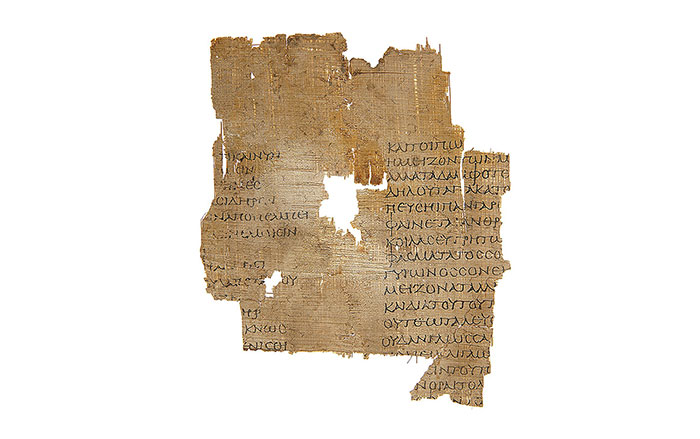
CHICAGO, ILLINOIS—A new analysis of The Gospel of Judas suggests that the Coptic document may have indeed been made in the third century A.D. Microscopist Joseph Barabe of McCrone Associates and a team of researchers tested the chemical composition of the inks and examined how the document was put together. The presence of brown and black inks had led them to suspect that the document was a forgery, but a French study of other third-century Egyptian documents shows that ink technology was changing at that time, in a way consistent with the inks used in The Gospel of Judas. In addition, if someone had been trying to create a new document on an ancient-looking papyrus, the new ink would have gathered in its wrinkles. But, it appears that the ink and papyrus of the document aged together naturally. “There was definitely a point where, all of a sudden, I just kind of relaxed and said, ‘This is probably just fine,” Barabe remembers.

The Treasures of Turkmenistan

MARY, TURKMENISTAN—Turkmenistan is preparing to receive foreign tourists who are interested in its 354 archaeological monuments. “Many unique discoveries which are like nothing in the world are waiting their moments in the storage departments of Turkmen museums,” said an unnamed employee from Turkmenistan’s national heritage department. For example, the 4,000-year-old fortress town of Gonur-Tepe had been hidden by the sands of the Kara Kum Desert. Recent excavations at Gonur-Tepe have uncovered a rare, early mosaic, silver and gold jewelry, and carved stone and bone. The UNESCO World Heritage Site of Merv, a city on the Silk Road, was founded some 2,500 years ago and sacked by the Mongols in 1221. The Sultan Sanjar Mausoleum, built in the twelfth century, is the best preserved structure in Merv.

Can This Revolutionary War POW Camp Be Saved?

YORK, PENNSYLVANIA—The Friends of Camp Security is a group of people working to raise enough money to pay off the cost of the site of an intact prisoner-of-war camp, where more than 1,000 English, Scottish, and Canadian soldiers were held during the American Revolutionary War. The site of Camp Security will then be handed over to the local government of Springettsbury Township. “This is an extraordinarily important site, because so few of these camp sites survived,” said Steve Warfel, a retired curator of archaeology at the Pennsylvania State Museum. 

War Damages Syria’s Archaeological Heritage

TELL MARDIKH, SYRIA—The fortified city of Ebla was first built 5,000 years ago because of the military value of its location. That location makes it attractive to modern fighters as well, but today’s soldiers bring vehicular traffic, construction projects, bunkers, open latrines, graffiti, and firepower, all of which cause damage to fragile ancient remains. Ebla is now used by anti-government fighters to watch for passing government military planes. The men have dug tunnels in previously untouched sections of the mound. Local children look for artifacts and people carry away dirt for building ovens. “A whole civilization belonging to all humanity is being destroyed,” commented Italian archaeologist Paolo Matthiae, who found an archive of 16,000 cuneiform tablets during his excavations of Ebla in the 1960s and 70s.

Friday, April 05

The Secrets of the Belgammel Ram

SOUTHAMPTON, ENGLAND—The Belgammel Ram, discovered by British divers off the coast of Libya in 1964, was analyzed by scientists led by Nic Flemming of England’s National Oceanography Centre. The 2,000-year-old bronze battering ram was once attached to the bow of a Greek or Roman warship, and would have been used to ram the sides of enemy ships. X-rays of its internal structure were made and reassembled into a 3-D image. Chemical analysis has shown that the ram was cast as one piece, and that the lead probably came from Greece. “We will never know why the Belgammel Ram was on the seabed near Tobruk. There may have been a battle in the area, a skirmish with pirates. …The fragments of wood inside the ram show signs of fire, and we now know that parts of the bronze had been heated to a high temperature since it was cast which caused the crystal structure to change. The ship may have caught fire and the ram fell into the sea as the flames licked towards it. Some things will always remain a mystery. But we are pleased that we have gleaned so many details from this study that will help future work,” said Flemming.

Babylon Faces Ongoing Threats

BAGHDAD, IRAQ—This video from CNN summarizes some of the challenges facing the 4,000-year-old city of Babylon. Archaeologists agree that restoration work under Saddam Hussein in the 1980s inflicted damage on the ancient remains and continues to cause problems. The dictator began to build a replica of the palace of Nebuchadnezzar II on top of its ruins, and then, after the Gulf War, added a modern palace adjacent to it. In 2003, U.S. troops occupied the new palace. Visitors can see the basketball hoop they installed inside its walls. Concertina wire that was left behind has been reused to keep tourists away from a 2,500-year-old lion statue. An oil pipeline now runs through the eastern part of the site. “It goes through the outer wall of Babylon,” said tour guide Hussein Al-Ammari. Only two percent of Babylon has been excavated, but local development continues to encroach on the site.

Hopi Indians of Arizona Want to Halt Paris Sale of Artifacts

PARIS, FRANCE—The U.S. State and Interior Departments are advising members the Hopi Indians of Arizona in their effort to stop the auction of 70 Katsinam, or sacred masks, next week at the Néret-Minet auction house. Katsinam, or “friends,” are owned communally and are thought to embody divine spirits. Many of the items in the sale are more than 100 years old, and may have been taken from unattended shrines, confiscated by missionaries, or even sold by individual tribe members. “Sacred items like this should not have a commercial value. The bottom line is we believe they were taken illegally,” said Leigh J. Juwanwisiwma of the Hopi Cultural Preservation Office. The government has agreements with other nations to stop the sale of their antiquities in the U.S., but the U.S. does not have reciprocal agreements to protect American artifacts abroad.