Subscribe to Archaeology
Archaeological Headlines By JESSICA E. SARACENI
Friday, April 8

Conservation of the Warship Mary Rose Continues

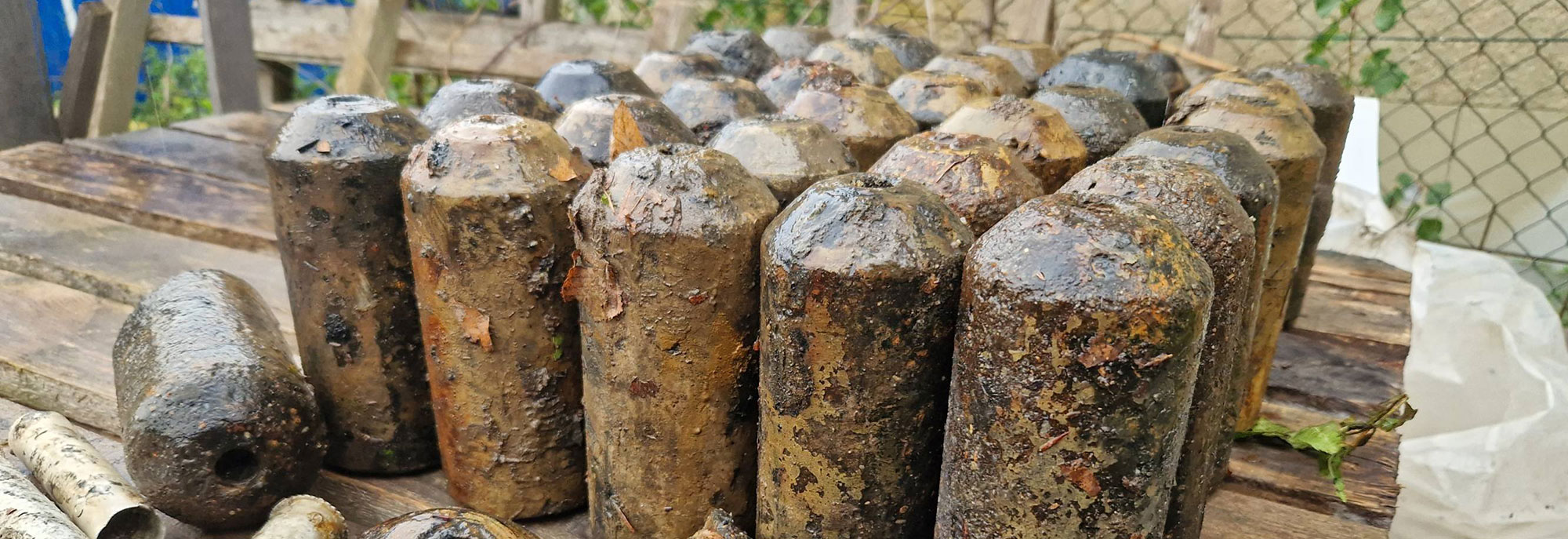
PORTSMOUTH, ENGLAND—According to a statement released by Diamond Light Source, Eleanor Schofield of the Mary Rose Trust and Donna Arnold of the University of Kent employed high-tech tools at Diamond Light Source to analyze bricks recovered from the wreckage of Mary Rose, King Henry VIII’s wooden warship that sank during a battle in the Solent in 1545 and was recovered in 1982. The more than 3,000 bricks made up two brick ovens in the ship’s galley. The bricks were washed in clear water and dried when they were recovered, but salt crystals eventually appeared on their surfaces, Schofield said. Because the crystals may have been damaging the bricks, which are mostly made of silicon oxide, the researchers analyzed their composition with scanning electron microscopy, electron-dispersive X-ray spectroscopy, and synchrotron-based X-ray diffraction. The tests identified the crystals as iron and calcium salts. As they dissolve, the salts create an acidic environment that could degrade the structure of the bricks, the researchers explained. The study also found no sign of sodium or chlorine from sea salt, indicating that the early work to clean the bricks prevented some damage to them. Schofield, Arnold, and their colleagues will now work to develop strategies to counteract the damage caused by the salts. Read the original scholarly article in the Journal of Cultural Heritage. To read about recent isotope analysis of the remains of some of Mary Rose's sailors, go to "Tudor Travelers."

Australia's Colonial Living Conditions Reflected in Migrants' Bones

ADELAIDE, AUSTRALIA—News-Medical.net reports that an international team of researchers led by Maciej Henneberg of the University of Adelaide and Donald Pate of Flinders University analyzed remains of British migrants unearthed at the site of an Anglican parish cemetery located near Australia’s southern coastline. The cemetery was in use from 1847 to 1927. The researchers found evidence of deficiencies in iron and vitamins C and D in the remains. The level of vitamin D in the sample was higher than the level of vitamin D found in two nineteenth-century cemeteries in Britain. The scientists attribute the difference to the levels of sunlight experienced by the migrants in South Australia. However, lower levels of vitamin C were found in the migrants than in the Britons buried in England. This deficiency reflects the living conditions experienced by the new arrivals, Henneberg explained. By the 1870s, fewer people were buried in the free area of the cemetery, reflecting economic improvements in the colony, the researchers concluded. Read the original scholarly article about this research in PLOS ONE. To read about a cache of silver shillings buried in the 1850s at the Port Arthur penal colony, go to "Around the World: Tasmania."

Early Bronze Age Ax Heads Discovered in England

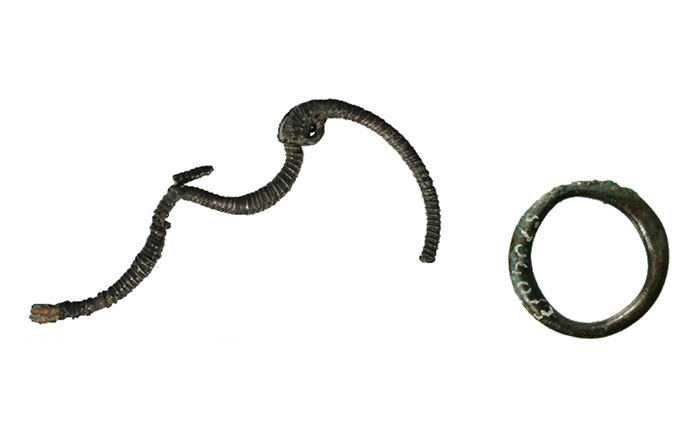
WILTSHIRE, ENGLAND—BBC News reports that metal detectorists discovered two ax heads on farmland in southwest England. The ax heads, thought to have been used for cutting down trees, are estimated to be 4,000 years old, and represent some of the earliest metalworking in Britain, according to Kurt Adams, Finds Liaison Officer for Gloucestershire and Avon. “They are incredibly important artifacts for this country,” he said. The ax heads are being stored in the Bristol Museum. To read about the largest Bronze Age hoard discovered in London, which includes axes, go to "Tool Time."

Thursday, April 7

How Do Viewers React to Reconstruction of Pompeii Home?

LUND, SWEDEN—According to a statement released by Lund University, researcher Giacomo Landeschi and his colleagues created a 3-D virtual replica of Pompeii’s House of Greek Epigrams for a museum display, and then used eye-tracking technology to record what features of the house drew the attention of the viewers. The elaborate structure, destroyed by the eruption of Mount Vesuvius in A.D. 79, is known for its detailed wall paintings and Greek inscriptions. Landeschi explained that Roman houses were designed to communicate the status and power of the owner to visitors. By tracking the gaze of modern viewers looking at the replica, the researchers hope to glimpse how people experienced the space in antiquity, added team member Danilo Marco Campanaro. Read the original scholarly article about this research in Antiquity. To read about recent excavations throughout the ancient city, go to "Digging Deeper into Pompeii's Past."

Radiation Detector Tested at England’s Roman Silchester

HAMPSHIRE, ENGLAND—According to a statement released by the University of Reading, a gamma-ray spectrometer, a device normally used to identify radioactive contamination at nuclear sites, was tested for its potential use as an archaeological tool at the site of Roman Silchester, which is located in southern England. The study suggests that gamma-ray spectrometers can detect radiation emitted by the decay of elements in buried buildings or artifacts, and could help researchers identify the composition of buried objects before they are excavated. During the test, the gamma-ray spectrometer confirmed the presence of a buried boundary wall at Silchester’s Roman temple because the materials in the wall emitted lower radioactivity readings than the surrounding area. Thus, the wall is thought to have been constructed with imported materials having a different geochemical composition than the surrounding soil. Team member Victoria Robinson explained that radiation detectors are also portable and highly versatile, giving them an advantage over the heavier equipment usually employed in geophysical surveys. Additional testing of the gamma-ray spectrometer will focus on the identification of buried fired bricks and industrial areas, she added. For more on recent research about Roman Britain, go to "Identifying the Unidentified."

“Mungo Man” and Others to Be Reburied in Australia

SYDNEY, AUSTRALIA—BBC News reports that officials in Australia’s federal government have decided to rebury the 42,000-year-old remains of “Mungo Man” and more than 100 other people unearthed between 1960 and 1980 in eastern Australia’s Willandra World Heritage Area. At the time of the discovery of the so-called Mungo Man remains in 1974, they were the oldest evidence of the human occupation of Australia and of a ceremonial burial in Australia. “Forty-two thousand years ago Aboriginal people were living—and thriving—on the edge of what was then a rich lakeside,” commented Federal Environment Minister Sussan Ley. “In the last four decades their remains have been removed, analyzed, stored, and extensively investigated in the interests of western science.” Some current members of the Aboriginal community commented that they continued to be left out of the decision-making process regarding the remains, which will be reinterred in anonymous locations in Australia’s national parks. To read about newly discovered rock art panels painted by ancient Aboriginal ancestors 10,000 years ago, go to "Letter from Australia: Where the World Was Born."

Wednesday, April 6

New Dating Technology Employed in Tanzania’s Olduvai Gorge

BURGOS, SPAIN—According to a statement released by Spain’s National Research Center on Human Evolution (CENIEH), a new dating technology, known as the cosmogenic nuclide isochron method, has been used for the first time on stone tools uncovered at a site in Tanzania’s Olduvai Gorge by a team of researchers led by Toshi Fujioka and Alfonso Benito-Calvo. The technique can be used to date the tools themselves, rather than the sediments surrounding them. Fujioka explained that this has been an important strategy at this site, called Complex T69, because it has few of the volcanic ash layers that have been employed to date other sites in Olduvai Gorge. The technique, he added, could help researchers establish a chronology for the disappearance of Oldowan tools, which are usually associated with Homo habilis, and the emergence of Acheulean tools, which are typically associated with Homo erectus. Read the original scholarly article about this research in the Journal of Human Evolution. To read about the earliest known bone point found in Olduvai Gorge, go to "The Bone Collector."

Advertisement