Subscribe to Archaeology
Archaeological Headlines By JESSICA E. SARACENI
Thursday, February 9

Face of Nabataean Woman Reconstructed

ABU DHABI, UNITED ARAB EMIRATES—CNN reports that the face of a Nabataean woman who lived some 2,000 years ago has been reconstructed from bone fragments recovered from a tomb at the site of the ancient trade center of Hegra, which is located in northwestern Saudi Arabia. Inscriptions on the tomb identified its occupant as a woman named Hinat, according to archaeologist Laila Nehme. Information gleaned from the bones, combined with anthropological data, were employed to produce the sculpture with a 3-D printer. The sculpture of Hinat is currently on display at the Hegra Welcome Center. For more on the Nabataeans, go to "Letter from Jordan: Beyond Petra."

Unique Golden Glass Image Unearthed in Rome

ROME, ITALY—ANSA.it reports that an ancient image of Roma, the personification of the city of Rome as a woman wearing a helmet and carrying a spear, was found on a rare piece of golden glass during work on a subway line. “From an initial study, it looks like the artifact is from the start of the fourth century,” said archaeologist Simona Morretta. The piece was originally at the bottom of a cup, she explained, and was the sort of object given as a gift. The cup may have broken, but the image was saved and perhaps exhibited on furniture or hung on a wall, she added. The artifact will be showcased in the Porta Metronia station museum. To read about the Arch of Constantine, one of the monuments along ancient Rome's Triumphal Way that also included the Temple of Venus and Roma, go to "A Monumental Imperial Biography."

Wednesday, February 8

Southeast Asia Study Tracks Prehistoric Genomes and Geography

SINGAPORE—According to a statement released by Nanyang Technological University, a new study of paleogeography and population genetics suggests that rapid sea level rise drove prehistoric migration in Southeast Asia. Kim Hie Lim and Li Tanghua of Nanyang Technological University and their colleagues compiled paleogeographic maps of the prehistoric landmass known as Sundaland from 26,000 years ago to the present. They also sequenced the genomes of people from 59 ethnic groups living in the region over the past 50,000 years. The study found that during periods of rapid sea level rise, the populations of Sundaland were separated into smaller groups as the large landmass flooded and split into smaller areas, including what are now the Malay Peninsula, Sumatra, Borneo, and Java. The warmer temperatures, however, also supported population growth, and population density increased. Eventual overpopulation then drove migration northward, towards mainland Southeast Asia and South Asia, where populations were once again able to mix. The scientists plan to extend their research to migration in other parts of Southeast Asia and from North Asia to the Americas. Read the original scholarly article about this research in Communications Biology. To read about the possible migration of modern humans from Southeast Asia to Australia, go to "World Roundup: Indonesia."

13,900-Year-Old Bone Projectile Point From Washington Identified

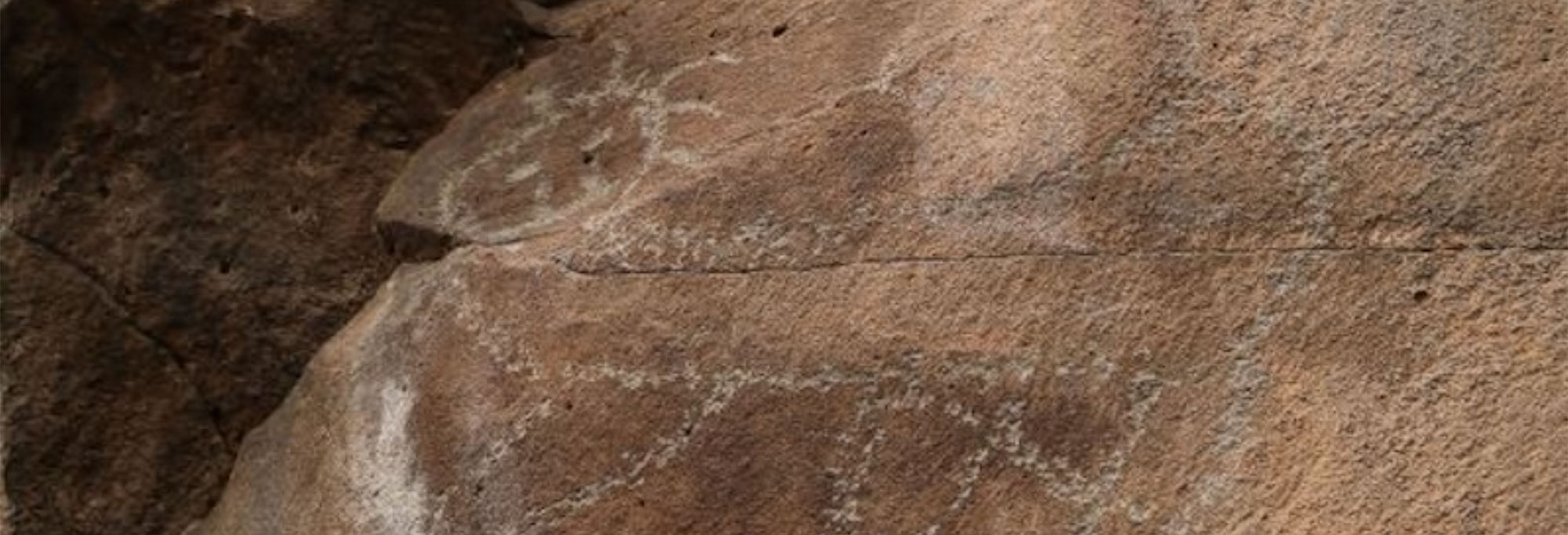
COLLEGE STATION, TEXAS—According to a statement released by Texas A&M University, a bone projectile point has been identified in a mastodon rib dated to 13,900 years ago by Michael Waters of Texas A&M University and his colleagues. The mastodon rib was unearthed at the Manis Mastodon Site on Washington’s Olympic Peninsula in the 1970s. Waters and his team members isolated all of the bone fragments, examined them with computed tomography scans and 3-D software, and printed them out at six times scale. “Then we fit the pieces back together to show what the specimen looked like before it entered and splintered in the rib,” Waters said. When the hunter threw a spear equipped with the bone point, which had been made from the leg bone of another mastodon, it lodged in the rib and failed to reach the animal’s lung. “This shows that the First Americans made and used bone weapons and likely other types of bone tools,” Waters concluded. Read the original scholarly article about this research in Science Advances. For more, go to "America, in the Beginning: Manis Mastodon Kill Site."

Roman Mithraeum Discovered in Southern Spain

CABRA, SPAIN—ArtNews reports that a sanctuary dedicated to the god Mithras has been uncovered at the Villa del Mitra in southern Spain's Roman city of Licabrum by researchers from the University of Málaga, the Carlos III University of Madrid, and the University of Córdoba. The villa, which has been dated to the first century A.D., was discovered in the 1970s and named for a second-century A.D. sculpture of Mithras sacrificing a bull discovered there about 20 years earlier. The villa featured a courtyard with a pond, rooms with mosaic floors, and a subfloor heating system. The Mithraeum was constructed at the villa in the second century A.D. and remodeled at the end of the third century. Several steps descend from its narrow entrance to a rectangular room measuring about 24 long by eight feet wide. Two stone benches flank the walls. Members of the cult would have sat on the benches during feasts and rituals. Fragments of pig, bird, and rabbit bones have been found on the floor. To read about a Mithraeum excavated at the Roman site of Mariana, go to "World Roundup: Corsica."

Neanderthals Enjoyed Seaside Crab Roasts in Portugal

TARRAGONA, SPAIN—According to a statement released by Frontiers, evidence that Neanderthals cooked and ate brown crabs some 90,000 years ago has been uncovered in Portugal’s Gruta de Figueira Brava by a team of researchers led by Mariana Nabais of the Catalan Institute of Human Paleoecology and Social Evolution (IPHES-CERCA). No signs of consumption of the crabs by rodents or birds were found, and about eight percent of the shells have burn marks, Nabais explained. Neanderthals are thought to have caught the crabs in low-tide pools on the nearby rocky coastline, and then carried them back to the cave, where they roasted them on coals. The remains of other shellfish were unearthed in the cave, Nabais added, but most of the debris came from brown crabs measuring about six inches across. A crab of this size would have yielded about seven ounces of meat, she concluded. Read the original scholarly article about this research in Frontiers in Environmental Archaeology. To read about recent DNA sequencing of the first known family of Neanderthals, go to "Around the World: Russia."

Tuesday, February 7

Turkey’s Gaziantep Castle Damaged by Earthquakes

GAZIANTEP, TURKEY—CNN reports that Gaziantep Castle, which is located on a hilltop in the center of southern Turkey’s city of Gaziantep, was heavily damaged by the powerful earthquakes that have struck southern Turkey and Syria. Large cracks have been seen in some of the bastions, the retaining wall next to the castle has collapsed, and rubble has tumbled down into city streets. The current structure at the site began as a watchtower built in the second and third centuries A.D. by the Romans. Byzantine Emperor Justinian I, who reigned from A.D. 527 to 565, expanded the fortifications. Additional changes were made during the reign of the Ayyubids in the twelfth and thirteenth centuries, and during the Ottoman Empire. To read about excavations of an ancient city near Gaziantep, go to "Zeugma After the Flood."

2,500-Year-Old Bronze Items and Bones Recovered in Poland

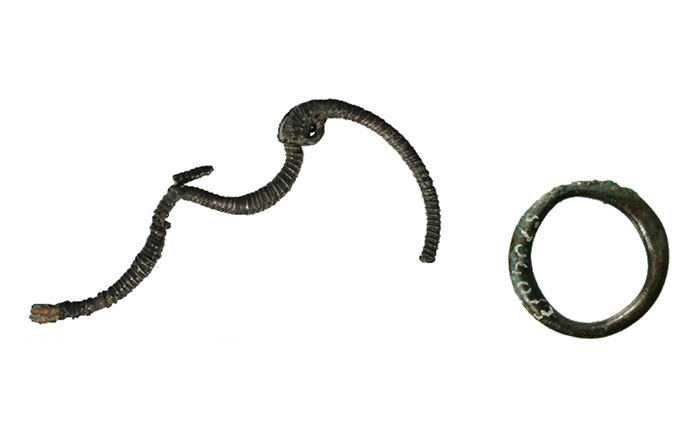
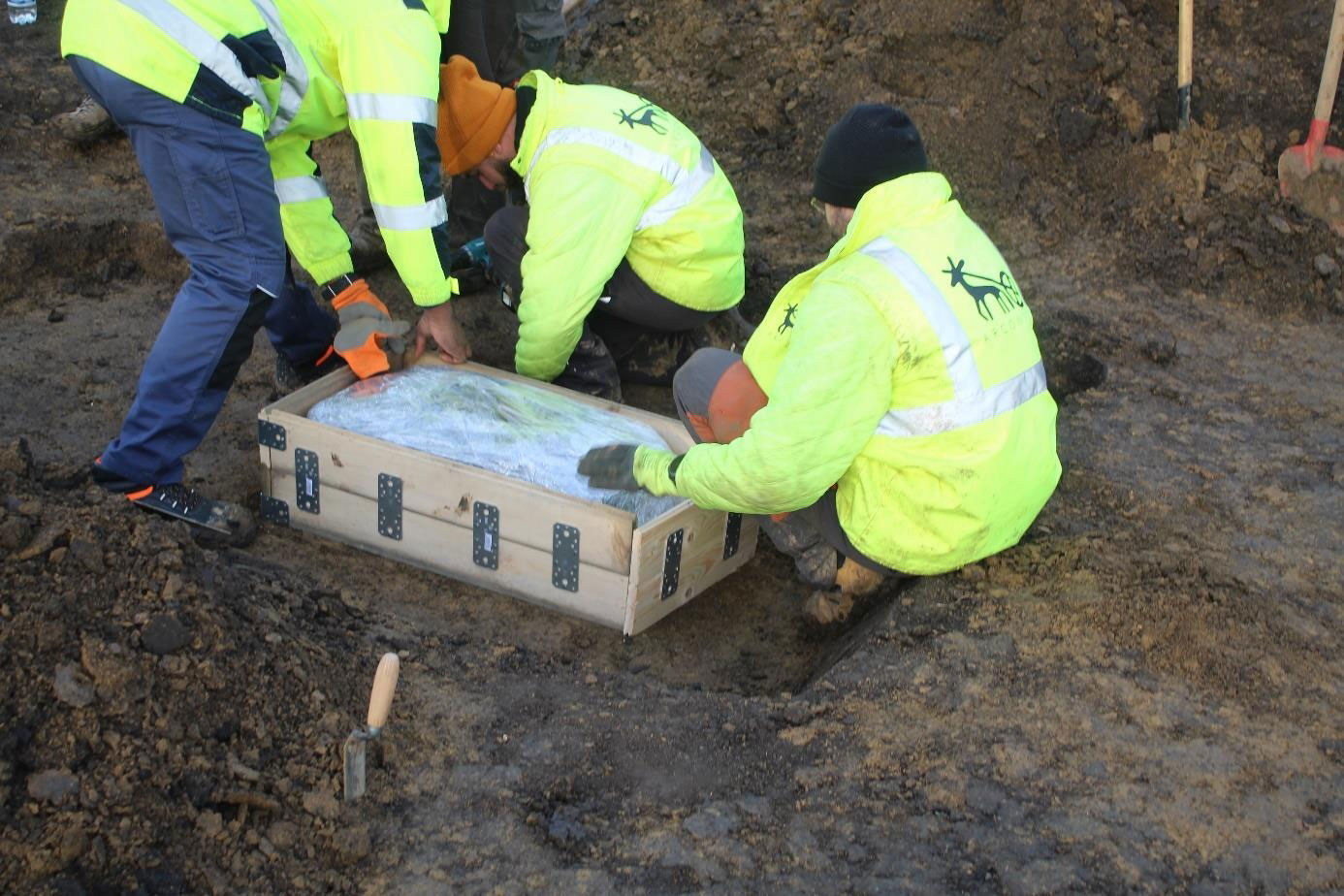
TORUŃ, POLAND—Science in Poland reports that a group of metal detectorists from the Kujawy-Pomerania History Seekers Group discovered a 2,500-year-old collection of bronze necklaces, bracelets, greaves, and pins in a plowed field that was once a lake in northern Poland and alerted the authorities. Researchers led by Wojciech Sosnowski of the Office of Conservator of Monuments of Toruń returned to the site, where they found three deposits that had not been disturbed by plowing, and pieces of fabric, rope, tools made of antler, bronze sheet fittings, and bronze horse harness fittings. Jacek Gackowski of Nicolaus Copernicus University examined the artifacts, and said that most of them can be associated with the local Lusatian culture, but some of them may have been made by the Scythians. “It was a time of growing unrest related to the penetration of groups of nomads coming from the Pontic Steppe, probably Scythians or the Neuri, into Central and Eastern Europe,” he said. Human bones found among the artifacts suggest that sacrifices may have been periodically made at the site. “They tried to secure their existence and give ritual resistance to the imminent, as it turned out, inevitable changes,” Gackowski concluded. To read about a cemetery of the Lusatian culture, go to "World Roundup: Poland."

Ancient Egyptian Embalming Residues Analyzed

MUNICH, GERMANY—Philipp Stockhammer and Maxime Rageot of Ludwig Maximilian University of Munich and their colleagues analyzed residues found in vessels at an ancient Egyptian embalming workshop and two nearby tombs in Saqqara, and determined that mummification specialists used specific mixtures to prepare different parts of the body, according to a Science News report. The vessels they analyzed were originally discovered in 2016 by the Saqqara Saite Tombs Project, led by the late archaeologist Ramadan B. Hussein. Written labels on the vessels, which have been dated to the 26th Dynasty (688–525 B.C.) and were deciphered by Susanne Beck of the University of Tübingen, named their contents, and in some cases, where to apply the substance. The study showed that different formulas were used to preserve the head, wash the body, treat the liver and stomach, and prepare bandages. Most of the ingredients, including oils or tars of cedar and juniper or cypress trees, pistachio resin, castor oil, animal fats, heated beeswax, and bitumen, had been identified in earlier studies of chemical residues taken from Egyptian mummies and vessels in other tombs. But the study also identified elemi and dammar resins, which were likely imported from Southeast Asia across vast trade networks. These substances have not been previously linked to the process of mummification. Stockhammer said that the specific properties of these resins that might have contributed to the preservation of bodies have not yet been investigated. Read the original scholarly article about this research in Nature. For more on the embalming process practiced at Saqqara, go to "Mummification Workshop," one of ARCHAEOLOGY's Top 10 Discoveries of the Decade.

Advertisement