Researchers Examine Discarded Roman Tiles
NORTHAMPTONSHIRE, ENGLAND—BBC News reports that workers at a third-century tile factory in England’s East Midlands may have included a literate man and a woman who wore well-made shoes. Nick Gilmour of Oxford Archaeology and his colleagues are recording more than 1,000 pounds of discarded tiles at the site, where building materials for Roman villas were produced. So far, they have found a tile bearing an imprint of nails from a narrow woman’s sandal and one with “Potentius fecit,” or “Potentius made me,” written in the wet clay with a finger. “The irony is the reason that we have got it is because it failed, it wasn’t even vaguely flat and wasn’t used on a villa or it wouldn’t have been in the tile rubbish tip,” Gilmour said. “So he might have been literate, but he was maybe not so good a tiler.” Tilers usually signed their work with a pattern or symbol rather than a signature to ensure payment, Gilmour explained. The team members will also record animal footprints and imprints of leaves found in the discarded tiles to collect information about the environment and seasonal work. To read about animal prints imprinted in Roman tiles that were recovered in Leicester, England, go to "They're Just Like Us."
Vikings May Have Traveled With Horses and Dogs
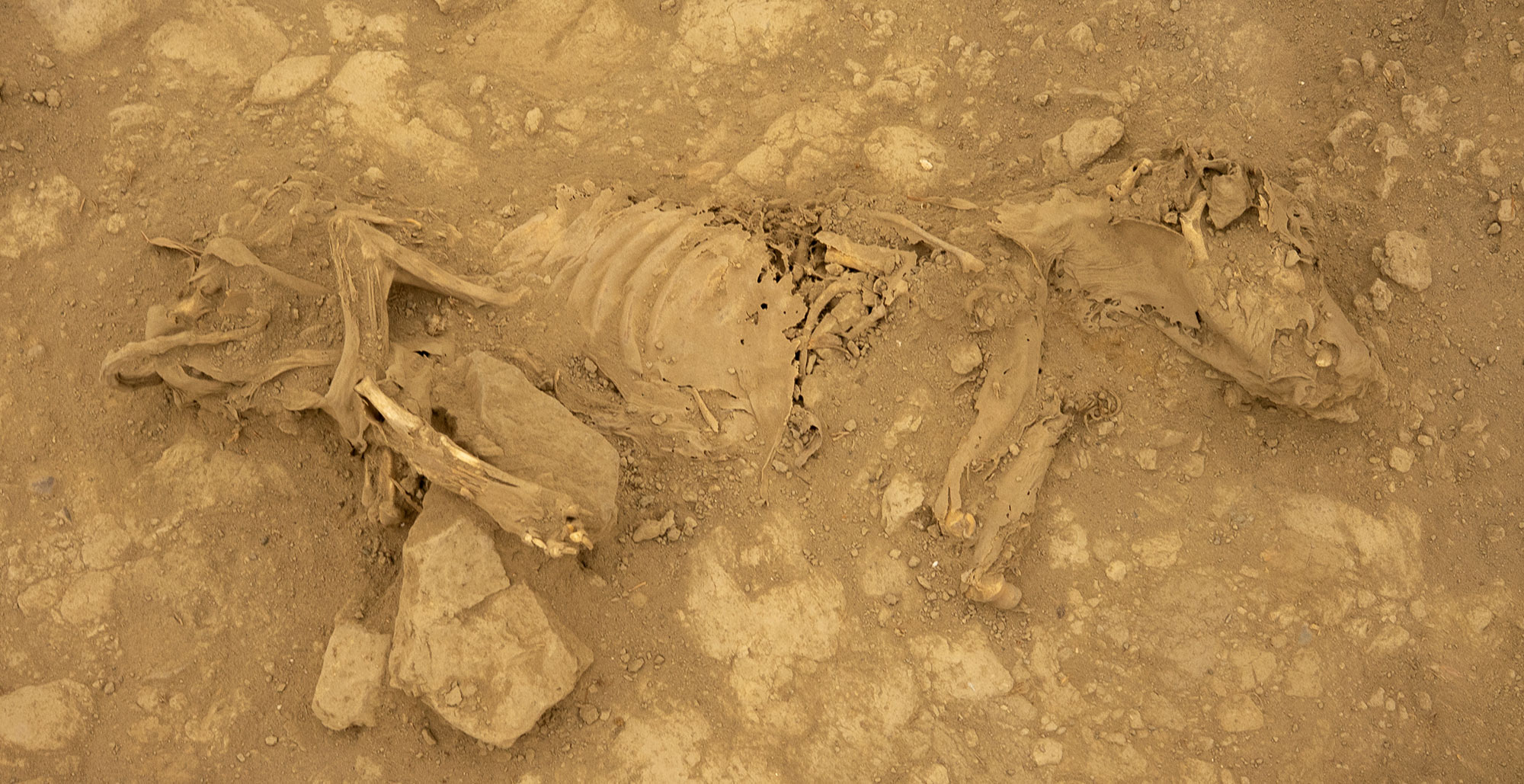
DERBYSHIRE, ENGLAND—An analysis of ninth-century animal bones found in burial mounds at the site of Heath Wood in England’s East Midlands suggests that Vikings carried horses, dogs, and perhaps pigs with them across the North Sea to Britain, according to a BBC News report. Tessi Lōffelmann of Durham University and Vrije Universiteit Brussels said that analysis of the levels of strontium isotopes in the bones showed that the animals had been raised in Scandinavia, while the discovery of cremated animal and human remains mixed together could indicate that Vikings treated their animals as companions. “I find it really touching and it suggests we underestimate just how important animals were to Vikings,” Lōffelmann said. Read the original scholarly article about this research in PLOS ONE. To read about the Vikings' arrival in northern England, go to "The Viking Great Army."
Evidence of Egypt’s Great Revolt Uncovered
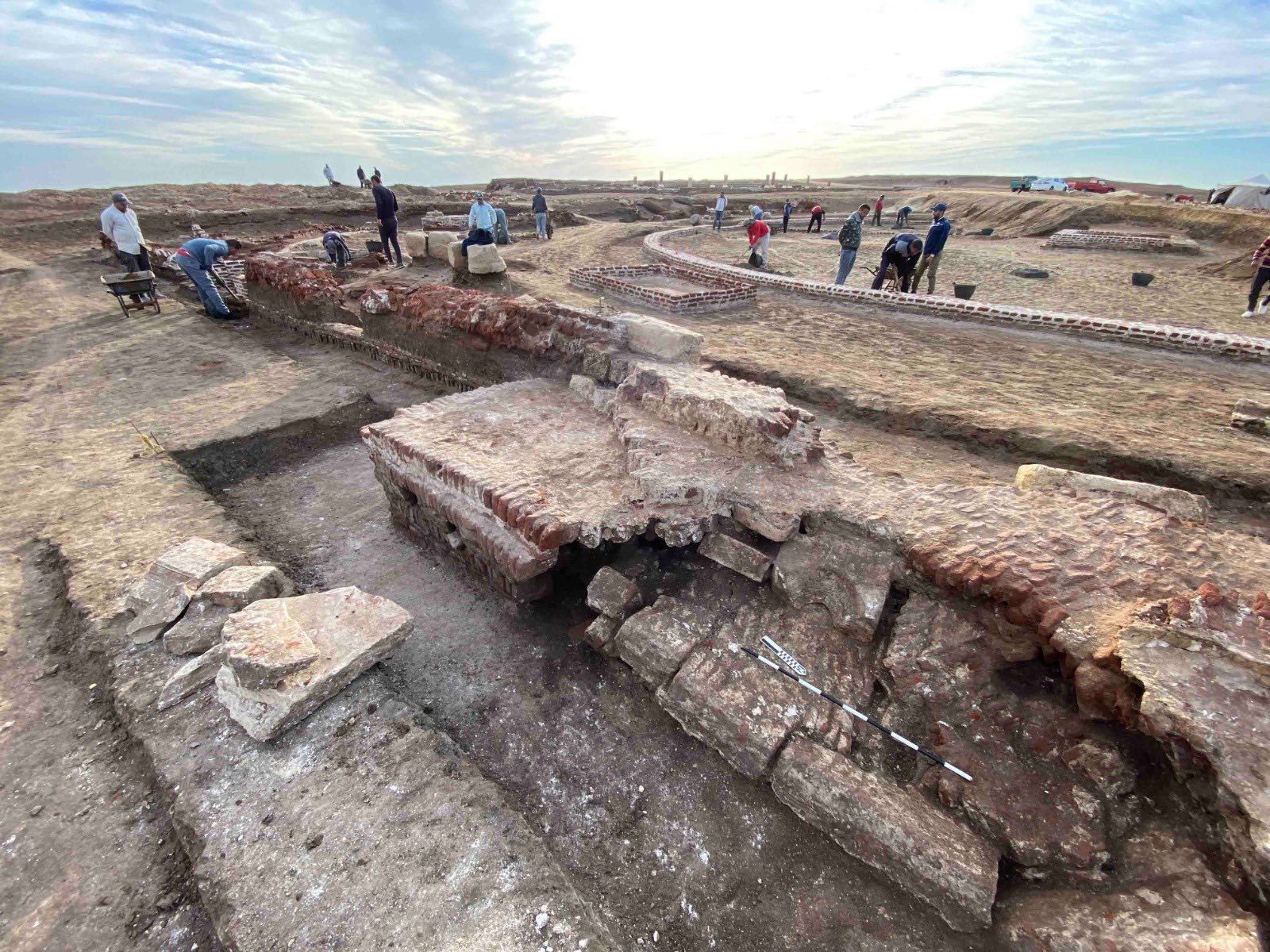
CAIRO, EGYPT—The Art Newspaper reports that an excavation at Tell Timai in northern Egypt has uncovered evidence of a rebellion mentioned in ancient decrees and texts, including the Rosetta Stone. Known as the Great Revolt, the Egyptian rebellion against Ptolemaic rule took place between 207 and 184 B.C. Jay Silverstein of Nottingham Trent University said that traces of burned buildings, weapons, stones thrown by siege engine, hidden coins, and a broken statue have been found at the site of the ancient city of Thmuis. Unburied bodies were also unearthed: the remains of a young man were found with his legs sticking out of a large kiln, while the body of a man in his 50s is thought to have been left sitting upright after a fight to the death. “We have opened a new door into our understanding of Hellenistic colonialism, indigenous resistance, and the mechanisms of control including the brutality of the Macedonian dynasty’s rule of Egypt,” Silverstein said. For more on archaeological evidence of the Great Revolt, go to "In the Time of the Rosetta Stone."
Elephant Bones Suggest Neanderthals Gathered in Large Groups
NEUWIED, GERMANY—Neanderthals may have formed much larger social groups than previously thought, according to a Science Magazine report. Archaeozoologists Lutz Kindler and Sabine Gaudzinski-Windheuser of the MONREPOS Archaeological Research Center and their colleagues examined more than 3,000 bones from the 125,000-year-old remains of an estimated 70 Palaeoloxodon antiquus individuals recovered in east-central Germany at a site situated along an ancient lakeshore. This extinct species of elephant stood nearly 13 feet tall at the shoulder, and would have required an organized hunt to fell, the researchers explained. The analysis showed that most of the bones came from adult male elephants, and that as much as four tons of meat was carefully removed from each animal—enough to feed 350 people for a week, or 100 people for a month. Dating of the elephant bones indicates that the hunting and butchering was repeatedly carried out over a period of about 300 years. “This is really hard and time-consuming work,” Kindler said. “Why would you slaughter the whole elephant if you’re going to waste half the portions?” Read the original scholarly article about this research in Science Advances. To read about butchered remains of Palaeoloxodon antiquus found in the classical world, go to "World Roundup: Greece."
Excavation of Anglo-Saxon Monastery Offers Clues to Viking Raids
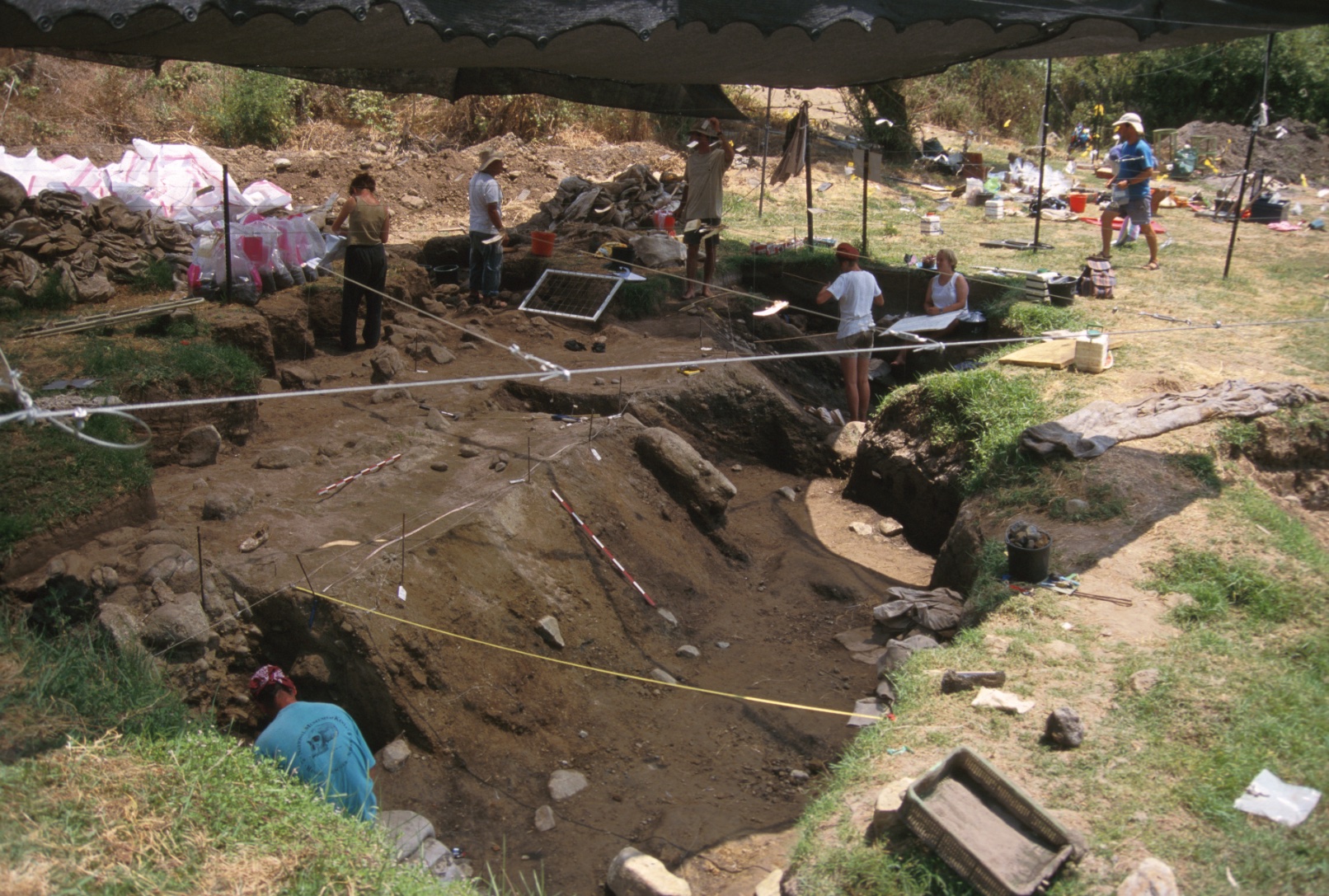
KENT, ENGLAND—According to a statement released by the University of Reading, the monastery in the southeast England’s village of Lyminge recovered from Viking attacks in the late eighth and early ninth centuries better than previously thought. Excavation of the monastery site by Gabor Thomas of the University of Reading has revealed a stone chapel surrounded by wooden buildings. Radiocarbon dating of butchered animal bones indicates that the site was established in the second half of the seventh century and occupied for nearly 200 years. Historical records show that the monks were granted asylum in Canterbury, the walled capital of Anglo-Saxon Kent, after a Viking raid in A.D. 804. Thomas said that there is evidence, including silver coins, that the monks returned to the monastery at Lyminge for several decades before it was abandoned at the end of the ninth century, while Alfred the Great fought invading Viking armies. “Settled life was only eventually restored in Lyminge during the tenth century, but under the authority of the Archbishops of Canterbury who had acquired the land formerly belonging to the monastery,” Thomas concluded. Read the original scholarly article about this research in Archaeologia. To read about an Anglo-Saxon feasting hall unearthed in Lyminge, go to "The Kings of Kent."
Anomalies Detected in Walls Surrounding Ancient Capital in China
XI’AN, CHINA—Science News reports that high-resolution muon scans of the 650-year-old ramparts surrounding Xi’an’s historic center have revealed fluctuations in the density of one section of the wall. Located in central China, Xi’an was the capital of the Zhou, Qin, Han, and Tang Dynasties, and the eastern end of the Silk Road. Some sections of these fortress walls are up to 40 feet tall and 60 feet thick. Muons are produced when cosmic rays contact Earth’s atmosphere. As they fall to the ground, muons are scattered or absorbed depending on what sort of material they encounter, and can be tracked with sensors. Nuclear physicist Zhiyi Liu of Lanzhou University said the anomalies detected in Xi’an’s wall could be construction flaws or perhaps hidden structures. Conservationists will now determine how to investigate the potential anomalies, he concluded. To read about 2,000-year-old bronze mirrors unearthed at a cemetery in the Xi'an suburbs, go to "Mirror, Mirror."
Tudor Pendant Recovered in English Field
WARWICKSHIRE, ENGLAND—The Guardian reports that a metal detectorist has discovered a sixteenth-century heart-shaped pendant suspended from an enameled bale on a heavy gold chain in England’s West Midlands. Made of 24-carat gold, its enameled decorations include a bush bearing the Tudor rose and a pomegranate—the symbols of King Henry VIII and his first wife, Catherine of Aragon. Their initials, H and K, appear on the reverse. Rachel King of the British Museum said that the letters TOVS and IORS, which appear on ribbon motifs, are a pun on the French word toujours, which means "always," and “all yours.” Research has not linked the object to Henry VIII or Katherine personally, but King said that the quality of the object suggests it may have been commissioned by a high-ranking noble as a prize at a major tournament around 1520. “We don’t know why it was in Warwickshire and who had it there,” she added. “At least not yet.” To read about a silver-gilt heart pendant dating to a period of strife between the Church of England and Roman Catholics following Henry VIII's dissolution of the monasteries in the late 1530s, go to "Heart of the Matter."
Underground Roman Aqueduct Explored Near Naples
NAPLES, ITALY—Live Science reports that Graziano Ferrari and his colleagues at the Cocceius Association have explored an underground branch of the Aqua Augusta, which is also known as the Serino aqueduct. This particular branch of the 87-mile-long aqueduct was built between 30 and 20 B.C. and carried water to private villas on the hill of Posillipo. “The Augusta channel runs quite near to the surface, so the inner air is good, and strong breezes often run in the passages,” Ferrari said. The team of speleologists and scientists will now be able to determine how the structure was built, calculate how much water flowed through it, and analyze the layers of mineral deposits on its walls for climate data. To read about the discovery of a section of the Aqua Appia, go to "Rome's Oldest Aqueduct," one of ARCHAEOLOGY's Top 10 Discoveries of 2017.
Silver Cross Found in Early Medieval Burial in England
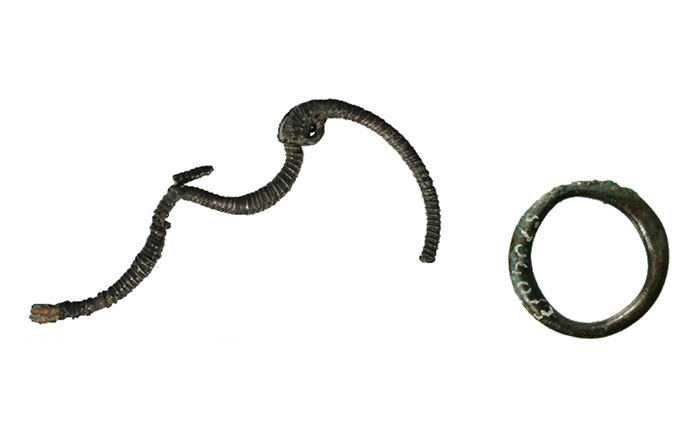
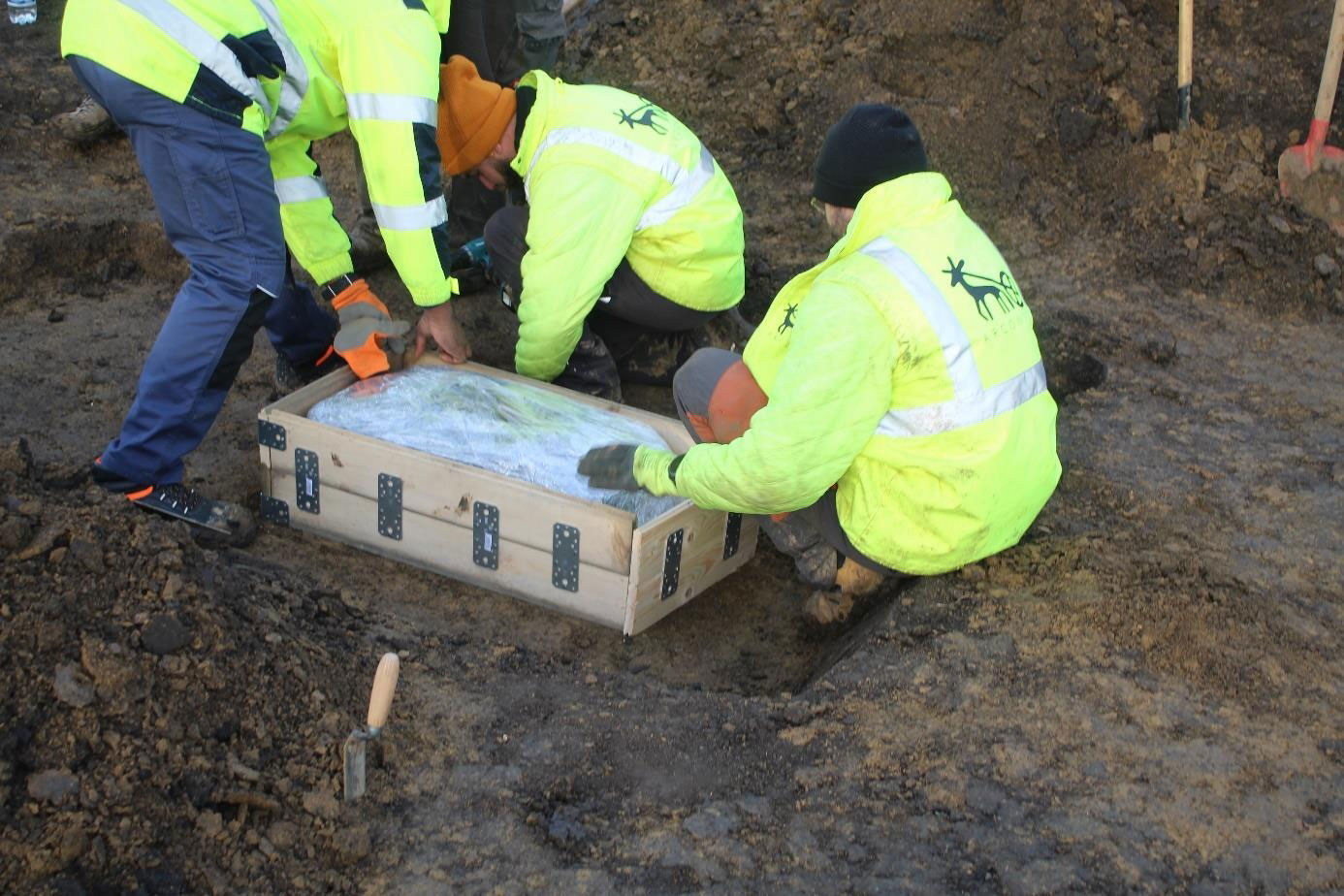
NORTHAMPTON, ENGLAND—BBC News reports that X-rays of a block of soil removed from a burial, which is thought to belong to a devout Anglo-Saxon woman who may have been an early Christian leader, have revealed a silver cross with a large garnet at its center. Last month, researchers from the Museum of London Archaeology announced the discovery of a 1,300-year-old gold necklace in the burial, which is located in England’s East Midlands. The X-rays show that the cross is covered with elaborate decorations, including human faces cast in silver. Two decorated pots and a shallow copper dish have also been recovered from the grave. To read about a cache of Anglo-Saxon heirlooms, go to "Secrets of Scotland's Viking Age Hoard."
Did Neanderthals Keep Hunting Trophies?
MADRID, SPAIN—According to a Phys.org report, a large number of 40,000-year-old animal bones have been found in the third level of Spain’s Cueva Des-Cubierta by Enrique Baquedano of Madrid’s Regional Archaeology and Paleontology Museum and his colleagues. Since its discovery in 1978, the remains of a Neanderthal child and tools made by Neanderthals have been found in the multilevel cave. The newly discovered bones include an assortment of large herbivore skulls that had been carefully removed from the animals’ bodies and modified with tools and sometimes fire, Baquedano said. Most of the skulls belonged to bison or aurochs, which have horns; male deer with antlers; and two rhinoceroses. The researchers noted that the skulls would have provided little food, and may have been saved as hunting trophies, or could have served an unknown purpose. Read the original scholarly article about this research in Nature Human Behavior. To read about 300,000-year-oid spears that were likely used by Neanderthals, go to "Weapons of the Ancient World: Hunting Equipment."
Roman Intaglios Discovered in Bath Drain in England
CARLISLE, ENGLAND—The Guardian reports that some 30 semiprecious stones dated to the late second and early third centuries A.D. have been found in northern England, in a drain at a bathhouse at the site of a Roman fort adjacent to Hadrian’s Wall. Archaeologist Frank Giecco of Wardell Armstrong Archaeology said that one amethyst depicts the goddess Venus holding either a flower or a mirror, while a red-brown jasper shows a satyr seated on rocks next to a sacred column. Other stones bear military symbols such as an image of the god Mars holding a spear, and fertility symbols including a mouse nibbling a branch. The finely carved stones are thought to have been lost from bathers’ rings as the vegetable glue that held them in place loosened in the steamy environment, Giecco explained. “They may not have even noticed until they got home because it’s the actual stone falling out of the rings—although we’ve also found one ring with a setting,” he said. More than 40 women’s hairpins and 35 glass beads were also found in the drain. To read about a popular Greek poem engraved on an ancient gemstone, go to "Poetic License."
New Thoughts on Great Zimbabwe’s Dhaka Pits
AARHUS, DENMARK—According to a statement released by Aarhus University, a new study at Great Zimbabwe, the eleventh-century capital of the Shona kingdom located in what is now southeastern Zimbabwe, indicates that the large depressions in the landscape surrounding the city’s surviving stone structures may have been used to store and manage the city’s water supply. It had been previously thought that the depressions, which are known as dhaka pits, were made when clay was dug to build the city. However, remote sensing surveys and excavations conducted by an international team of researchers led by Innocent Pikirayi of the University of Pretoria suggest that the pits were positioned to collect surface water in areas where water runs when it rains, and collect and store seeping groundwater. The stored water would have allowed the people of Great Zimbabwe to manage their livestock and crops during the two dry seasons of the year, the researchers concluded. Read the original scholarly article about this research in Anthropocene. To read about the Zimbabwe site of Mapela, go to "World Roundup: Zimbabwe."
Advertisement