Mesolithic Human Remains Discovered in Northern England
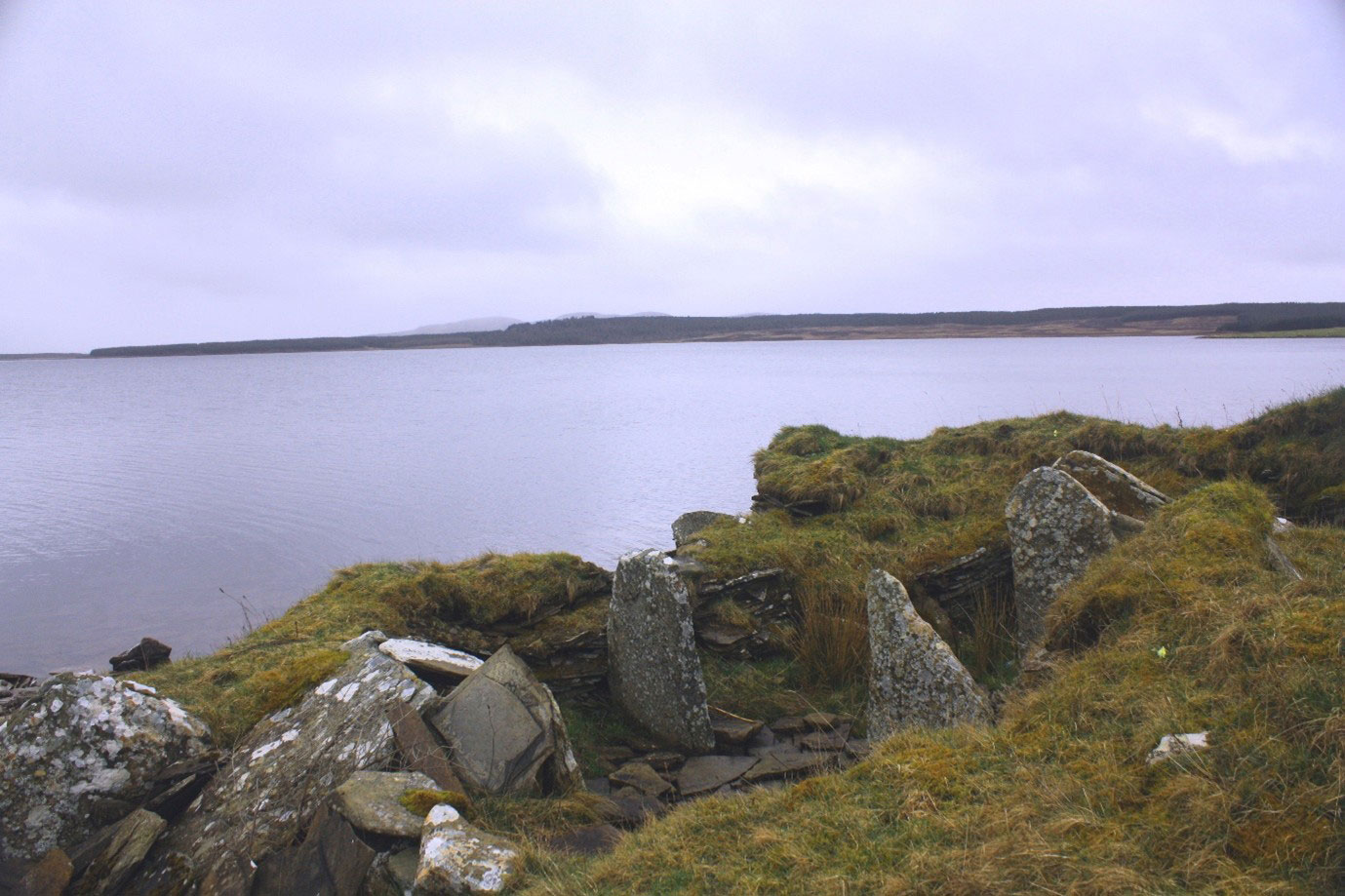
CUMBRIA, ENGLAND—BBC News reports that one set of human remains and a shell bead recovered from northern England’s Heaning Wood Bone Cave have been dated to 11,000 years ago. Rick Peterson of the University of Central Lancashire said that this individual would have been a pioneer reoccupying the region after the end of the Ice Age. The previously oldest-known human remains found in northern England, which were discovered at Kent’s Bank Cavern in 2013, had been dated to 10,000 years ago. Heaning Wood Bone Cave held at least eight burials, Peterson added. “Some of them came back [dated] from the Bronze Age, some of them were Neolithic which is about 6,000 years ago,” he said. To read about an 11,000-year-old engraved shale pendant unearthed in North Yorkshire, go to "Mesolithic Markings."
5,000-Year-Old Tavern Uncovered in Iraq
PHILADELPHIA, PENNSYLVANIA—According to a statement released by the University of Pennsylvania, a public eating space or tavern dated to 2700 B.C. has been uncovered at Lagash, an ancient city site located in southern Iraq. The tavern was equipped with benches; a zeer, or clay pot used to keep food cool; an oven; and storage vessels containing traces of food. Archaeologist Holly Pittman of the University of Pennsylvania said the tavern was partially open-air and partially a kitchen area. And although the city was an important political, economic, and religious center, Pittman explained that it also supported a large population that produced food and crafts. Earlier excavations have revealed a pit of red clay, a pit of sand, kilns, and waste materials from pottery manufacturing; streets; alleyways; and traces of buildings. One building, thought to have been used by the potters, held benches and a table. A nearby domestic kitchen space held clay jar stoppers, bowls containing traces of food, and a grinding stone. A toilet was found in another room in the dwelling, Pittman added. She and her colleagues are also evaluating the ancient city’s access to water, noting that the Tigris-Euphrates river delta would have been much closer to the site than it is today. To read about a 200-year-long border conflict involving Lagash, go to "Warfare."
When Did England’s Civil War Begin?
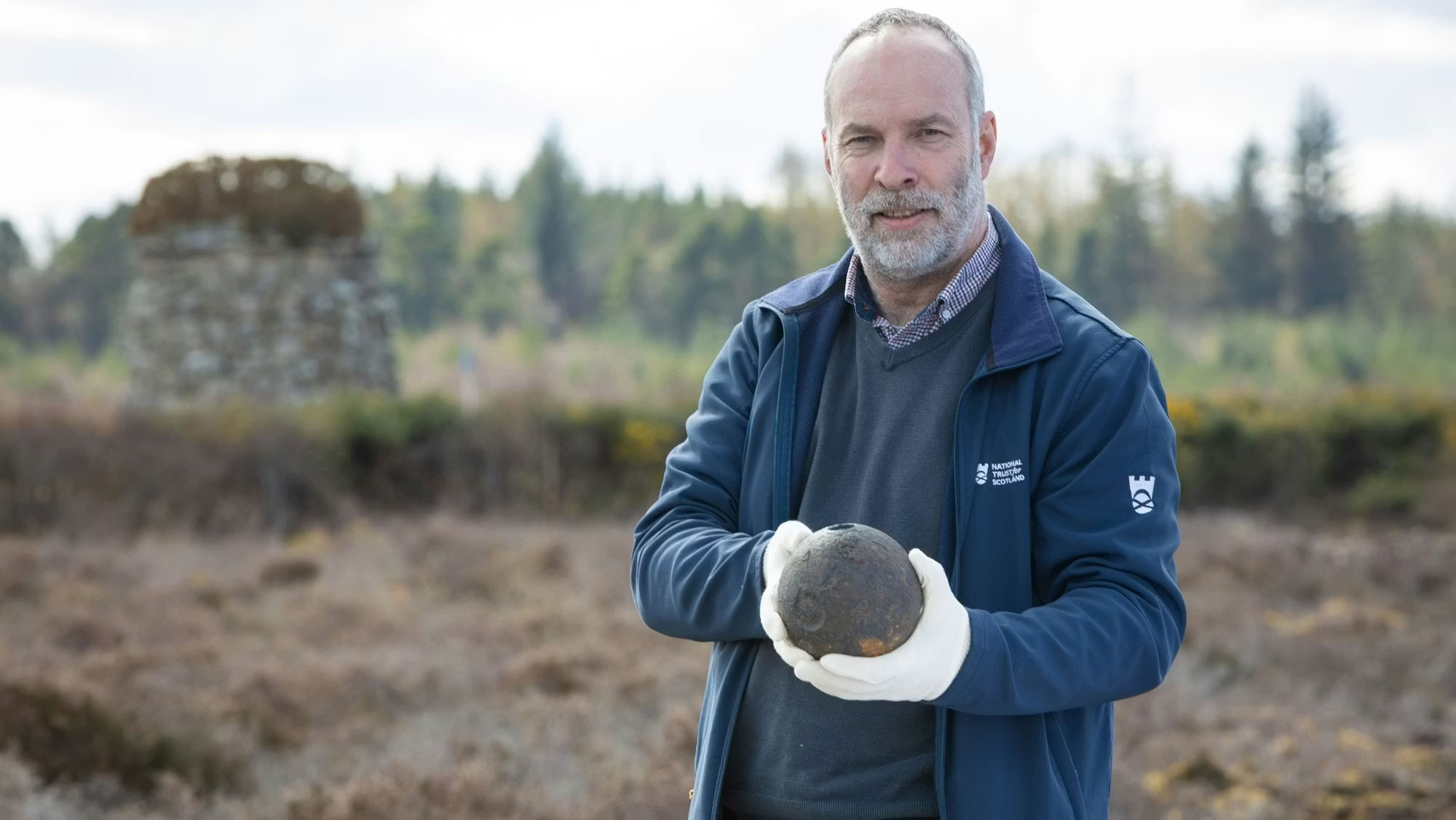
WARWICKSHIRE, ENGLAND—The Guardian reports that the bases of two towers from a late medieval fortified gatehouse have been found at the site of Coleshill Manor, the home of a seventeenth-century royalist situated next to a strategic crossing of the River Cole in England’s West Midlands. Examination of the towers’ stone walls revealed pockmarks made by musket balls and pistol shot. Dozens of musket balls have also been recovered. Stuart Pierson of Wessex Archaeology and his colleagues think the damage may have occurred in August 1642, since Parliamentarian troops could have passed by Coleshill Manor as they headed to the Battle of Curdworth Bridge, long thought to be the first skirmish of England’s Civil War. “There are always stories about royalty and the lead parliamentarians, but there’s not so much focus given to the people themselves, even the upper classes who found themselves involved but weren’t necessarily really part of it,” Pierson said. To read about the aftermath of a civil war skirmish in Scotland in 1650, go to "After the Battle."
CT Scans Reveal Ancient Egyptian Teenager's Intact Mummy
TAHRIR, EGYPT—Ahram Online reports that Sahar Saleem of Cairo University and Sabah Abdel-Razek of the Cairo Egyptian Museum and their colleagues examined the so-called “Mummy of the Golden Boy” with computed tomography scans and advanced radiology techniques. The study found that the 2,300-year-old remains, which were discovered in 1916 in a tomb at Tell Edfu and have been kept in storage at the Cairo Egyptian Museum since then, belonged to a boy approximately 15 years of age at the time of death. He had healthy teeth and bones, and showed no signs of malnutrition. The body had received elaborate care—the brain had been removed, as well as the viscera, although the heart was spotted within the chest cavity. Packing and resin were then inserted in the skull and body cavities. Forty-nine amulets of 21 different varieties, including the Eye of Horus, scarabs, and the Knot of Isis, were placed in three columns in the body cavity and between the folds of the wrappings. Thirty of the amulets were made of gold, while the rest were made of stone or faience. The images also showed that a golden tongue amulet had been placed in the mummy’s mouth. Abdel-Razek said that the intact “Mummy of the Golden Boy” will be put on display at the Egyptian Museum, along with the CT scans and 3-D printed replicas of the amulets. Read the original scholarly article about this research in Frontiers in Medicine. To read about the virtual unwrapping of the mummy of Amenhotep I, go to "Inside a Pharaoh's Coffin," one of ARCHAEOLOGY's Top 10 Discoveries of 2022.
Headless Skeletons Unearthed in Eastern England
CAMBRIDGESHIRE, ENGLAND—Eleven of the 17 skeletons recently found in a Roman burial site in the East of England by researchers led by Patrick Moan of Oxford Archaeology had been decapitated, with their heads positioned by their feet, according to a BBC News report. Pottery had been placed in the graves, and in one of them, a pot was found in place of the head. The burials, which have been dated to the third century A.D., were discovered near traces of an Iron Age settlement made up of 40 roundhouses, trackways, and enclosures related to farming activities. Roman coins, brooches, a large lead lid or platter, pottery and a kiln, and querns and millstones were also unearthed. To read about decapitated bodies buried in a Roman cemetery in Sussex, go to "Foreign Funeral Rites."
CHICAGO, ILLINOIS—According to a statement released by the Field Museum of Chicago, X-rays of a bronze sword held at the institution since the 1930s have revealed the weapon is about 3,000 years old. It had been previously thought that the sword, which was discovered in Hungary in the Danube River, was a replica. Museum curator William Parkinson thinks a clerical error was the source of the mix-up. “Someone just wrote it down wrong,” he said. When the weapon was analyzed by scientists from the Field Museum and Hungarian archaeologists who were preparing a special exhibition, they were surprised to find that its chemical makeup was nearly identical to that of other Bronze Age swords found in Europe. “Usually, this story goes the other way round,” Parkinson concluded. “What we think is an original turns out to be a fake.” To read more about arms in the past, go to "Weapons of the Ancient World."
Thin Tooth Enamel Found in H. antecessor Individual
BURGOS, SPAIN—According to a statement released by the Spain's National Research Center for Human Evolution (CENIEH), a study of the teeth of two Homo antecessor individuals recovered from the Gran Dolina site in northern Spain’s Atapuerca Mountains has found that thin tooth enamel was present in hominins some 900,000 years ago. It had been previously thought that Neanderthals were the only members of the genus Homo to have thin tooth enamel. Research team leader Laura Martín-Francés of the Complutense University of Madrid and CENIEH explained that H. antecessor is related to both Neanderthals and modern humans. While one of the individuals in the study had thin tooth enamel similar to that observed in Neanderthals, the other had thick enamel similar to that found in modern humans and most fossil species. The differences between these two H. antecessor individuals likely reflect variability within the same population, Martín-Francés concluded. To read about evidence of 14,000-year-old dental work, go to "Paleo-Dentistry."
Impact of Shifting Monsoon Season in Southern Iran Studied
LINKÖPING, SWEDEN—According to a statement released by Linköping University, an international team of researchers led by Joyanto Routh of Linköping University analyzed variations in precipitation and vegetation in southeastern Iran over the past 4,000 years, and found a correlation between shifting monsoon patterns and the rise and fall of Persian civilizations. An eight-foot-long sediment core taken at Konar Sandal, an Early Bronze Age urban complex, showed that during wet periods, the people who lived in the Jiroft Valley region grew more of their own food, while during dry periods, they abandoned the settlement and presumably lived a more nomadic life. Radiocarbon dating of the sediment core revealed that intensive agriculture was practiced during a wet period beginning between 3,900 and 3,700 years ago. By 3,300 to 2,900 years ago, however, the climate had become dry and windy. Pollen levels in the sediment core indicate that agriculture had almost stopped during this time, which coincides with the collapse of the settlement at Konar Sandal some 3,200 years ago. Some 600 years later, the Achaemenid and Sasanian Empires emerged, when the climate was much wetter and food could once again be produced on a large scale, Routh explained. Read the original scholarly article about this research in Quaternary Science Reviews. To read about a rhesus macaque buried in a cemetery in southwest Iran some 4,500 years ago, go to "World Roundup: Iran."
Search for the First Mile of the Appian Way Called Off
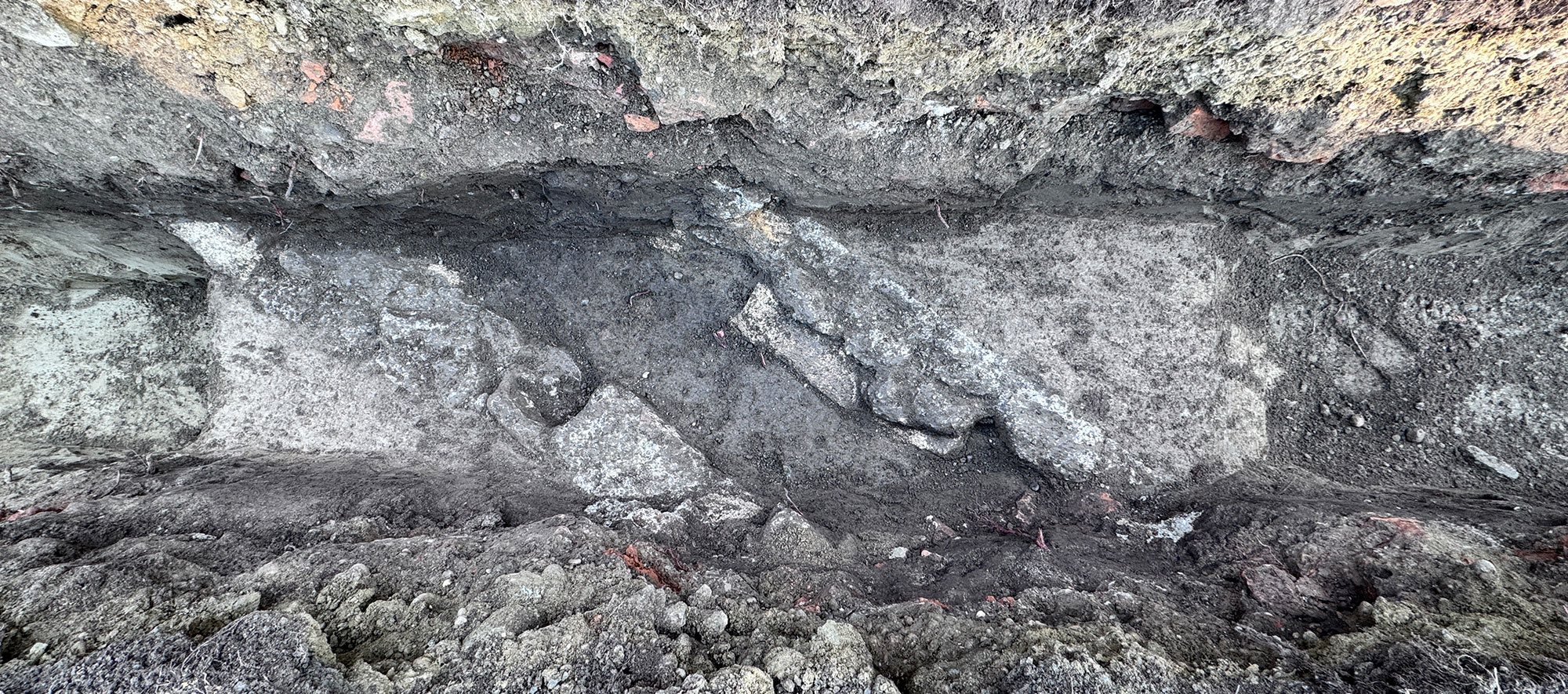
ROME, ITALY—Reuters reports that groundwater with a strong current is interfering with the search for the first mile of the Appian Way, also known as the “regina viarum,” or “queen of roads.” Constructed in the fourth century B.C. by magistrate Appius Claudius Caecus, the road connected Rome to Brindisi, a port city in southeastern Italy. The opening of the road is thought to rest more than 25 feet underground near the Baths of Caracalla. Riccardo Santangeli Valenzani of Roma Tre University said the excavation to date has cleared about 20 feet of dirt, but the pumps in use are not powerful enough to clear the groundwater if they continue to dig. Valenzani added, however, that artifacts dated from the second century A.D. through the late eighteenth century A.D., including a Roman statue and one of the earliest coins to have been minted by a pope, have been recovered. The team members will attempt to extract a core to look for evidence of the road before they backfill the site. For more about the subterranean environment of the baths, go to "The Tunnels Beneath Rome's Baths of Caracalla."
Study Suggests Neolithic Injuries Reflect Violence
EDINBURGH, SCOTLAND—According to a statement released by the University of Edinburgh, about one in 10 of the known skeletons from northwestern Europe’s early farming communities shows signs of injuries inflicted by weapons. These injuries include blows to the head from blunt instruments or stone axes and penetrative injuries perhaps inflicted by arrows. Some of the injured were buried in mass graves, perhaps after the destruction of entire communities. The researchers reached these conclusions after examining more than 2,300 skeletons from some 180 archaeological sites dated between 4,000 and 8,000 years ago in Denmark, France, Germany, Great Britain, Spain, and Sweden. Read the original scholarly article about this research in Proceedings of the National Academy of Sciences of the United States of America. To read about weapons throughout history, go to "Weapons of the Ancient World."
Advertisement