Subscribe to Archaeology
Archaeological Headlines By JESSICA E. SARACENI
Tuesday, January 24

Hacksilver Hoards from the Levant Analyzed

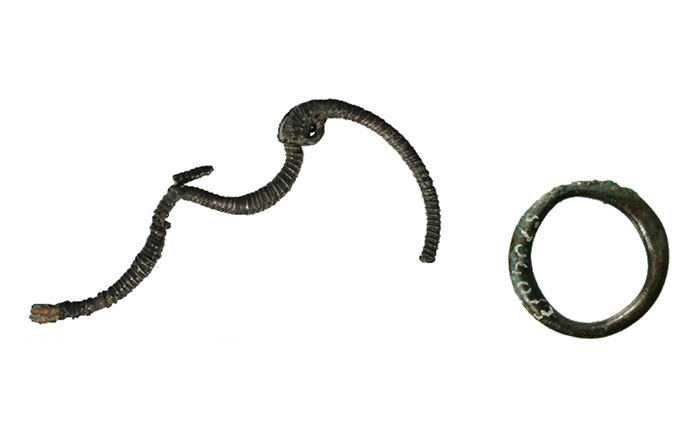
HAIFA, ISRAEL—According to a Live Science report, a new study of hacksilver hoards unearthed in Israel and Gaza suggests that they may have been used as currency some 3,600 years ago. Tzilla Eshel of the University of Haifa and her colleagues analyzed 28 pieces of silver from four Bronze Age hoards uncovered at Gezer in the Judaean Mountains, a tomb at Megiddo in northern Israel, Shiloh in the West Bank, and Tell el-‘Ajjul in Gaza. Silver-working tools were not found with the hoards from Gezer, Shiloh, and Tell el-‘Ajjul. The researchers think that the material was therefore not going to be used to craft silver objects. “We know that the Middle Bronze Age is a period of [making] large ramparts and fortifications,” Eshel added. The irregular pieces of silver may have been used to pay workers in the southern Levant with an agreed-upon amount of silver by weight, she explained. It is known that workers in the northern Levant were paid in this manner. Chemical analysis of the silver indicates that it had been mined in Turkey and southeastern Europe. The metal then was probably carried to the Levant through long-distance trade. Read the original scholarly article about this research in Journal of Archaeological Science. To read about a silver hoard uncovered in southwestern Russia, go to "Russian River Silver."

Roman Road Uncovered in Romania

CLUJ-NAPOCA, ROMANIA—According to a Romania Insider report, fragments of a 2,000-year-old Roman road have been uncovered in the center of the city of Cluj-Napoca by archaeologists from Romania’s National History Museum of Transylvania. Team member Cristian Dima said that the north-south road was made of large base stones topped with river stones, mortar, and large slabs or tiles. It was probably part of a network of roads in the settlement of Napoca, he added. Such roads were used long after the fall of the Roman Empire, and many of the routes are still in use today. Roads in rural areas tended to survive for longer periods since heavily traveled city roads had to be maintained or modified, Dima explained. To read about the discovery of a Roman road in the Venetian lagoon, go to "A Trip to Venice."

Monday, January 23

1,300-Year-Old Fabrics Discovered in Israel's Arava Desert

HAIFA, ISRAEL—The Jerusalem Post reports that cotton and silk fabric that may be evidence of trade with the Far East some 1,300 years ago have been found in Israel’s Arava desert by a team of researchers including Guy Bar-Oz of the University of Haifa and Roy Galili of Ben-Gurion University, Orit Shamir of the Israel Antiquities Authority, Britt Hildebrandt of the University of Gottingen, and Nofar Shamir of the University of Haifa. The scraps of colorful fabrics, which were recovered from a seventh-century A.D. garbage deposit at the Nahal Omer site, are thought to have been made in China, India, and Sudan. “The findings include a large number of imported materials including textiles with typical decorative patterns originating from India and silk items from China that had not yet been discovered in Israel during this period,” Shamir said. “The richness and abundance of the finds indicates the great demand for luxury products from the East.” The trade route could have passed through the Negev and the Arava to connect the region to Mediterranean ports and the main Silk Road, Bar-Oz explained. To read about a once thriving Jewish community known as the Beta Israel, go to "Letter from Ethiopia: Exploring a Forgotten Jewish Island."

Child Buried With Dogs Unearthed in Egypt

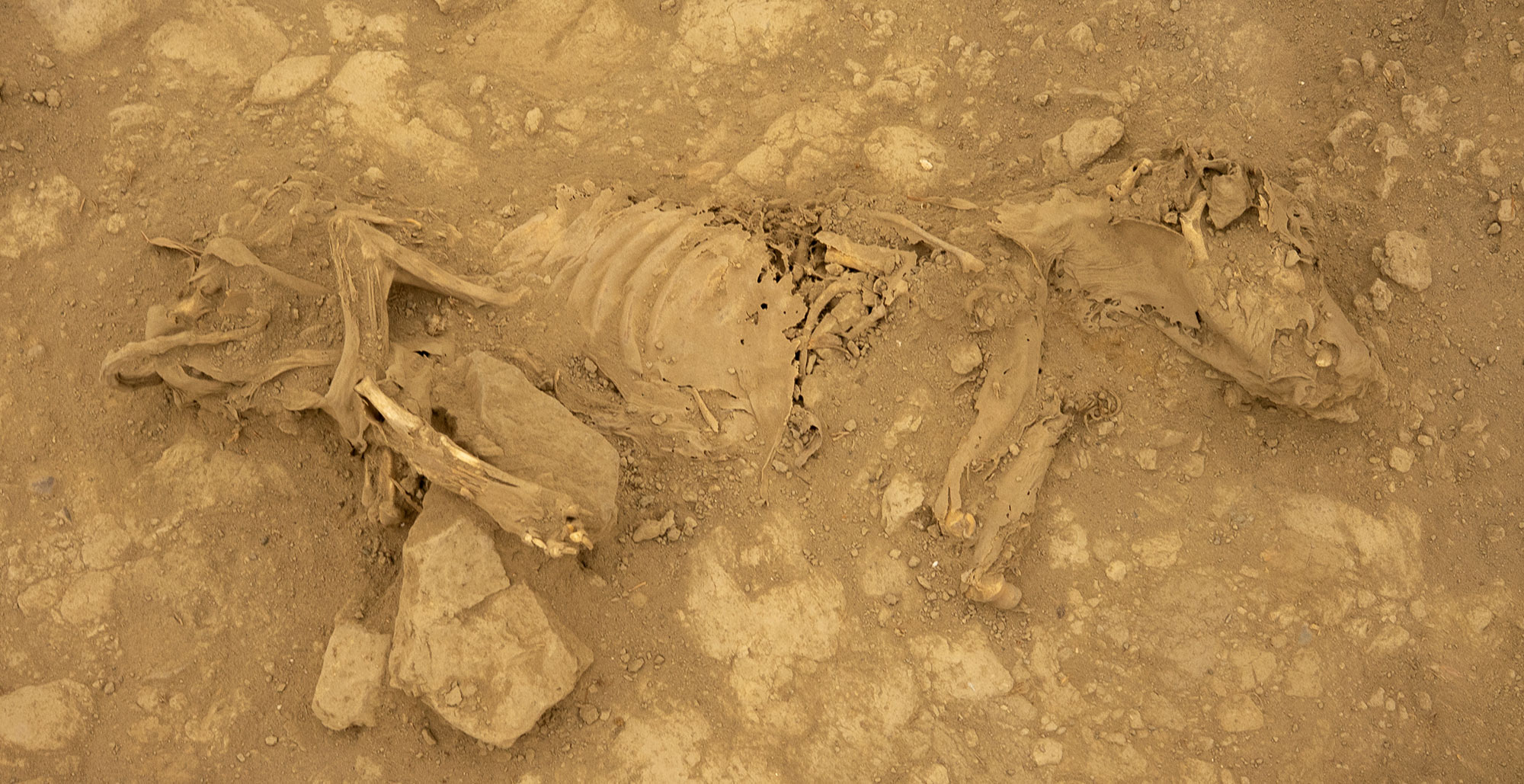
CAIRO, EGYPT—The Jerusalem Post reports that the remains of a child and 142 dogs have been found in a single burial near Cairo dated to sometime between the first century B.C. and the first century A.D. by researchers from the Russian Academy of Sciences. Most of the dogs were puppies. The archaeologists have found no signs of wounds on the dogs, who seem to have all died at the same time. Blue clay on the remains is thought to have come from reservoirs, perhaps because the dogs died in a flood. The child, who is thought to have been the dogs’ caretaker, probably died with them. To read about ancient Egyptian animal mummies, go to "Messengers to the Gods."

Living Quarters and Sugarcane Mills Found on Martinique

TROIS-ILETS, MARTINIQUE—The Miami Herald reports that an excavation conducted at the Estate of Château Gaillard on the Caribbean Island of Martinique has uncovered remnants of eighteenth-century sugarcane mills. Scientists from France’s National Institute of Preventive Archaeological Research (INRAP) said the circular structures each measured about 50 feet in diameter. Wooden rollers wrapped in iron to crush the sugarcane would have been powered by oxen or mules and operated by enslaved people. Traces of simple wooden huts where enslaved people lived on the property were also found. These living quarters were shown in rows on a 1770 map of the estate. Animal mills were replaced by steam engines in the early nineteenth century, and slavery was abolished on the island in 1848. The study suggests that the huts became seasonal housing for workers during the sugarcane harvest that were in use into the early twentieth century. To read about how sugarcane and enslaved Africans' expertise in distilling alcohol led to profitable rum production in seventeenth-century Barbados, go to "Alcohol Through the Ages: Triangle Trade."

Friday, January 20

Column Cleaning at Egypt’s Great Hypostyle Hall Completed

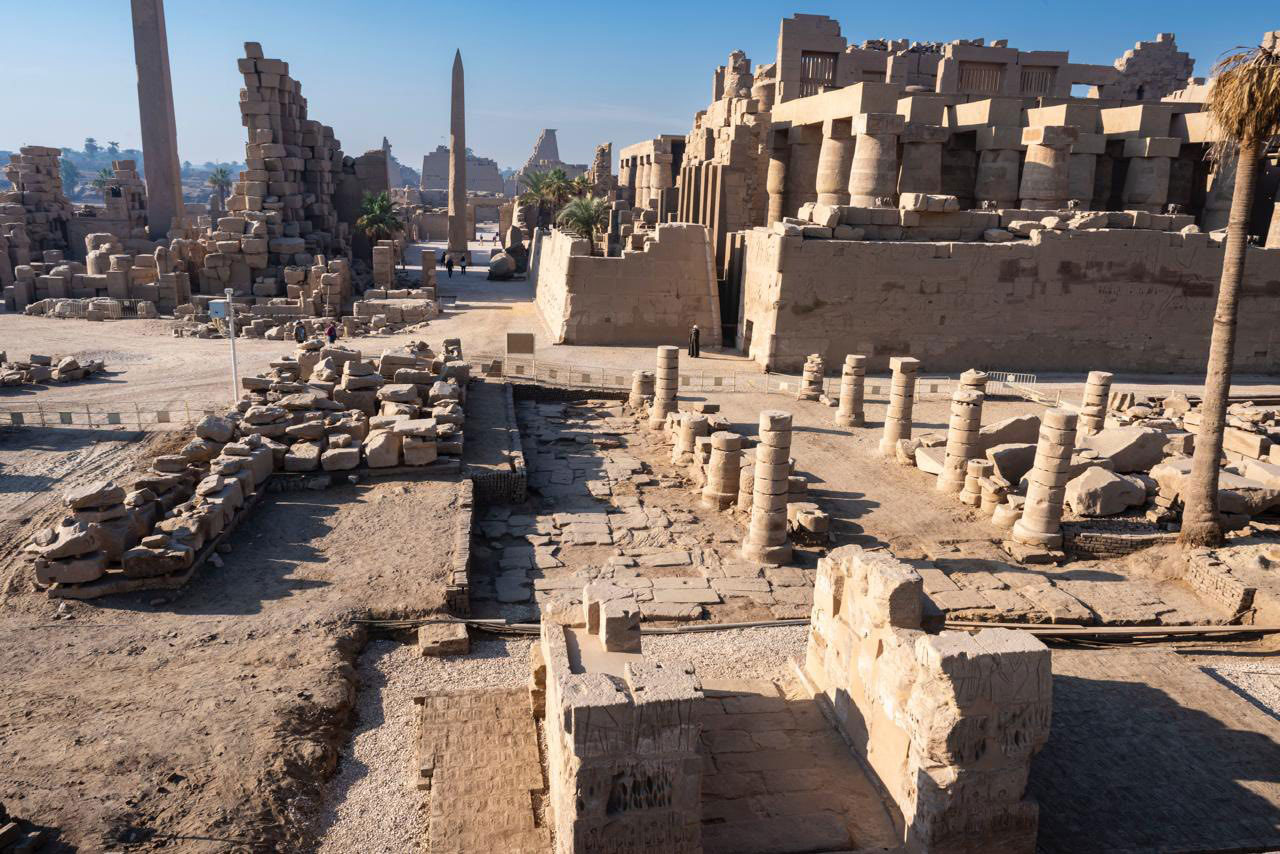
LUXOR, EGYPT—The restoration of 37 columns at the Great Hypostyle Hall in the temple of Amun-Ra at the Karnak temple complex has been completed, according to an Ahram Online report. Mostafa Waziri of Egypt’s Supreme Council of Antiquities said that the columns were cleaned to remove sand, dust, and bird debris, and reveal the engravings and colors on the original surfaces. The temple, constructed during the reign of Seti I (1294–1279 B.C.), was used and renovated over a period of more than 1,000 years, he concluded. To read about worship of Amun throughout Egypt and Nubia, go to "The Cult of Amun."

Mesolithic Artifacts Unearthed in Northern England

SCARBOROUGH, ENGLAND—BBC News reports that traces of a Mesolithic settlement dated to some 10,500 years ago have been found in North Yorkshire by Nick Overton of the University of Manchester and his colleagues. The butchered bones of elk, red deer, beavers, and water birds; tools; decorated weapons made of bone and antler; and evidence of woodworking are among the finds that have been recovered. Overton said that the site, which has been preserved by thick layers of peat, was once situated along the shores of a lake. He thinks the animal bones and the weapons used to kill the animals were intentionally deposited in wetlands on the lakeshore according to strict social rules. Team member Amy Gray Jones of the University of Chester explained that this careful disposition of animal remains and important items, and the decorations found on the artifacts, suggest that the Mesolithic inhabitants were not struggling to survive, but understood the landscape and the animals that lived in it. To read about an 11,000-year-old shale pendant unearthed in North Yorkshire, go to "Mesolithic Markings."

Advertisement