Ostrich Eggs Found at Ancient Campsite in Israel
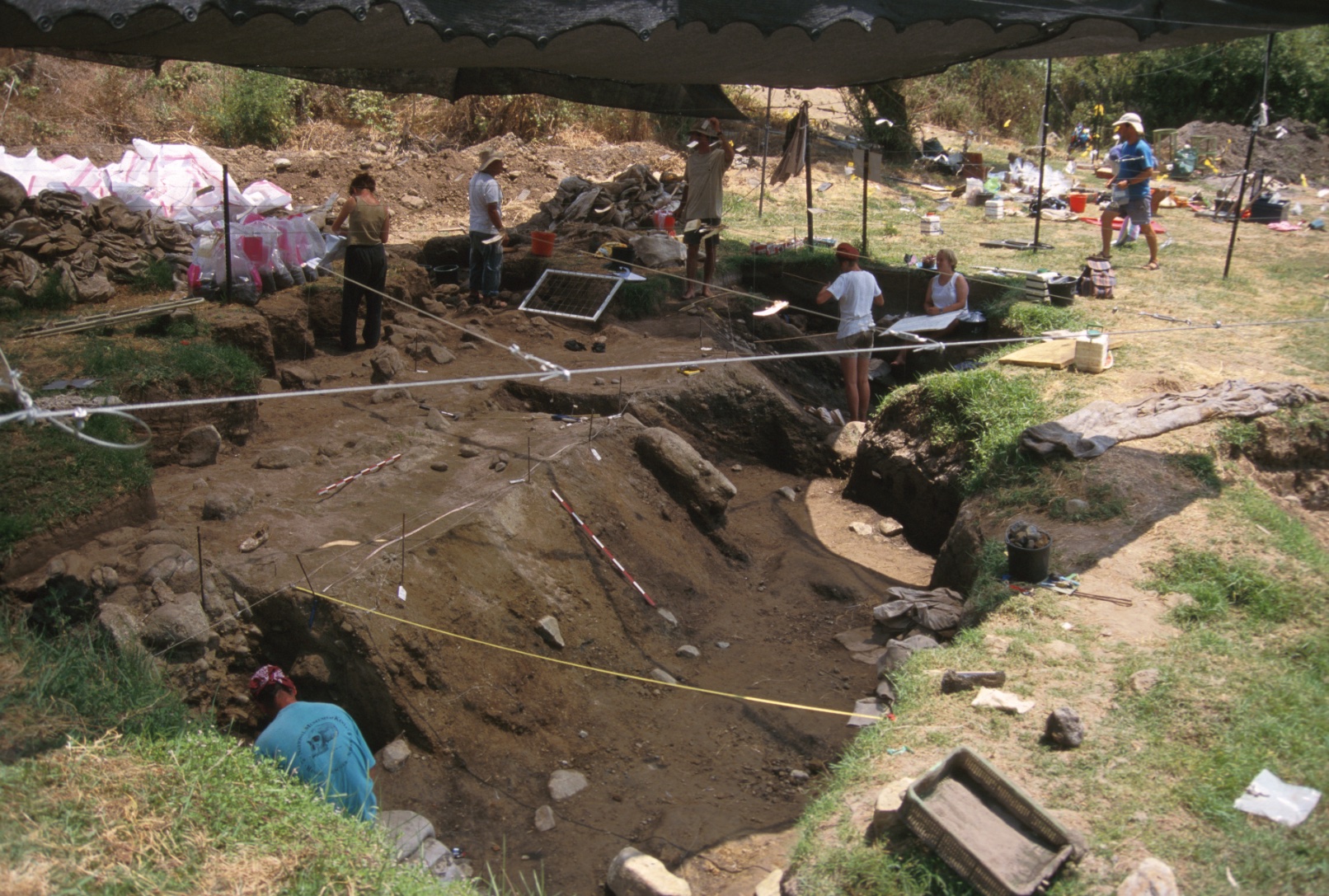
TEL AVIV, ISRAEL—ANSA Med reports that the shells of eight ostrich eggs have been found at an ancient campsite in southern Israel’s Negev Desert. The eggs are estimated to be 4,500 years old, but could be up to 7,500 years old, according to Lauren Davis of the Israel Antiquities Authority. “The proximity of the eggs to the fire pit indicates that it was not a casual discovery but an intentional collection of eggs,” she said. “One of them was directly in the fire pit, which strengthens the conviction that they were used as food.” The shells had been crushed, but were otherwise well-preserved on the surface of the campsite by the shifting desert sands, Davis added. Burned stones, flint, stone tools, and pottery fragments were also recovered. For more on the ancient ostrich egg trade, go to "A Rare Egg."
Headless Skeletons Uncovered at Neolithic Site in Slovakia
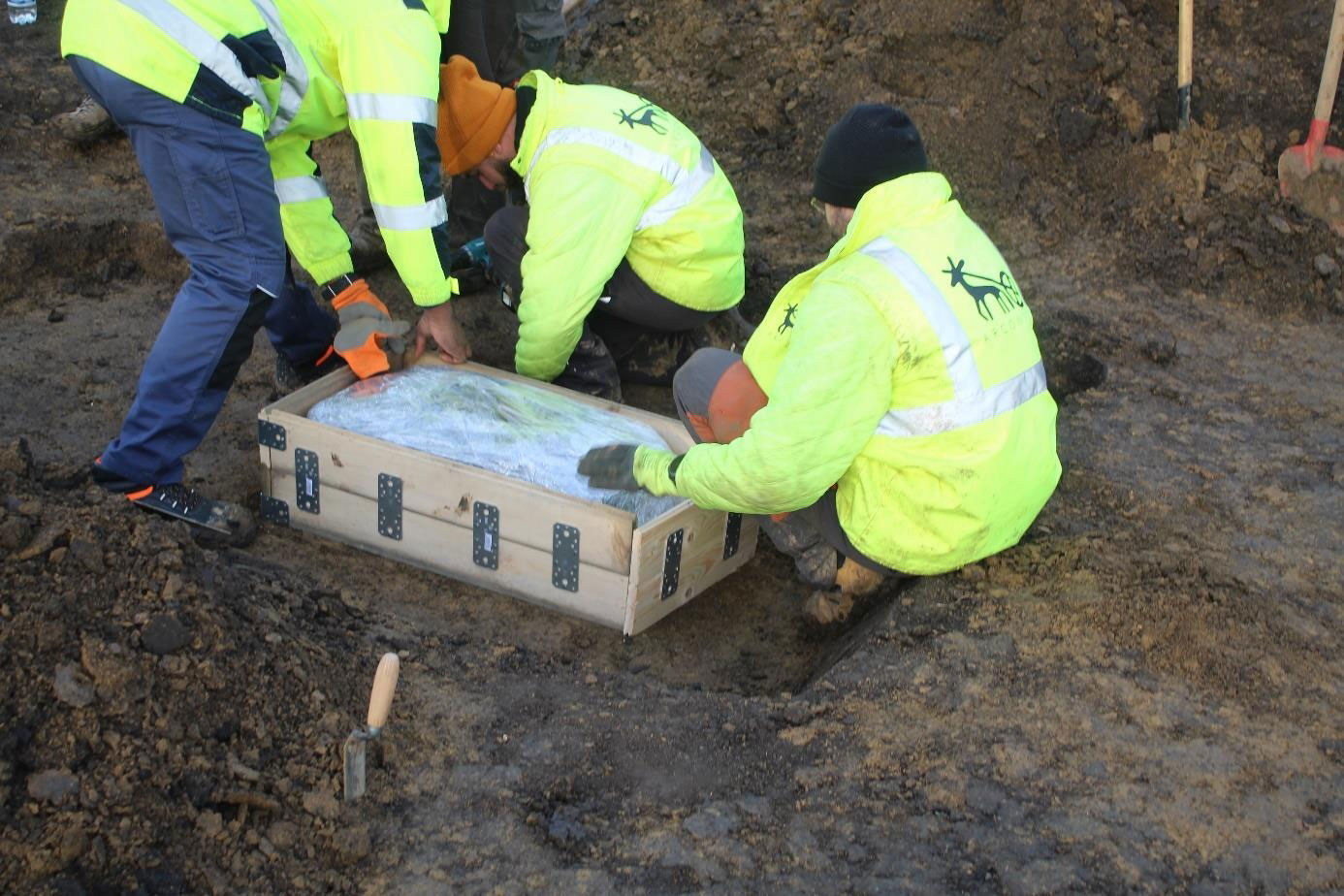
KIEL, GERMANY—According to a statement released by Kiel University, the remains of 38 people have been found in a ditch at Slovakia’s site of Vráble-Ve’lke Lehemby, which consists of three villages made up of more than 300 dwellings associated with the Linear Pottery Culture. The site has been dated to between 5250 and 4950 B.C. All of the skeletons, except for that of a single infant, were missing their heads, while the jumbled positions of the bones suggest that the bodies had been thrown or rolled into the ditch. It is not yet clear if the people had been killed by decapitation, or if their heads had been removed after death. Research team member Katharina Fuchs of Kiel University said that some of the bones were out of anatomical position, indicating that decomposed remains may have been pushed into the middle of the trench to make room for additional bodies. Further study will try to determine the ages of the dead, if they were related to each other, and if they lived in the area. To read about a DNA study of victims of a brutal massacre some 5,000 years ago in Poland, go to "We Are Family."
Possible Archaic Temple of Poseidon Discovered in Greece
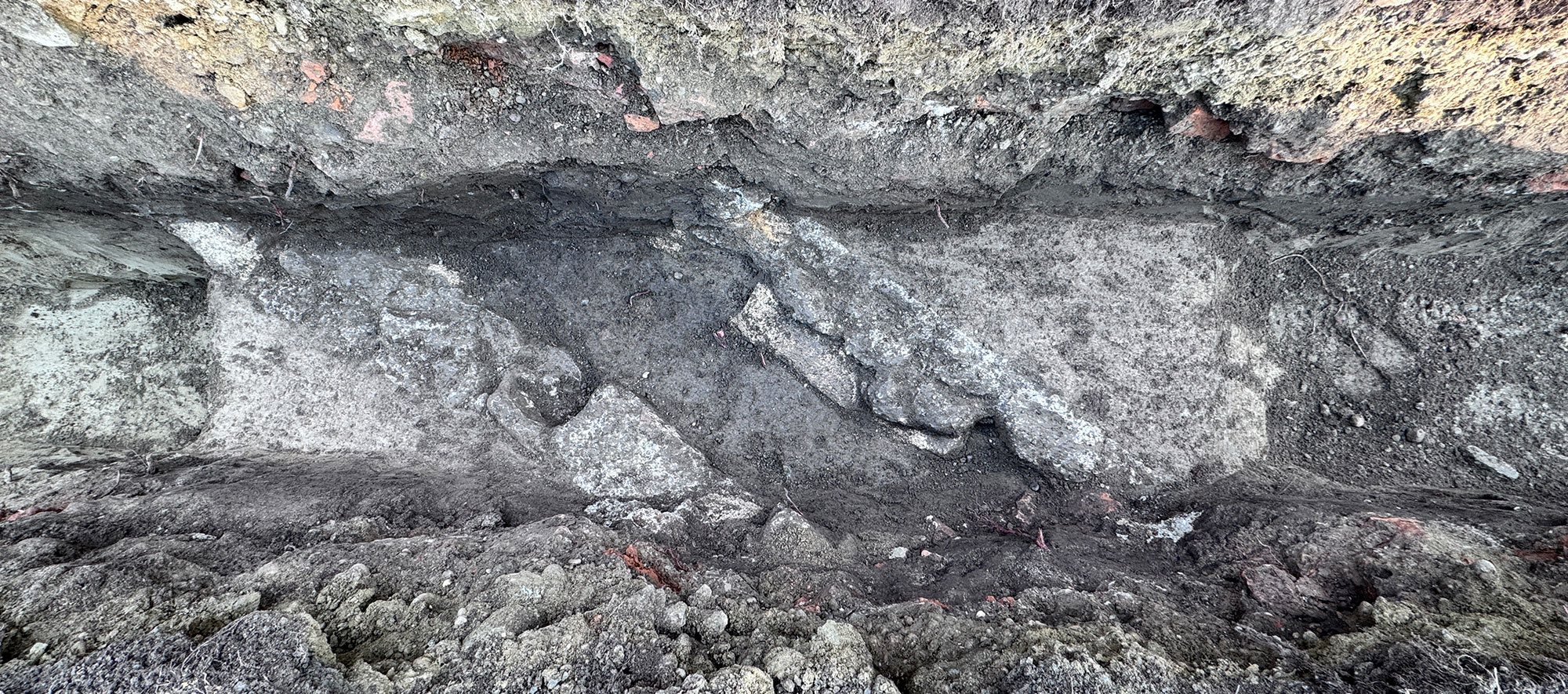
MAINZ, GERMANY—According to a statement released by the University of Mainz, researchers from the Austrian Archaeological Institute, Johannes Gutenberg University Mainz, Kiel University, and the Ephorate of Antiquities of Elis have uncovered traces of a 2,500-year-old structure that may have been part of a sanctuary of Poseidon, the Greek god of the sea. The structure is located at the Kleidi site, on the western coast of the Peloponnese region of southern Greece. “The location of this uncovered sacred site matches the details provided by [the ancient Greek historian] Strabo in his writings,” said Birgitta Eder of the Austrian Archaeological Institute. Fragments of roof tiles and a piece of a marble ritual water basin, or perirrhanterion, were also recovered. Eder and the research team will continue to investigate the structure’s relationship to the seaside landscape, which earthquakes and tsunamis have transformed over time. The location may even have been chosen for Poseidon’s temple for this reason, the researchers concluded. To read about an island sanctuary that was home to an ancient Greek mystery cult, go to "Secret Rites of Samothrace."
CAIRO, EGYPT—Live Science reports that the face of Ramesses II has been reconstructed from his 3,000-year-old mummified remains by a team of researchers led by radiologist Sahar Saleem of Cairo University. Because Ramesses II (reigned ca. 1279–1213 B.C.) died in his 90s, the researchers also employed “age regression” software to produce an image of how he might have appeared at age 45. Data from Saleem’s new computed tomography scans of the pharaoh’s skull were assembled into a 3-D image, which Caroline Wilkinson of Liverpool John Moores University used to reconstruct his face with computer software usually used in criminal investigations. Computer-generated imagery was then used to add skin, eyes, and hair to the detailed 3-D reconstruction. To read about the recently unearthed burial of Ramesses' economic minister, go to "The Treasurer's Tomb."
When Did the Threat of Smallpox Emerge?
LA NOSTRA FAMIGLIA, ITALY—According to a Health Day News report, a new mathematical analysis of the rate of evolution of the virus that causes smallpox suggests that it originated some 3,800 years ago, or 2,000 years earlier than previously thought. Diego Forni of the Eugenio Medea Scientific Institute said that the study confirms that smallpox existed in the ancient world, adding that pox scarring has been observed on ancient Egyptian mummies. The study also suggests that different strains of smallpox all descended from a single common ancestor. Read the original scholarly article about this research in Microbial Genomics. To read about excavations around an English manor once owned by Edward Jenner, pioneer of the smallpox vaccine, go to "Letter from England: The Scientist's Garden."
Roman-Era Sarcophagus Uncovered in Istanbul
ISTANBUL, TURKEY—Hurriyet Daily News reports that human bones and a sarcophagus were uncovered in the Büyükçekmece district of Istanbul during a construction project. Researchers from the Istanbul Archaeological Museums determined that the sarcophagus is about 2,000 years old. It was then removed from the site and taken to the Istanbul Archaeological Museums Directorate. To read about investigations of hundreds of previously unexplored ancient tombs in western Anatolia, go to "Canyon of the Ancestors."
Artifacts Recovered from a 3,000-Year-Old Well in Germany
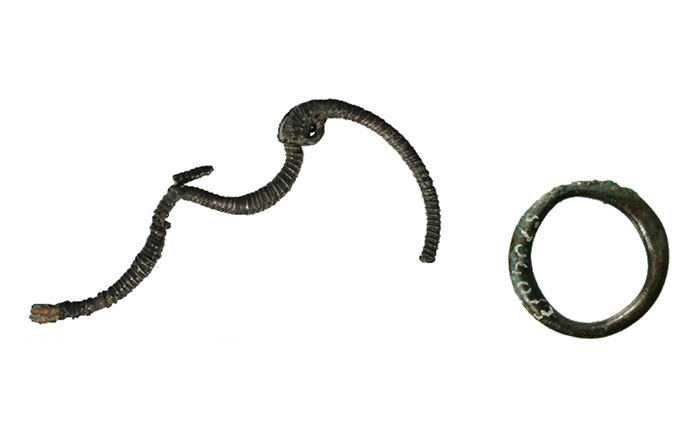
GERMERING, GERMANY—A 3,000-year-old wooden well containing more than 100 artifacts has been discovered in southern Germany, in an area where more than 70 ancient wells have been found, according to a Miami Herald report. Marcus Guckenbiehl of the Bavarian State Office for Monument Protection suggests that the items may have been intentionally placed in this 16-foot well as ritual offerings during a long drought. More than 70 of the objects were finely crafted clay vessels, including cups, pots, and bowls. Twenty-six bronze robe pins were also recovered, in addition to a bracelet, two metal spirals, four amber beads, a wooden spoon, and an animal tooth wrapped in wire. To read about a medieval iron folding chair unearthed in central Germany, go to "Take a Seat."
New Thoughts on the Secrets of Roman Concrete
ROME, ITALY—CNN reports that an international team of researchers analyzed samples of Roman concrete taken from a city wall at the site of Privernum, which is located in central Italy. Based upon recipes for concrete found in Roman texts, it had been previously thought that Roman engineers used slaked lime (lime mixed with water) as a binding agent, said Admir Masic of the Massachusetts Institute of Technology. But Masic and his colleagues have concluded that quicklime (calcium oxide) was used instead of, or in addition to, slaked lime. The high temperatures produced by the use of quicklime formed white chunks in the concrete known as lime clasts. Tests of the quicklime concrete recipe suggest that when later exposed to water, the lime clasts dissolved into any cracks in the concrete and sealed them before they could spread, resulting in the long-lasting nature of Roman concrete. Masic and his colleagues also noted that the high temperatures produced by using quicklime to mix concrete reduced its curing and setting times. Read the original scholarly article about this research in Science Advances. For more on Roman concrete, go to "Around the World: Rome."
Ancient Water System Unearthed in Central China
HENAN PROVINCE, CHINA—Xinhua reports that more than 260 feet of water channels have been found near the Qianqiu Gate at the site of the imperial palace in the ancient capital of Luoyang, which is located in central China. The city was occupied for some 1,500 years, and served as the capital for about 600 years. Guo Xiaotao of the Chinese Academy of Social Sciences' Institute of Archaeology said that the four channels run side-by-side from southwest to northeast, and were all built at the same time sometime between A.D. 220 and 420 according to a unified construction plan. The covers placed over the channels were equipped with square holes to collect rainwater, he added. The channels would have brought water from outside the city into the palace and lakes in the gardens to the north of the structure. The channels were then likely reused by the emperor Xiaowen of the Northern Wei Dynasty, who ruled between A.D. 471 and 499. To read about another discovery from Luoyang, go to "Tomb from a Lost Tribe."
Byzantine Woman’s Remains Found at a Castle in Turkey
AYDIN, TURKEY—Hurriyet Daily News reports that excavators at Kadikalesi Castle in western Turkey have unearthed the remains of a woman thought to have lived in the thirteenth century. The grave was found under stones in an area of the castle that once contained a church and a monastery. Examination of the bones suggests she was between 34 and 38 years old at the time of death and stood about five feet, three inches tall. “It is not very common to put a woman’s burial inside churches,” said excavation team member Umut Kardaşlar. “Probably, this woman must have been a woman who donated a significant amount to the church, or she must have been the wife of a bureaucrat,” he added. To read about recent analysis of Late Antique mosaics from Halicarnassus, Turkey, go to "Reduce, Reuse, Recycle."
Possible Ritual Center Found Near a Spring in Eastern England
NORTHAMPTONSHIRE, ENGLAND—BBC News reports that Bronze Age and Roman-period artifacts have been found at the site of a natural spring in England’s East Midlands by researchers from the Museum of London Archaeology. The team members estimate that the site was in use for more than 2,000 years. Five empty burial urns were found in the Bronze Age barrow, which has been dated to about 2000 B.C. “The fact no human remains were placed within the barrow suggests it may have had a more symbolic rather than functional use,” explained researcher Simon Markus. A stone building with an underground room at the site has been dated to between A.D. 43 and 410. It was decorated with elaborately painted plasterwork, and may have had a painted ceiling. The researchers think it may have been a Roman shrine associated with the spring. Water tanks estimated to be 2,000 years old were also uncovered. Traces of willow tree blossoms, pinecones, walnut shells, and a leather shoe were recovered from the tanks. To read about a luxurious Roman building complex in North Yorkshire that researchers think may have been a religious sanctuary, go to "Leisure Seekers."
Advertisement