Subscribe to Archaeology
Archaeological Headlines By JESSICA E. SARACENI
Friday, December 30

Additional Mummies Uncovered Near Vizier’s Tomb in Luxor

LUXOR, EGYPT—According to an EFE report, two tombs containing the mummified remains of dozens of senior officials and clergy have been found by a team of Egyptian and Spanish archaeologists from the Vizier Amenhotep-Huy Project. Amenhotep-Huy served as vizier in the 18th Dynasty under the pharaoh Amenhotep III, who reigned from about 1390 to 1352 B.C., but he opposed religious practices promoted by Akhenaten, the pharaoh’s son. “He is a very important person,” commented team leader Francisco J. Martín. Two chambers connect the newly discovered tombs to the vizier’s tomb, a chapel with 30 columns located on the west bank of the Nile River. “They began to build other tombs from different dynasties within the vizier’s tomb, since the place was sacred,” Martín explained. To read about monuments built by Amenhotep III in Thebes, go to "Rediscovering Egypt's Golden Dynasty."

Neolithic Tombs Discovered in Central China

LUOYANG, CHINA—Xinhua reports that more than 300 tombs estimated to be 4,500 years old have been discovered at the site of Suyang, which is located in central China. Nine of the tombs have been excavated to date, revealing the remains of ten people. Some of the tombs have been heavily damaged by looters. Ren Guang of the Luoyang Municipal Institute of Archaeology said that the burials date to the beginning of the Longshan Culture period, which is known for its thin-walled black pottery. To read about a 2,500-year-old burial near Luoyang, go to "Tomb from a Lost Tribe."

Thursday, December 29

Traces of Viking-Era Hall Found in Denmark

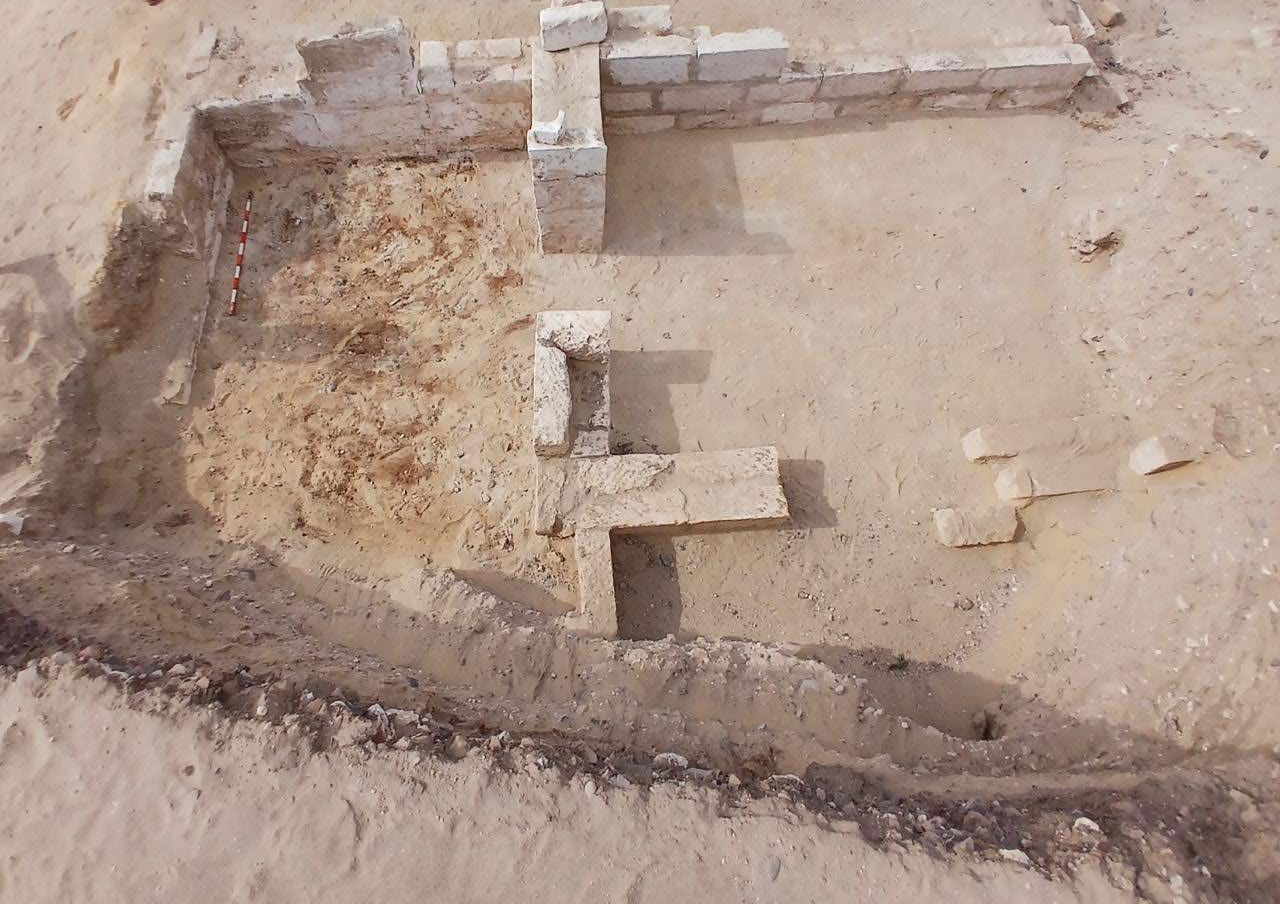
AALBORG, DENMARK—According to a statement released by The Historical Museum of Northern Jutland, researchers have found traces of a hall that has been dated to the time of Harald "Bluetooth" Gormsson, who ruled as king of Denmark from around A.D. 958 to 986. Archaeologist Thomas Rune Knudsen said the hall measured about 130 feet long and 30 feet wide. Ten to 12 rectangular oak posts supported its roof. Similar halls have been uncovered at the sites of the king’s ring castles, Knudsen added. He expects to find traces of several houses to the east of the hall, and perhaps evidence that the land surrounding the site was farmed. Knudsen thinks the land may have belonged to a family whose name was inscribed on a runestone found in the area, though he notes that this would be difficult to prove. For more, go to "Bluetooth's Fortress."

Stone Points Found in Idaho Dated to 15,700 Years Ago

CORVALLIS, OREGON—According to a statement released by Oregon State University, researchers led by Loren Davis have discovered projectile points thought to have been made by the earliest peoples in the Americas at the Cooper’s Ferry site, which is located near Idaho’s Salmon River on traditional Nez Perce land. The deadly, razor-sharp points, which range in size from approximately one-half to two inches long, have been radiocarbon dated to around 15,700 years ago. Davis said that the points are sharpened on one end, and have a stem on the other end that was likely attached to a dart. They are similar to projectile points of a similar age found in Hokkaido, Japan, he added, and could support the idea of cultural and genetic connections between the Ice Age peoples of northeastern Asia and North America. Read the original scholarly article about this research in Science Advances. For more on the Cooper's Ferry site, go to "A Seaside Journey to America."

Possible Funerary Structures Uncovered at Peru’s Huaca Bandera

LIMA, PERU—According to an Andina News Agency report, excavations in northern Peru at the Moche site of Huaca Bandera have uncovered a red- and cream-colored ceremonial bench, a wall containing rows of painted niches, and a burial on a pyramidal platform in an area of the site known as Walled Complex 2. Archaeologist Manuel Curo said that the structures date to around 850 B.C. Images of similar structures were also found in the depiction of the burial of an elite person on a Moche vessel. The structures may have been a symbol of power, Curo and his colleagues have concluded. For more on the Moche, go to "Painted Worlds."

Wednesday, December 28

Painted Skulls From Peru’s Chincha Valley Analyzed

BOSTON, MASSACHUSETTS—A new study of red paint applied to human remains recovered from more than 100 mortuary structures in southern Peru’s Chincha Valley has found that only the remains of certain people were painted, and that different kinds of red paint were employed, according to a Live Science report. Samples of red paint were taken from 38 bones and artifacts that had been dated to between A.D. 1000 and 1825, including 25 human skulls. The paint samples were analyzed using X-ray powder diffraction, X-ray fluorescence spectrometry, and laser ablation ICP-MS by a team of researchers led by Jacob Bongers of Boston University. The results showed that red paint on 24 of the objects came from iron-based ochres such as hematite, 13 came from mercury-based cinnabar, and one was a combination of the two pigments. Most of the bones that had been painted belonged to men, although paint was also found on the bones of some women and children, and on those of several people whose remains showed evidence of healed traumatic injuries and of people whose skulls had been modified in infancy. Examination of the 25 painted skulls in the study also revealed that this paint was applied using textiles, leaves, and even with fingers, Bongers said. It is not clear, however, how long after death the paint was applied to the bones. For more on the ways the dead were honored in Peru's Chincha Valley, go to "Dignity of the Dead."

Viking-Era Grave Discovered in Norway

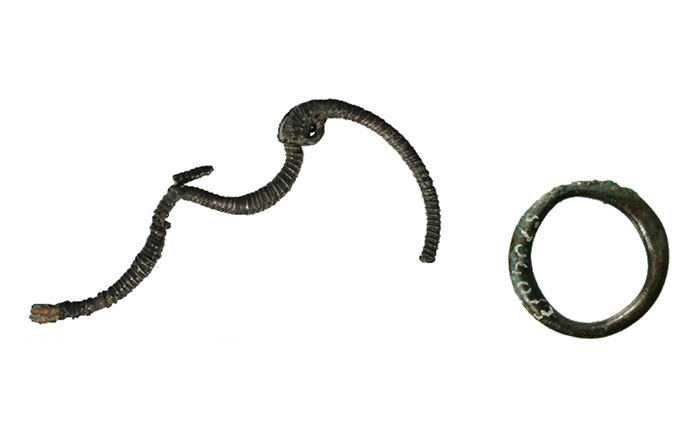
OSLO, NORWAY—Life in Norway reports that a Viking-era grave was found in a residential area of Oslo during a survey conducted before a construction project. Archaeologist Marianne Bugge Kræmer of the Oslo Municipality Cultural Heritage Management Office said that the grave was situated on a prominent hill and would have had views of a valley and stream. The grave contained fragments of a soapstone vessel and a style of brooch worn by men, as well as a sickle, two knives, the metal shield boss from a wooden shield, horse equipment, and human remains. “For now, the grave has been dated based on the artifacts it contains,” Kræmer said. “This type of brooch with spheres begins to appear in approximately A.D. 850 and became common after the tenth century A.D.” Zanette Tsigaridas Glørstad of the University of Oslo explained that the bones and artifacts have been transferred to a conservation lab at the university’s Museum of Cultural History. Researchers will not be able to extract a DNA sample from the bones because they were all burned, she added. For more, go to "Vikings in Furs."

2,000-Year-Old Sculptures Unearthed in Turkey

KÜTAHYA, TURKEY—According to a Hürriyet Daily News report, excavations in western Turkey at the site of the ancient city of Aizanoi have uncovered the heads of statues of the Greek gods Eros and Dionysus and the demigod Hecules. Gökhan Coşkun of Kütahya Dumlupinar University said that another, nearly complete six-foot-tall statue was also found. “Only half of its pedestal and one foot is missing in the male statue, while other parts are completely preserved,” he said. Coşkun notes, however, that the Hercules head does not belong to the body of a Hercules statue unearthed at Aizanoi in 2020. To read about another recently discovered statue of Hercules, go to "A Young Hercules."

Advertisement