Subscribe to Archaeology
Archaeological Headlines By JESSICA E. SARACENI
Tuesday, December 27

Dense Maya Settlements Spotted in Guatemala

SALT LAKE CITY, UTAH—Phys.org reports that a lidar survey of northern Guatemala’s Mirador-Calakmul Karst Basin has revealed more than 1,000 densely populated Maya settlements covering some 650 square miles. Richard D. Hansen of the Idaho State University and his colleagues also determined that these settlements were linked by about 110 miles of raised causeways, which would have allowed the communities to engage in collective labor efforts. Some of the settlements also had large platforms and pyramids that may have served as hubs for work, recreation, and politics; ball courts for playing sports; and canals and reservoirs for water management. To read about the discovery of a Maya ceremonial pyramid and courtyard complex using lidar, go to "New Neighbors."

Bearskin Coats Could Date Back 300,000 Years

TÜBINGEN, GERMANY—According to a statement released by the University of Tübingen, cut marks on the hand and foot bones of cave bears unearthed at Schöningen, a Lower Paleolithic site in northwestern Germany, suggest that humans used bear skins at least 300,000 years ago. Ivo Verheijen of the University of Tübingen said that cut marks on bones are usually thought to be the result of butchering animals for meat, but these fine marks indicate that the skin was carefully detached from these small bones. Verheijen added that bear skin must be removed shortly after an animal’s death if it is to be preserved and used. Spears found in the cave may have been used to hunt the bears. Eating bear meat and wearing their well-insulated skins was likely key to early human survival in northern Europe, concluded Nicholas Conard of the University of Tübingen. For more on the spears discovered at Schöningen, go to "Hunting Equipment."

Study Suggests Europe’s Hunter-Gatherers Produced Pottery

MAYNOOTH, IRELAND—Hunter-gatherers knew how to make and use pottery to store and cook food, according to a Science Magazine report. It had been previously thought that pottery was developed by early farmers during the Neolithic period. Rowan McLaughlin of the National University of Ireland, Maynooth, and his colleagues examined the decorations and shapes of pottery fragments unearthed at more than 150 archaeological sites around the Baltic Sea and Eastern Europe and radiocarbon dated residues within them. Chemical analysis of the residues also allowed the researchers to determine whether they resulted from cooking fish, pork, plants, or the meat of ruminants such as deer or cattle. The study suggests that the use of pottery began to spread among hunter-gatherers in the Far East some 20,000 years ago, and starting around 7,900 years ago clay pots spread throughout the Ural Mountains and southern Scandinavia within a few centuries. McLaughlin thinks pottery-making knowledge was passed from group to group. “There’s no way a population could grow that fast,” he said. If these hunter-gatherer societies were patrilocal, meaning women left home to marry men in other communities, he explained, knowledge of pottery may have spread as women moved from village to village through marriage. For more, go to “Farmers and Foragers.”

Thursday, December 22

Early Christian Pilgrimage Site Excavated in Israel

JERUSALEM, ISRAEL—The Guardian reports that Israel Antiquities Authority researchers working at a burial cave in south-central Israel's Tel Lachish national park have found fifth-century inscriptions in Greek and Syriac dedicating the site to Salome, a woman who assisted at the birth of Jesus according to the traditions of Eastern Orthodox Christianity. Outside the cave, archaeologists uncovered a colonnaded forecourt covering about 3,750 square feet, and evidence of shops that sold clay lamps to pilgrims into the ninth century, some 200 years after the Muslim conquest of the region. To read about a mosque and other Islamic-style buildings unearthed in Israel's Negev Desert, go to "Side by Side."   

Artifacts Recovered from Franklin Expedition Shipwreck

OTTAWA, CANADA—CBC News reports that Parks Canada archaeologists have recovered 275 artifacts from the wreckage of HMS Erebus, one of two ships lost in the Arctic during Captain John Franklin’s search for the Northwest Passage in 1845. Erebus was discovered off the northwest coast of King William Island in Nunavut in 2014. Divers can only reach the wreck in the summer months during short dives while wearing special suits heated with warm water pumped from the surface. Most of the objects recovered this summer came from the steward’s pantry, including elaborate table settings and platters, and a leather book with a feather quill pen tucked inside its cover. Conservators will attempt to read any notes that might have been made in this journal. Investigation of the officers’ cabins revealed a set of drafting implements thought to have belonged to 2nd Lt. Henry Thomas Dundas le Vesconte, who was in charge of mapmaking for the expedition. The officers’ personal chests also remain in the cabins. For more on the discovery of Erebus, go to "Franklin's Last Voyage."

Wednesday, December 21

Ancient Warrior’s Grave Uncovered in Romania

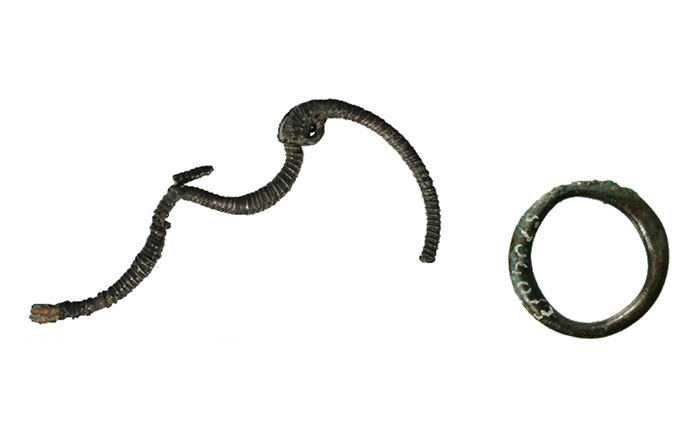
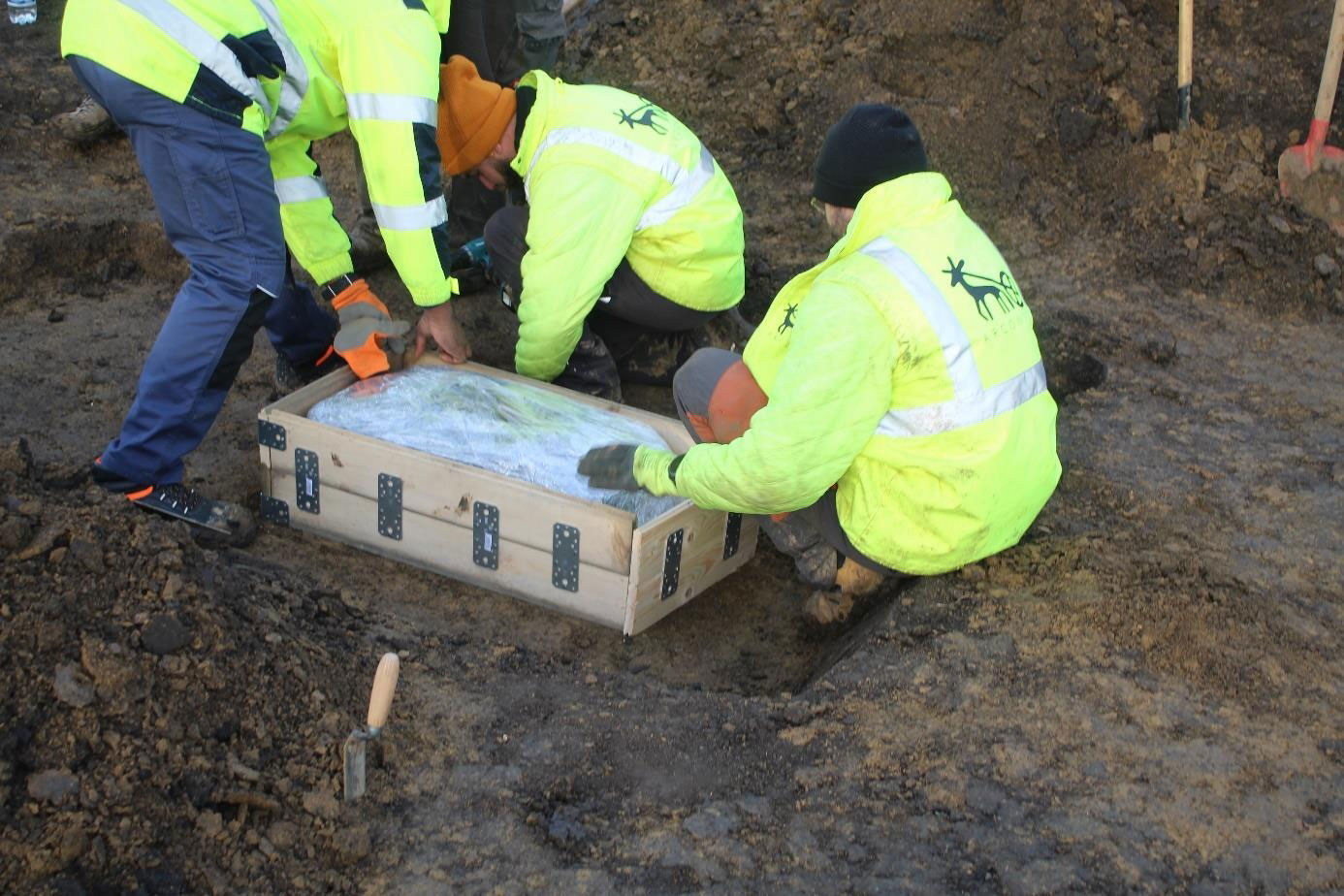
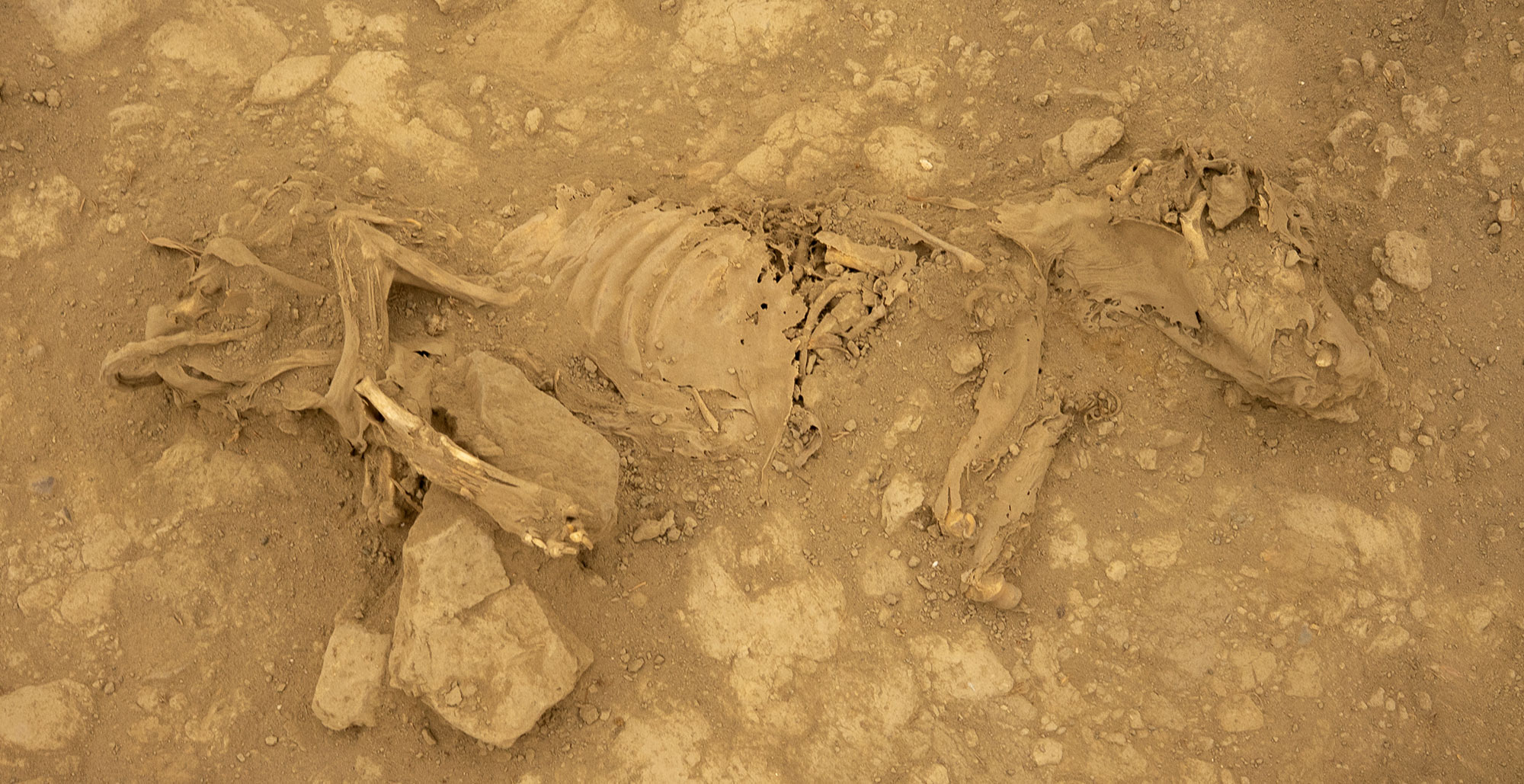
BUCHAREST, ROMANIA—Romania-Insider.com reports that a grave containing the remains of a warrior, his horse, decorated weapons, and jewelry was discovered in the path of a planned highway in eastern Romania by a team of researchers from the Vasile Pârvan Institute of Archaeology. The ornaments would have been worn by both the warrior and the horse, the researchers explained. The grave is estimated to date to between the fourth and tenth centuries A.D. The remains and the artifacts are being cleaned, preserved, and restored at the Vasile Pârvan Institute of Archaeology for later display. To read about ancient fortifications in Romania that were spotted using aerial photography, go to "Spying the Past from the Sky."

Drought May Have Driven Raids on the Roman Empire

CAMBRIDGE, ENGLAND—According to a statement released by the University of Cambridge, drought conditions in the fifth century A.D. may have driven Hunnic peoples from herding animals to raiding the Roman Empire. Susanne Hakenbeck, Ulf Büntgen, and their colleagues reconstructed the region’s climate over the past 2,000 years with tree ring analysis, and found that the area that is now Hungary experienced unusually dry summers in the fourth and fifth centuries A.D. The drought was severe enough that crop yields and pasture for grazing herds would have been reduced beyond the floodplains of the Danube and Tisza rivers. “We found that periods of drought recorded in biochemical signals in tree rings coincided with an intensification of raiding activity in the region,” Büntgen said. Hakenbeck added that analysis of isotopes in human bones unearthed in the region suggests that some people migrated from their places of birth and ate mixed agricultural and pastoral diets. Others, however, may have been driven to violence, the researchers argue. Historical records of intense raiding on the Roman frontier coincide with extremely dry summers in the Carpathian Basin, they concluded. Read the original scholarly article about this research in Journal of Roman Archaeology. To read about a group of nomads in the Carpathian Basin who ruled much of Europe from the sixth through ninth centuries A.D., go to "The Avars Advance."

Sharpening Byproducts Hint at Lower Paleolithic Tool Use

SCHÖNINGEN, GERMANY—According to a statement released by the University of Tübingen, researchers from the University of Tübingen and the Senckenberg Center for Human Evolution and Paleoenvironment analyzed 57 tiny pieces of flint found in southwestern Germany around the skeleton of a Eurasian straight-tusked elephant that died some 300,000 years ago. The chips are thought to have flaked off cutting tools during the re-sharpening process. Team member Jordi Serangeli said that the flint byproducts were probably left behind by either Homo heidelbergensis or early Neanderthals who were working near the elephant carcass and took their tools with them when they left. Microscopic bits of wood clung to fifteen of the tiny flakes, while wear on another sharp-edged fragment suggests it had been used to cut animal tissue, such as the elephant carcass, added team member Flavia Venditti. Read the original scholarly article about this research in Scientific Reports. To read about early stone tools, go to "Neanderthal Tool Time."

Advertisement