Late Period Tombs Excavated in Northern Egypt
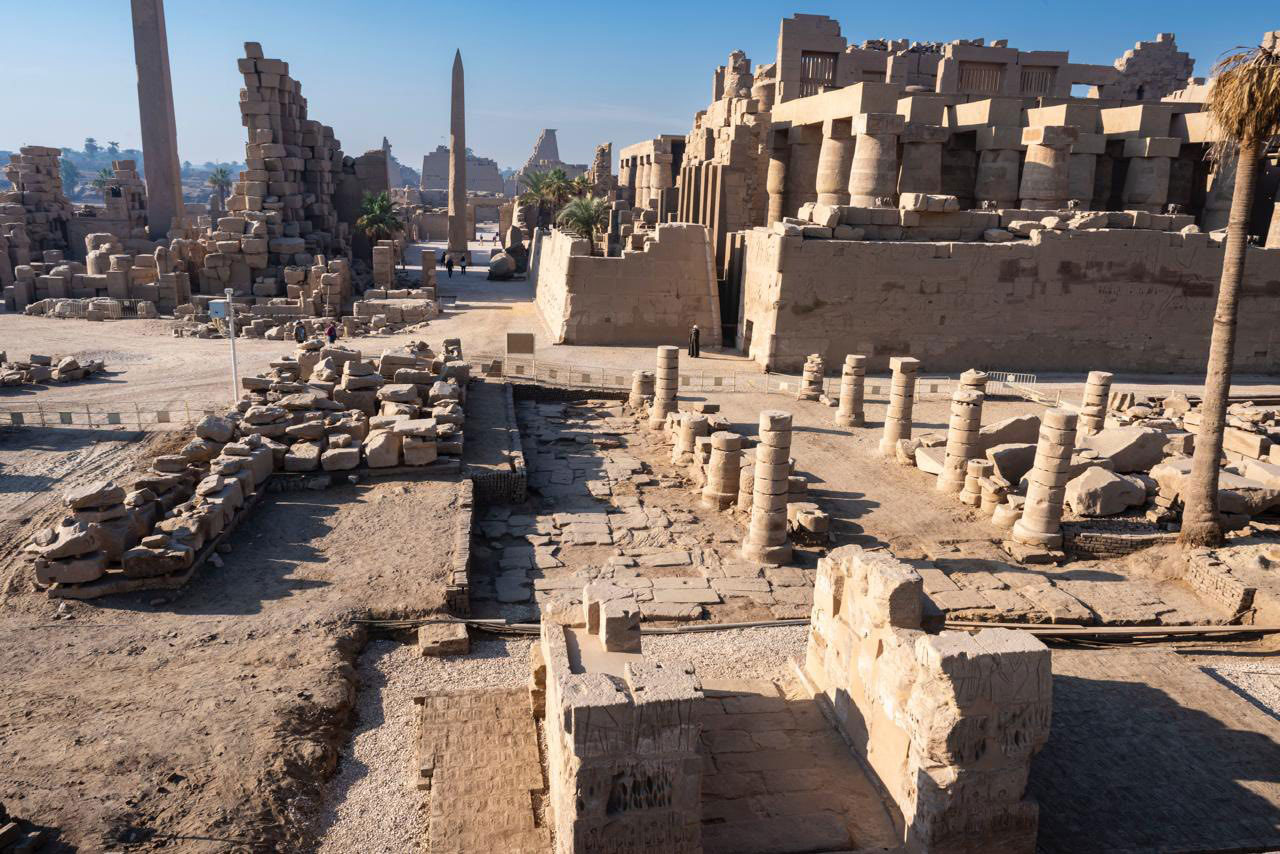
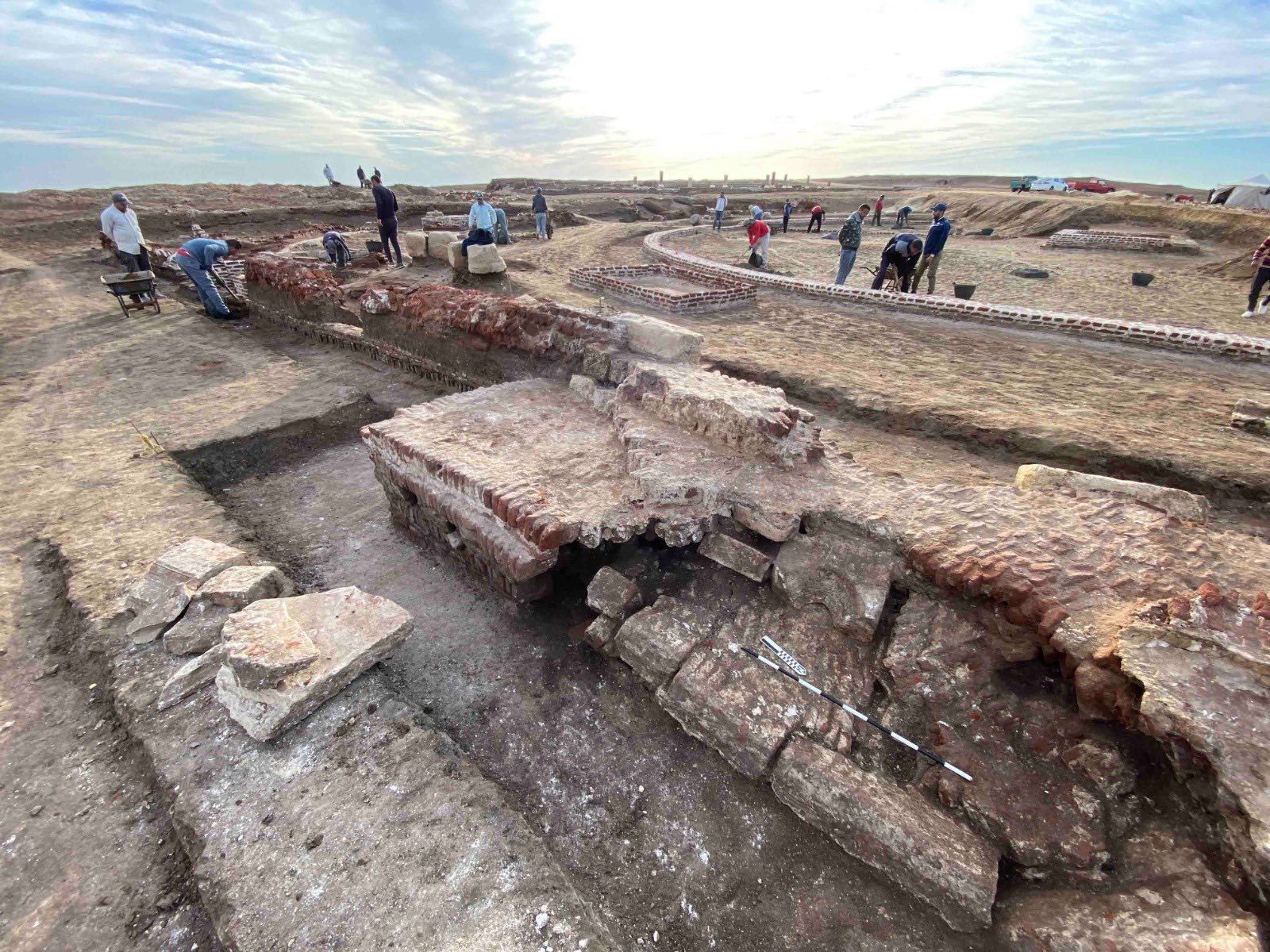
DAMIETTA, EGYPT—Ahram Online reports that 20 burials have been discovered at Tel El-Deir, which is located in the Nile Delta close to the Mediterranean Sea. Some of the Late Period (712–332 B.C.) burials were found in mudbrick tombs. Mostafa Waziri of Egypt’s Supreme Council of Antiquities explained that one mudbrick tomb containing gold fragments depicting the deities Isis, Bastet, and Horus has been dated to the 26th Dynasty, from about 688 to 525 B.C. The gold is thought to have been placed on human remains in the tomb, he added. Funerary amulets, a headrest, canopic jars depicting the four sons of Horus, and statues of the deities Isis, Neftis, and Djehuti were also recovered. To read about the virtual unwrapping of Amenhotep I's mummy, go to "Inside a Pharaoh's Coffin," one of ARCHAEOLOGY's Top 10 Discoveries of 2022.
Dyed Cotton Fibers Found at Neolithic Village Site in Israel
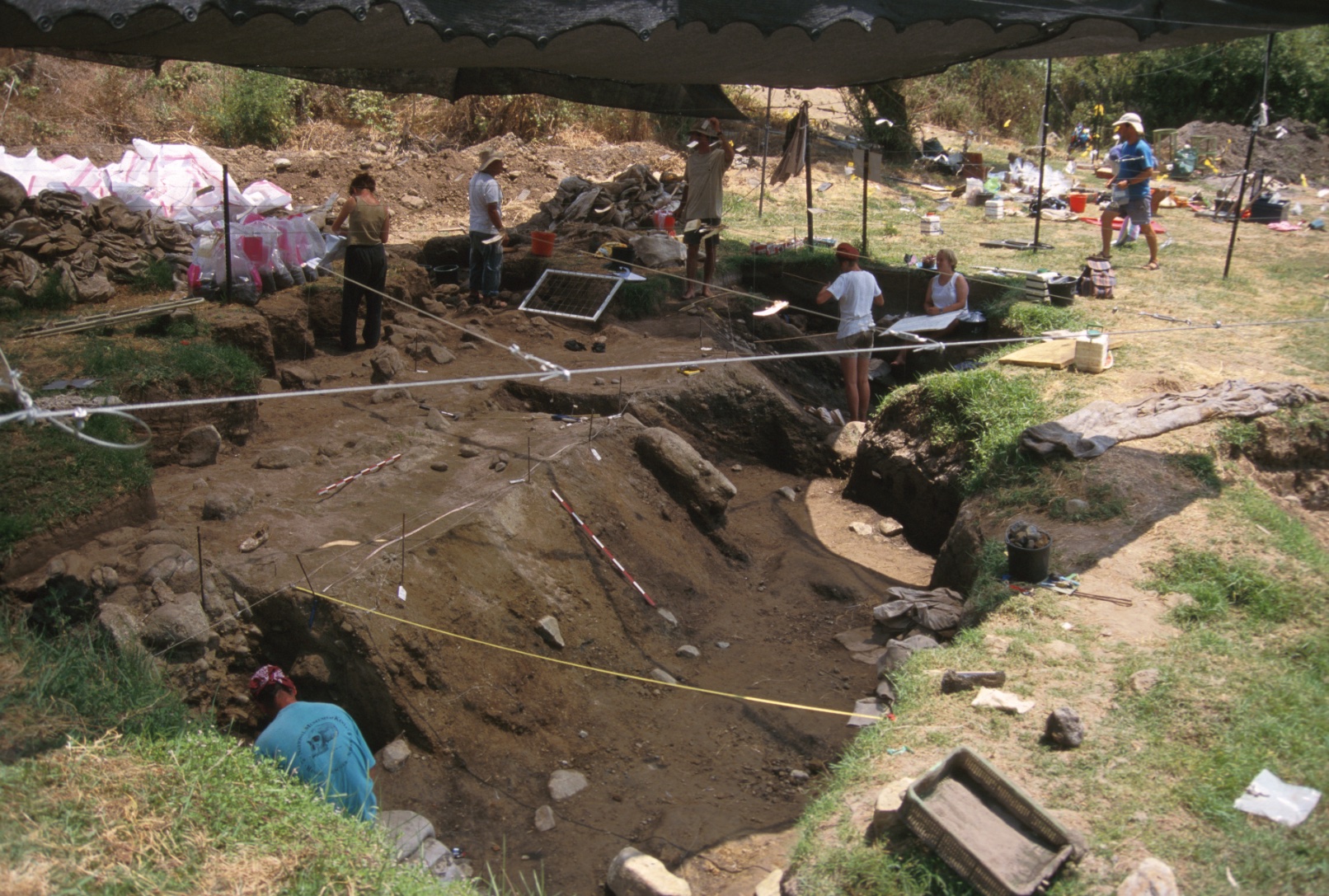
HAIFA, ISRAEL—According to a Haaretz report, evidence for the use of dyed wild cotton some 7,000 years ago has been uncovered at Tel Tsaf, a Late Neolithic village site located in northern Israel. This discovery has pushed back the use of cotton in the Jordan Valley by several centuries. Shades of blue, pink, purple, green, and brown/black have been detected on a few of the microfibers. Because cotton does not grow naturally in the arid region, an international team of researchers, including Li Liu of Stanford University, Maureece Levin of the University of Arkansas at Little Rock, Florian Klimscha of the Lower Saxony State Museum, and Danny Rosenberg of the University of Haifa, suggests it had been imported from the Indus Valley, where evidence suggests that cotton threads were used to string copper beads as early as 8,500 years ago. Other artifacts unearthed at Tel Tsaf, such as the oldest copper object unearthed in the Middle East, a clay model of a grain silo, and a stamped seal, also attest to the settlement’s wealth, the researchers explained. Read the original scholarly article about this research in Frontiers in Plant Science. To read about another recent discovery at Tel Tsaf, go to "Around the World: Israel."
Analysis of Bronze Age Tools Detects Traces of Gold
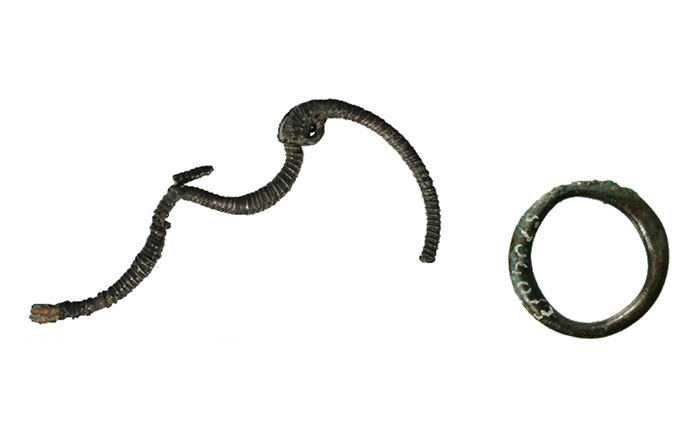
LEICESTER, ENGLAND—According to a report in The Guardian, a new study of 4,000-year-old tools recovered from a grave near Stonehenge some 200 years ago suggests that they were used to work gold. The objects include flint cups, two broken battle axes dated to the Neolithic period, and a copper-alloy awl. When Rachel Crellin and Christina Tsoraki of the University of Leicester and their colleagues examined the tools, which are held at the Wiltshire Museum, they found gold residues on the surfaces. Microscopic wear analysis showed that some had been used like hammers and anvils. Other tools were used to smooth gold sheets that may have been used to cover items made of jet, amber, or wood. The cups may have been used to mix resins and adhesives, the researchers explained. It is not known if the axes had been handed down through the generations over 2,000 years, or if they were found and put to use by Bronze Age craftsmen. The man who was buried in the tomb was likely to have been an early metalworker, the researchers concluded. He was also buried with a cloak decorated with pierced animal bones, a possible symbol linking metalworking and spiritual leadership. To read about a standard measurement that researchers believe Stonehenge's builders used, go to "Epic Proportions."
Vatican Will Return Parthenon Sculptures to Greece
VATICAN CITY—The Associated Press reports that three fragments of the Parthenon marbles currently held in the Vatican Museums will be repatriated to Greece following a request for their return made by Ecumenical Patriarch Bartholomew I. The return is described by the Vatican as a donation from Roman Catholic leader Pope Francis to His Beatitude Ieronymos II, the Orthodox Christian archbishop of Athens, and all of Greece. The fragments include the head of a horse, the head of a boy, and a bearded male head from the 520-foot frieze depicting a procession in honor of the goddess Athena that surrounded the Parthenon, which was built on the Athenian Acropolis in the fifth century B.C. The sculpture fragments will be reunited with others now on display in the Acropolis Museum, according to a statement from the Greek Ministry of Culture. To read about ongoing work to document other marble fragments on the Acropolis, go to "The Acropolis of Athens: Scattered Architecture."
Cambridge University Will Repatriate Benin Bronzes
CAMBRIDGE, ENGLAND—BBC News reports that Britain’s Charity Commission has granted permission for the University of Cambridge to repatriate 116 of the so-called Benin Bronzes to Nigeria. In 1897, the bronze and brass sculptures were taken by armed British forces who sacked Benin City as part of an attack in response to a trade dispute. The items were then sold in London to pay for the excursion. “Across the international museum sector, there is growing recognition that illegitimately acquired artifacts should be returned to their countries of origin,” said Nicholas Thomas, director of the university’s Museum of Archaeology and Anthropology, where these objects have been held. Some of the objects will remain in Cambridge on an extended loan as part of the agreement with the Nigerian National Commission for Museums and Monuments, he added. To read about a port town in Benin where one million enslaved individuals were forced onto boats bound for North America, go to "Off the Grid: Ouidah, Benin."
Study Suggests Walking May Be Linked to Treetop Foraging
LONDON, ENGLAND—Bipedalism may have developed some seven million years ago as human ancestors foraged for food on flexible branches in treetops, according to a report in The Guardian. It had been previously suggested that hominins began moving on two legs in response to a shift in the environment from dense forest to more open woodlands and grasslands. Alex Piel of University College London and his colleagues tracked the movements of chimpanzees living in an open environment of woodland and grasses in western Tanzania’s Issa Valley, and determined that these primates spent a similar proportion of time on the ground as chimpanzees living in densely forested areas. “Even though we have far fewer trees, [the chimps are] no more terrestrial,” Piel explained. “Most of the time that they are on two legs is in the trees,” he added. This fits with the fossil record, Piel concluded, which indicates that early hominins had both arboreal and terrestrial adaptations. Read the original scholarly article about this research in Science Advances. For more on the evolution of hominin bipedalism, go to "The Human Mosaic."
Bog Body Discovered in Denmark
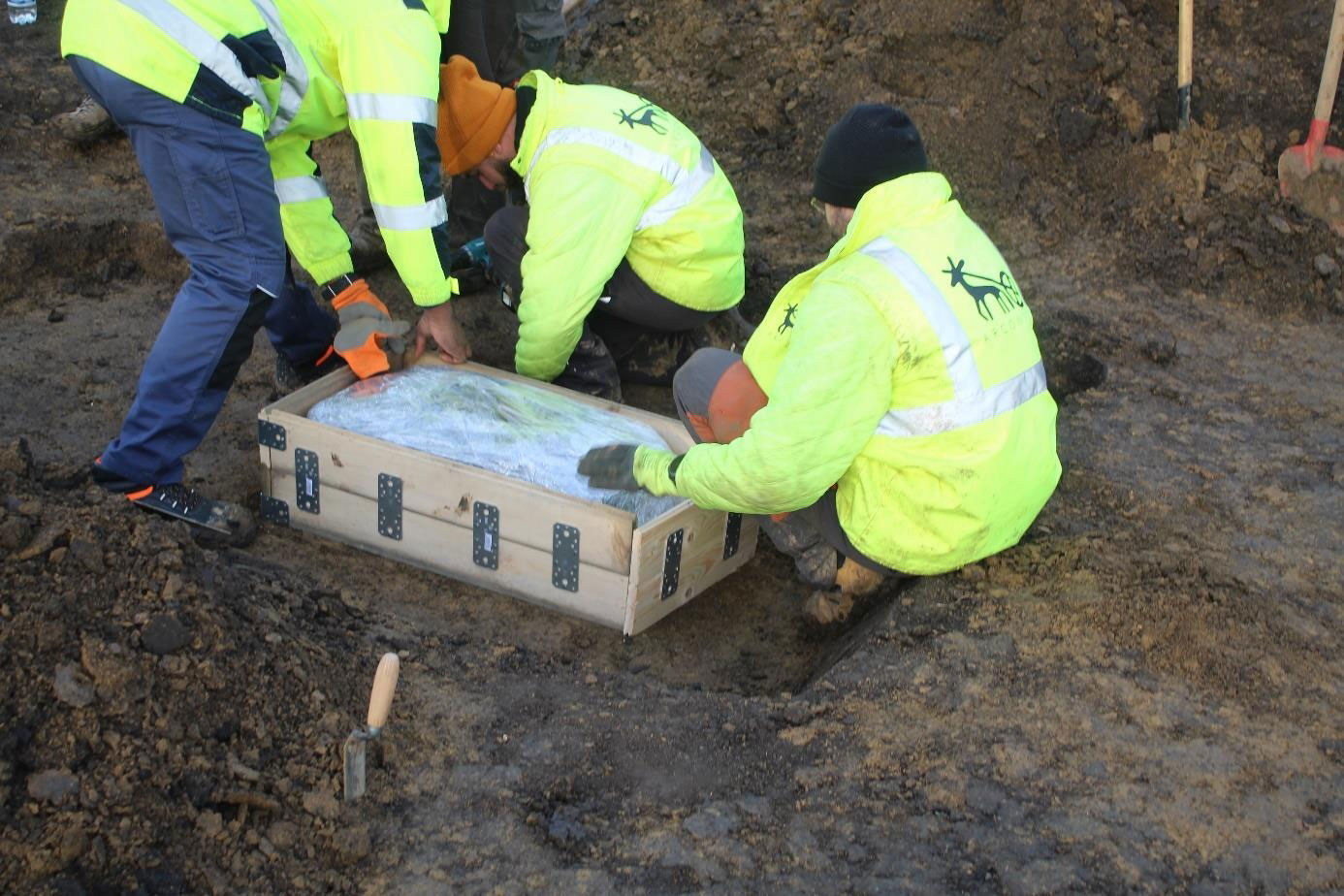
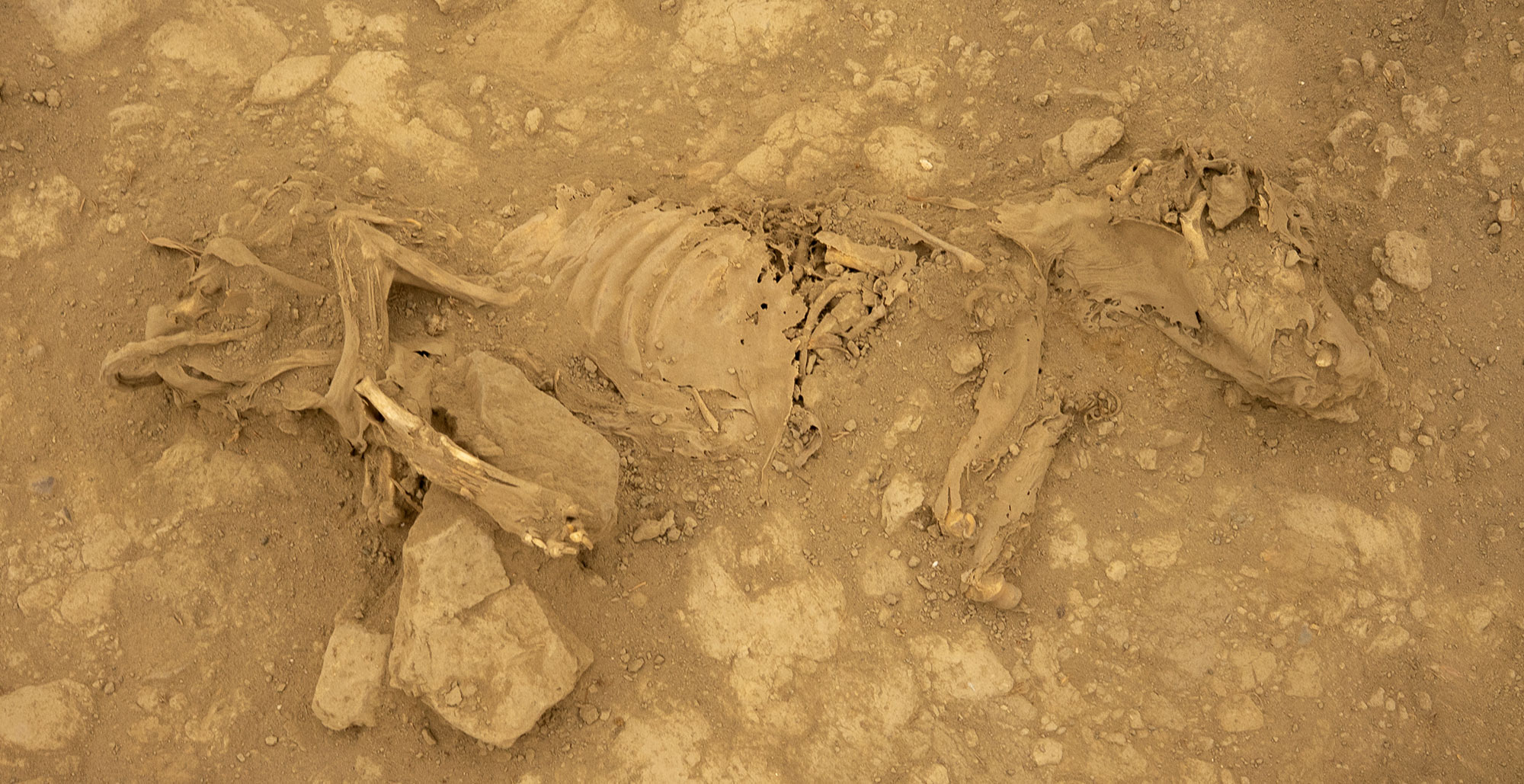
STENLØSE, DENMARK—Live Science reports that human and animal bones, as well as an unpolished flint ax head, were recovered from what was once a bog on Denmark’s island of Zealand during an investigation conducted before a construction project. The style of the ax suggests that the bones date to the early Neolithic period, more than 5,000 years ago, according to Emil Struve of the ROMU museums. “We know that traditions of human sacrifices date back that far—we have other examples of it,” he said. The human remains include leg bones, a pelvis, and part of a lower jaw with some teeth still attached. The rest of the body probably lay outside the protective layer of peat and was not preserved. Examination of the pelvis and teeth may yield information about the person’s age and sex. Struve and his colleagues plan to conduct a full excavation of the site in the spring. To read about canine remains found in a Danish bog, go to "Denmark's Bog Dogs."
Did the Aztecs Use Mountains to Track the Sun?
RIVERSIDE, CALIFORNIA—According to a statement released by University of California, Riverside, the Aztecs used the mountains of the Sierra Nevada, along the eastern edge of the Basin of Mexico in which Mexico City is located, as a solar observatory to track the sunrise. Detailed knowledge of the movement of the sun and the timing of the dry and monsoon seasons would have been required in order to grow enough food to feed the three million people thought to have lived in the region before the arrival of Europeans in 1519. The scientists, led by ecologist Exequiel Ezcurra, began the search for a possible observation spot in ancient Aztec texts. References to Mount Tlaloc led them to the site of a temple on the summit of Mount Tlaloc. Then, using a computer model, the researchers determined that a causeway structure at the temple aligns with the rising sun on February 24, the first day of the Aztec year. “When the sun rose at a landmark point behind the Sierras, they knew it was time to start planting,” Ezcurra explained. “The Aztecs were just as good or better as the Europeans at keeping time, using their own methods.” Read the original scholarly article about this research in Proceedings of the National Academy of Sciences of the United States of America. To read about a remarkably well-preserved collection of wooden objects recovered from the foot of the Templo Mayor in Tenochtitlan, go to "Aztec Offerings," one of ARCHAEOLOGY's Top 10 Discoveries of 2022.
Advertisement