Study Hints at Heavy Toll of Illness in a Medieval German Village
KIEL, GERMANY—Based upon an examination of skeletal remains and analysis of DNA extracted from teeth, as many as one-third of the people buried in an early medieval cemetery in a town in northern Germany suffered from an infectious disease, according to a Live Science report. Biochemist Ben Krause-Kyora of Kiel University and his colleagues found that of the 70 individuals in the study, more than 30 percent had hepatitis B; parvovirus B19; variola virus, which causes smallpox; or one of the two bacteria that cause leprosy. Seven of these individuals carried two pathogens, and one young man had three—hepatitis B, parvovirus B19, and Mycobacterium leprae. “We wanted to show which pathogens circulated in an early medieval population and how high the infection rates were,” Krause-Kyora explained. Crop failures and famine brought on by cold temperatures in the sixth and seventh centuries A.D. may have contributed to the high rate of illness, he concluded. Read the original scholarly article about this research in Genome Biology. To read about excavations searching for evidence of Berlin's earliest days, go to "Letter from Germany: Berlin's Medieval Origins."
Notre Dame’s Lead Coffin Burials Examined
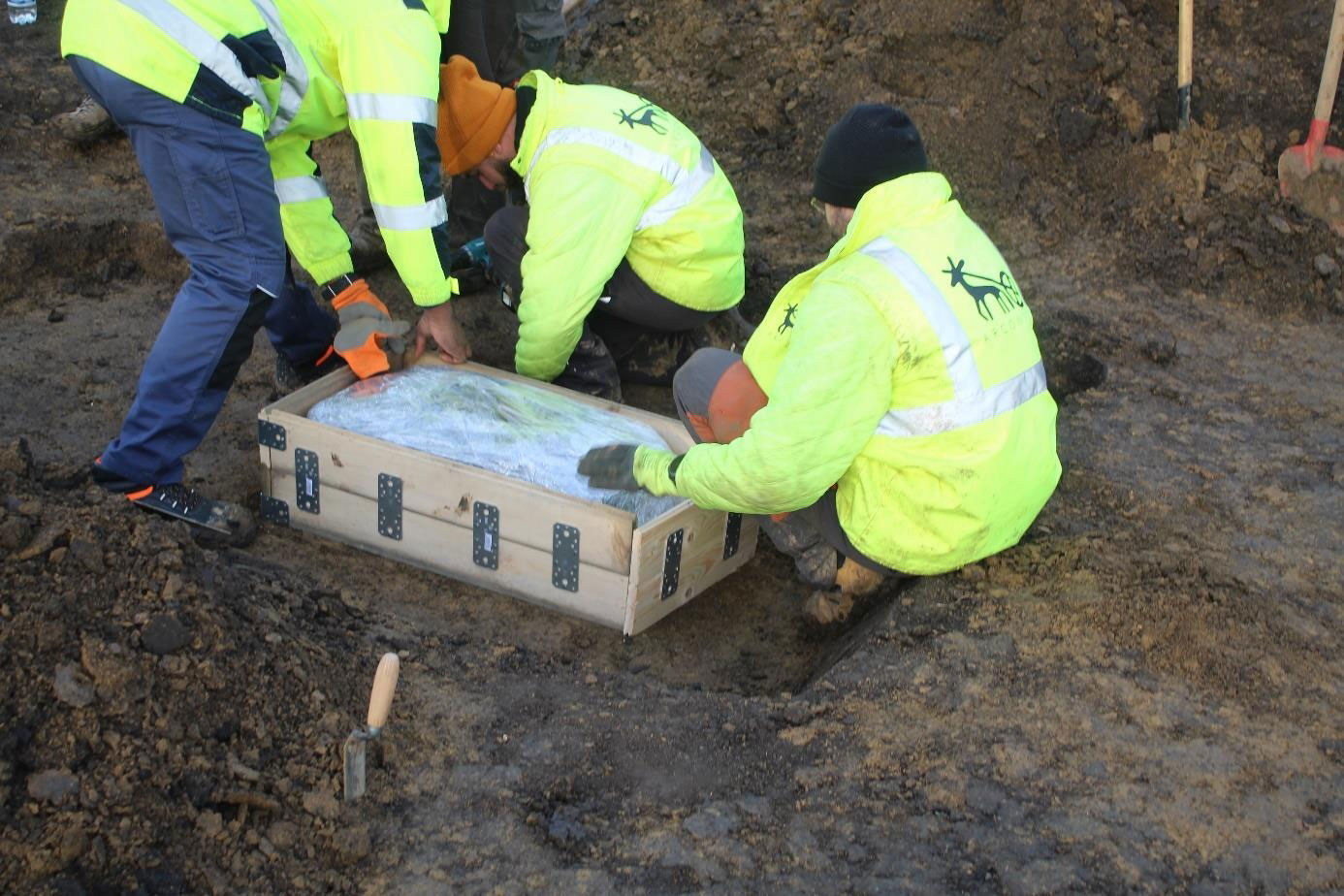
PARIS, FRANCE—According to a report in The Guardian, researchers led by Eric Crubézy of the University of Toulouse III have examined the contents of two body-shaped lead coffins found buried under the nave at Notre Dame Cathedral. The floor of the nave was removed as part of the preparations to install a new spire on the 850-year-old structure, which was heavily damaged by fire in 2019. A brass plaque on the first coffin identified the remains within as Antoine de la Porte, a rich and influential head of the cathedral who died in 1710. Archaeologist Christophe Besnier of France’s National Institute of Preventive Archaeological Research (INRAP) said that the priest had led a sedentary life, was in his eighties when he died, and had “extraordinarily good teeth.” The second coffin, which does not have a name plaque, is thought to date to the fourteenth century. The remains in this coffin belonged to a man who died in his thirties. Because the condition of his hip bones suggest he had been an experienced horseman, researchers have dubbed him “Le Cavalier.” This man’s teeth had been destroyed by chronic disease, and his skull was deformed, perhaps from wearing a headdress or headband as a baby. At death, he is thought to have been embalmed and buried wearing a crown of flowers. To read about sculptures found underneath Notre Dame's floor during restoration, go to "Around the World: France."
Additional Geoglyphs Spotted in Peru’s Nazca Desert
LIMA, PERU—Vice reports that more than 160 geoglyphs, including depictions of humans, birds, orcas, cats, snakes, and camelids, were discovered in Peru’s Nazca Desert during field surveys conducted by a team of researchers led by Jorge Olano of Panthéon-Sorbonne University and Masato Sakai of Yamagata University. The scientists began the search with high-resolution aerial images taken with drones. Many of the geoglyphs, estimated to be about 2,000 years old, measure between just 10 and 20 feet across. This team also identified more than 140 geoglyphs in the same area in 2019. For more on identifying Nazca geoglyphs using high-resolution 3-D imaging, go to "Around the World: Peru."
3,500-Year-Old Cairn Discovered in Finland
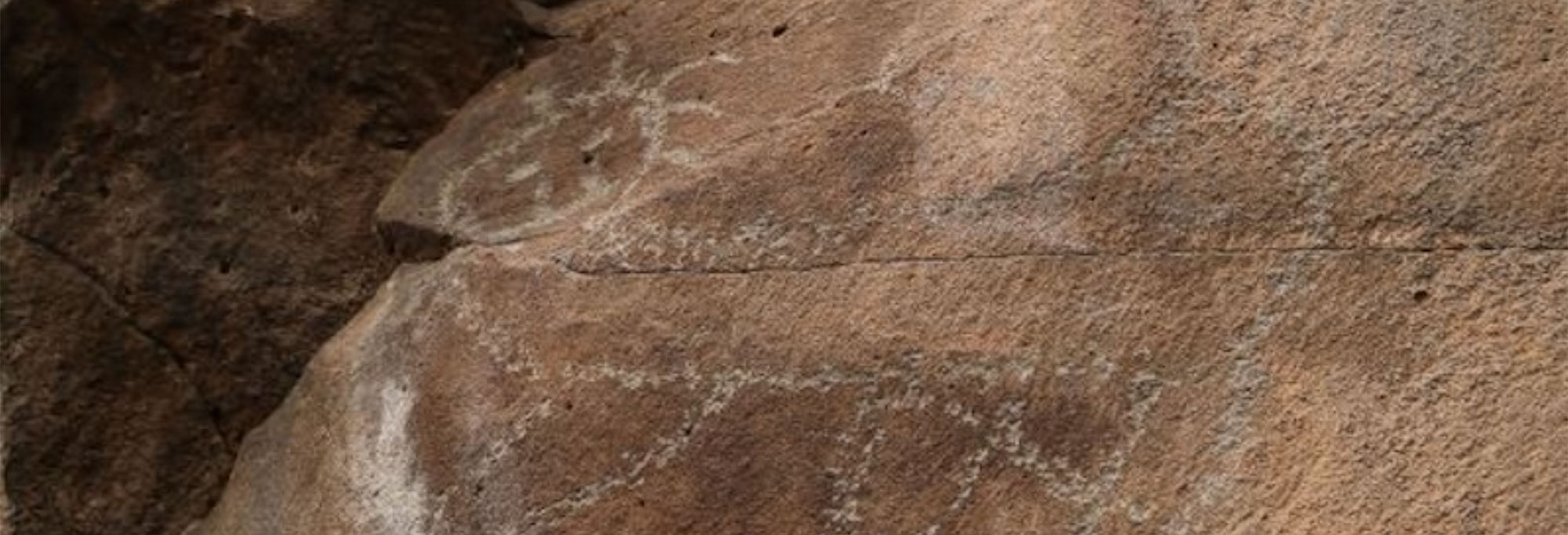
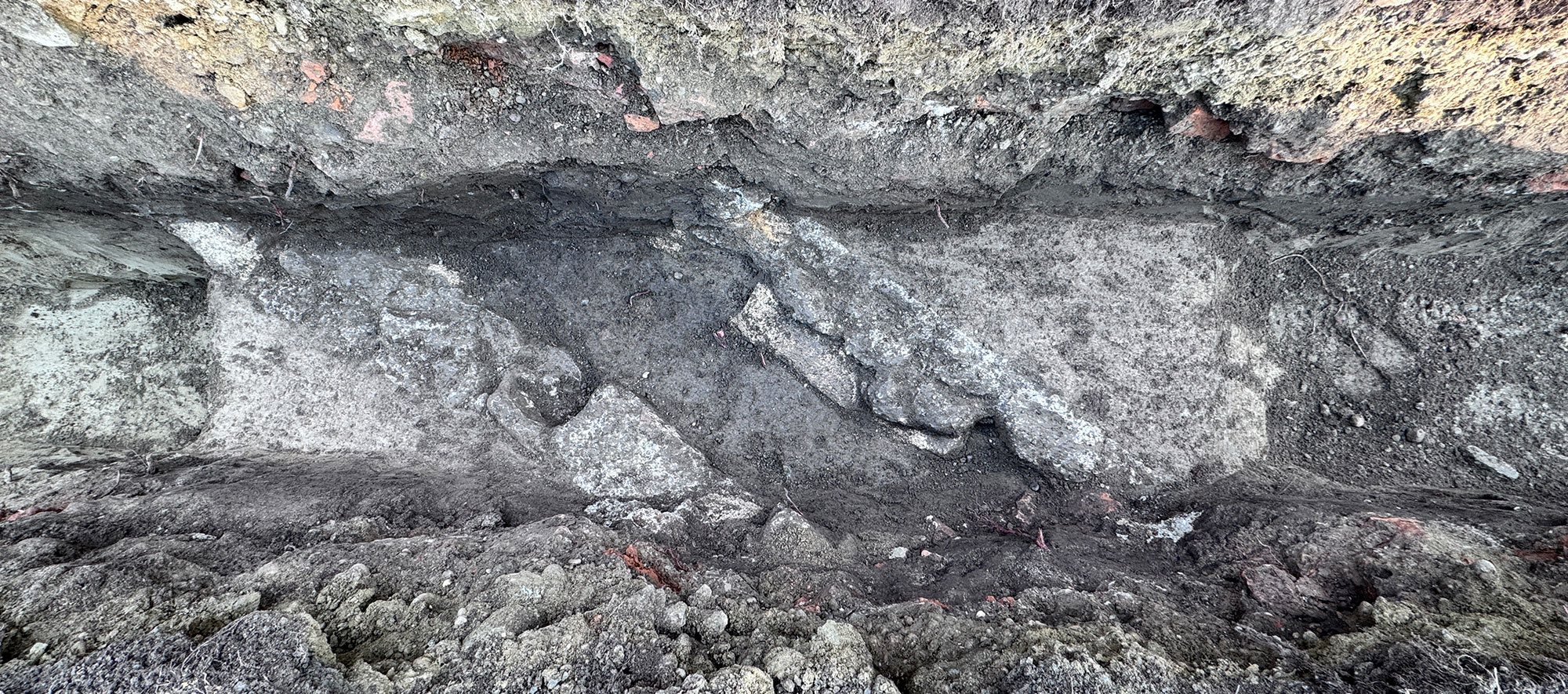
TURKU, FINLAND—YLE News reports that a Bronze Age monument was discovered on Finland’s southwestern coast during an archaeological survey. The pile of stones, which now measures about 30 feet long, 20 feet wide, and about one foot tall, is situated on the highest point of a hill overlooking the Aura River. Researchers led by Juha Ruohonen of the University of Turku suggest that when built, this cairn was probably taller and more compact. It may have marked a grave, or could have been built as a display of control over an area. Two stones incised with small, cup-like markings were identified near the cairn. To read about preserved organic material that was found in an 8,000-year-old grave in Majoonsuo, go to "Around the World: Finland."
Roman Mosaic Floor Uncovered in Naples
NAPLES, ITALY—The Charlotte Observer reports that a mosaic floor has been uncovered at the Pausilypon, a Roman villa overlooking the Bay of Naples, by a team of researchers led by Marco Giglio of the University of Naples “L’Orientale.” The mosaic, located in what is thought to have been the villa’s original main living area, has a white center surrounded by a double-layered black outline. This style dates the mosaic to the late Republican period or the Augustan period at the latest, Giglio explained. The floor may therefore shed light on the villa’s first owner, Publius Vedius Pollio, a merchant and politician who left the property to the emperor Augustus in his will in 15 B.C. Augustus renovated the villa and covered the white mosaic floor tiles when he converted the living space into a personal spa, Giglio added. To read about a marble head of Augustus that was unearthed in the southern Italian town of Isernia, go to "Head of State."
Jewelry Recovered from 18th Dynasty Tomb in Upper Egypt
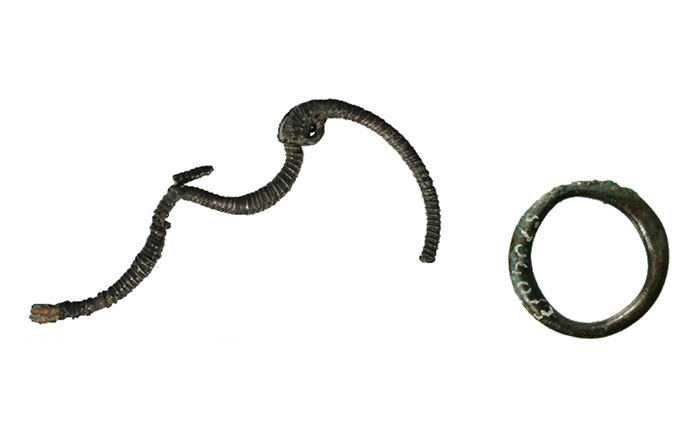
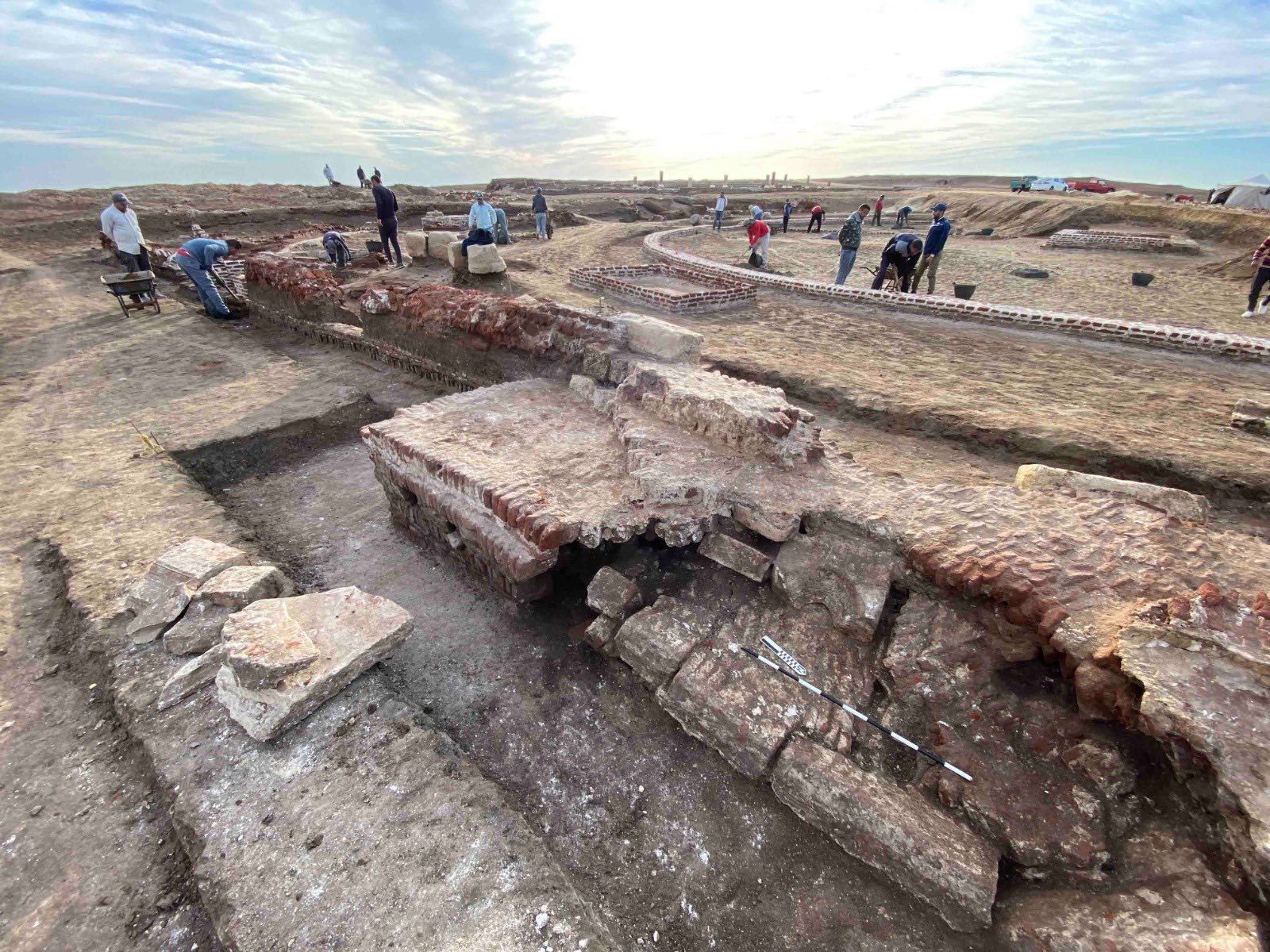
CAIRO, EGYPT—Ahram Online reports that a collection of jewelry made of gold and soapstone has been discovered in a small shaft-and-chamber tomb in the Tell El-Amarna necropolis by a team of researchers from the University of Cambridge. The capital city of Amarna was built to be the home of the cult of Aten, the sun god, by the pharaoh Akhenaten, who ruled from about 1349 to 1336 B.C. The jewelry, including three rings and a necklace made of petal-shaped pendants, was found with the remains of a woman that had been wrapped in textiles and matting made with woven plant materials. To read about burials in Amarna that contained unusual conical headpieces, go to "Egyptian Coneheads."
Ancient Artifacts Uncovered in Oman
MUSCAT, OMAN—The Times of Oman reports that incense burners, bronze axes, and tools made from copper and steatite have been found in an 80-foot-long mass grave on the northeastern tip of the Arabian Peninsula. Researchers from Oman’s Ministry of Heritage and Tourism and Sapienza University have dated the objects to the first millennium B.C., when the archaeological site of Dibba was a trading center connecting India, Persia, and Mesopotamia. The excavation was conducted ahead of the construction of a visitor center at the site. To read about an ancient game board unearthed at a site in the Qumayrah Valley, go to "Around the World: Oman."
Rare Wooden Haniwa Unearthed in Japan
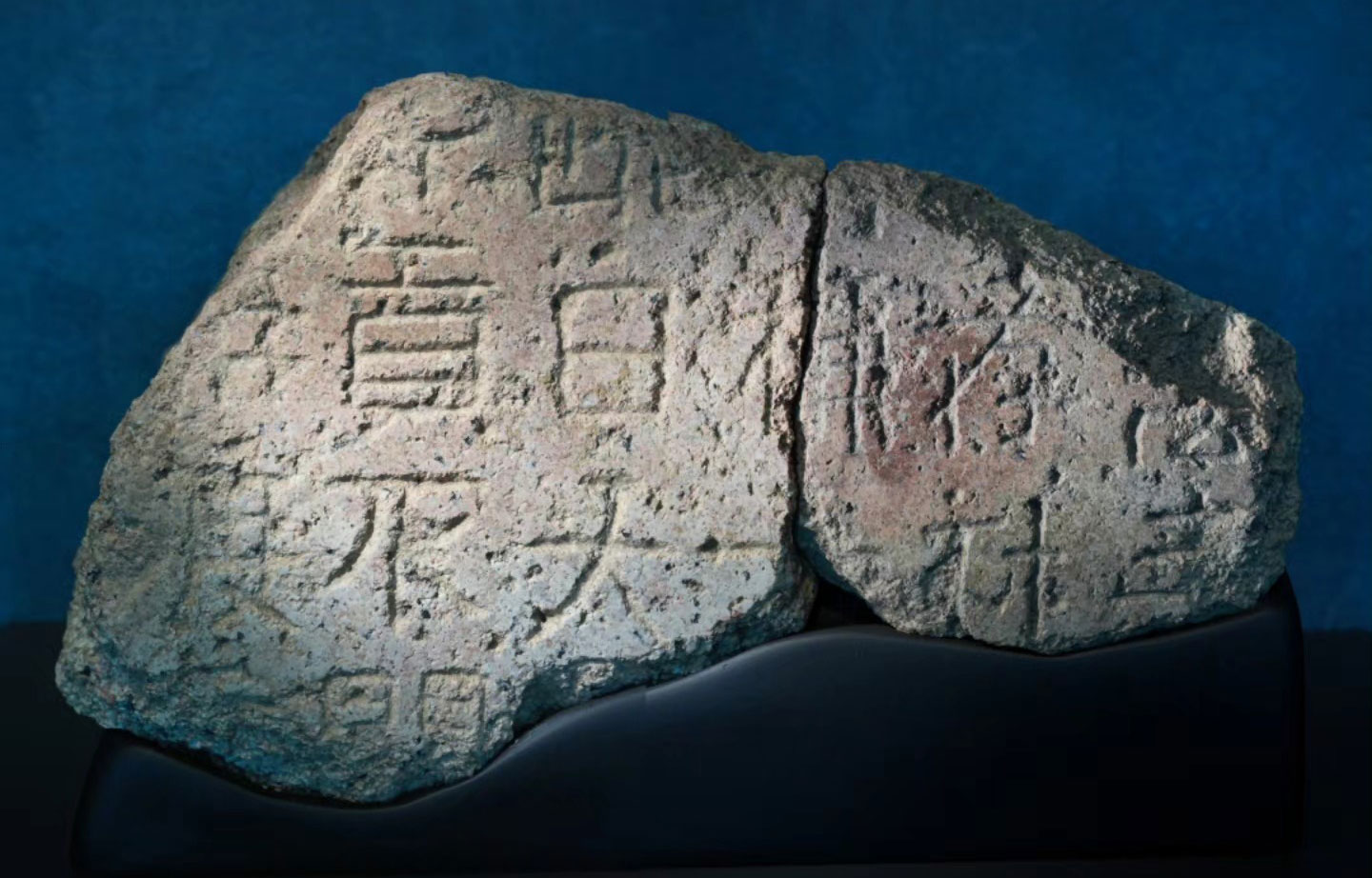
HABIKINO, JAPAN—The Japan Times reports that the remains of a wooden haniwa measuring more than 11 feet long and about two and one-half feet wide were discovered in a moat surrounding the Minegazuka Kofun, a fifth-century A.D. tomb located in Osaka Prefecture on the island of Honshu. The rare figure—the tallest found to date—was carved from kōyamaki (Japanese umbrella pine), which only grows in a few areas of Japan. “It’s possible that a figure then at the center of power was buried [at the Minegazuka Kofun],” commented Hiroaki Suzuki of the Nara Prefectural Government’s cultural property preservation division. To read about an eighth-century A.D. building uncovered at Nara's Heijo Palace, go to "Around the World: Japan."
Ireland Will Repatriate Artifacts to Egypt
CORK, IRELAND—Next year, University College Cork will return mummified human remains, a wooden sarcophagus excavated by Ernesto Schiaparelli in the early twentieth century, four canopic jars, cartonnage, and other ancient artifacts to Egypt, according to a BBC News report. The sarcophagus, thought to have belonged to a man named Hor, and the mummy, also thought to belong to a man, were donated to the school. The canopic jars, dated to between 945 and 700 B.C., are thought to be the oldest objects in the collection. They were purchased by the university from an antiquities dealer. No records of how the cartonnage was acquired have been found. To read about the virtual unwrapping of the mummy of Amenhotep I, go to "Inside a Pharaoh's Coffin," one of ARCHAEOLOGY's Top 10 Discoveries of 2022.
Stone Tools Offer Clues to Rice Domestication in China
DARTMOUTH, NEW HAMPSHIRE—According to a statement released by Dartmouth College, evidence of rice harvesting has been detected on 10,000-year-old stone tools unearthed at Neolithic sites in southern China’s Lower Yangtze River Valley. Unlike wild rice, cultivated rice seeds stay on the plant as they mature. Domestication of rice as a crop is thought to have occurred as early farmers selected plants with more seeds on them over time. Jiajing Wang and his colleagues examined 52 small, flaked stone tools and looked for residues of phytoliths, which are microscopic structures made of silica found in some plant tissues, including rice. They found rice phytoliths on 28 of the tools. They also used microscopes to analyze scratches on the surfaces of the tools, and found 30 tools with fine marks, high polish, and rounded edges likely produced by harvesting silica-rich plants. Further analysis shows that older tools were used in a method called finger-knife harvesting, in which the rice is harvested from the top of the plant. The marks found on later tools indicate that a slicing motion had been used, likely in the sickle harvesting method. “Sickle harvesting was more widely used when rice became more domesticated, and more ripe seeds stayed on the plant,” Wang explained. The rice leaves and stems could also be put to use, he added. Read the original scholarly article about this research in PLOS ONE. To read about large-scale rice farming in the Yangtze Delta beginning about 5,000 years ago, go to "Early Signs of Empire."
Advertisement