Subscribe to Archaeology
Archaeological Headlines By JESSICA E. SARACENI
Tuesday, November 29

Researchers Revisit Circumstances of Ötzi the Iceman's Death

INNLANDET COUNTY, NORWAY—Live Science reports that a new study of Ötzi the Iceman, who perished in the Italian Alps some 5,300 years ago, suggests that he might not have died in the gully where his mummified body was found. When Ötzi's body was found in 1991, archaeologists surmised that the man's body, clothing, and associated artifacts, including a backpack, bow, and quiver of arrows, had been preserved in place by the ice of a moving glacier. An arrowhead embedded in his shoulder, as well as a deep cut on his hand, indicated that Ötzi was probably killed during a conflict. Now, researchers led by archaeologist Lars Pilø of the Secrets of the Ice project propose that Ötzi died on the surface of an ice patch, and that his body and belongings were carried into the gully by periodic occurrences of ice thawing and then refreezing. The team also thinks that damage to Ötzi's equipment, which earlier researchers ascribed to combat, was likely caused by pressure from the surrounding ice. "There’s definitely been a conflict," Pilø said. "But what we say is that the damage to the artifacts is more easily explained by natural processes." Read the original scholarly article about this research in The Holocene. To read about analysis of Ötzi's clothing, go to "Ötzi's Sartorial Splendor."

How Did Paleolithic People Cook?

LIVERPOOL, ENGLAND—A study of charred plant remains dating to as far back as 70,000 years ago has revealed how Paleolithic people prepared foods to make them more palatable, according to a Haaretz report. A team of researchers led by University of Liverpool archaeologist Ceren Kabukcu used a scanning electron microscope to analyze plant fragments processed by Neanderthals between 70,000 and 40,000 years ago in Shanidar Cave, which is located in the northwestern Zagros Mountains of Iraq, as well as plants cooked by humans around 12,000 years ago in Greece's Franchthi Cave. They found that both Neanderthals and early modern humans made foods that contained multiple ingredients, primarily pulses, such as lentils, as well as nuts and grasses. “The evidence from one fragment supports this idea that Neanderthals, much like the later Homo sapiens (early modern humans), were cooking plants," Kabukcu says. "Our evidence is also supported by previous studies that were done on plant starches trapped in the tartar preserved on Neanderthal teeth found in burials from the same [Shanidar] site." Both groups prepared their foods by soaking, pounding, and grinding the plants, many of which were naturally bitter due to the alkaloids and tannins in seed coats. Such techniques would have reduced, but not eliminated, the bitter taste, Kabukcu says. Read the original scholarly article about this research in Antiquity. To read about 31,000-year-old cooked snail shells uncovered in southwestern Spain, go to "Paleo-escargot."

Monday, November 28

What Drove Madagascar’s Megafauna to Extinction?

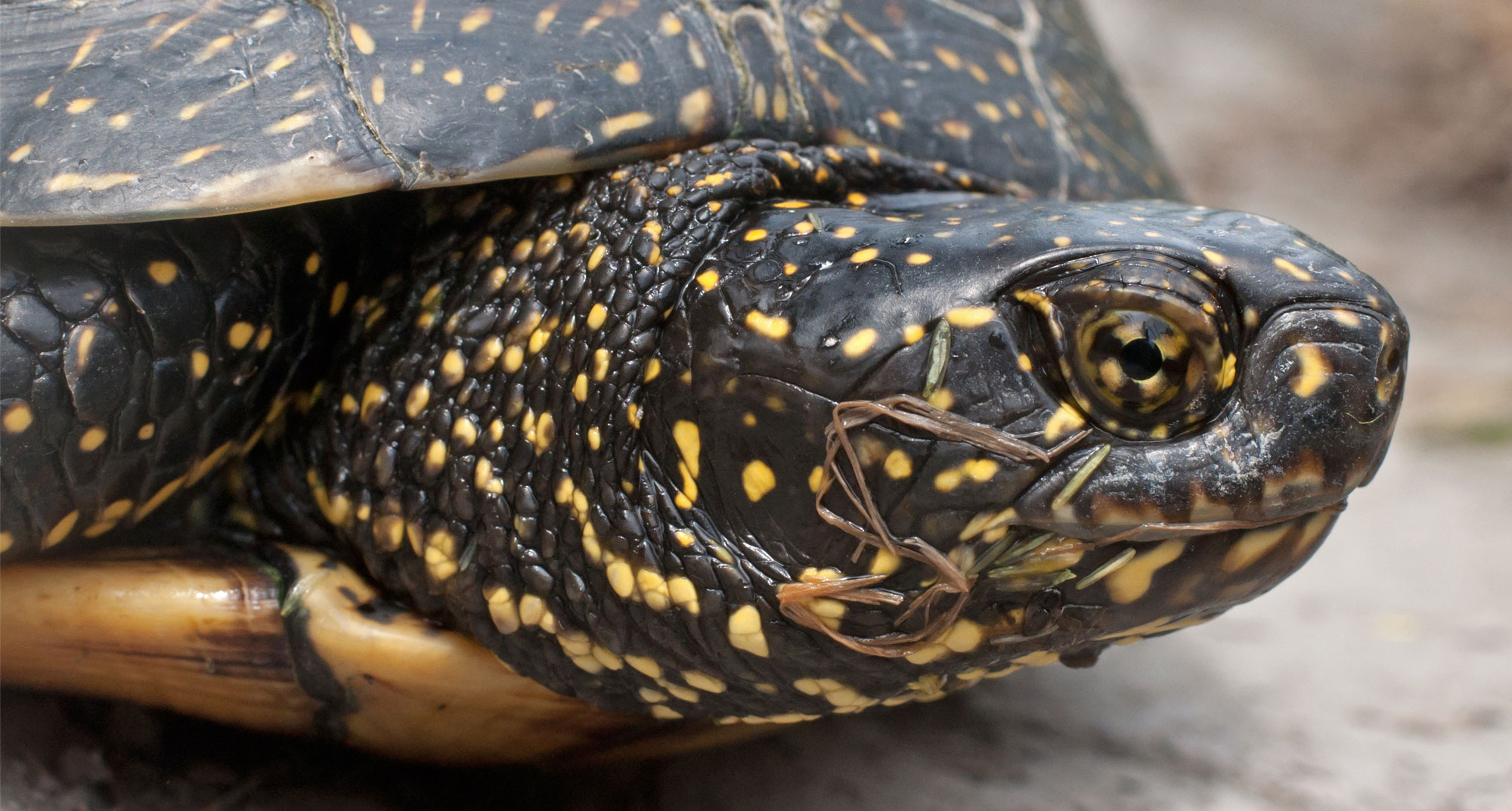
ANTANANARIVO, MADAGASCAR—According to a statement by the Max Planck Institute, excavations at three coastal ponds in southwest Madagascar show that large species, such as pygmy hippos, giant tortoises, and nine-feet-tall elephant birds, may have gone extinct 1,000 years ago because of a number of factors. Past studies have demonstrated that Madagascar’s megafauna were hunted and butchered 2,000 years ago, when humans first settled the island, leading to speculation that overhunting may have eventually driven the species to extinction. But the team’s findings show that the disappearance of megafauna around 1,000 years ago coincided with a dramatic increase in the amount of charcoal in the archaeological record, as well as the number of bones belonging to domestic species such as cattle and dogs. “Our results suggest that occupation and alteration of space, through the burning of forests for introduced grazing species, drove the extinction of large animals on the island, rather than the mere presence of hunters,” says Max Planck archaeologist Sean Hixon. Read the original scholarly article about this research in Scientific Reports. To learn about Madagascar’s megalithic tradition, go to “Sacred Stones.” 

Bronze Age Sacrificial Pits Discovered at Sanxingdui

CHENGDU, CHINA—ArtNews reports that a range of new artifacts has been discovered at the Bronze Age Sanxingdui site in southwest China. The site, which is close to the city of Chengdu in the Sichuan Basin, has been under constant excavation since 1986, when two pits filled with hundreds of jade, bronze, and ivory objects that had been ritually disposed of were discovered. Researchers have now uncovered six additional pits where people ritually sacrificed their valuables. Four of these pits date to around 1200 to 1000 B.C. and had ivory objects at the top and finely crafted bronze vessels and figurines at the bottom. One of the bronze figurines is in a kneeling position and carries on its head a ritual vessel called a Zun decorated with a dragon. The other two pits date to around 1046 to 950 B.C. One of these later pits held ivory items and small gold foil ornaments in the shape of stripes, circles, and birds—as well as a gold mask weighing more than half a pound. The final pit contained a wooden chest with traces of cinnabar pigment suggesting it had been painted red. Read the original scholarly article about this research in Antiquity. To read about a theory regarding what led to the end of the Sanxingdui civilization, go to “Seismic Shift.”

Wednesday, November 23

Winepress Found at Georgia’s Roman Fort of Apsaros

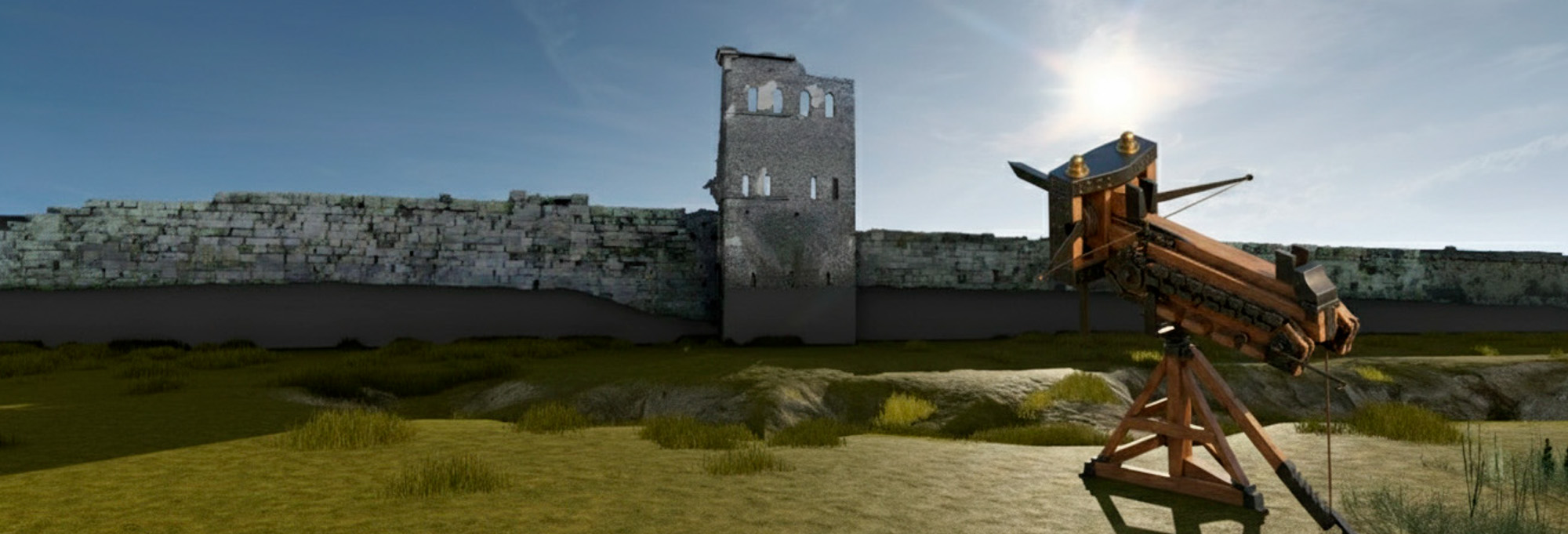
WARSAW, POLAND—Science in Poland reports that a winepress was discovered in southwestern Georgia near the site of a Roman fort during a laser scanning survey conducted by a team of researchers led by Shota Mamuladze of the Agency for the Protection of Cultural Heritage of Adjara and Radosław Karasiewicz-Szczypiorski of the University of Warsaw. The winepress was likely part of a farm that produced wine for the troops garrisoned at Apsaros in the second and third centuries A.D., Karasiewicz-Szczypiorski said. “From the point of view of the military regulations, this area should be clear,” he explained. “But people have always been interested in doing business. Therefore, brothels were built near this and other Roman camps, and, in this case, a winepress.” The winepress may have even been owned by retired Roman soldiers, he added. It was built in the local fashion, but sealed with Roman mortar, in clear exchange of ideas, Karasiewicz-Szczypiorski concluded. To read about the earliest evidence of winemaking in France, go to "French Wine, Italian Vine."

Residues in Mesopotamia’s Mass-Produced Pottery Analyzed

GLASGOW, SCOTLAND—According to a statement from the University of Glasgow, Claudia Glatz of the University of Glasgow and her colleagues analyzed animal fat residues found in 5,500-year-old beveled rim bowls from the site of Shakhi Kora in northeastern Iraq. The study suggests that the mass-produced, thick-walled conical vessels, which are found across what was Mesopotamia, were used to serve a variety of foods, but most often were used with dishes containing meat, such as stews or broths flavored with bone marrow, Glatz explained. It had been previously thought that beveled rim bowls were used as bread molds, and to measure cereal grains for distribution to laborers or for the purposes of taxation. How the bowls were used varied locally, Glatz concluded. Read the original scholarly article about this research in Journal of Archaeological Science: Reports. To read about the remnants of a Sumerian boat uncovered in southern Iraq, go to "Sailing in Sumer."

Spider Monkey at Teotihuacan May Have Been a Maya Gift

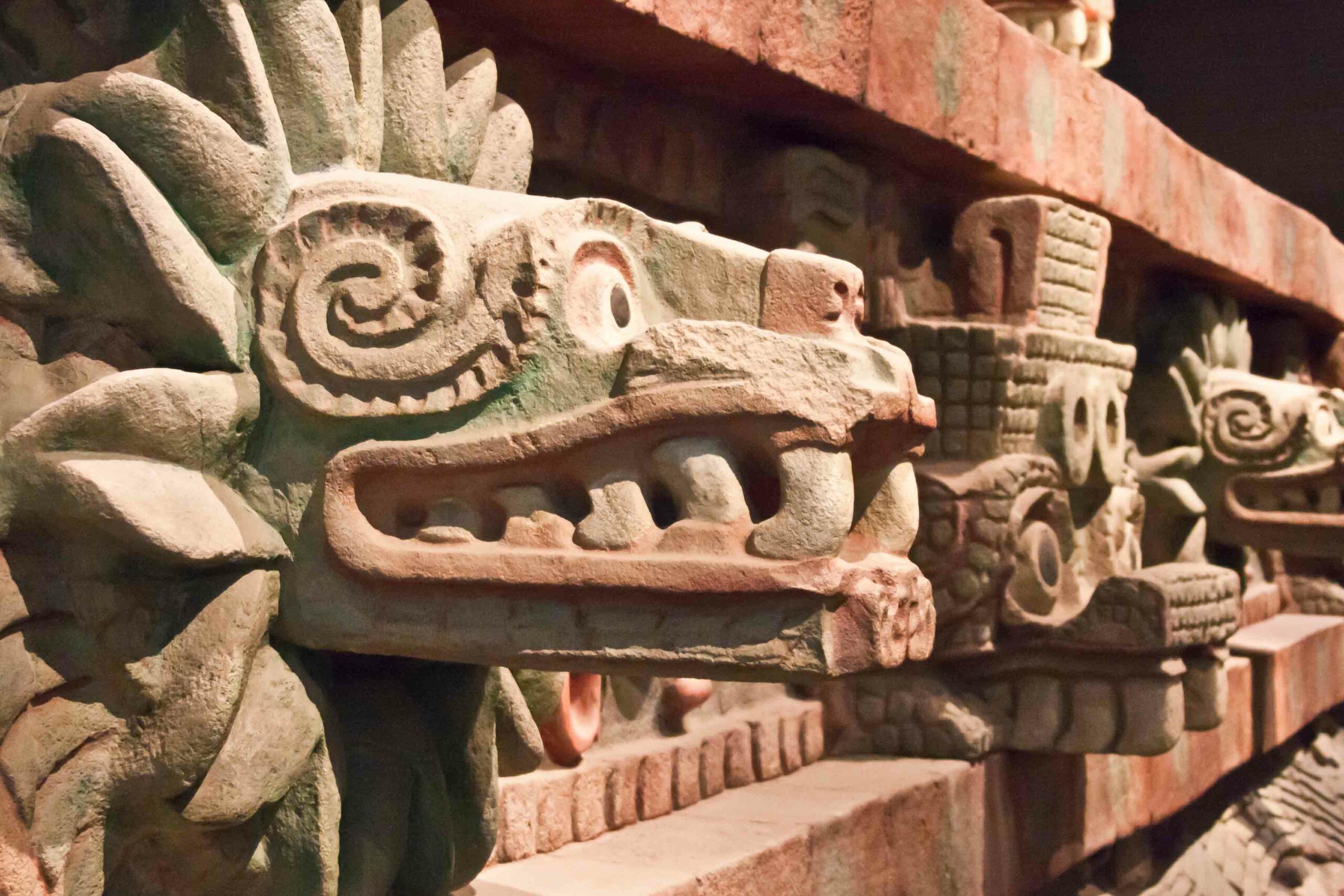
RIVERSIDE, CALIFORNIA—According to a statement released by the University of California, Riverside, the 1,700-year-old remains of a female spider monkey have been found in Mexico at Teotihuacan’s Plaza of Columns Complex, along with the remains of additional sacrificed animals, including a golden eagle and several rattlesnakes; Maya-style mural fragments; and more than 14,000 fragments of ceramics, which suggest a great feast had taken place. Figurines made of jade from Guatemala’s Motagua Valley, objects made from shells, and obsidian blades and projectile points were also recovered at the site. Nawa Sugiyama of the University of California, Riverside suggests that the primate had been a gift from Maya diplomats to the leaders of Teotihuacan. Analysis of the monkey’s bones indicates that she was between the ages of five and eight at the time of death, and had eaten a diet that included maize and chili peppers for at least two years while in captivity. While in the wild, the spider monkey had lived in a humid environment and ate mostly plants and roots. Read the original scholarly article about this research in Proceedings of the National Academy of Sciences of the United States of America. To read about the city's breeding of rabbits for food, fur, and other products, go to "The Rabbit Farms of Teotihuacán."

Advertisement