Subscribe to Archaeology
Archaeological Headlines By JESSICA E. SARACENI
Tuesday, November 22

Medieval Bone Flute Uncovered in England

KENT, ENGLAND—A fipple flute has been unearthed near the coast of southeastern England by researchers from Cotswold Archaeology who are investigating the site of a medieval building that may have been used for baking bread or brewing beer, according to a BBC News report. The flute is thought to have been carved from a sheep or goat tibia sometime between the thirteenth and fifteenth centuries. It has five finger holes on its top and a thumb hole on its back. A mouthpiece has not been recovered. To read about a musical instrument carved out of a human femur, go to "Bronze Age Keepsakes."

4,000-Year-Old Tomb in Egypt Was Oriented to Winter Solstice

MÁLAGA, SPAIN—According to a statement released by the University of Málaga, researchers led by Maria Dolores Joyanes-Díaz of the University of Málaga and colleagues from the University of Jaén suggest that a tomb in the necropolis at Aswan was oriented to the sunrise on the winter solstice so that light fell on a statue within it. The statue depicts the governor of the city of Elephantine, who lived around 1830 B.C., at the end of the 12th Dynasty. An ancient Egyptian architect, the researchers have shown, would have been able to pinpoint such a location for the tomb and the statue with simple tools. They also employed computer software to reproduce the position of the sun with respect to the horizon in antiquity and confirm the design. The solar cycle, the researchers explained, was related to ancient Egyptian ideas about rebirth and resurrection of the dead. Placing the statue in a spot where sunlight fell on it with the rising sun of the winter solstice marked the beginning of the victory of light over darkness, while the summer solstice occurred at about the time of the life-giving annual flooding of the Nile River. Read the original scholarly article about this research in Mediterranean Archaeology and Archaeometry. To read about a tomb with an unopened coffin that was found by accident at the necropolis, go to "The Unseen Mummy Chamber."

Monday, November 21

Possible Medieval Shipwreck Spotted in Norway Lake

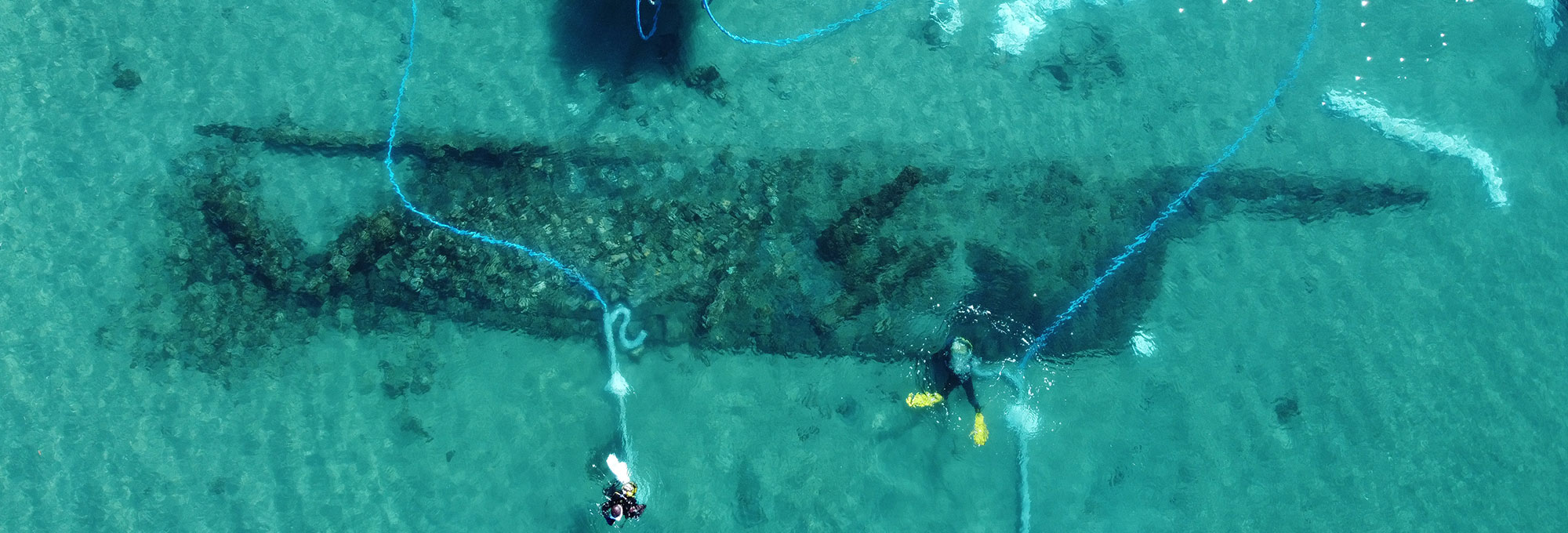
OSLO, NORWAY—Science in Norway reports that a shipwreck that may be as much as 700 years old was found in southern Norway’s Lake Mjøsa during a survey conducted by Øyvind Ødegård of the Norwegian University of Science and Technology and his colleagues. The shipwreck, detected with an autonomous underwater vehicle, rests under more than 1,300 feet of water. Ødegård said it measures about 32 feet long and eight feet wide with a steering oar situated at the back of the ship. It appears that the overlapping planking of the clinker-built vessel may be separating, perhaps because its iron nails are rusting, he added. “Because this is a freshwater lake, the wood in such a ship is preserved,” Ødegård said. “The metal may rust, and the ship may lose its structure, but the wood is intact. A similar ship to the one we now found, it would not have survived for more than a few decades if it had gone down on the coast,” he concluded. The survey of the lake will continue. To read about Viking ship burials uncovered in Norway and Sweden, go to "Sailing the Viking Seas."

Were Europe’s Early Humans Connected to Each Other?

LONDON, ENGLAND—According to a statement released by London’s Natural History Museum, two 400,000-year-old fossilized teeth discovered at the Boxgrove site in southern England are similar to fossilized teeth of a similar age found among the bones of an estimated 29 individuals at Spain’s Sima de los Huesos site. The legbones recovered at the two sites, however, differ significantly from each other. The tibia found in England, however, was found in a later sediment layer than the teeth and so the individuals may represent two different populations, explained researcher Chris Stringer. “In other words, the incisors at Boxgrove and Sima could represent the same population, but the Boxgrove tibia people are different,” he said. The fossils at both Boxgrove and Sima de los Huesos had originally been identified as Homo heidelbergensis, but new research on the physical features and analysis of DNA samples from the Sima de los Huesos fossils suggests they may actually belong to early Neanderthals. The incisors from England’s Boxgrove site could therefore also represent an early Neanderthal population, Stringer concluded, but the tibia may belong to a Homo heidelbergensis individual or something else. The researchers will now attempt to determine how much time separated these layers of sediments at the Boxgrove site. To read about a fraud fossil discovery in early twentieth-century England, go to "Piltdown's Lone Forger."

Colonnaded Hall Discovered in Egypt’s Nile Delta

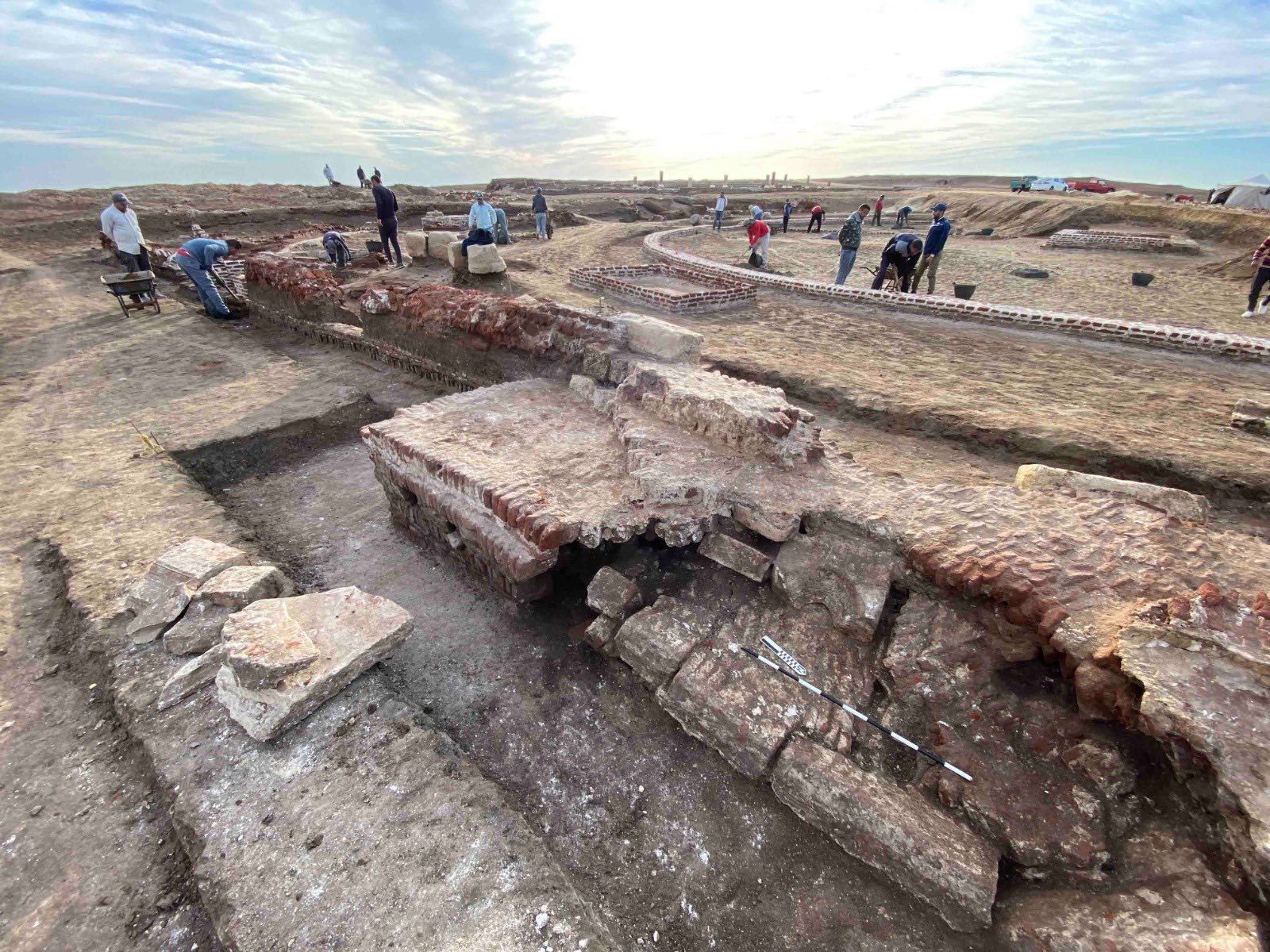
CAIRO, EGYPT—Ahram Online reports that a colonnaded hall has been discovered in Butu Temple at the site of Tel Al-Farayeen, which is located in the northern Nile Delta. “It shows a major part of the temple, which sheds light on the original plan of the temple and the architectural design of the surrounding area,” said Mostafa Waziri of the Supreme Council of Antiquities. Artifacts such as pottery and stone engravings found in the structure have been dated to the 26th Dynasty (688–525 B.C.). One limestone relief depicts a deity with a bird head wearing a white crown surrounded by feathers that may be Nekhpet or Mut, Waziri added. The researchers also found evidence of a mudbrick wall that surrounded the area. It had been built during the New Kingdom period and enlarged during the 26th Dynasty, Waziri explained. Previous excavations at the site have uncovered a huge stone building, tools used in religious rituals, and carved ivory inlaid with gold. To read about more than 100 painted coffins dating to the 26th Dynasty that were uncovered at the Saqqara necropolis, go to "Mummy Cache," one of ARCHAEOLOGY's Top 10 Discoveries of 2020.

Friday, November 18

Pyramid and Hundreds of New Kingdom Coffins Found in Egypt

CAIRO, EGYPT—Live Science reports that exploration near an Old Kingdom pyramid dedicated to Teti, who ruled in the Sixth Dynasty from about 2323 to 2150 B.C., has uncovered a series of shafts containing New Kingdom (1550–1070 B.C.) burials. “Teti was worshipped as a god in the New Kingdom period, and so people wanted to be buried near him,” said Egyptologist Zahi Hawass. The burials include a limestone sarcophagus, some 300 coffins marked with the names of the deceased, and well-preserved mummies. “The coffins have individual faces, each one unique, distinguishing between men and women, and are decorated with scenes from the Book of the Dead,” Hawass explained. One coffin has a mask made of gold, he added. Pieces to the game Senet, small figurines, statues of the god Ptah-Sokar, and a metal ax were also recovered. In addition to the burials, Hawass and his team unearthed traces of a pyramid belonging to a queen named Neith. “It is amazing to literally rewrite what we know of history, adding a new queen to our records,” Hawass concluded. To read about monuments built during the New Kingdom reign of Tutankhamun's grandfather, go to "Rediscovering Egypt's Golden Dynasty."

Advertisement