Pottery Unearthed at Peru’s Huaca la Palma
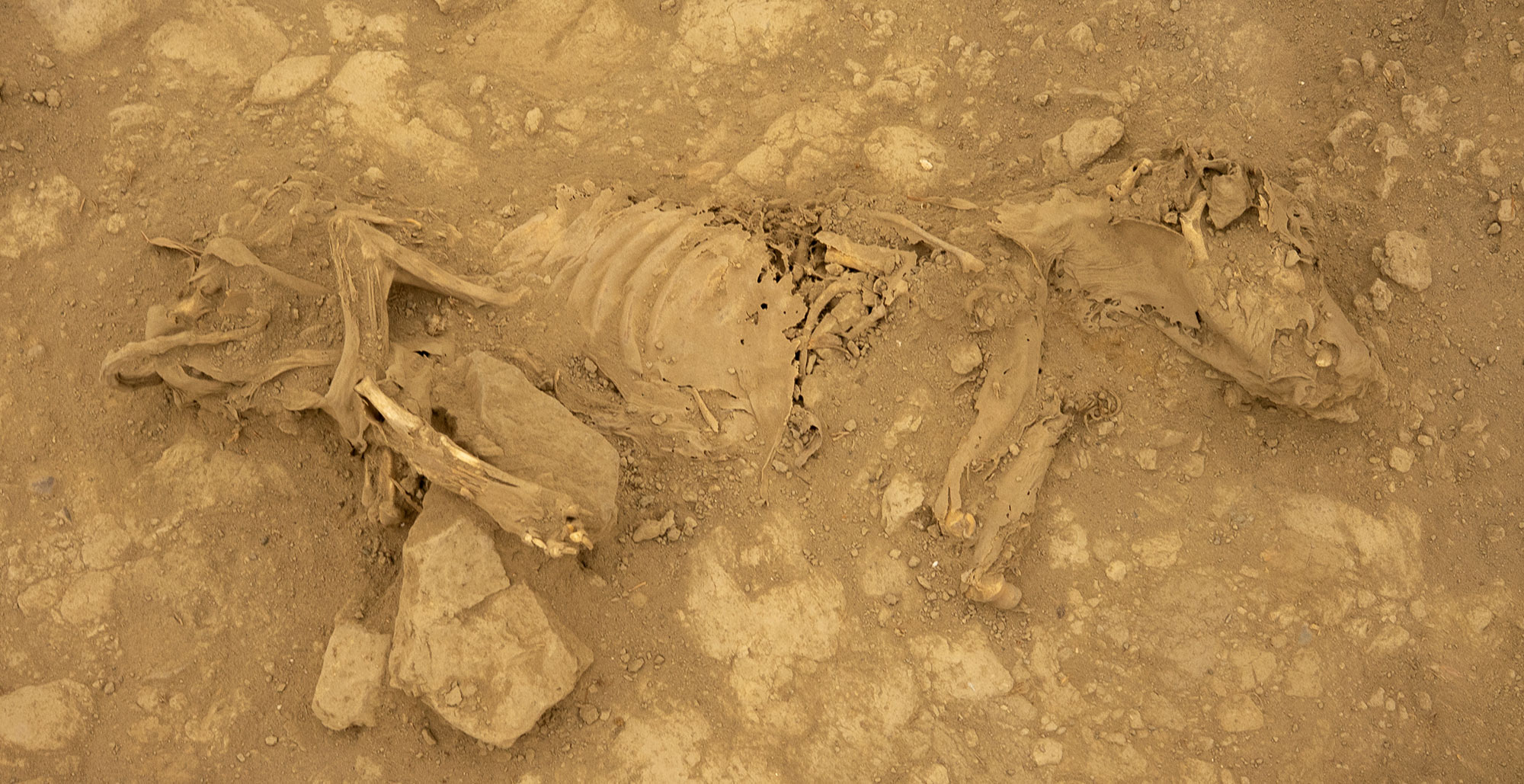
LIMA, PERU—Andina reports that four ceramic bottles and a small bird-shaped jug were uncovered in the northeastern corner of Huaca la Palma, the main building at the Maranga Archaeological Complex. The pottery is thought to date between A.D. 1470 and 1532, and to have been crafted by the Ychsma culture, which occupied river valleys close to Peru’s central coastline. For more about the rise of the Ychsma culture, go to "Man Meets Dog, Both Meet Death."
Moai Damaged by Easter Island Fire
SANTIAGO, CHILE—A fire on Easter Island earlier this week has burned about 148 acres and damaged an unknown number of moai, according to a BBC News report. The nearly 1,000 megaliths were carved between A.D. 1400 and 1650 by the Rapa Nui people, who positioned them facing inland in a ring around the island. The largest weigh about 74 tons and stand more than 30 feet tall. The fire is thought to have been started deliberately near the Rano Raraku volcano. Pedro Edmunds, mayor of the island, said that the damage caused by the fire cannot be undone. To read about how the moai aided the island's agricultural productivity, go to "Around the World: Chile."
Roman “Refrigerator” Found in Bulgaria
WARSAW, POLAND—According to a Science in Poland report, a food storage unit made of ceramic tiles has been unearthed at the site of a military barracks in Novae, a Roman fortress situated on the border of the Roman Empire in what is now Bulgaria. Piotr Dyczek of the University of Warsaw said that he found fragments of dishes and animal bones that had been baked inside the container. Charcoal particles and a fragment of a small bowl may have been used as a censer to repel insects, he added. The recent excavations also uncovered fragments of ceramic and lead pipes to supply water from the Dermen River; coins dated from the mid-third century to the beginning of the fourth century A.D.; and the remains of a house containing quern stones, weaving and fishing weights, spindle whorls, vessel fragments, and pits filled with bones. “At that time, Novae was slowly transforming into a civilian city,” Dyczek explained. To read about a gravestone unearthed at a Roman settlement in northwestern Bulgaria, go to "A Dutiful Roman Soldier."
Cobbled Ford Uncovered in England
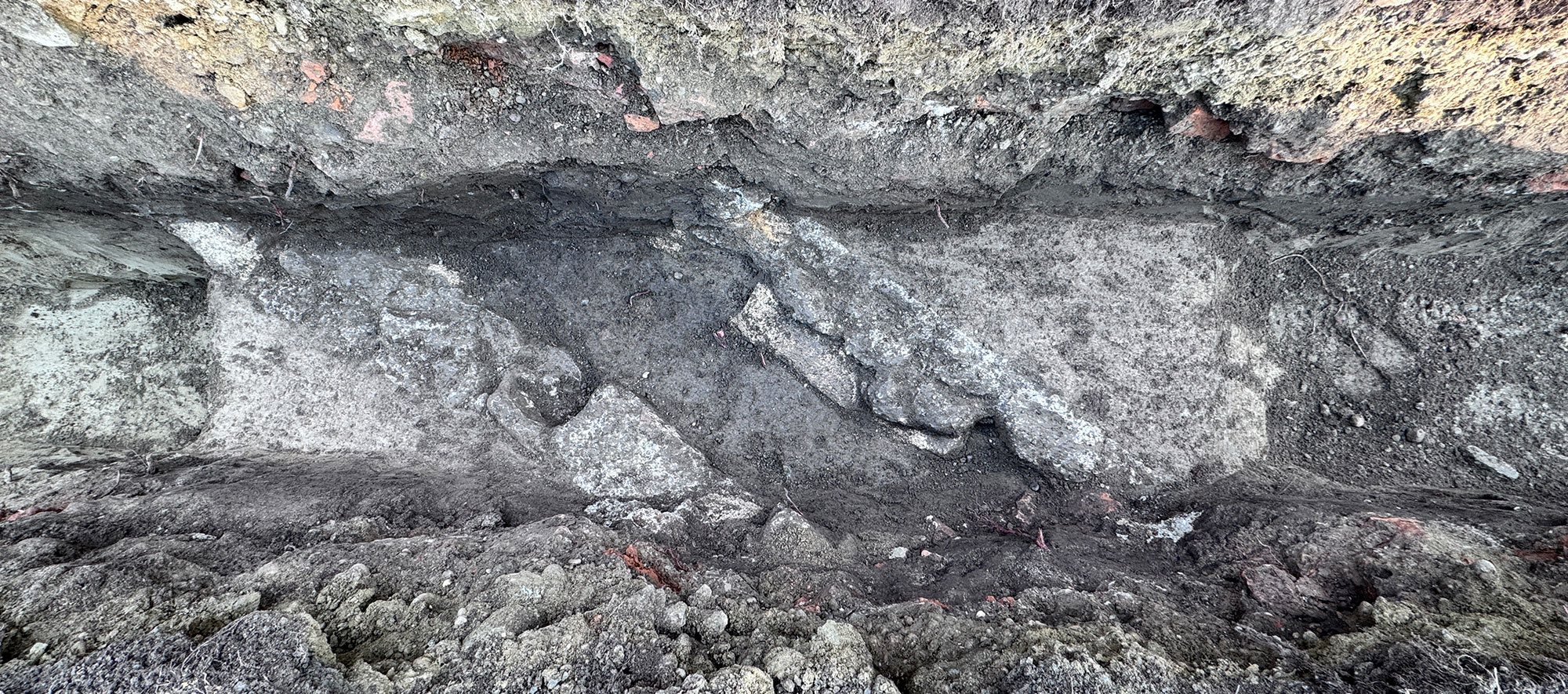
EVESHAM, ENGLAND—A cobbled path measuring 30 feet long was discovered during waterworks in southwestern England, according to a BBC News report. Archaeologist Aidan Smyth of the Wychavon District Council said the perfectly fitted stones were once used as a ford to cross a brook, and may date to the first century A.D. Marks in the cobbles suggest the ford was used by carts, he added. “If it is of a Roman date, it’s the only one of its kind in Britain,” Smyth said. For more on Roman Britain, go to "Identifying the Unidentified."
1,800-Year-Old Medusa Medal Unearthed in Turkey
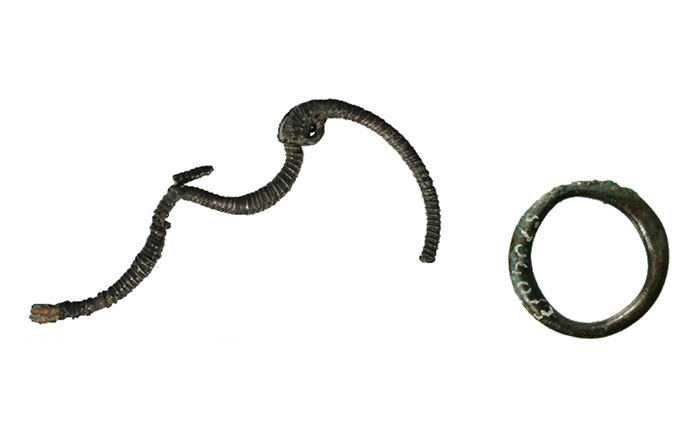
ADIYAMAN PROVINCE, TURKEY—Yeni Şafak reports that a 1,800-year-old bronze medal bearing a Medusa head has been unearthed in Perrhe, a major city of the ancient Greco-Iranian kingdom of Commagene in southeastern Anatolia. Mehmet Alkan of the Adiyaman Museum said that the medal was likely awarded to a soldier to be worn on his shield during a military ceremony. To read about a city that came under the control of Commagene, go to "Zeugma After the Flood."
Pesticides May Have Contributed to Corrosion on Roman Bowl
KENT, ENGLAND—According to a report in The National Wales, traces of pesticides have been detected on a Roman copper-alloy bowl unearthed on a farm in southeastern England in 2016. The compound chlorobenzene is known to accumulate in soil and water, and may continue to pose a threat to archaeological material, explained Luciana da Costa Carvalho of the University of Oxford and her colleagues. It was found in the spots of green-colored corrosion on the bowl, while brown-colored spots contained traces of diethyltoluamide, or DEET, which is still used in insect repellents today, Carvalho explained. Read the original scholarly article about this research in Scientific Reports. To read about a golden bowl belonging to the Urnfield culture that was recently unearthed in Austria, go to "A Shining Example."
Late Roman–Period Shrine Discovered in Egypt’s Eastern Desert
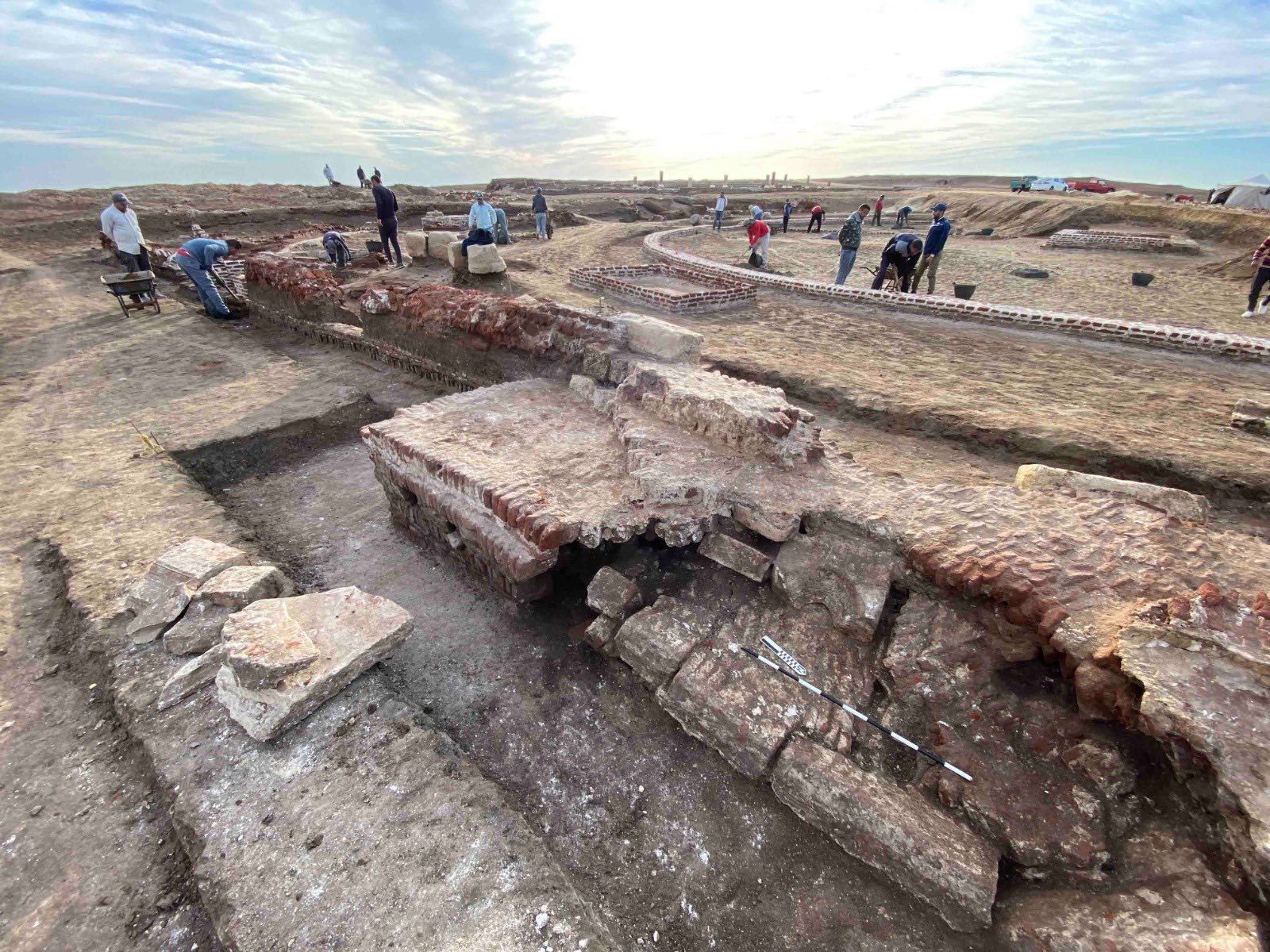
BARCELONA, SPAIN—According to a statement released by the University of Barcelona, Joan Oller Guzmán and his colleagues have uncovered a temple at the ancient seaport of Berenice, which is located in Egypt’s Eastern Desert. Dubbed the Falcon Shrine for a group of 15 headless falcons and eggs found buried within it, the temple has been dated from the fourth to the sixth centuries A.D., when the city may have been partially occupied by the Blemmyes, a nomadic group from Nubia. Inscriptions at the site include the names of some Blemmyes kings. The Falcon Shrine is thought to have been adapted to accommodate a combination of the beliefs of the Blemmyes and Egyptian traditions. Offerings such as harpoons, cube-shaped statues, and a stela recording various religious activities have also been found, Oller explained. Read the original scholarly article about this research in the American Journal of Archaeology. To read about excavations of an animal cemetery at Berenice, go to "Around the World: Egypt."
Traces of Original Manor Found at Poland’s Branicki Palace
BIAŁYSTOK, POLAND—Science in Poland reports that sections of a field stone floor thought to date to the fifteenth and sixteenth centuries has been unearthed in the parade courtyard of the Branicki Palace. Maciej Karczewski of the University of Białystok said the very solid floor was probably part of a wooden building constructed by the Raczkowicz family, the first owners of the estate. “The layout of the manor complex remained completely unknown until now,” Karczewski said. “The size of this anomaly indicates it must have been a large building, and the tiles found in this place may indicate that the building could have been located close to the manor house,” he explained. The sixteenth-century layer was found right under the current surface, suggesting that layers from the seventeenth, eighteenth, and nineteenth centuries had been cleared away sometime during the twentieth century. The palace that stands on the property today was constructed in the eighteenth century, along with a baroque garden. To read about another discovery in Poland, go to "Viking Knights, Polish Days."
Pre-Hispanic Images Revealed on Early Convent Walls in Mexico
MEXICO CITY, MEXICO—According to a statement released by Mexico’s National Institute of Anthropology and History, a team of researchers removing layers of lime from the walls at the former Christian convent of Tepoztlán uncovered a well-preserved sixteenth-century mural featuring pre-Hispanic iconography in chapel four. As they removed the lime, the conservators first saw a red circle measuring about three feet in diameter, and expected to find a Christian image of Mary or Jesus within it. Instead, the image features pre-Hispanic iconography, including a plume, an ax, a shield known as a chimalli, and a flower stick, which could be attributed to the god Tepoztécatl. The emblem, which was equal in size to Christian images painted on the walls, was found to have been repeated in chapels two and three at the convent. The images could help to clarify the relationship between pre-Hispanic culture and Christianity in the first years after the Spanish invasion, the researchers concluded. To read about a ritual offering of starfish that was unearthed at the Aztec capital of Tenochtitlan, go to "Mexican Star Power."
Advertisement