Search for Boston’s Enslaved Residents Underway
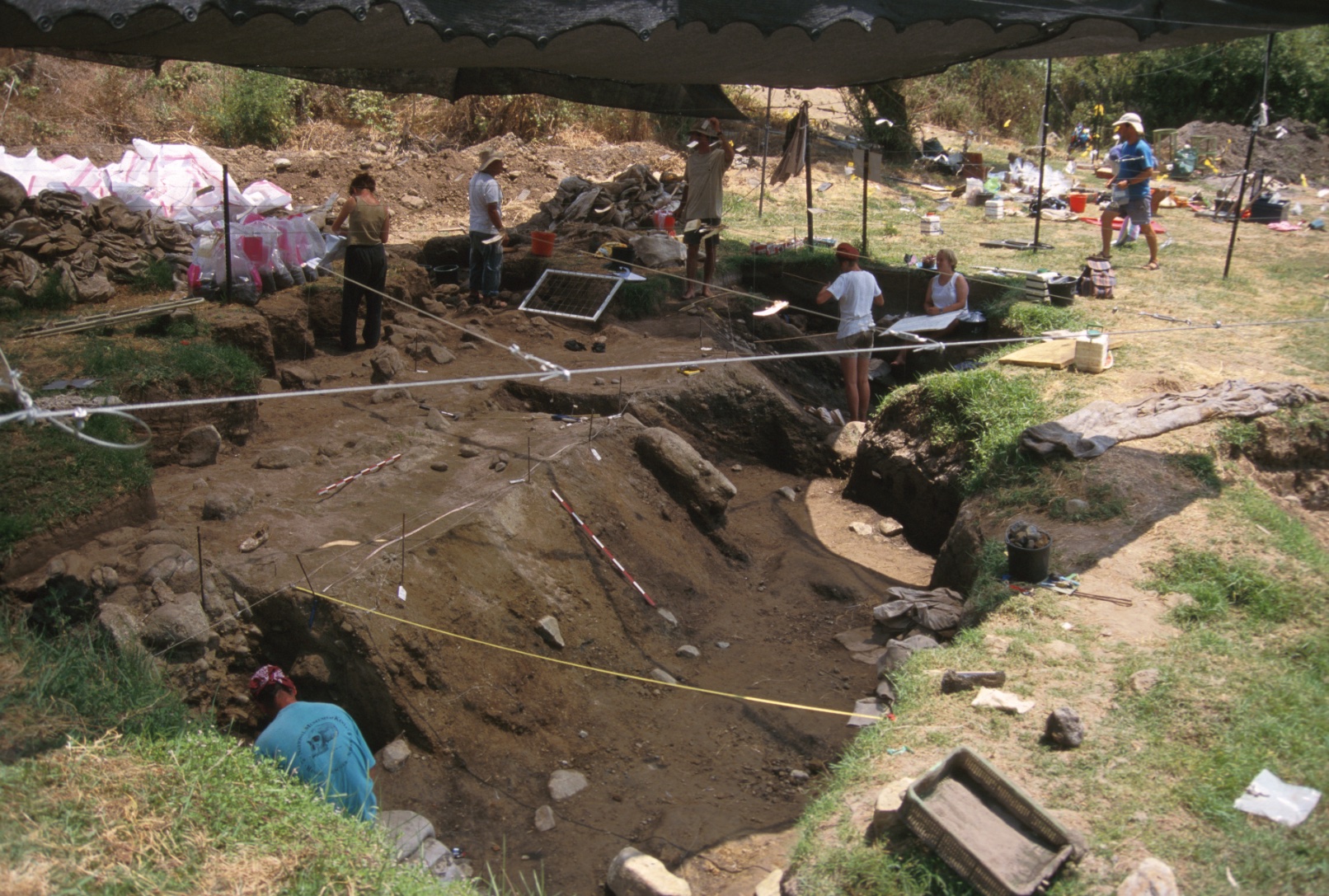
BOSTON, MASSACHUSETTS—City Archaeologist Joe Bagley, aided by volunteers, has begun an excavation in Boston’s Roxbury neighborhood at the original site of the Shirley-Eustis House, a country estate built in 1747, according to Boston.com. The mansion was home to William Shirley, the Royal Governor of Massachusetts Bay who later became Commander-in-Chief of all British and colonial forces in North America. So far, the team members have uncovered a cowrie shell, a type of shell from the Pacific region that was used as money in many parts of the world. In Boston, the shells are usually found in areas where enslaved people were housed. Historical documents indicate that at least five enslaved people, most of them children, lived at the site. The team members will look for their possible living quarters, which may have been placed over the stable and in the kitchen, in an area referred to in documents as a “dungeon,” with bottle glass windows and thick plank doors. “It is likely that if we find the original basement of the mansion house on the property, we will also be able to find these quarters, too,” Bagley said. To read about a seventeenth-century pottery fragment uncovered at another colonial house in Boston, go to "Artifact."
Prehistoric Mass Grave Uncovered in Slovakia
VRÁBLE, SLOVAKIA—The Slovak Spectator reports that a mass grave containing the remains of some three dozen people has been uncovered at the site of a settlement in western Slovakia dated from 5250 to 4950 B.C. In its later stages, the settlement was fortified with a moat and a palisade with six entrances. Zuzana Hukelová of the Slovak Academy of Sciences said the bones were discovered in a ditch near one of these entrances. “The bodies originally lay in various positions—on their backs, on their stomachs, on their sides, some in a frog-like position,” she said. Many of the individuals are thought to have been young, although only one child’s skull has been recovered. Those at the bottom of the ditch were missing their heads, she added. Further research will try to determine if these people died at the same time, and if they died of illness or injury. Scientists will also attempt to retrieve DNA samples from the bones and look for relationships between the dead. To read about a nearly 5,000-year-old mass grave in southern Poland, go to "We Are Family."
White Lead Identified in 2,500-Year-Old Containers in China
SHAANXI PROVINCE, CHINA—According to a NextShark report, researchers from the University of the Chinese Academy of Sciences and the Shaanxi Academy of Archaeology have identified synthesized white lead in bronze containers discovered at the Liangdaicun site in northwestern China. The bronze containers were recovered from the tomb of an aristocrat in a cemetery dated to between 770 and 476 B.C. The scientists analyzed the white substance with Fourier-transform infrared spectroscopy (FTIR), X-ray powder diffraction (XRD), scanning electron microscopy-energy dispersive spectroscopy (SEM-EDS), and radioactive and stable carbon isotope analyses. The tests also revealed that the substance, which may have been used as a cosmetic, was precipitated out of a solution—a process distinct from the one used in Greece in the fourth century B.C. White lead synthesis is therefore likely to have developed independently in each place, the researchers explained. Read the original scholarly article about this research in Humanities & Social Sciences Communications. To read about 2,000-year-old bronze Buddha statues unearthed in central China, go to "Made in China."
Coin Hoard Found in Southern Egypt
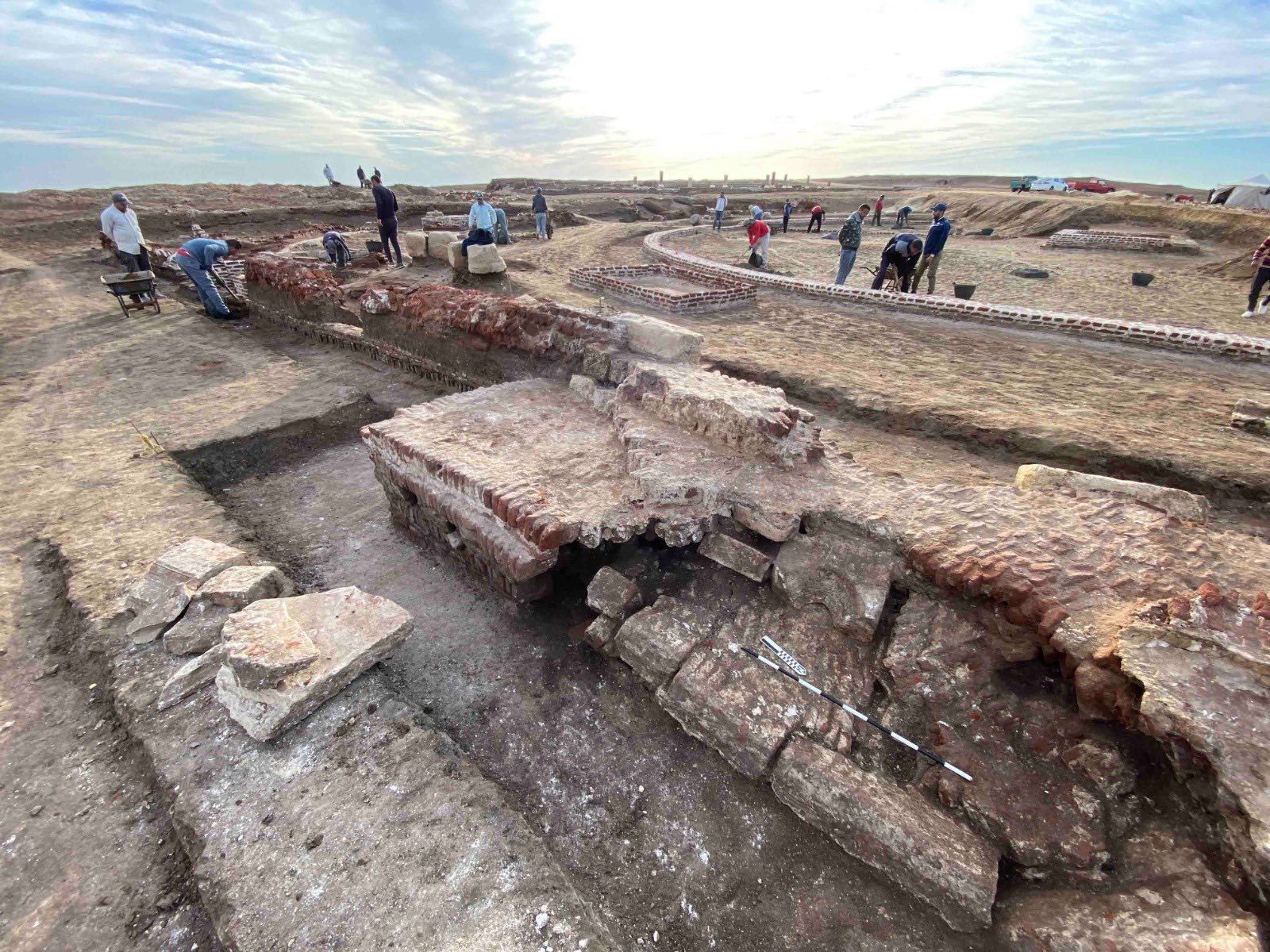
ESNA, EGYPT—Live Science reports that researchers from Egypt’s Supreme Council for Archaeology have found a hoard of coins, molds, and weights used during the minting process behind a temple site near the west bank of the Nile River in southern Egypt. Most of the coins were minted between the seventh and the thirteenth centuries, and include a variety of gold coins, more than 280 silver Islamic coins, a coin minted in Armenia during the reign of King Leo II in the thirteenth century, and bronze and brass coins minted in the Ottoman Empire. To read about a scholar's search for a notable piece of jewelry from Tutankhamun's tomb, go to "The Case of Tut's Missing Collar."
Hercules Statue Unearthed in Northern Greece
ATHENS, GREECE—The Greek City Times reports that pieces of a larger-than-life-size statue of a youthful Hercules have been unearthed in northern Greece at the ancient city of Philippi by researchers from Aristotle University. The statue, dated to the second century A.D., was found in a city square where two main streets intersected. It appears to have been reused to decorate a building dated to the late Byzantine period in the eighth or ninth century A.D. The figure wore a wreath of vine leaves and held a lion skin in his outstretched left hand. His club was found nearby in pieces. To read about the head of what is believed to be a statue of Hercules that was recovered from the Antikythera shipwreck, go to "Around the World: Greece."
Late Bronze Age Tomb Opened in Israel
PALMAHIM, ISRAEL—Haaretz reports that a burial chamber estimated to be 3,300 years old was discovered on the coast of southern Israel during a construction project. The square-shaped tomb had been carved out of bedrock with a pillar to support its ceiling, perhaps for use by a single family or clan over many generations, explained Eli Yannai of the Israel Antiquities Authority. The researchers do not expect to be able to extract DNA from the poorly preserved human remains, however. He added that the tomb was intact when it was discovered, but it appears that some items have been stolen since then. Arrowheads, bronze spear tips, pottery and bronze vessels, amphoras, bowls, cooking vessels, and oil lamps remain in the tomb. Some of the vessels are tiny, and may have held precious substances imported from Cyprus, Lebanon, and Syria. The settlement where these people lived may now be underwater, Yannai concluded. To read about the abrupt end of the Bronze Age site of Tel Kabri, go to "Around the World: Israel."
19th-Century Coal Chute Uncovered in Nova Scotia
HALIFAX, NOVA SCOTIA—An investigation ahead of a road construction project near downtown Halifax has uncovered a brick and stone structure dated to the nineteenth century, according to a CBC News report. “Basically it is a cavity that was used to store coal, so it’s called a coal chute or a coal port,” explained project manager Donna Davis of Halifax’s Cogswell District. Coal would have been dumped into the chute through a grate at road level to be used as fuel. It is not yet known if the building, which was located near the Halifax waterfront, was residential, commercial, or industrial, Davis added. The construction project has also revealed large storm sewer tunnels made of brick. To read about archaeological investigations of Nova Scotia's French colony of Acadia, go to "Paradise Lost."
New Kingdom Sarcophagus Discovered at Saqqara
CAIRO, EGYPT—Ahram Online reports that a team of researchers led by Ola El Aguizy of Cairo University has recovered a sarcophagus that belonged to a man named Ptah-M-Wia at the Egyptian necropolis of Saqqara. The tomb of Ptah-M-Wia, who was a government official during the reign of Ramesses II (r. ca. 1279–1213 B.C.), was discovered last year. It consists of a 23-foot-long entrance shaft leading to a square room, and two additional empty rooms. An opening in the floor of the main room led to stairs and the burial chamber. The lid of the sarcophagus shows the deceased with a beard and crossed arms and holding the Djed symbol of Osiris and the Tyet symbol of Isis. The goddess Nut is also depicted with spread wings, along with the four sons of Horus. “The lid of the sarcophagus was broken diagonally, and the missing part was found in the corner of the chamber,” El Aguizy said. “The sarcophagus was empty except for some residue of tar from the mummification on the bottom of the sarcophagus.” Mostafa Waziri of the Supreme Council of Antiquities added that Ptah-M-Wia’s titles included royal scribe, great overseer of cattle in the temple of Ramesses II, and head of the treasury. To read about the discovery of Ptah-M-Wia's tomb, go to "The Treasurer's Tomb."
Advertisement