Subscribe to Archaeology
Archaeological Headlines By JESSICA E. SARACENI
Monday, September 19

Rock Art Discovered Near Machu Picchu

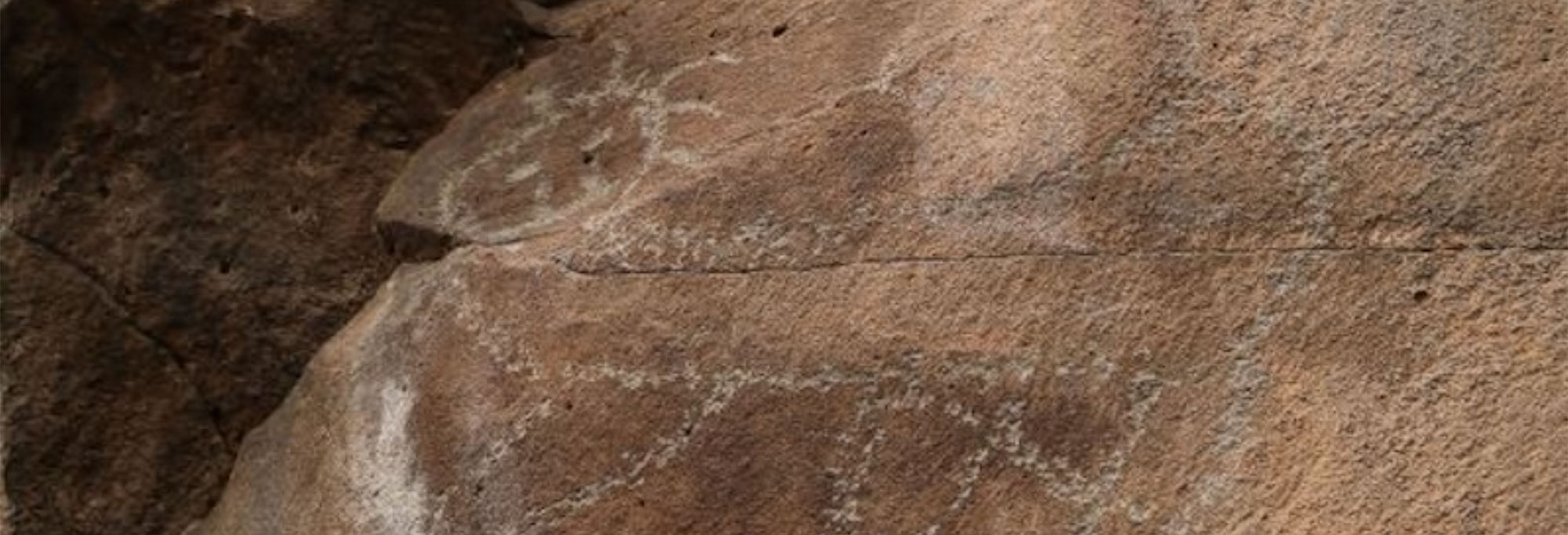
LIMA, PERU—Andina reports that partially exposed human remains and rock art have been discovered on the banks of the Vilcanota River along the railway leading to the Archaeological Park of Machu Picchu by archaeologists from the Decentralized Culture Directorate in Cusco. Archaeologist Francisco Huarcaya said the images, including camelids, the sun, and geometric shapes, were painted on different parts of a huge rock. He thinks they could be associated with guardian deities in the form of mountains, and may have a funerary context. “There are other images that cannot be identified due to geological problems and rock wear caused by long exposure to sun, wind, rain, and water filtration,” Huarcaya said. To read about a temple mural uncovered in Peru, go to "The Spider's on the Wall."

Researchers Return to Age of Exploration Shipwreck

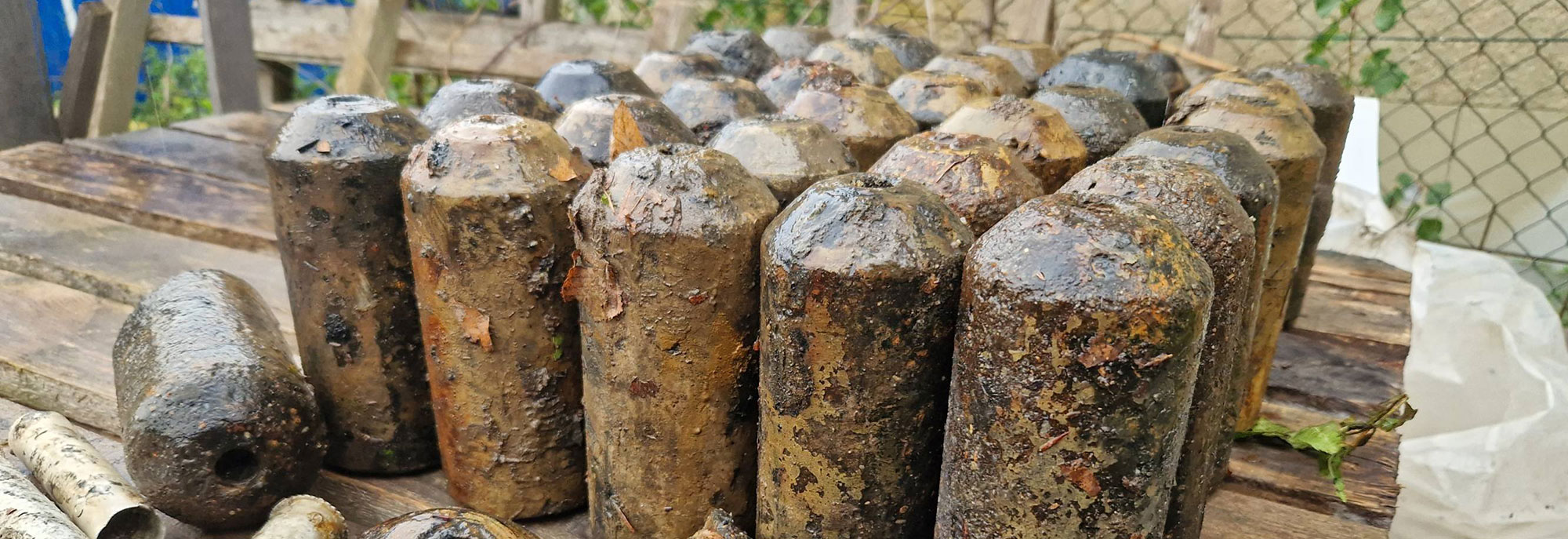
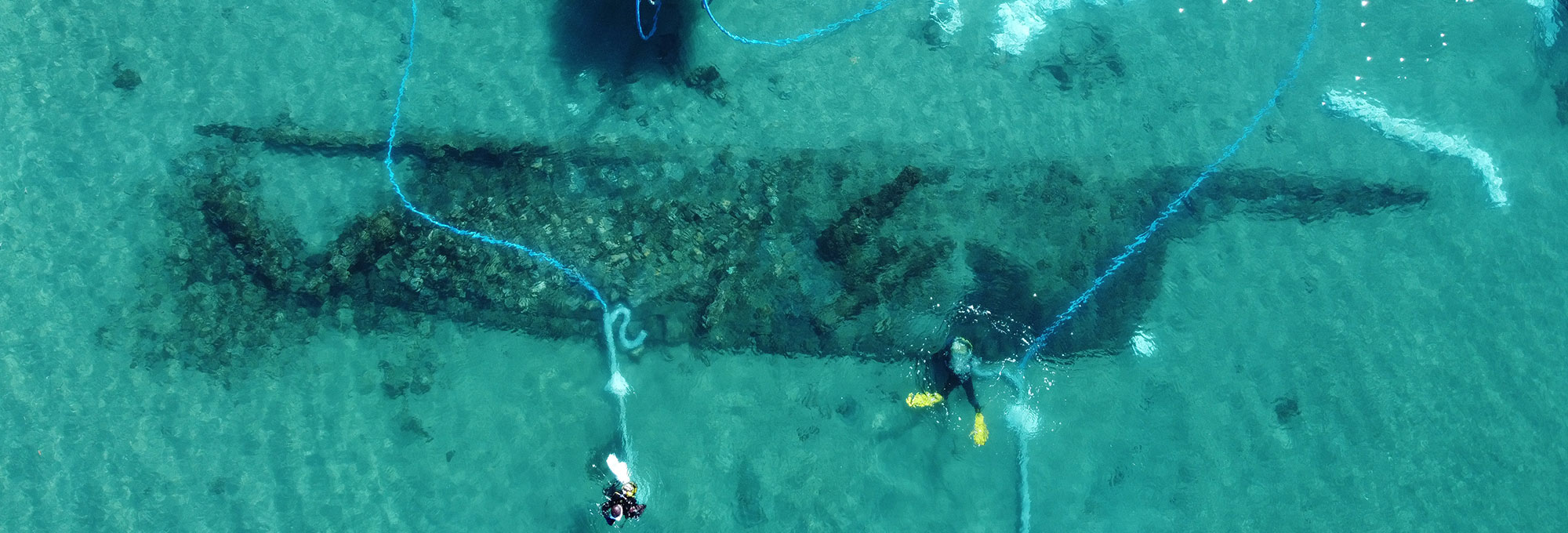
LUND, SWEDEN—According to a statement released by Lund University, Brendan Foley and a team of researchers from Lund University, Blekinge Museum, and the Danish Viking Ship Museum have returned to the well-preserved wreckage of Gribshunden, which sank in 1495 off the coast of Ronneby, Sweden. The vessel served as the flagship of the Danish Norwegian King Hans, and is one of the first to have been built to carry artillery. The team members recovered artillery, handguns, and major components of the steering gear and sterncastle. They are also creating 3-D digital models of Gribshunden to investigate how the tightly confined spaces on board may have been used by the king and his noblemen while at sea for months at a time. Future excavations will investigate why the ship sank on a voyage to Kalmar, Sweden, where King Hans expected to be elected king of Sweden. “Medieval documents state that there was a fire and explosion, but we have not seen any signs of that,” Foley said. To read about a previous discovery from the wreck of Gribshunden, go to "Around the World: Sweden."

Did European Traders Traverse East Africa’s Trade Routes?

NEW HAVEN, CONNECTICUT—According to a statement released by Yale University, European traders in pursuit of gum copal, ivory, and enslaved people may have taken advantage of established trade routes when they arrived in eastern-central Africa. Anthropologist Jessica Thompson and her colleagues found glass beads at three sites, and cowrie shells at a fourth site in northern Malawi, more than 400 miles from the coast of the Indian Ocean. The shells, which have been radiocarbon dated to between 1,150 and 1,341 years old, are thought to have originated in the Indian Ocean, while chemical analysis of the beads with laser ablation indicates that all but one of them had been manufactured in Europe in the mid-nineteenth century. The last bead was likely produced in South Asia between the fifteenth and seventeenth centuries, and may have arrived in Africa long before the other beads. “This tells you that people were already trading through very complex routes from the Indian Ocean, over mountains and around lakes to inland communities at least 1,000 years before Europeans began documenting their experiences in the region,” Thompson said. To read about a Danish fortress in West Africa that was a hub of the transatlantic slave trade, go to "Letter from Ghana: Life Outside the Castle."

Prehistoric Stone Tools Found in Western India

MAHARASHTRA, INDIA—Stone tools discovered at the cave site of Koloshi in western India may offer information about the people who created the nearby Konkan petroglyphs, according to a BBC News report. Led by Tejas Garge, Director of Archaeology & Museums for the Government of Maharashtra, excavations at the site are the first systematic investigation of the region's prehistory. Archaeologist Parth Chauhan of the Indian Institute of Science Education and Research (Mohali) said any residues found on the edges of the stone artifacts will be analyzed to try to determine how they were used. “It will take several months to find out the exact time period these stone tools belong to,” Chauhan said. “But right now, we can say that these artifacts are between 5,000 to 48,000 years old.” The more than 1,700 rock carvings found at 132 separate sites in the area depict animals, birds, human figures, and geometric designs. Their age remains unclear. For more on the Konkan petroglyphs, go to "India's Anonymous Artists."  

Friday, September 16

New Dates Offer Insight Into Ice Age Occupation of the Philippines

PUERTO PRINCESA, PHILIPPINES—According to a statement released by the University of the Philippines Diliman, evidence for the human occupation of the island of Palawan has been radiocarbon dated to between 20,000 and 25,000 years ago. Archaeologist Janine Ochoa of the University of the Philippines Diliman and her colleagues, including members of the Indigenous Pala’wan community, uncovered remnants of deer hunting and freshwater shellfish foraging in Pilanduk Cave. “[The cave] has the best preserved Last Glacial Maximum (LGM) archaeological record from any site in the Philippine archipelago,” Ochoa said. “There are not many LGM sites in the Philippines because many were likely submerged underwater when the coastlines and the sea levels were much lower during the LGM,” she concluded. To read about evidence for the arrival of humans in the Philippines, go to "A Very Long Way to Eat Rhino."

CT Scans Reveal Secrets of South American Mummies

MUNICH, GERMANY—Live Science reports that Andreas Nerlich of the Munich Clinic Bogenhausen and his colleagues examined 3-D computed tomography scans taken of three sets of naturally mummified human remains from northern Chile and southwestern Peru that have been held in museums in Germany and Switzerland. Radiocarbon dating of the remains indicates that they are between 740 and 1,120 years old. The researchers found evidence that two of the bodies belonged to men who may have died violent deaths. One had been hit on the head and stabbed in the back, while the other had suffered a dislocated neck. “The types of trauma we found would not have been detectable if these human remains had been mere skeletons,” Nerlich explained. The third set of mummified remains has been identified as a woman who died of natural causes. Read the original scholarly article about this research in Frontiers in Medicine. To read about a well-preserved mummy buried at the ceremonial center of Pachacamac on the coast of Peru, go to "All Bundled Up." 

New Thoughts on Early Animal Herders

STORRS, CONNECTICUT—According to a statement released by the Public Library of Science, hunter-gatherers living at Abu Hureyra, Syria, some 12,800 to 12,300 years ago may have kept small numbers of animals near their dwellings. Alexia Smith of the University of Connecticut and her colleagues looked for dung spherulites, or tiny clumps of calcium carbonate found in animal dung, in soil samples from the site. The study suggests that these hunter-gatherers burned dung as fuel, and may have kept sheep close to home. By the Neolithic period, the residents of Abu Hureyra also used dung to prepare plaster floors for their dwellings. A drop in the levels of spherulites could indicate that animals were kept farther away from the dwellings, perhaps because the herds had grown. Read the original scholarly article about this research in PLOS ONE. To read about a study of Africa's first pastoralists, go to "Herding Genes in Africa."

Thursday, September 15

Belgium Repatriates Ancient Artifacts to Egypt

CAIRO, EGYPT—Ahram Online reports that Belgium has handed over two ancient wooden statues to Egypt. The objects were seized from an antiquities dealer by Belgian authorities in 2016. One is a painted figurine of a standing man dated to the Old Kingdom period, from 2649 to 2150 B.C. The other is an ushabti figurine dated to the Late Period, from 712 to 332 B.C. To read about other wooden artifacts found in burials at the Saqqara necropolis, go to "The Mummies Return."

2,300-Year-Old Skeleton Unearthed in Vietnam

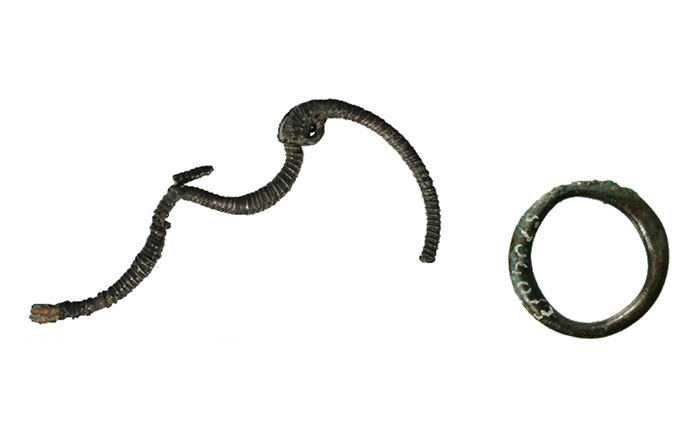
HO CHI MINH CITY, VIETNAM—Vietnam Plus reports that a 2,300-year-old skeleton has been uncovered at the Giong Ca Vo archaeological site in southeastern Vietnam. The site consists of a red soil mound where archaeologists have found 185 burial jars, 13 graves, and artifacts such as animal-shaped earrings and gold leaves, and other objects made of precious stones, glass, and mollusk shells. Two animal fangs were found at the neck of the skeleton, thought to be the remains of a man of the Dong Nai culture who stood about five feet, four inches tall. Hsiao Chung Hung of Australian National University said that the site was centrally located and probably supported a busy port in addition to craftsmen and artisans. For more on archaeology in Vietnam, go to "World Roundup: Vietnam."

Has the Maya Kingdom of Sak Tz’i’ Been Found?

CHIAPAS, MEXICO—According to a report in The New York Times, a fortified Maya settlement thought to be the capital of the Sak Tz’i’ dynasty is being investigated on private land in southern Mexico by a team of researchers including Charles Golden of Brandeis University. The site is thought to have been occupied as early as 750 B.C. until the end of the Classic period, around A.D. 900. Golden said that the ruins cover about 100 acres and include an acropolis dominated by a 45-foot-tall pyramid, temples, plazas, reception halls, a palace, ceremonial centers, and a ball court measuring about 350 feet long by 16 feet wide. Inscriptions from other sites had linked the kingdom of Sak Tz’i’ to the Maya cities of Piedras Negras, Bonampak, Palenque, Tonina, and Yaxchilan. A two-foot by four-foot wall panel recovered at the site, dated to A.D. 775, records the names of rulers, battles, rituals, and a creation account of a flood and a water serpent that may relate to the construction of the city. “The stories touch on the community’s relationship to the surrounding natural environment,” said team member Andrew Scherer of Brown University. “The area is thick with streams and waterfalls and frequently floods.” For more on the site's initial discovery, go to "Around the World: Mexico."

Advertisement