Subscribe to Archaeology
Archaeological Headlines By JESSICA E. SARACENI
Wednesday, September 14

2,600-Year-Old Cheese Discovered in Egypt

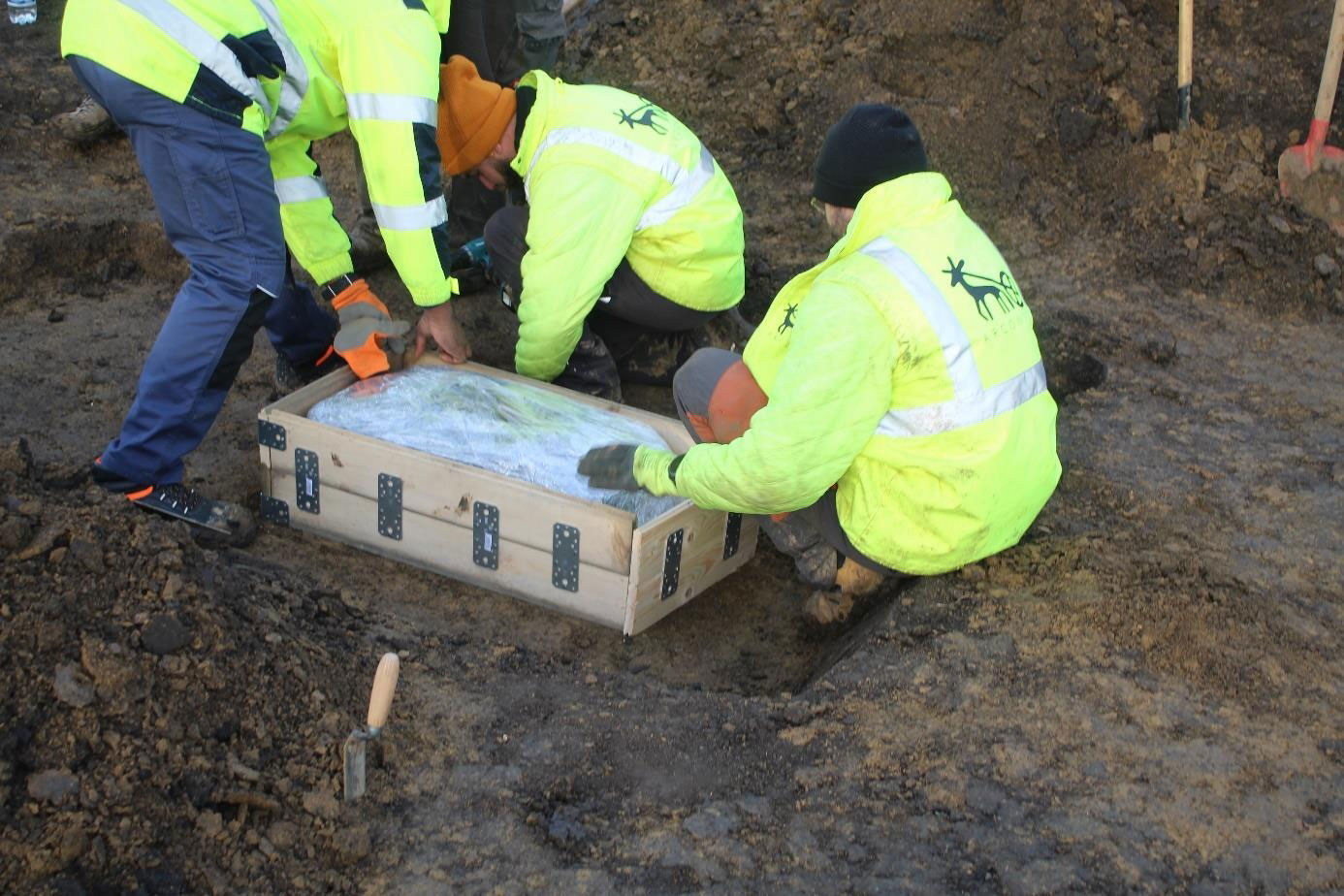
CAIRO, EGYPT—The National News reports that several blocks of white cheese have been found in clay pots inscribed with Demotic script at the Saqqara necropolis. The cheese has been dated to the 26th Dynasty, between 688 and 525 B.C. Additional containers found with the cheese have yet to be opened. To read about excavations of an ancient economic minister's burial in Saqqara, go to "The Treasurer's Tomb."

Prehistoric Remains Discovered in Underwater Cave in Mexico

MEXICO CITY, MEXICO—A human skeleton has been found in an underwater limestone cave system along Mexico’s Caribbean coastline, according to an Associated Press report. Archaeologist Octavio del Rio and diver Peter Broger found the bones, partially covered with cave sediment, about one-third of a mile into the cave system, but no signs of modern diving equipment. This suggests the remains were deposited in the cave before it was flooded some 8,000 years ago, at the end of the last Ice Age, del Rio explained. The cave system is located near the construction path of the so-called Maya Train project, the construction of 950 miles of track connecting beach resorts to archaeological sites on the Yucatán Peninsula. To read about ritual objects found in caves in Chichen Itza, go to "Maya Subterranean World," one of ARCHAEOLOGY's Top 10 Discoveries of 2019.

“Jesuit Ring” Found at French Fort in Michigan

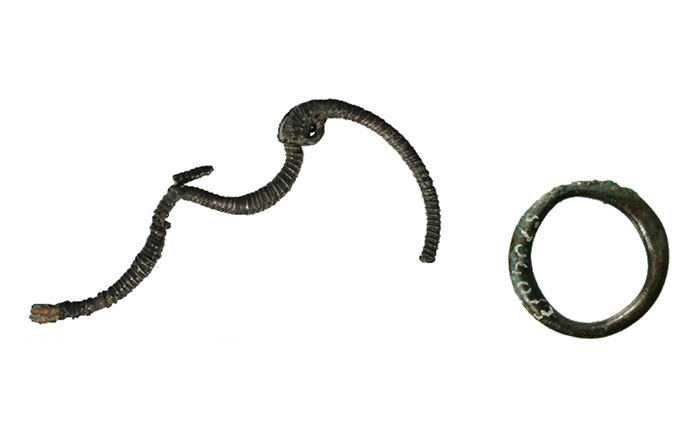
NILES, MICHIGAN—The Charlotte Observer reports that a heart-shaped ring has been unearthed in southwest Michigan at the site of Fort St. Joseph, a stronghold built by the French in the 1680s as a mission, garrison, and trading post. Erika Hartley of the Fort St. Joseph Archaeological Project said the ring, known as a “Jesuit ring,” was likely manufactured somewhere else for trading purposes, and could have been lost at any time during the century that the fort was occupied. Kylie Krueger of Western Michigan University explained that these types of rings were typically made of copper alloy with bezels in different shapes. Some of them even had glass insets made to look like precious stones, she added. To read about a late medieval ring unearthed in Wales, go to "Artifact."

Tuesday, September 13

U.S. Repatriates Roman Sculptures to Italy

NEW YORK, NEW YORK—Three fourth-century B.C. terracotta sculptures held at the J. Paul Getty Museum in Los Angeles have been repatriated to Italy after an investigation conducted by the Archaeology Section of the Italian Carabinieri for the Protection of Cultural Property, the Antiquities Trafficking Unit of U.S. Homeland Security Investigations, and the office of Manhattan District Attorney Alvin L. Bragg, Jr., according to a statement released by the Manhattan District Attorney’s Office. Bragg said that the Roman sculptures, known as the “Poet and Sirens,” were stolen several decades ago from a tomb near Taranto, Italy, by local looters, purchased by known antiquities traffickers, and then cleaned, reassembled, and eventually sold to the museum. To read about Roman sculptures that were repurposed for the Arch of Constantine, go to "A Monumental Imperial Biography."

Genomes Reveal Story of Donkey Domestication

TOULOUSE, FRANCE—According to a Science News report, donkeys (Equus asinus) were domesticated some 7,000 years ago in East Africa, based upon an analysis conducted by molecular archaeologist Ludovic Orlando of the Center for Anthropobiology and Genomics of Toulouse and his colleagues. The genomes in the study sample came from donkeys living in 31 countries today, and DNA from 31 donkeys who lived between 100 and 4,000 years ago. These genomes were then compared with the genomes of living wild asses from Asia and Africa. The study suggests that all domesticated donkeys can be traced back to a single domestication event that took place in East Africa around 5000 B.C., at about the time that the Sahara started becoming more arid. “Donkeys are champions when it comes to carrying stuff and are good at going through deserts,” Orlando said. Donkeys then spread with humans into Europe and Asia, where they formed genetically distinct groups, he concluded. To read about donkey-hemippe hybrids that were bred in Mesopotamia, go to "Kunga Power."

Ancestral Maya Village Unearthed in Belize

CHAMPAIGN, ILLINOIS—According to a statement released by the University of Illinois at Urbana-Champaign, researchers are investigating the site of a nearly 2,000-year-old ancestral Maya village in central Belize. Remain of dwellings at the site include walls, plaster floors, and pottery vessels for cooking, serving, and storing food. Agricultural tools made of chert and manos and metates for grinding flour were also uncovered. Animal bones at the site suggest that the villagers hunted forest animals. A collection of finely made artifacts made of imported chert was found in a building constructed with uniform stones and white limestone plaster that may have been used for community events or ceremonies. Set apart from the other structures, the excavators also uncovered a platform mound topped with four structures situated around a plaza. This complex is thought to have housed an elite family. To read about a Maya city that straddles modern-day Belize and Guatemala, go to "Off the Grid: El Pilar, Belize."

Monday, September 12

Footprint of a Prehistoric Structure Uncovered Near Prague

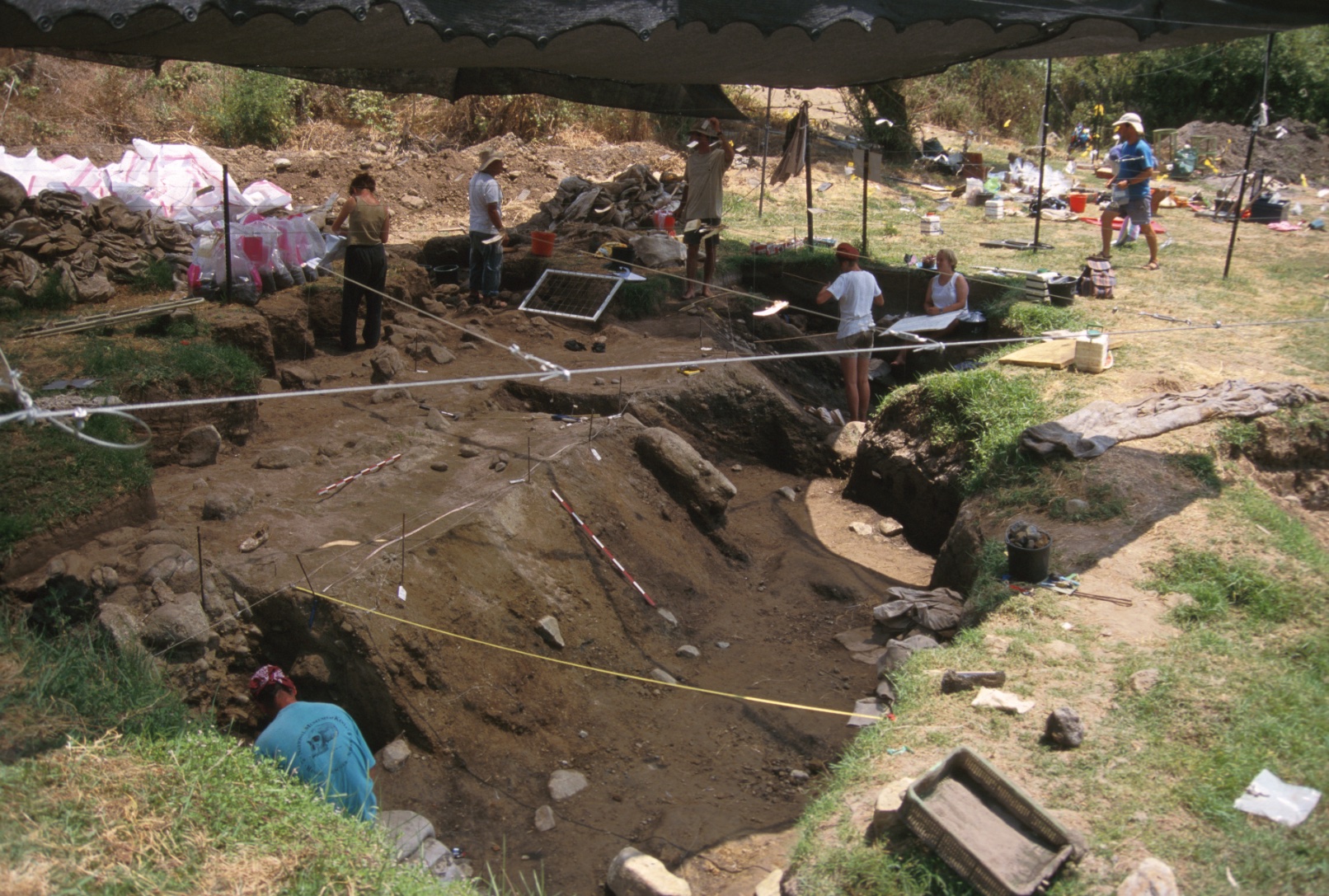
PRAGUE, CZECH REPUBLIC—Radio Prague International reports that traces of an estimated 7,000-year-old circular structure measuring about 180 feet in diameter have been uncovered in Vinoř, an area on the outskirts of the city of Prague, by a team of researchers led by Miroslav Kraus. The well-preserved remains of the structure, known as a roundel, include postholes that held a central wooden structure and evidence of three entrances. Kraus explained that the roundel may have served as a trade or religious center. “It would be great to discover something that would indicate the actual function of the building,” Kraus said. “However, it is very unlikely, since none of the previously researched roundels have revealed such information.” Kraus and his colleagues will also try to obtain an accurate date for the structure. To read about a Neolithic well excavated in East Bohemia, go to "Around the World: Czech Republic."

U.S. Repatriates Artifacts to Egypt

NEW YORK, NEW YORK—Ahram Online reports that six artifacts recovered from the Metropolitan Museum of Art were handed over to Egypt’s Consul General Howaida Essam Mohamed at a ceremony in New York following two investigations into trafficking networks and the illegal antiquities trade by the Manhattan District Attorney’s Office and U.S. Homeland Security Investigations. The objects include a coffin fragment painted with a woman’s face; a seventh-century B.C. limestone relief engraved with hieroglyphic text and an offering scene; five linen fragments; a bronze statue of a musician named Kemes; and a Roman-era Fayum portrait of a woman. Another nine artifacts recovered from an American collector, including a Ptolemaic-era coin, will also be returned to the Egyptian Consulate. District Attorney Alvin L. Bragg, Jr., commented that his office would not allow the borough to be used by dealers and traffickers to turn a profit off stolen artifacts. To read about innovative research being done on mummy portraits from Roman Egypt, go to "At Face Value."

Decorative Heater Unearthed at 16th-Century Castle in Poland

KRAKÓW, POLAND—Science in Poland reports that excavations at the site of a sixteenth-century wooden castle in a wetland in east-central Poland have uncovered the clay base of a masonry stove and tiles decorated in green, yellow, white, and blue enamel. “Among [Zelechów castle’s] remains we found numerous, beautifully decorated tiles with rich geometric, plant, and animal patterns,” said Wojciech Bis of the Polish Academy of Sciences. “There were also images of fantastic animals, including griffins, human figures, and coast of arms.” The stove would have provided radiant heat for the members of the court. The team members found the tiles among burnt beams and layers of burnt clay, suggesting that the castle was destroyed by fire. The clay may have covered the walls and floors of the structure, Bis explained. Similar tiles have been found in Wawel Royal Castle in Kraków, suggesting that this castle was used by the same elites. Evidence of feasting, in the form of pig and oxen bones and fragments of ceramic vessels, was also uncovered. To read about burials of four medieval knights that were uncovered in Poland, go to "Viking Knights, Polish Days." 

1.8-Million-Year-Old Tooth Found in the South Caucasus

DBILISI, GEORGIA—The Guardian reports that a 1.8-million-year-old hominin tooth has been discovered in Orozmani, which is located in southern Georgia, about 12 miles away from Dmanisi, where hominin skulls of similar age were found some 20 years ago. The remains suggest that the area was one of the first homes for early humans outside Africa, explained Giorgi Bidzinashvili of Georgia’s National Research Center of Archaeology and Prehistory. “It solidifies Georgia as a really important place for paleoanthropology and the human story in general,” commented team member Jack Peart. To read about the skulls found at Dmanisi, go to "Homo erectus Stands Alone," one of ARCHAEOLOGY's Top 10 Discoveries of 2013.

Advertisement