Possible Evidence of Amputation Dates Back 31,000 Years
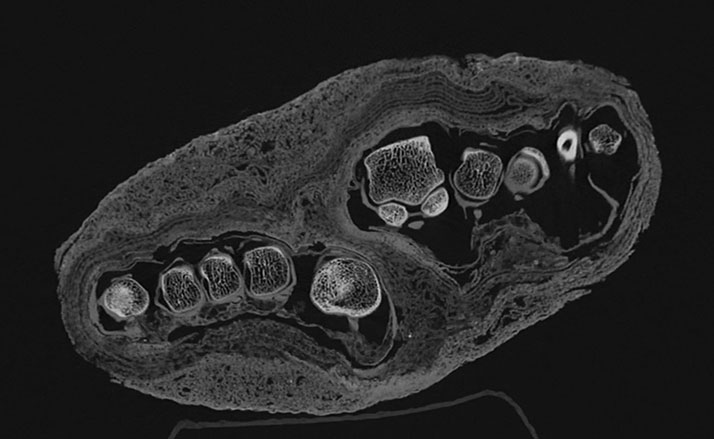
BRISBANE, AUSTRALIA—According to a Live Science report, 31,000-year-old remains recovered from a limestone cave in a remote region of the Indonesian portion of the island of Borneo bear evidence of surgical limb amputation. When the bones were unearthed by Tim Maloney of Griffith University, India Ella Dilkes-Hall of the University of Western Australia, and Andika Priyatno of Balai Pelestarian Cagar Budaya, they noticed that the left foot and lower leg were missing. When paleopathologist Melandri Vlok of the University of Sydney examined the remains, she confirmed the presence of bony growths related to healing on the end of the shortened limb. The healing of such a wound and the child’s survival as a hunter-gatherer for several years in mountainous terrain would have required a high degree of community care, Vlok said. The foragers may have even had knowledge of the use of tropical plants as anesthetics, antiseptics, and other wound-healing treatments, added Dilkes-Hall. It had been previously thought that the anatomical and surgical knowledge necessary for the successful amputation of diseased or damaged limbs did not begin to develop until people began farming and living in permanent settlements, Maloney concluded. Read the original scholarly article about this research in Nature. To read about a Civil War–era surgeon's burial pit in Virginia that was filled with amputated limbs, go to "Do No Harm."
Pakistan’s Mohenjo-Daro Damaged by Heavy Rain
ISLAMABAD, PAKISTAN—Al Jazeera reports that 55 inches of rain in southeastern Pakistan have caused significant damage to Mohenjo-Daro, a 4,500-year-old city of the Indus Valley civilization that was discovered in 1922 and named a UNESCO World Heritage Site in 1980. “The original structure is safe by and large, including the stupa at the site,” said Abdul Fatah Shaikh, director of archaeology and museums for Sindh province. “However, the protective layer, also called mud slurry, that we deployed suffered a lot of damage, causing exposure of the original walls.” The ancient city’s drainage and water management systems helped to protect the site from accumulating standing water, he added. Conservation work has begun to protect the ancient structures from irreparable damage. To read about the burial of a Harappan couple that was unearthed in northern India, go to "A Plot of Their Own."
Traces of Native American Village Found in Florida
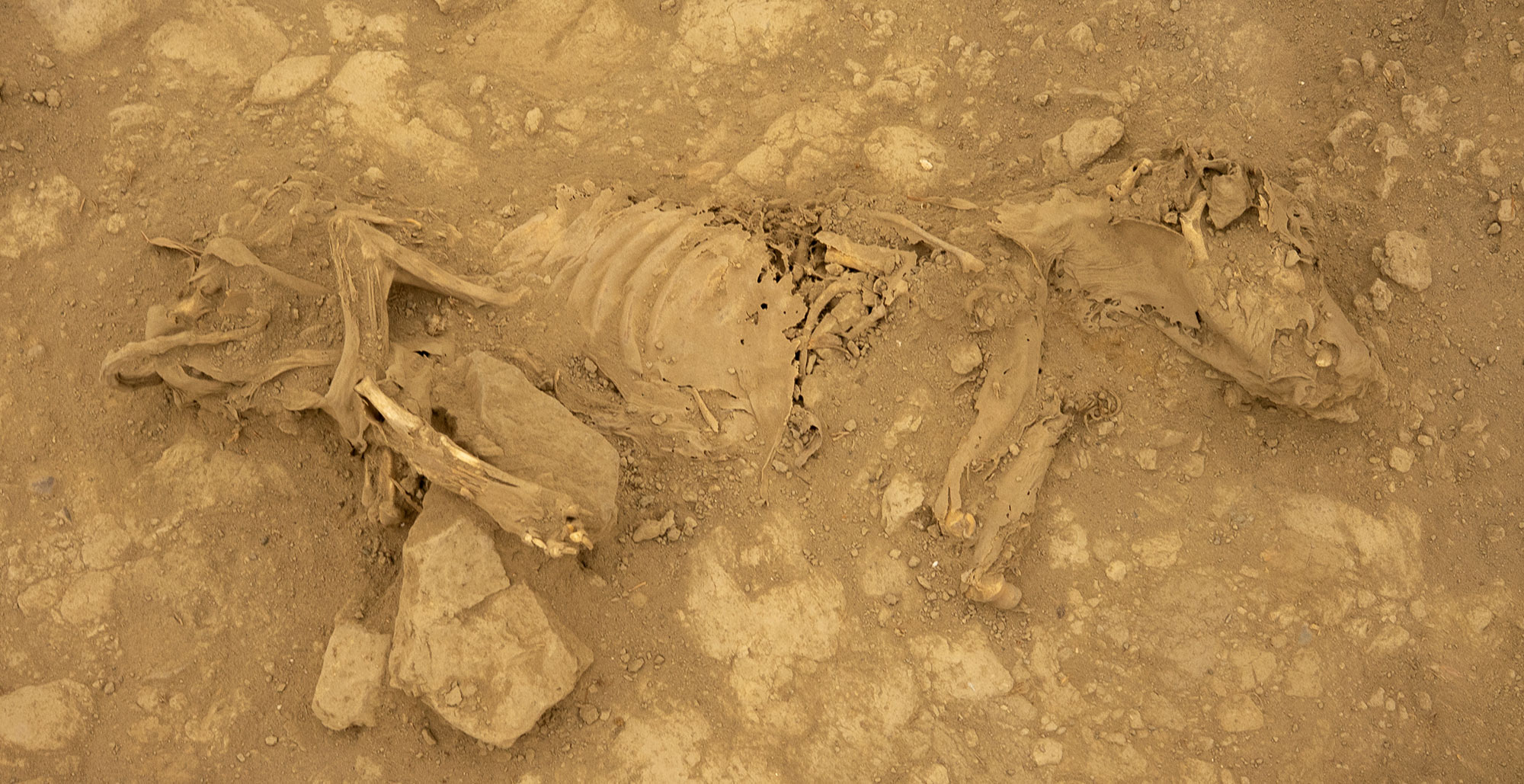
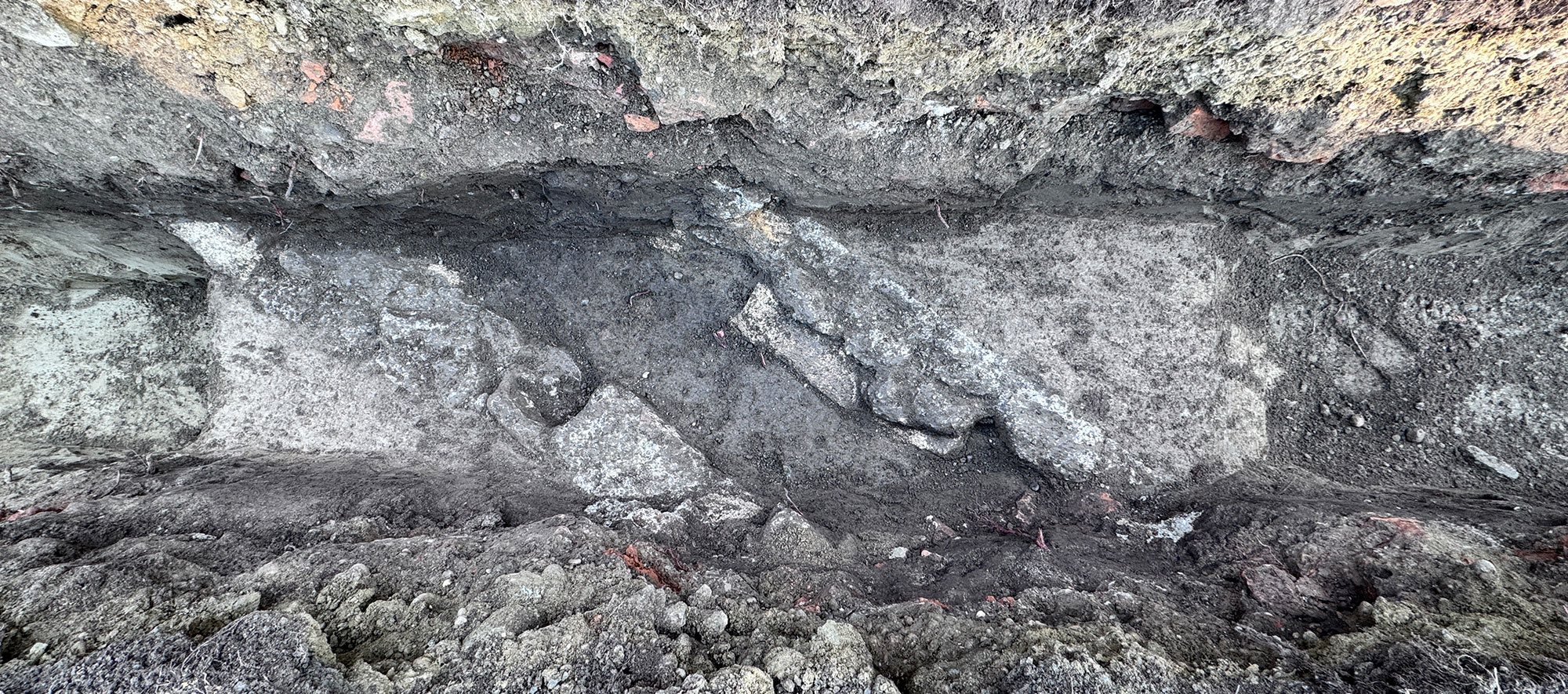
ST. AUGUSTINE, FLORIDA—According to a First Coast News report, St. Augustine city archaeologist Andrea White and her colleagues have found pottery and postholes from Palica, a Native American village, under a nineteenth-century house in St. Augustine’s Lincolnville neighborhood. The house was constructed a couple of feet above the ground, which has protected the archaeological site. This particular area was the site of a Catholic mission in the early 1700s, White explained. The mission was eventually abandoned in the mid-eighteenth century. The remains of a carefully buried donkey, thought to have been a farm animal, have been dated to the late eighteenth century, when the land was used as an orange grove as part of the Yallaha plantation. To read about an artifact recovered from a 1782 shipwreck off the coast of St. Augustine, go to "Around the World: Florida."
Hundreds of Monumental “Kites” Spotted in Arabian Desert
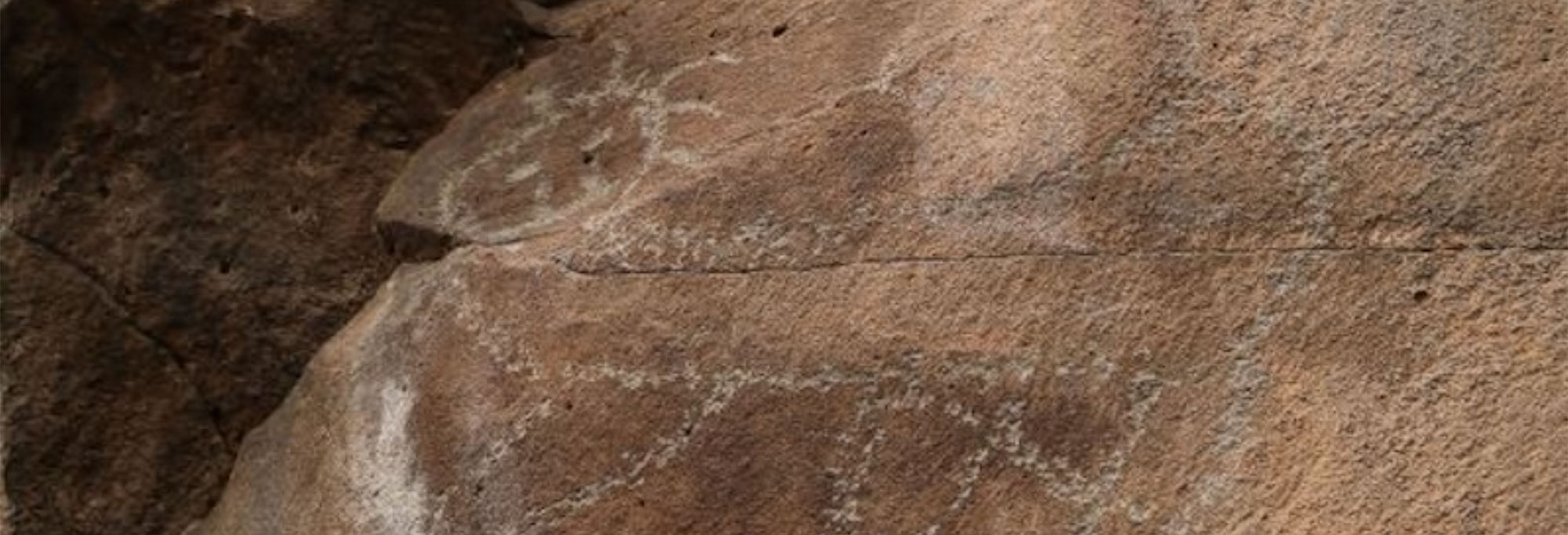
OXFORD, ENGLAND—According to a statement released by the University of Oxford, some 350 monumental structures known as “kites” have been spotted in northern Saudi Arabia and southern Iraq with satellite imagery. Michael Fradley of Endangered Archaeology in the Middle East and North Africa (EAMENA) and his colleagues used open-source satellite imagery to look for the star-shaped structures, which consist of long, low stone walls, in the eastern Nafud Desert. The walls are thought to have been built as early as 8000 B.C., when the region was wetter and greener, to guide fast-moving game into a head enclosure where it could be captured or killed. Fradley explained that the heads of some of these kites measure more than 300 feet wide, while the guiding walls can run for more than two miles. The kites were probably built and rebuilt over generations, and may have also served as an expression of status and identity, and a way to mark territory. Further research will explore who built the kites, where they lived while building them, and how the game was used. Read the original scholarly article about this research in The Holocene. To read about rectangular stone monuments scattered throughout the deserts of northwestern Saudi Arabia, go to "Around the World: Saudi Arabia."
Possible “Vampire” Burial Uncovered in Poland
BYDGOSZCZ, POLAND—According to an Ars Technica report, a woman whose remains were uncovered in a seventeenth-century cemetery in northern Poland may have been considered a vampire. Dariusz Poliński of Nicholas Copernicus University said that the woman, who had very noticeable protruding front teeth, is thought to have been wealthy because of traces of a silk cap found on her head. A sickle blade found across the skeleton’s neck may have been intended to decapitate the corpse if it tried to “rise” as a vampire, he explained. A padlock had also been placed on the left big toe. “This symbolizes the closing of a state and the impossibility of returning,” Poliński added. He thinks the woman’s appearance may have prompted superstitious locals to take these precautions. To read about other so-called "vampire" burials in Bulgaria, go to "Vampire-Proofing Your Village."
Pottery Yields Molecular Traces of Neolithic Meals
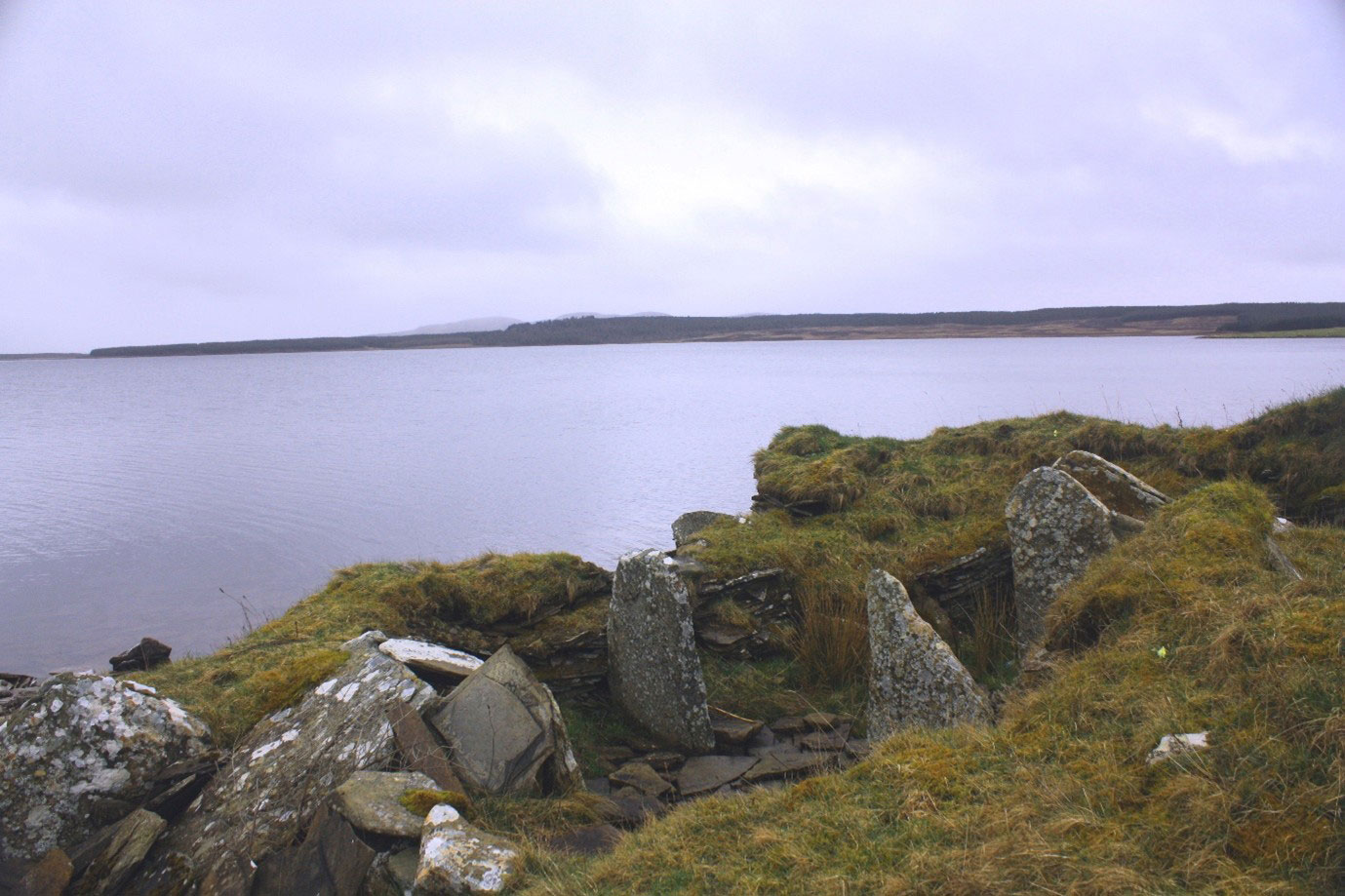
BRISTOL, ENGLAND—According to a statement released by the University of Bristol, Simon Hammann, Luce Cramp, and their colleagues analyzed residues collected from pots recovered from crannog sites in Scotland’s Outer Hebrides. The study suggests that early Neolithic cooks used cereals, dairy products, and meat as ingredients as early as 4000 B.C., when grain was brought to Britain by migrant farmers from continental Europe. The study also showed that the biomarkers for grains can be preserved for thousands of years longer than previously thought possible if kept in waterlogged conditions. Biomolecular traces of cereals were detected in about one third of the pots in the study, Hammann and Cramp explained. The analysis also indicates that wheat, which is not usually found among charred plant remains at archaeological sites in the region, was boiled in the pots. Smaller pots were used to cook cereals in milk, perhaps to form a gruel, while larger pots were used to cook meat-based stews. Many of the pots were intact and decorated, and may have served a ceremonial purpose. Read the original scholarly article about this research in Nature Communications. For more on Scotland's crannogs, go to "Worlds Apart."
Search Begins for Signs of Laundresses at Old Fort Meade
RAPID CITY, SOUTH DAKOTA—KOTATV.com reports that archaeologists are excavating an area at Old Fort Meade known as “Soap Suds Row,” where hired laundresses cleaned soldiers’ uniforms. The fort was occupied from 1878 to 1944. “Of course, you can imagine a cavalry post and the type of laundry that they were generating,” said team member Linea Sundstrom. Her research indicates that the laundresses lived in a row of 13 houses situated along Bear Butte Creek. Many of the well-paid women were married to enlisted men. Sundstrom thinks the laundresses at Fort Meade might have continued to work after the U.S. Army banned women from accompanying troops as laundresses. “They kept it [the laundry facility] longer than most western military posts,” she said. “The debate on why they did away with it was because some felt it gave women too much economic power.” Sundstrom hopes the excavation will yield information on how long women continued to work at the fort. To read about excavations at a Union Army camp in Kentucky, go to "A Path to Freedom."
Advertisement