Subscribe to Archaeology
Archaeological Headlines By JESSICA E. SARACENI
Tuesday, September 6

Paleolithic Artifacts Discovered in a Cave in Slovakia

KRAKÓW, POLAND—Science in Poland reports that weapons, bone needles, a fragment of a stone lamp, and hundreds of animal bones have been uncovered in the remains of a large fire in Hučivá Cave, which is located in Slovakia’s Belianske Tatras, by a team of Polish and Slovak researchers. Paweł Valde-Nowak of Jagiellonian University said the artifacts were left behind by Magdalenian people who were hunting ibex, a creature that no longer lives in the region. The researchers will continue to look for evidence of prehistoric peoples on the Polish side of the Tatra Mountains. Read the original scholarly article about this research in Antiquity. To read about a Magdalenian wind instrument fashioned from a snail shell, go to "Artifact."

1930s Medicine Bottle Found in Poland’s Gwda River

PIŁA, POLAND—The First News reports that an intact medicine bottle from the 1930s has been recovered from the Gwda River in western Poland by Jarosłav Rola of the Stanisław Staszic Regional Museum and his colleagues. The bottle contained an herbal remedy for treating stomach or heart ailments, he explained. The ongoing survey of the river also yielded a fragment of a pot dated to the twelfth or thirteenth century, a 2,000-year-old drinking mug, and a piece of a seventeenth-century bridge. The artifact will be held at the museum, Rola concluded. To read about seventeenth-century artifacts recovered from the Vistual River, go to "World Roundup: Poland."

11th-Century Settlement Uncovered in Zanzibar’s Stone Town

ZANZIBAR, TANZANIA—The National reports that traces of an eleventh-century settlement have been found in the courtyard of the Old Fort at Stone Town, which was thought to have been first established as a hub for Indian Ocean trade networks on the East African coast by Portuguese explorers and the Sultanate of Oman. The homes, cooking pits, and pottery were left behind by local Swahili people, who transitioned to the construction of stone buildings in the fourteenth century. “We can now say that the town was built centuries before the Omanis arrived,” said Tim Power of UAE University. Recent excavations have also uncovered a wall of a Portuguese church that had been demolished and integrated into the fort, and a carved stone block from a mosque that once stood on the site. To read about medieval trading centers along the East African coast, go to "Stone Towns of the Swahili Coast."

Friday, September 2

Possible Priest’s Grave Discovered at Pacopampa

CAJAMARCA, PERU—Reuters reports that a 3,000-year-old tomb has been found in northern Peru’s Pacopampa archaeological site by archaeologist Yuji Seki. Pacopampa consists of a large ceremonial center constructed of cut and polished stone, and is known for the tomb of the so-called Lady of Pacopampa, who is thought to have been buried around 700 B.C., before the construction of the temple at the site. The newly discovered burial contains the remains of a man, musical instruments, and shells of large sea snails that lived in waters off the coast of Ecuador. “They were brought from a faraway place,” Seki said. “It could mean this person had a quite important religious power back then.” To read about a 3,000-year-old burial mound in northern Peru, go to "Letter from Peru: Connecting Two Realms."

Carvings Discovered at Ireland's Grange Stone Circle

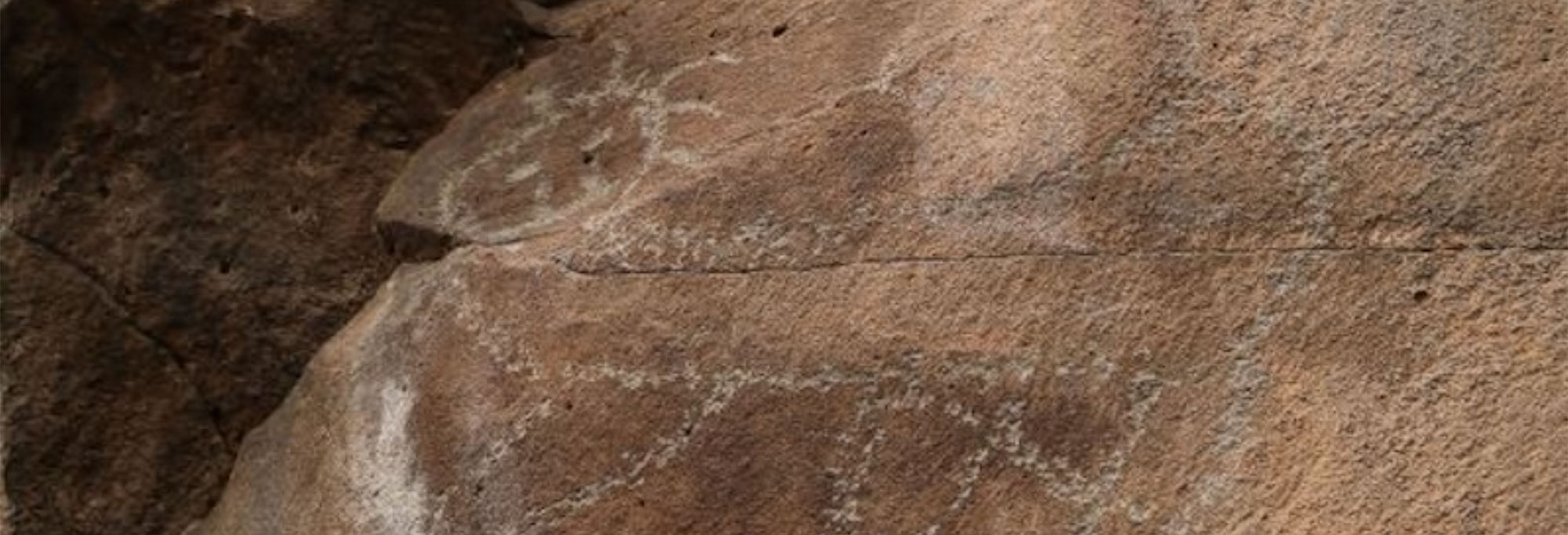
LIMERICK, IRELAND—Irish Central reports that new photographs of a stone at the north entrance passage to Grange Stone Circle, which consists of 113 stones set in a wide earthen bank, have revealed previously unseen carvings of concentric circles and arcs. Grange Stone Circle is located in western Ireland, near horseshoe-shaped Lough Gur, prehistoric crannogs, and ring forts. “The carvings are quite like those at passage tombs in the North and East of the country, such as Knowth and Newgrange, but there is only a single carved stone of this kind in Munster or Connaught,” commented Elizabeth Shee Twohig, who is now retired from University College, Cork. She thinks the stone may have been carved around 3000 B.C., when the banked enclosure at Grange Stone Circle was built, and later incorporated into the stone circle. To read about the people buried in the 5,500-year-old tomb of Newgrange, go to "Around the World: Ireland."

Thursday, September 1

Prehistoric Elephant Tusk Unearthed at Hominin Site in Israel

TEL AVIV, ISRAEL—The Associated Press reports that an eight-foot-long tusk belonging to an extinct elephant species has been uncovered in southern Israel at an archaeological site dated to about 500,000 years ago, based upon the style of stone tools recovered. The area, which is now arid, was likely a swamp or a shallow lake at the time, explained prehistorian Avi Levy of the Israel Antiquities Authority. His colleague Omry Barzilai added that it is not clear if the Paleolithic hominins killed the elephant, or if they found the tusk and brought it to the site. To read about a cave in southern China where the teeth of hominins were found alongside the bones of an extinct elephant species, go to "An Opportunity for Early Humans in China."

Did Romans Eat Special Foods at Funerals?

BARCELONA, SPAIN—El País reports that analysis of 41 burials uncovered in the Vila de Madrid necropolis, which was located in northeastern Spain near the site of the Roman city of Barcino, reveals that the funerary banquets and grave offerings from the second century A.D. to the mid-third century A.D. resembled everyday meals. According to Domingo C. Salazar-García of the University of Valencia and his colleagues, Romans followed rules requiring that the remains of a sacrificed animal be placed in every grave to provide food for the deceased in the afterlife. The researchers compared the chemical composition of the bones and teeth of the dead with the food left in each person’s grave. The results of the study suggest that the diet provided for the afterlife of most of those buried in the necropolis was much like their everyday diet, in that the rich had been provided with more expensive cuts of meat, while no animal bones were recovered from some of the graves, and a few individuals had radically different diets from the rest. Inequalities present in life may have also been present in funerary rituals, the researchers concluded. Read the original scholarly article about this research in PLOS ONE. To read about a peculiar burial custom at a Roman cemetery in England, go to "Foreign Funeral Rites."

Pollen Study Tracks Ancient Flow of Egypt’s Nile River

CAIRO, EGYPT—According to a New York Times report, a new study of fossilized pollen recovered from sediment cores indicates that the Khufu branch of the Nile River once flowed closer to the Giza plateau than previously thought. A team of scientists from France, China, and Egypt combined their analysis of the pollen grains with prior studies of the rock layers around the pyramids at Giza to reconstruct the flow of the river’s Khufu branch over the past 8,000 years. Although most of the pollen belonged to flowering grasses, they also found pollen from marsh plants that typically grow along the edges of established lakes. Water levels were therefore probably high enough some 4,000 years ago to facilitate the transport of stone for the construction of the pyramids of Menkaure, Khafre, and Khufu. Shortly after the reign of Tutankhamun (1336–1327 B.C.), the level of water in the Khufu branch began to drop and the area became much more arid, the researchers concluded. To read about the skilled workers who transported materials used to build the Great Pyramid, go to "Journeys of the Pyramid Builders."

Advertisement