Monumental Rampart Uncovered in Cyprus
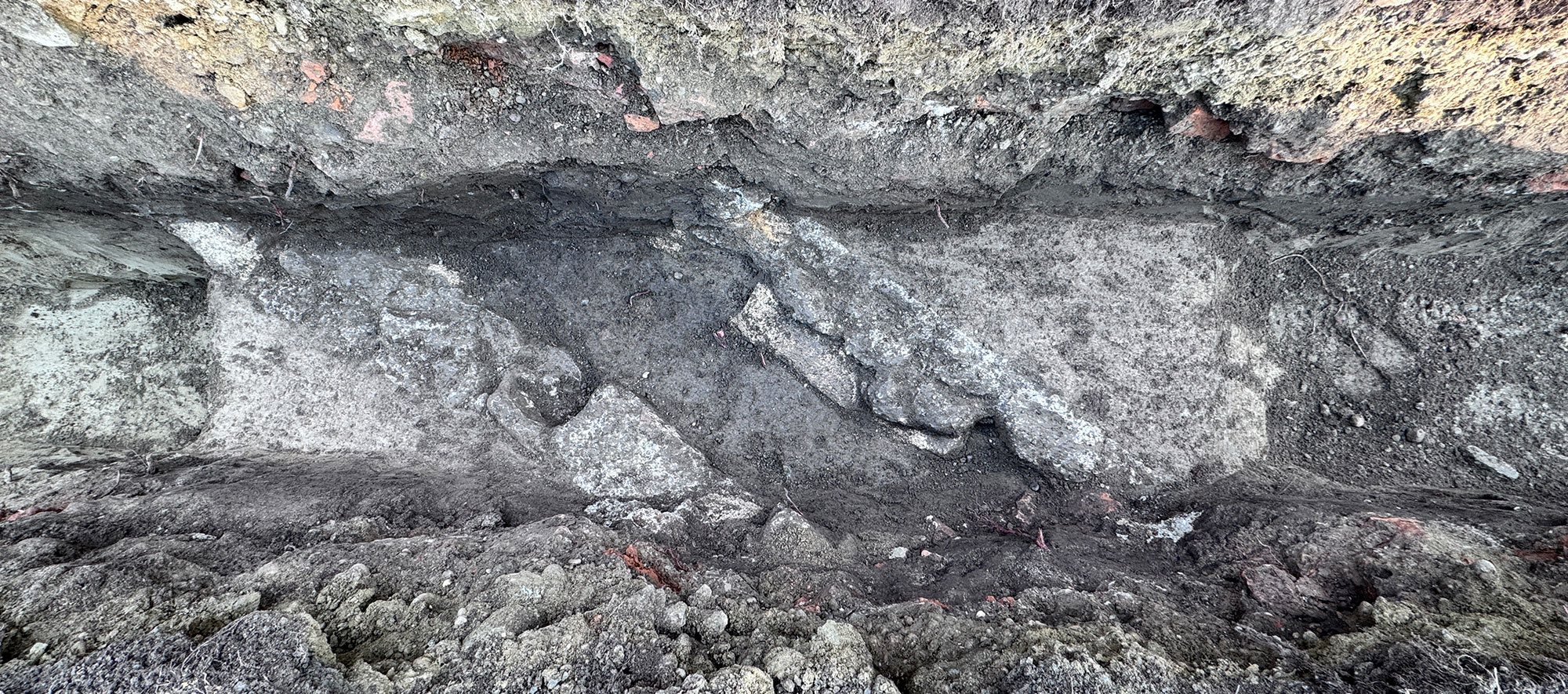
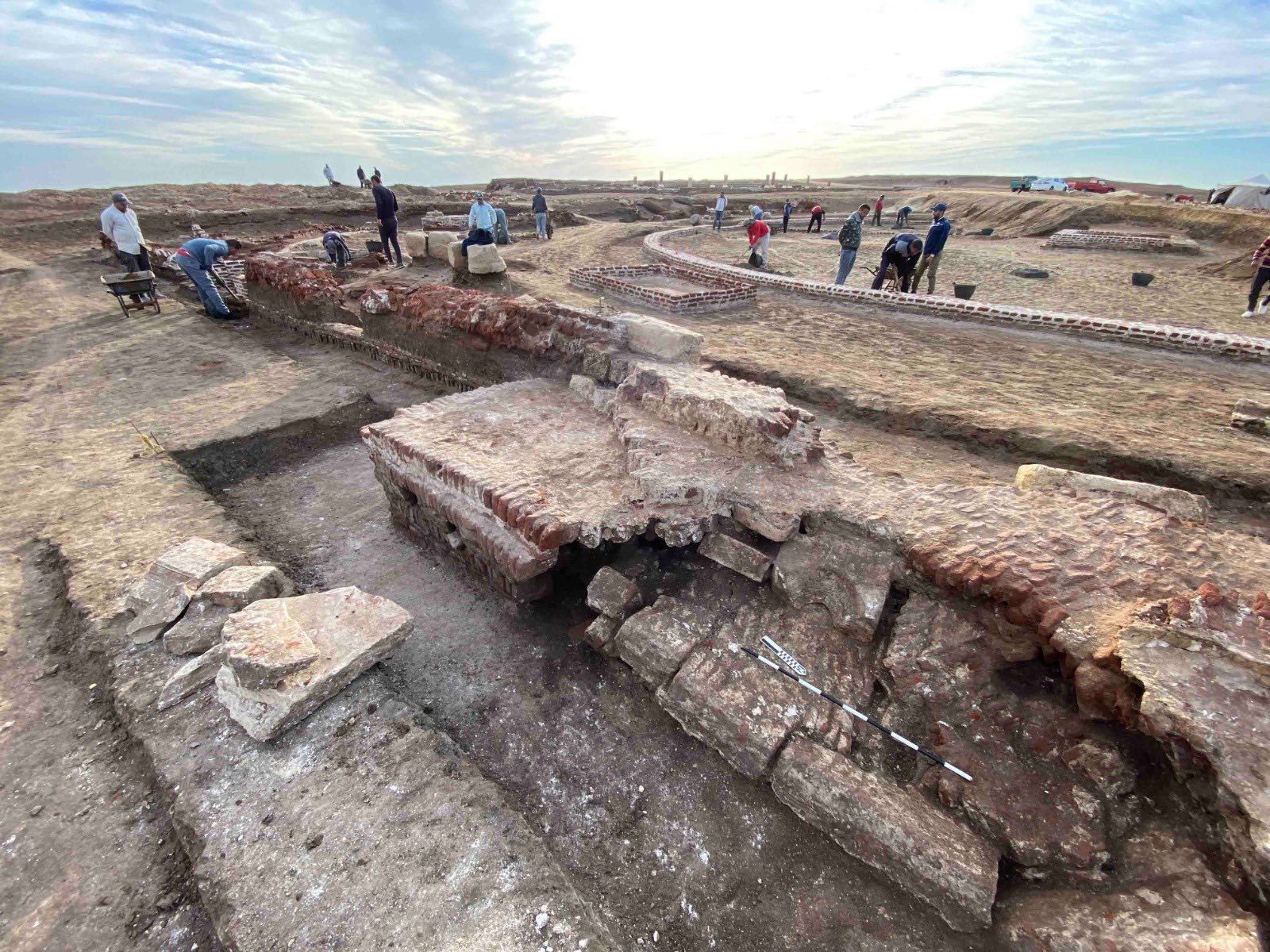
PAPHOS, CYPRUS—The Cyprus Mail reports that a rampart enclosing an area of more than 2,000 square feet has been discovered in the monumental tumulus of Laona in southwestern Cyprus by a team of researchers from the University of Cyprus, the Cyprus University of Technology, and Siena's University for Foreigners. The structure was made with 15-foot-thick walls of mudbricks and stones set on a base of leveled bedrock, river pebbles, and soil mixed with broken pottery, and then covered with a mound at the end of the fourth century or early in the third century B.C. So far, the researchers have identified two facing staircases on one wall, and a third staircase on the tallest surviving section of the rampart. The researchers will continue to investigate the tumulus and try to identify the expert engineers and skilled work force who might have built it. To read about discoveries from Classical-era Cyprus, go to "Living the Good Afterlife."
Study Offers Insight Into Metallurgy in Ancient China
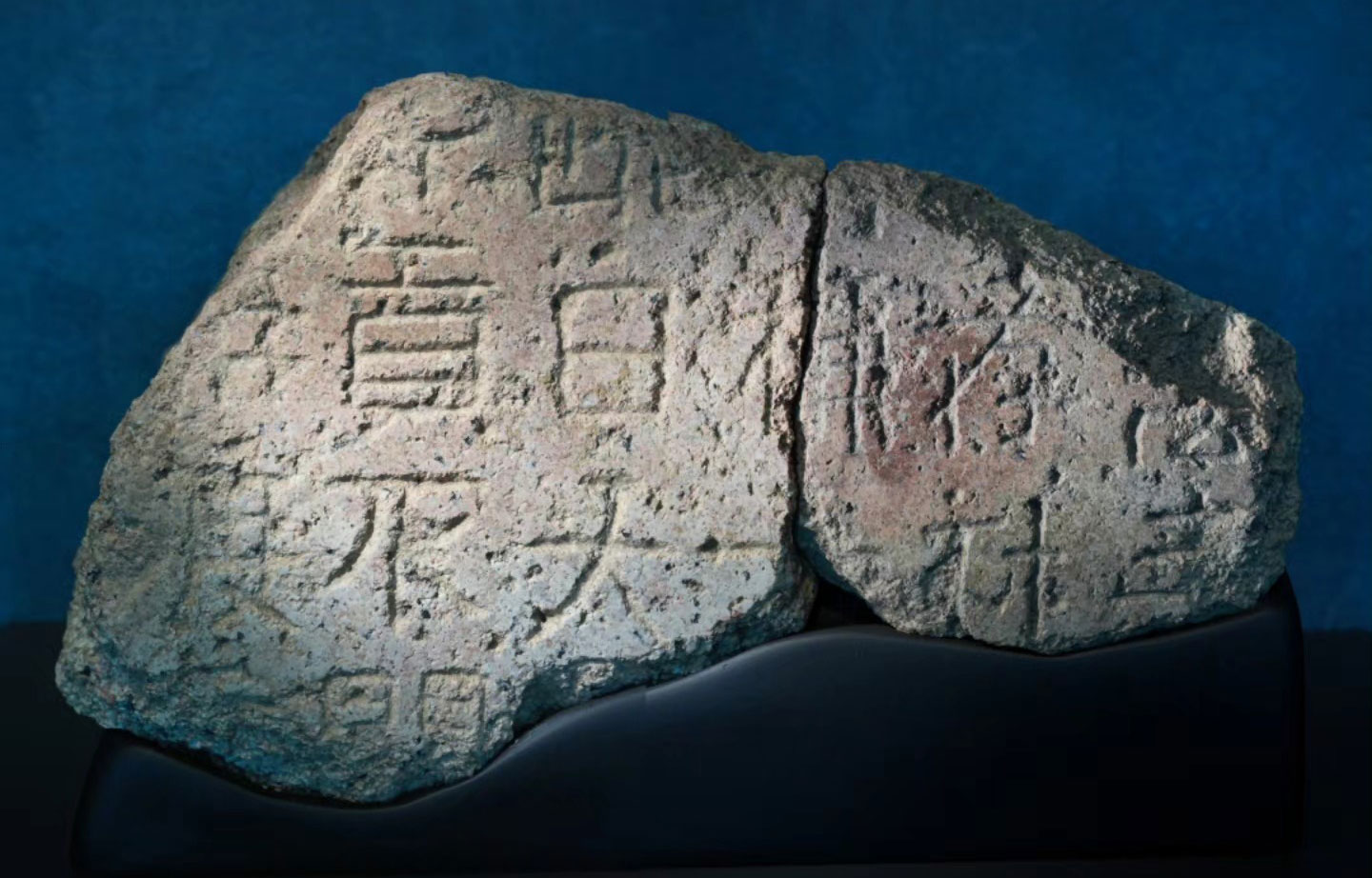
OXFORD, ENGLAND—CNN reports that Ruiliang Liu and A.M. Pollard have deciphered the names of two ingredients in a recipe for bronze recorded in the Kaogong ji, a 2,300-year-old Chinese text containing details about metal items such as swords and musical instruments. Jin and Xi, two of the main ingredients for bronze listed in the Kaogong ji, were thought to be the elements copper and tin, but attempts to follow the ancient recipes did not produce a match for the metal found in ancient artifacts. After a study of the composition of ancient Chinese coins, Liu and Pollard now think that Jin and Xi may have been the names of pre-mixed alloys combining copper, tin, and lead. “For the first time in more than 100 years of scholarship, we have produced a viable explanation of how to interpret the recipes for making bronze objects in early China given in the Kaogong ji,” Pollard concluded. Read the original scholarly article about this research in Antiquity. To read about bronze Buddhas recently unearthed in central China, go to "Made in China."
17th-Century Coin Unearthed at a Castle in Slovakia
PRIEVIDZA, SLOVAKIA—According to a report in The Slovak Spectator, a seventeenth-century coin, pottery, and a knife were uncovered in the area where the gates once stood at Sivý Kameň, a castle on the Nitra River in west-central Slovakia. Archaeologist Dominika Andreánska said that the castle was built in the fourteenth century, but by the late seventeenth century was being used as a prison. Her team, she added, identified the gate area from old photographs of the castle ruins. The coin, a denarius, was minted in 1679 in central Slovakia during the reign of Holy Roman Emperor Leopold I. “It is interesting that it [the coin] dates from the end of the seventeenth century, when Sivý Kameň castle functioned only as an occasional prison, or was a ruin, because it was burnt down during the anti-Habsburg uprisings,” Andreánska concluded. To read about a basilica unearthed in Germany that was commissioned by Holy Roman Emperor Otto the Great, go to "Otto's Church."
Rock Crystals Recovered from Neolithic Burial Mound in England
MANCHESTER, ENGLAND—According to a statement released by the University of Manchester, transparent rock crystals have been recovered from Neolithic burial mounds at Dorstone Hill in England’s West Midlands. Researchers including Nick Overton of the University of Manchester and his colleagues from the University of Cardiff and Herefordshire County Council found that the rock crystal had been knapped in the same manner as flint recovered from the site, but it had not been used as tools, such as arrowheads or scrapers. Rather, the worked rock crystal was deposited in the mounds over a period of about 300 years, along with pottery, stone tools, and cremated bone. Such large pieces of rare rock crystal were likely imported from Snowdonia in north Wales or St. David’s Head in southwestern Wales. Overton explained. The team members plan to analyze the chemical composition of the crystals in order to track down their source. Read the original scholarly article about this research in Cambridge Archaeological Journal. To read about a rock crystal jar that was discovered as part of a large cache of artifacts, go to "Secrets of Scotland's Viking Age Hoard."
Pathogens Detected in Bronze Age Remains in Greece
JENA, GERMANY—Phys.org reports that a study of genetic material recovered from the teeth of people buried in the Hagios Charalambos cave on the Greek island of Crete between about 2290 and 1909 B.C. detected the presence of extinct strains of two pathogens. Researchers from the Max Planck Institute for Evolutionary Anthropology, the Max Planck Institute for the Science of Human History, the British School at Athens, and Temple University suggest that epidemics brought about by Y. pestis, which causes plague, and S. enterica, which causes typhoid fever, could have contributed to the collapse of Egypt’s Old Kingdom and the Akkadian Empire in Mesopotamia. It had been previously suggested that climate change may have triggered these Bronze Age population declines. Read the original scholarly article about this research in Current Biology. To read about DNA sequencing of Y. pestis recovered from two skeletons in southwestern Russia, go to "Bronze Age Plague," one of ARCHAEOLOGY's Top 10 Discoveries of 2018.
Sleeve Buttons Unearthed at Colonial Michilimackinac
MACKINAC ISLAND, MICHIGAN—WXYZ Detroit reports that a set of sleeve buttons have been discovered at Colonial Michilimackinac, the site of an eighteenth-century fortified trading post situated on the Straits of Mackinac. Archaeologist Lynn Evans said the joined sleeve buttons, made of green glass paste “stones” set in brass, would have functioned like a modern cufflink. The sleeve buttons, she added, were recovered from a layer of demolition rubble in a rowhouse dated to 1781. To read about sunken ships off Michigan's northeastern coast, go to "Shipwreck Alley."
Roman Coins and Votive Offerings Recovered from Hot Springs
TUSCANY, ITALY—CNN reports that excavators working in central Italy near the village of San Casciano dei Bagni discovered statuettes and coins thought to have been left behind by Roman visitors to an ancient Etruscan pool fed by hot springs. The objects may have been offered to the gods believed to have provided the hot water in thanks for relief from respiratory problems and aches and pains, according to Jacopo Tabolli of Siena’s University for Foreigners. Some 700 of the 3,000 coins are still shiny, he added, and may have been thrown into the baths in the third century A.D. by Roman emperor Marcus Aurelius Carus to honor the gods who watched over his health. The statuettes include objects shaped like a phallus, a rare womb made of bronze, a pair of breasts, legs, and arms. Such objects are thought to have been offered in thanks for healing of those body parts, while bronze ears are thought to have been thrown into the pool to call the gods’ attention to prayers. Remnants of fountains, statues, and altars dedicated to Apollo, the god of prophecy and medicine; Isis, the goddess of fertility; and Fortuna Primigenia, the goddess of the first born, were also uncovered at the site. To read about a 3,500-year-old ritual pool unearthed in northern Italy, go to "Italian Master Builders."
Gold Jewelry Found in Ancient Burial Urn in Southern India
TAMIL NADU, INDIA—According to a New Indian Express report, researchers led by VP Yathees Kumar of the Archaeological Survey of India discovered a gold diadem, bronze and iron objects, and pottery in a burial urn at Adichanallur, an archaeological site in southern India occupied between 1000 and 600 B.C. “The diadem is yet to be measured accurately as it is folded on both edges, and also its weight is yet to be ascertained,” Kumar said. The bronze objects include a circular sieve, a cup with a stand, and two bowls. Outside the urn, the excavators recovered 11 arrowheads, two spearheads, a hanger, an iron plate, a chisel, and a long spear with a decorated handle. To read about another discovery in the area, go to "Tamil Royal Palace."
Advertisement