Subscribe to Archaeology
Archaeological Headlines By JESSICA E. SARACENI
Friday, August 5

New Thoughts on Africa’s Bantu Expansion

MUNICH, GERMANY—According to a statement released by the Max Planck Society, a team of researchers led by Ezequiel Koile analyzed more than 400 Bantu and related languages with a sequence-free sampling approach, which was borrowed from a process used in genetic studies, in order to track how Bantu speakers spread southward through the Central African Rainforest from a region near the current border of Nigeria and Cameroon. The team members also used a “breakaway model” when assembling the language family tree. In this scenario, at every split in the language tree, one of the populations stayed in the same place, while the other migrated, explained team member Remco Bouckaert. This seemed to be a more realistic possibility than other diffusion-based methods, he continued. The study concluded that the Bantu expansion occurred about 4,000 years ago—long before a savanna corridor alongside the rainforest is thought to have opened up around 2,500 years ago. It had been previously thought that Bantu populations would not have been able to maintain their crops and cattle while migrating through dense rain forest. Read the original scholarly article about this research in Proceedings of the National Academy of Sciences of the United States of America. To read about DNA analysis of an enslaved individual who was likely from a Bantu-speaking population, go to "Tracing Slave Origins," one of ARCHAEOLOGY's Top 10 Discoveries of 2015.

Temple Dedicated to the Sun God Unearthed in Egypt

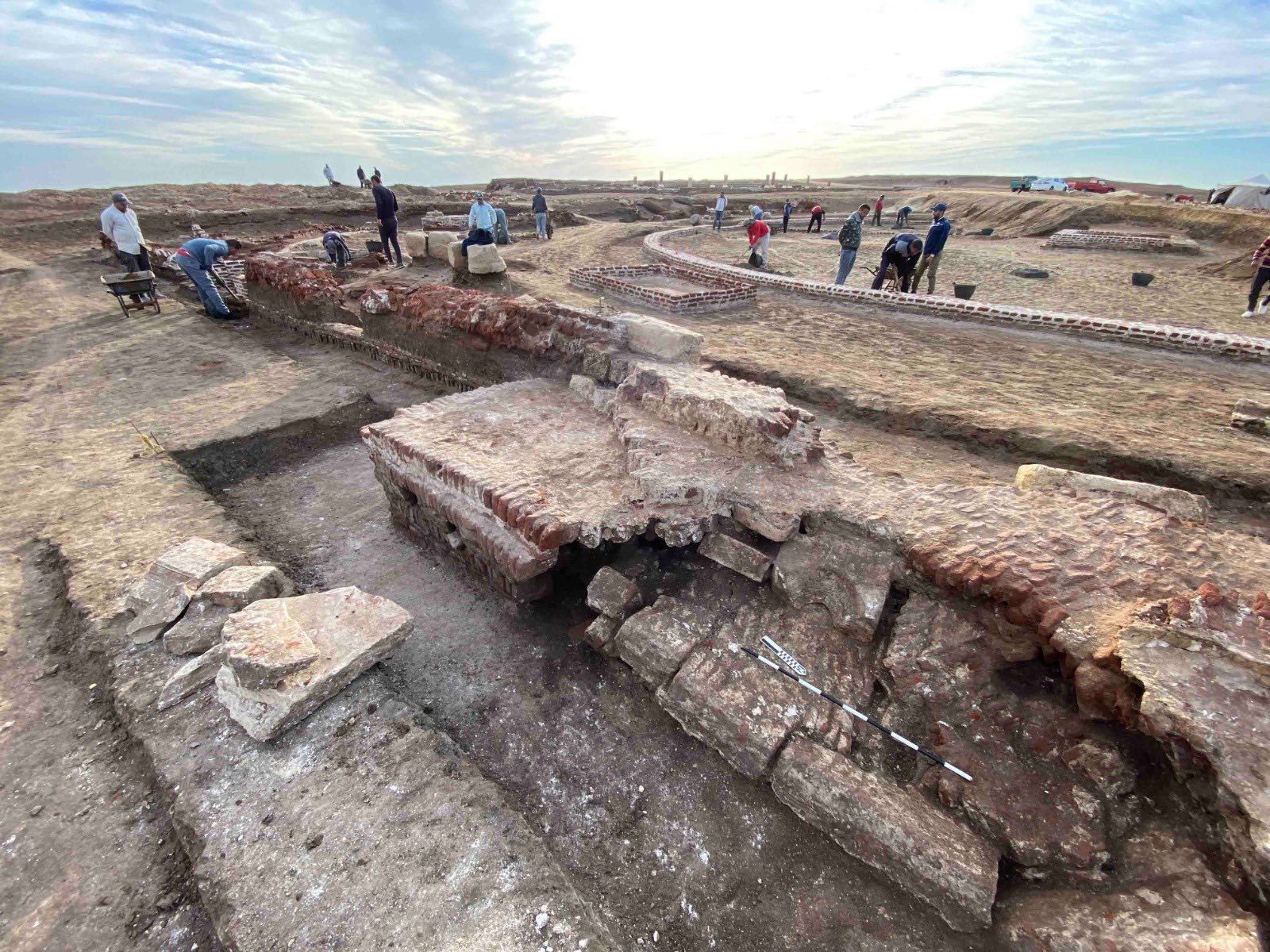
CAIRO, EGYPT—According to a Live Science report, 4,500-year-old traces of a temple dedicated to Ra, the ancient Egyptian sun god, have been uncovered south of Cairo at the site of Abu Ghurab by a team of researchers led by Massimiliano Nuzzolo of the Polish Academy of Sciences and Rosanna Pirelli of the University of Naples L'Orientale. The mudbrick structure, thought to have been built during the reign of either Shepseskare, who ruled from about 2438 to 2431 B.C., or Neferefre, who ruled from about 2431 to 2420 B.C., measured at least 197 feet long and 66 feet wide. It consisted of an L-shaped entrance portico featuring limestone columns, a courtyard, storage rooms, and rooms thought to have been used for unknown cultic purposes, Nuzzolo explained. “The walls of this building were all plastered in black and white and often also show traces of painting in red and blue,” he said. One deposit of artifacts included dozens of beer jars and jars decorated with red pigment, while a second deposit contained the seals of pharaohs from the 5th and 6th Dynasties. The temple was ritually demolished, Nuzzolo added, possibly before it was completed. A new temple was built of stone at the site for Niuserre, who reigned from 2420 to 2389 B.C. To read more about the 5th Dynasty pharaohs, go to "In the Reign of the Sun Kings."

Thursday, August 4

Neolithic Watermelons May Have Been Valued for Their Seeds

ST. LOUIS, MISSOURI—According to a statement released by Washington University in St. Louis, biologist Susanne S. Renner and her colleagues analyzed genes extracted from 6,000-year-old watermelon seeds unearthed at Libya’s Uan Muhuggiag rock shelter. They compared them to genes from 3,300-year-old watermelon seeds unearthed in Sudan and from collections of modern watermelon seeds. The researchers found that Libya’s ancient watermelon probably produced unappetizing flesh, but its numerous, oil-rich seeds lacked the cucurbitacin chemical that made the flesh bitter. These seeds would have made a tasty, nutritious dried or roasted snack, or could have been boiled to make soup or stew, Renner explained. Guillaume Chomicki of the University of Sheffield added that the damage patterns found on the teeth of people who lived in what is now Libya during the Neolithic period are consistent with the consumption of seeds. To read about DNA sequencing of a watermelon leaf recovered from a 3,500-year-old tomb in Luxor, go to "World Roundup: Egypt."

Wednesday, August 3

Possible Hessian Remains Found at Revolutionary War Battlefield

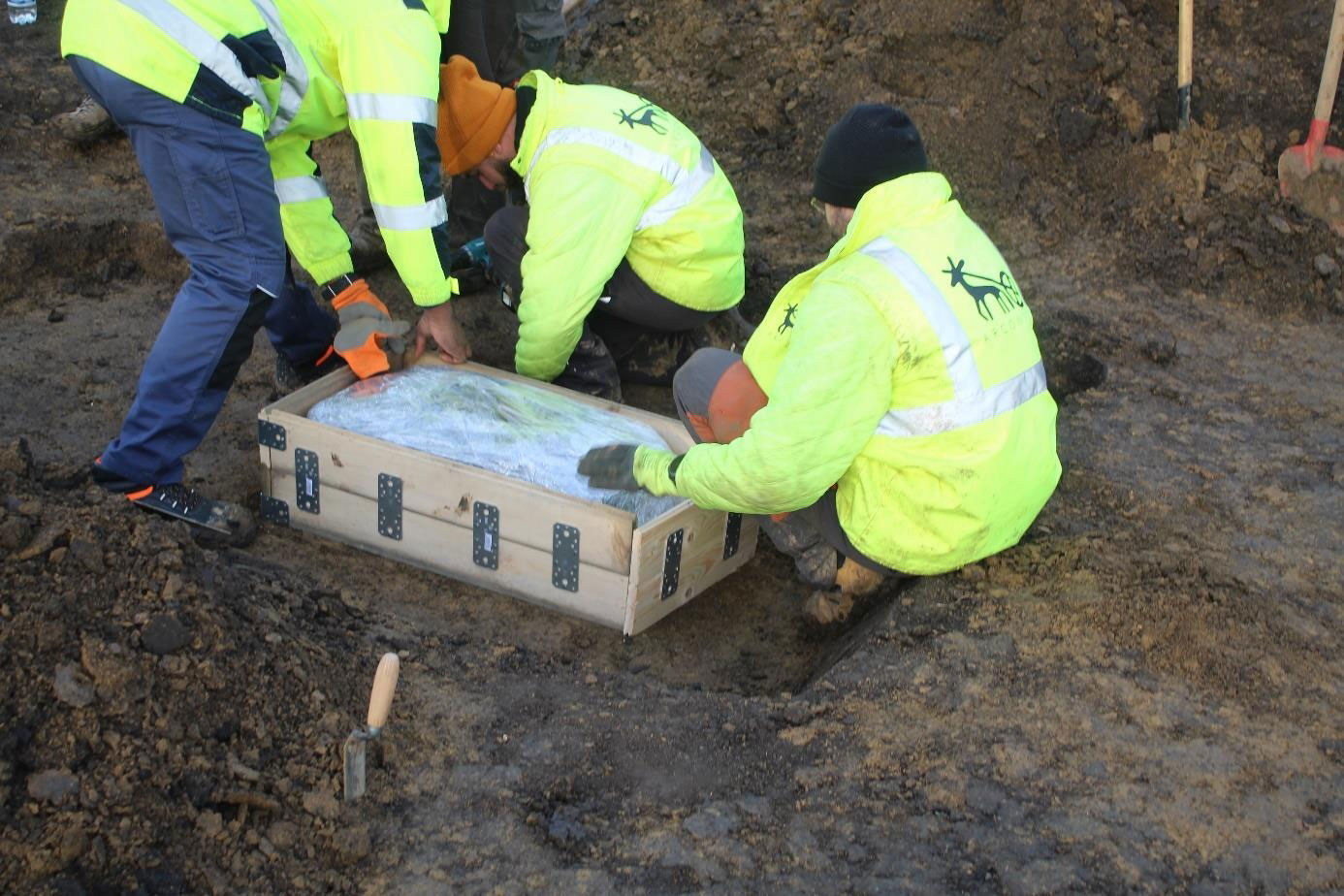
GLASSBORO, NEW JERSEY—According to an Associated Press report, a mass grave has been found in the trench system surrounding Fort Mercer, an earthen structure built during the Revolutionary War by American forces on the New Jersey shore of the Delaware River. Researchers from Rowan University and South River Heritage Consulting of Delaware said the grave contained the remains of as many as 12 men, pewter and brass buttons, and a gold guinea worth a soldier’s pay for a month. They suggest that the remains could represent German soldiers who were hired by the British to fight rebellious colonists, and may have been among the 377 men lost by the British at the Battle of Red Bank in 1777. Forensic anthropologists employed by the New Jersey State Police will analyze the remains, and attempt to extract DNA from them, in order to learn where the men originated and their health status at the time of death. Historian Jennifer Janofsky of Rowan University added that the team members may even be able to identify some of the soldiers. The bones will eventually be interred at another location. To read about excavations at another Revolutionary War battle site in South Carolina, go to "Laurens' Last Stand."

Advertisement