Early Bronze Age Grave Unearthed in Slovakia
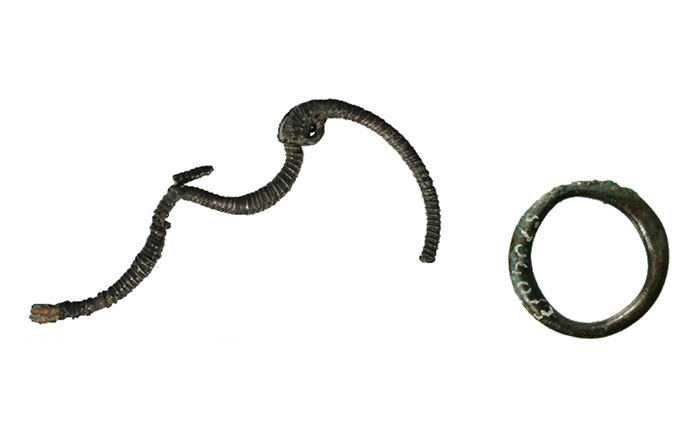
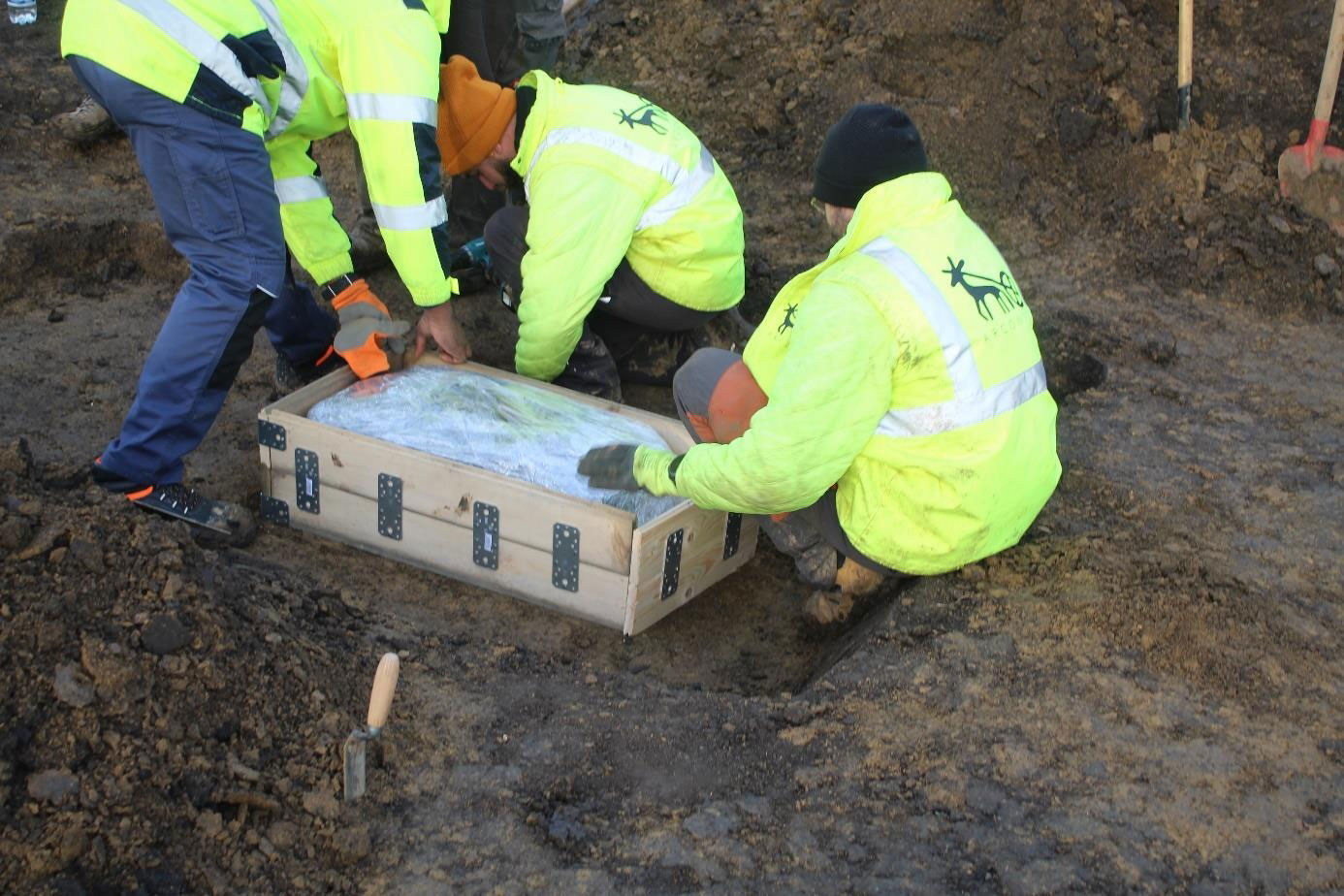
TRNAVA, SLOVAKIA—The Slovak Spectator reports that a 4,000-year-old grave of the Nitra culture was found during an investigation ahead of a construction project at a school in western Slovakia. The grave held the remains of a woman who had been placed on her left side in a flexed position. Bone beads, a copper bracelet, and two willow-shaped earrings were also recovered from the grave. “Uncovering the grave was a bit different than usual because all the classes of the local primary school and kindergarten arrived to watch our research and discoveries,” said archaeologist Peter Grznár. To read about investigations of the grave of a young woman buried in Denmark nearly 3,300 years ago, go to "Bronze Age Traveler."
Chrysalis Carving Offers Clues to Ancient Silk Production
SHANXI PROVINCE, CHINA—Xinhua reports that a one-inch-long stone carving of a silkworm chrysalis has been found in northern China, in a 5,200-year-old burial attributed to the Yangshao culture. “At present, many silkworm cocoons and chrysalises discovered in Yuncheng City have been found in good condition, indicating that the ancestors of Yangshao Culture in southern Shanxi had raised silkworms,” said Tian Jianwen of the Shanxi Province Archaeology Research Institute. The carving will offer clues to the study of the origin and spread of silk, Tian explained. To read about the oldest silk fibers ever found in an archaeological context, go to "World Roundup: China."
Viking-Era Sword Hilt Discovered in Norway
STAVANGER, NORWAY—According to a statement released by the University of Stavanger, two metal detectorists working independently of each other discovered three pieces of the hilt of a Viking-era sword in the Jåttå/Gausel area of western Norway, where the grave of the so-called Gausel queen, which contained artifacts from the British Isles, was discovered in 1883. Conservator Cora Oschmann said that it is still difficult to see all of the details of the hilt, but so far gilded images of animals and geometric figures in silver and black have been revealed as the artifact undergoes cleaning and restoration. Both ends of the cross guard, she added, are in the shape of animal heads. Similar swords have been found in eastern and western Europe, added archaeologist Zanette Glørstad, and it is likely that this sword was imported from France or England in the early 800s, although it is possible that a swordsmith in Norway could have copied a foreign style. To read about a Viking sword unearthed in southern Norway, go to "Artifact."
Drought Reveals Rome’s Pons Neronianus
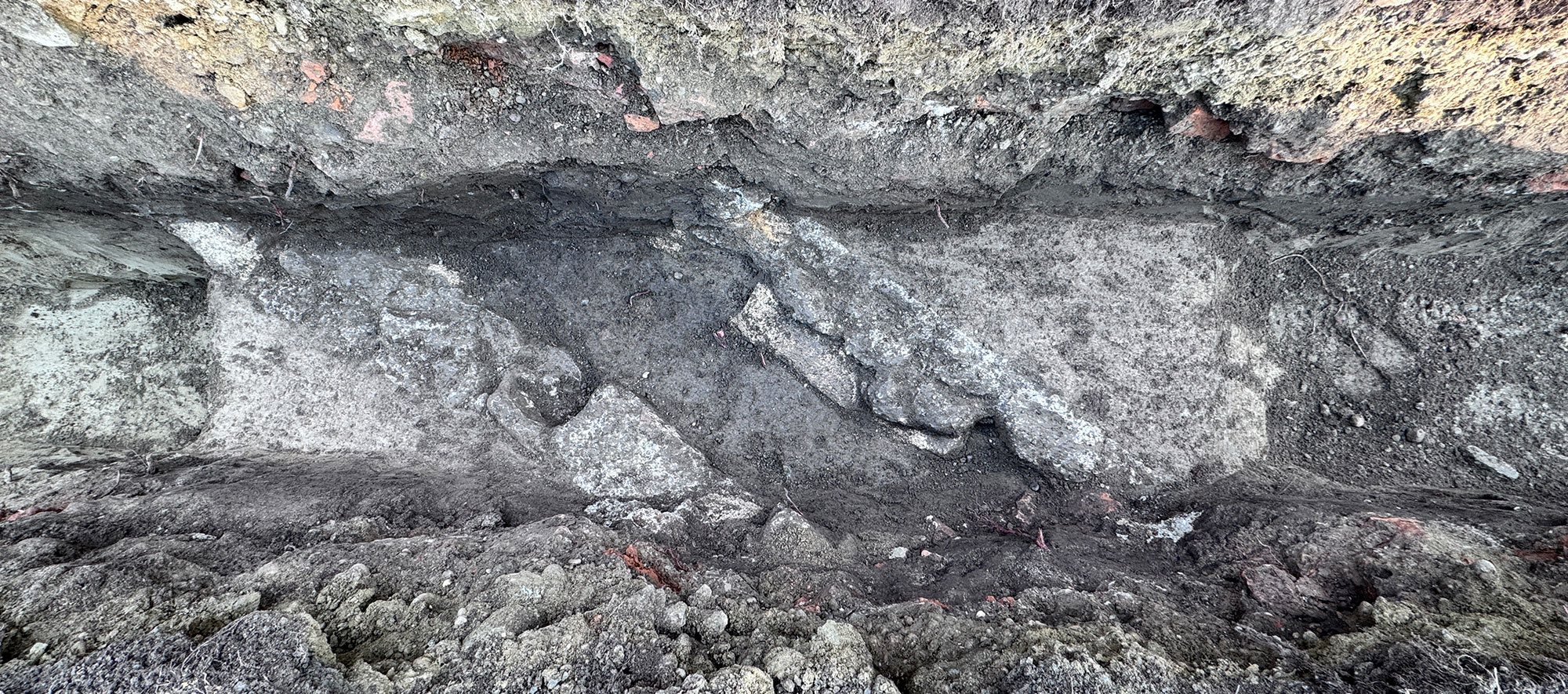
ROME, ITALY—Live Science reports that severe drought has lowered the level of the Tiber River and revealed traces of the Pons Neronianus, or Bridge of Nero. Scholars are not certain that the emperor constructed this bridge, however. It may have been built before Nero’s reign, which began in A.D. 54 and ended with his suicide in A.D. 68. “The Pons Neronianus was probably a reconstruction of an earlier crossing,” said architectural historian Nicholas Temple of London Metropolitan University. This name for the bridge first appeared in twelfth-century catalogues of Rome’s monuments, and may reflect its location, since it would have provided access from the city to what had been Nero’s gardens and properties, explained Robert Coates-Stephens of the British School at Rome. The structure was dismantled by the mid-third century, and its stone reused to build a new bridge further downstream in a better location. To read about the Arch of Constantine in the heart of Rome, go to "A Monumental Imperial Biography."
Remains Found in World War II–Era Mass Grave in Poland
WARSAW, POLAND—BBC News reports that a mass grave containing more than 17 tons of ashes has been found in northern Poland, near the site of Soldau, a Nazi concentration camp where as many as 30,000 Jews, political opponents of the Nazis, and members of the Polish intelligentsia and clergy were killed. The ashes are thought to represent at least 8,000 bodies that had been exhumed and burned in a Nazi effort to destroy evidence of the murders. To read about remote sensing of another Nazi killing site, go to "World Roundup: Lithuania."
Military Officer’s Tomb Discovered in Egypt
CAIRO, EGYPT—The National reports that a tomb holding the remains of Wahibre-mery-Neith, an Egyptian military official who commanded battalions made up of foreign soldiers, has been unearthed in Giza’s Abusir necropolis by a team of researchers led by Miroslav Bárta of Charles University in Prague. Mostafa Waziri of the Supreme Council of Antiquities said that the shaft tomb, which has been dated to around 500 B.C., is about 20 feet deep and 46 feet square. A double sarcophagus was found on a bed of sand at the bottom of a second shaft cut into the bedrock of the main shaft. The outer sarcophagus is made of white limestone, while the inner is made of basalt. The damaged inner coffin was inscribed with passages from the Egyptian Book of the Dead describing the resurrection of the deceased and the journey to the afterlife. No mummy was found. Barta thinks the tomb was looted around the fourth or fifth centuries A.D., based on pottery that had been left behind by the intruders. A scarab, some 400 ushabti figurines made of faience, and two alabaster canopic jars were also recovered. To read about the researchers' recent discovery of a large embalming cache for Wahibre-mery-Neith, go to "Mummy Makers."
Food Remains Found in Store Dated to Australia’s Gold Rush
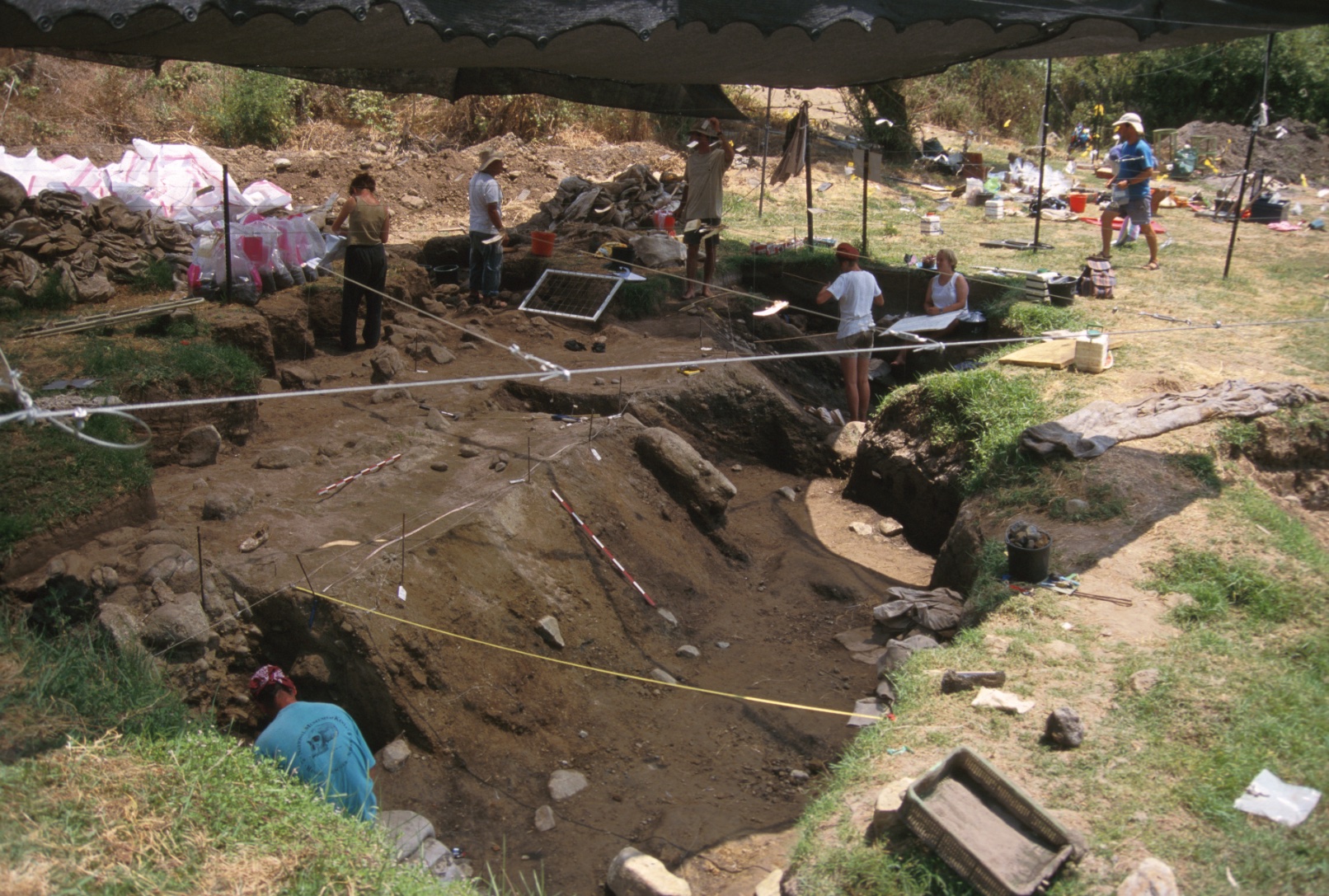
MELBOURNE, AUSTRALIA—9 News reports that well-preserved coffee beans were among the artifacts recovered from the site of a general store in Melbourne during archaeological investigations conducted as part of the Metro Tunnel project. When the store burned down during the Gold Rush in the 1850s, more than 500 coffee beans were carbonized, along with imported English biscuits, fruit, and other perishable goods. Deputy Premier of Victoria Jacinta Allan quipped that the coffee beans show that the beverage has long been important to Melburnians. To read about excavations of a nineteenth-century prison in the Melbourne suburbs, go to "Alone, but Closely Watched."
Possible Cancer Detected in Ancient Egyptian Mummy
WARSAW, POLAND—According to a Science in Poland report, researchers from the Warsaw Mummy Project suggest that the extensive facial defects observed in a computed tomography scan of a 2,000-year-old Egyptian mummy may have been caused by nasopharyngeal cancer. Previous studies of the mummified remains, which were brought to Poland in the early nineteenth century, have determined that they belonged to a young woman who was pregnant at the time of her death. “Firstly, we have unusual changes in the nasopharyngeal bones, which, according to the mummy experts, are not typical of the mummification process,” said Rafał Stec of the Medical University of Warsaw. Radiologists have also noted that the changes observed in the bones could have been caused by tumors. The team members plan to collect tissue samples from the mummy and compare them with cancer samples taken from other Egyptian mummies. The results of the tests could also be compared with modern cancer samples, and perhaps offer information on the evolution of the disease. To read about what researchers have learned from CT scans of other mummies from around the world, go to "Heart Attack of the Mummies."
Ancient DNA in East Asia Linked to Native Americans
YUNNAN PROVINCE, CHINA—According to a statement released by Cell Press, analysis of a genome obtained from a 14,000-year-old hominin fossil recovered from southern China’s Red Deer Cave indicates that the individual was a modern human. It had been previously thought that these fossils could represent an unknown archaic human species, or a hybrid of an archaic population and modern humans. Comparison of this individual's genome with genomes of people from around the world suggests that this branch of modern humans may have contributed to the East Asian ancestry of Native Americans, explained team member Bing Su of the Chinese Academy of Sciences. Some of the population is thought to have traveled north from southern East Asia along China’s eastern coastline and on to Siberia, the Bering Strait, and North America. Others became the ancestors of people living in East Asia, the Indo-China peninsula, and islands in Southeast Asia, Su added. “It’s an important piece of evidence for understanding early human migration,” he said. Read the original scholarly article about this research in Current Biology. To read about a hominin skull unearthed in China that has been dated to at least 146,000 years ago, go to "China's New Hominin Species."
Bronze Age Pot Discovered in Wales
CARDIFF, WALES—BBC News reports that a well-preserved 3,000-year-old pot has been found in an enclosure ditch at the site of a roundhouse in Cardiff’s Trelai Park. The dwelling, thought to date to between 1500 and 1100 B.C., is located about one-half mile from Caerau Hillfort, a triangular structure built in the Iron Age. “The enclosure definitely predates the hillfort, people were living here before the hillfort was built,” said archaeologist David Wyatt of the Caerau and Ely Rediscovering Heritage Project. Further study could reveal where the pot was made and how it was used. Researcher Oliver Davis added that there are only one or two other sites in Wales dated to the Bronze Age. For more on hillforts in Wales, go to "Letter from Wales: Hillforts of the Iron Age."
Advertisement