Isotope Analysis Identifies South Australia’s Early Colonists
ADELAIDE, AUSTRALIA—According to a statement released by Flinders University, a team of researchers led by Christine Adams has measured the levels of strontium isotopes in the teeth of early South Australian colonists who were buried before 1880 in unmarked graves in the free ground section at the Anglican Parish of St. Mary’s Church in Adelaide. The study suggests that just one of the 13 people had been born in Adelaide, while eight of them had been born in Britain or Ireland. Just three of the individuals could have spent their childhoods in either location. The last person in the sample was likely born and raised somewhere else. Team member Donald Pate explained that isotope analysis offers important information about migration and mobility in the colonial population because the lives of these people were not well documented. Read the original scholarly article about this research in Australian Archaeology. To read about the diverse origins of New Zealand's settlers, go to "Kiwi Colonists."
Neolithic Ceramic Figurine Found in Golan Heights
SHA’AR HAGOLAN, ISRAEL—According to a report in The Jerusalem Post, a possible mother goddess figurine crafted by members of the Yarmukian culture some 8,000 years ago has been uncovered in the Golan Heights. Anna Eirikh-Rose of the Israel Antiquities Authority said the Yarmukians living in the settlement where the figurine was uncovered produced pottery vessels on a large scale. This seated figurine, found in two pieces next to the wall of a dwelling, measured about eight inches long. “This is one of the largest examples of the figurine found,” she explained. “It is of a large seated woman with big hips, a unique pointed hat and what is known as ‘coffee-bean’ eyes and a big nose. One hand is positioned on her hip and the other one under her breast.” The eyes may actually represent kernels of wheat or barley, she added. Eirikh-Rose and her colleagues will analyze the clay used to make the figurine and try to determine how it was used. “This is a big question to study—the development of religious beliefs and culture,” she concluded. To read about Neolithic clay cylinders that might have been the world's first matches, go to "World Roundup: Israel."
Jawbone Discovered in Spain May Be Oldest Known Hominin Fossil
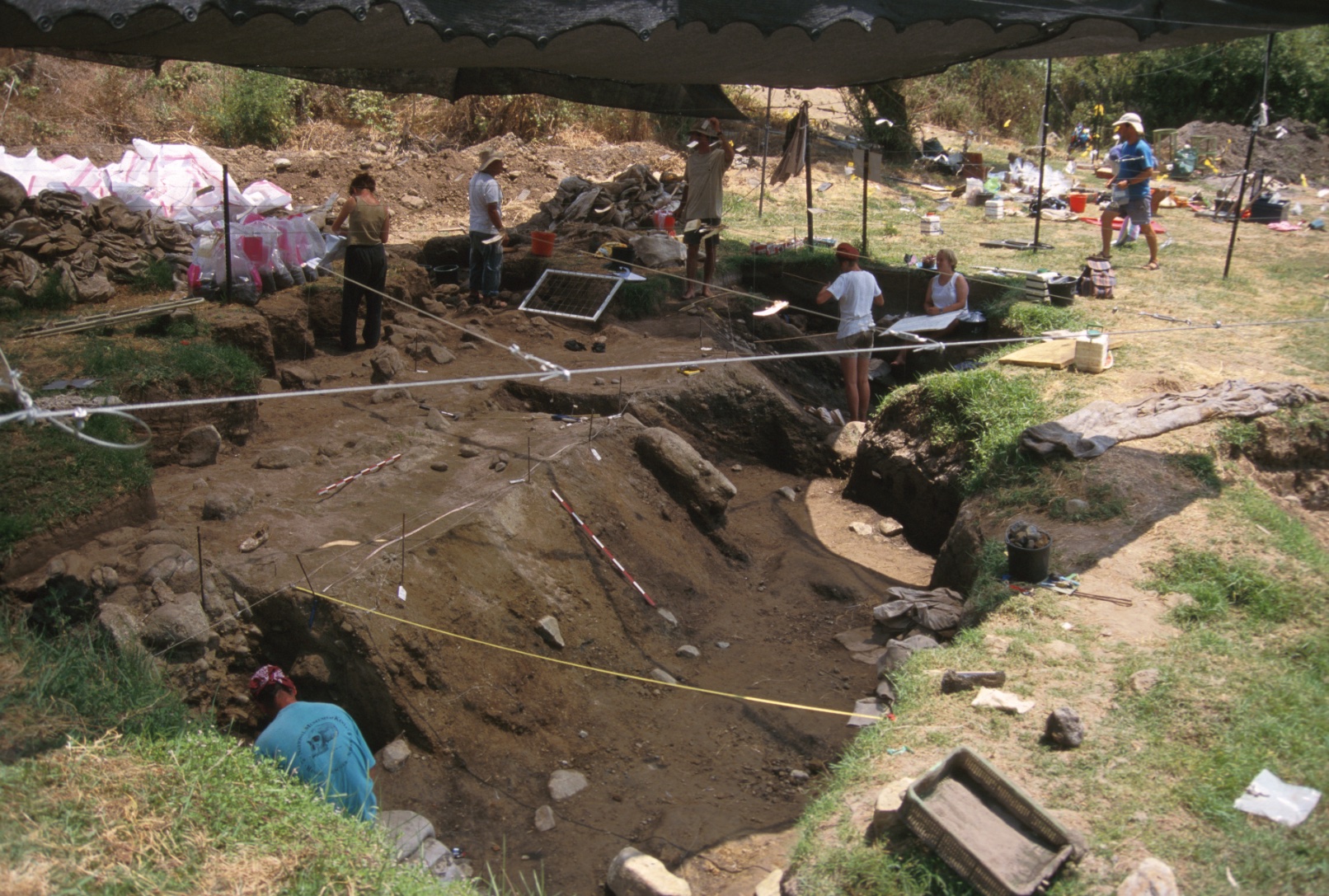
BURGOS, SPAIN—The AFP reports that a jawbone fragment discovered in northern Spain’s Atapuerca Mountains last month may be Europe’s oldest known hominin fossil. Paleoanthropologist Jose-Maria Bermudez de Castro of the National Center for Research on Human Evolution (CENIEH) said the jawbone was found in a layer of earth about six feet deeper than the one in which another hominin jawbone, dated to 1.2 million years ago, was found in 2007. He estimates that the newly discovered fossil could be 1.4 million years old. CENIEH researchers will date the newly unearthed fossil and also attempt to determine if it belonged to Homo antecessor or another hominin species. To read about reconstructions of the inner-ear anatomy of hominins, including specimens of pre-Neanderthal hominins recovered from the Atapuerca Mountains, go to "Neanderthal Hearing."
Possible Prehistoric Burial Uncovered in Wales
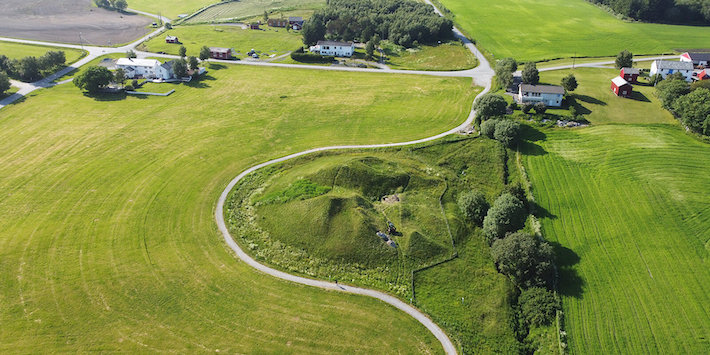
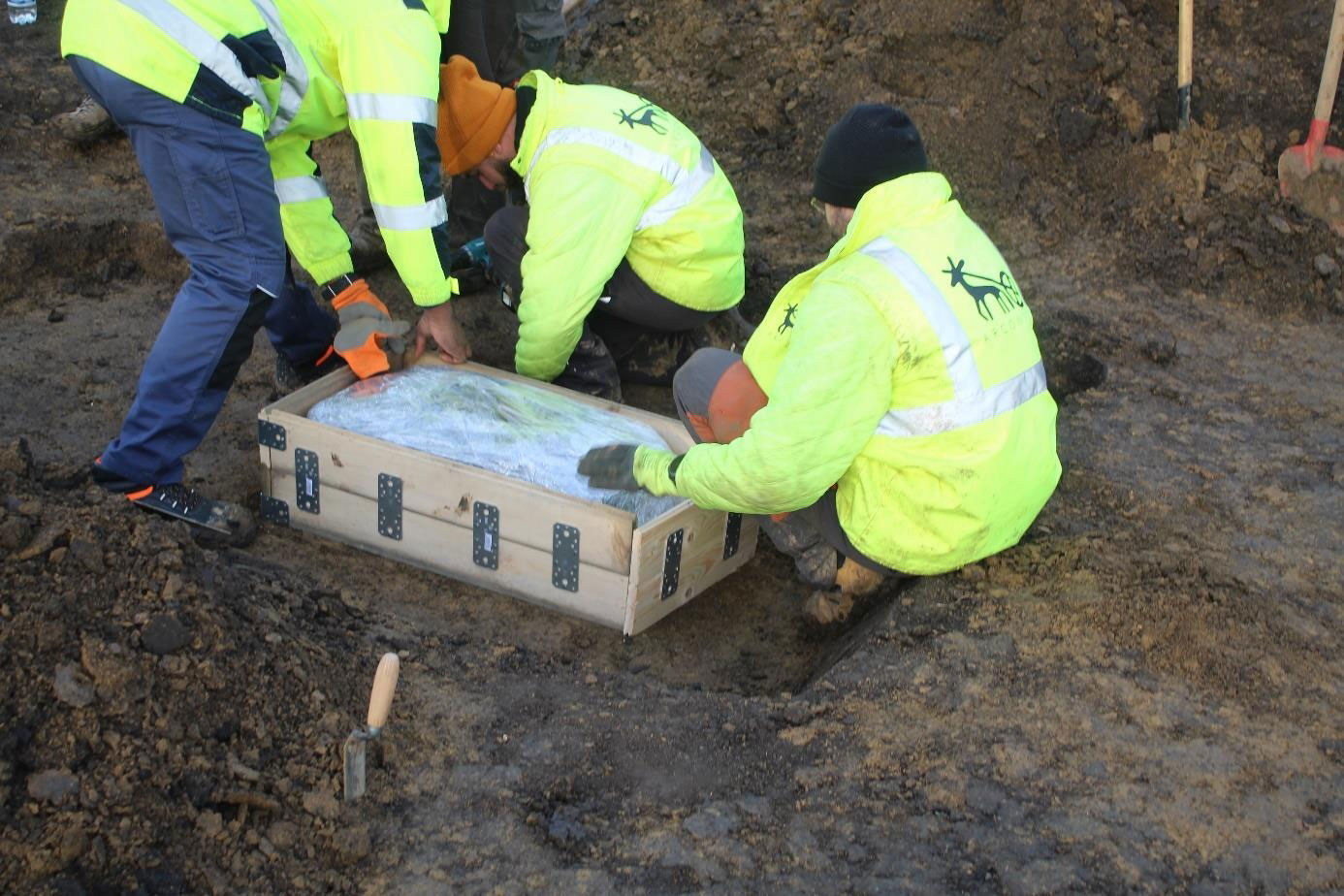
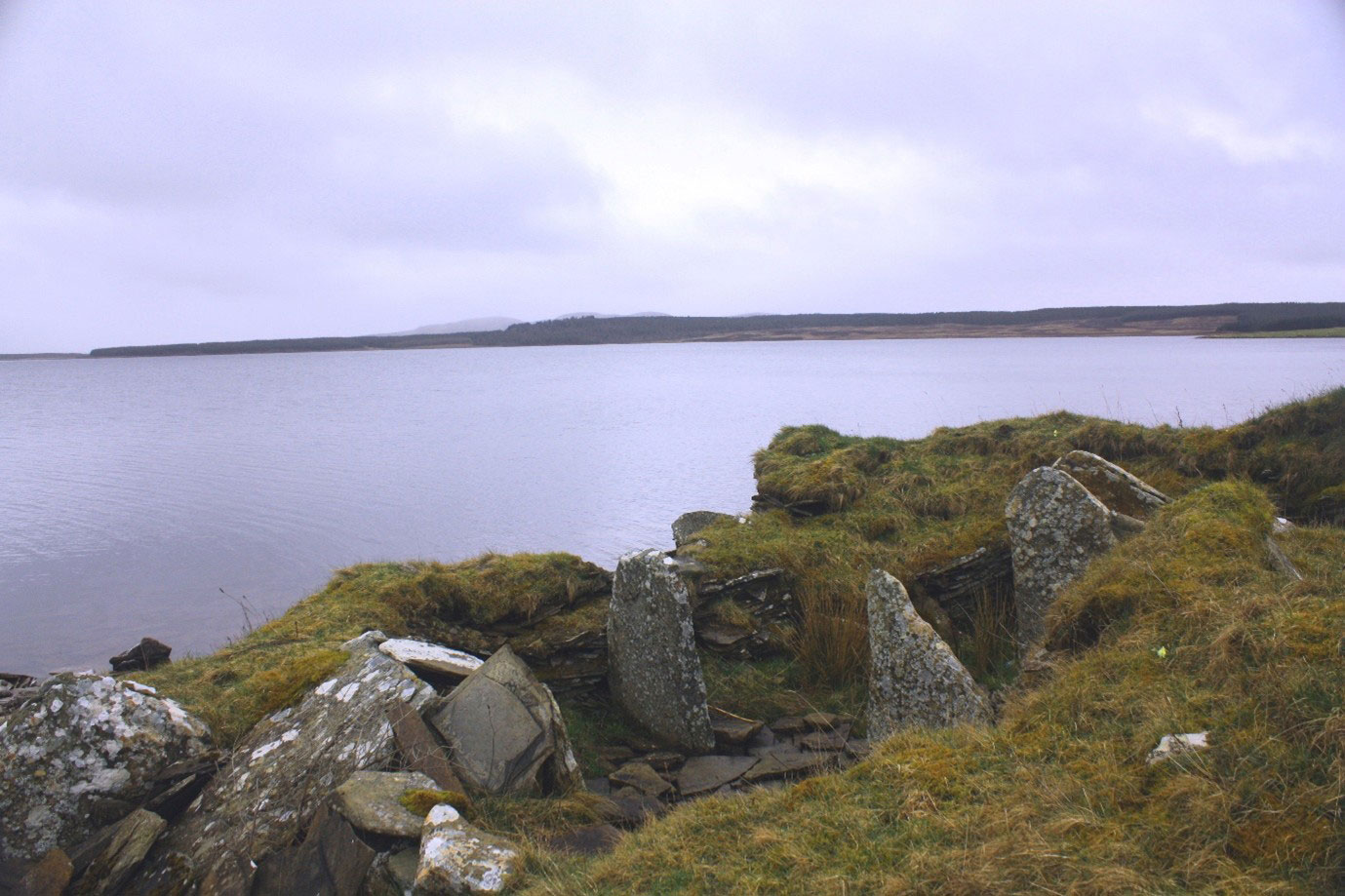
CRICCIETH, WALES—The National reports that Tom Fildes of the Gwynedd Archaeological Planning Service and his colleagues discovered a possible stone-lined burial in northwestern Wales during an investigation conducted ahead of a construction project. “In the cist there were no human remains found during the excavation but experts say this could be a result of the preservation conditions at the site,” Fildes said. This cist is thought to date to the prehistoric era, since a possible grinding stone and a piece of worked chert were also recovered nearby. To read about the arc of standing stones in western Wales known as Waun Mawn, go to "A Welsh Ancestor."
Ancient Mosaic Floors in Israel May Depict Biblical Heroines
CHAPEL HILL, NORTH CAROLINA—According to a statement released by the University of North Carolina, Chapel Hill (UNC), 1,600-year-old mosaic floor panels depicting biblical heroines have been uncovered in the ancient Galilean synagogue at Huqoq by a team of researchers led by UNC archaeologist Jodi Magness and Dennis Mizzi of the University of Malta. The researchers suggest that the images depict an episode in Judges, one of the books of the Hebrew scriptures, in which Israelite forces, led by the prophetess and judge Deborah and the military commander Barak, defeat a Canaanite army led by Sisera. In the story, Sisera took refuge after the battle in the tent of Jael, who killed him as he slept. The first strip, or register, of the mosaic shows Deborah under a palm tree and Barak holding a shield. What is left of the poorly preserved middle register appears to show a seated Sisera, while the bottom register shows him lying on the ground, bleeding from the head, as Jael hammers a tent stake through his temple. Other recently uncovered mosaics at the site include a fragment of a Hebrew inscription inside a wreath flanked by vases holding sprouting vines. The vines, in turn, frame a hare, a fox, a leopard, and a wild boar eating grapes. To read about other mosaics previously uncovered in the synagogue, go to "Mosaics of Huqoq."
“Head of Eros” Reunited with Sarcophagus in Turkey
ANKARA, TURKEY—The Anadolu Agency reports that the Victoria & Albert Museum returned a piece of a 30-ton sarcophagus to Turkey after renewing a cultural partnership with the Istanbul Archaeological Museums. The Roman sarcophagus was discovered in the ancient city of Sidamara by British military consul general Sir Charles Wilson in 1882. He took the piece, known as the “head of Eros,” with him back to London. The head was re-attached to the Sidamara sarcophagus by a team of conservators from both institutions. To read about the discovery of a Roman amphitheater in western Turkey's ancient city of Mastaura, go to "In the Anatolian Arena."
Germany Agrees to Repatriate Artifacts to Africa
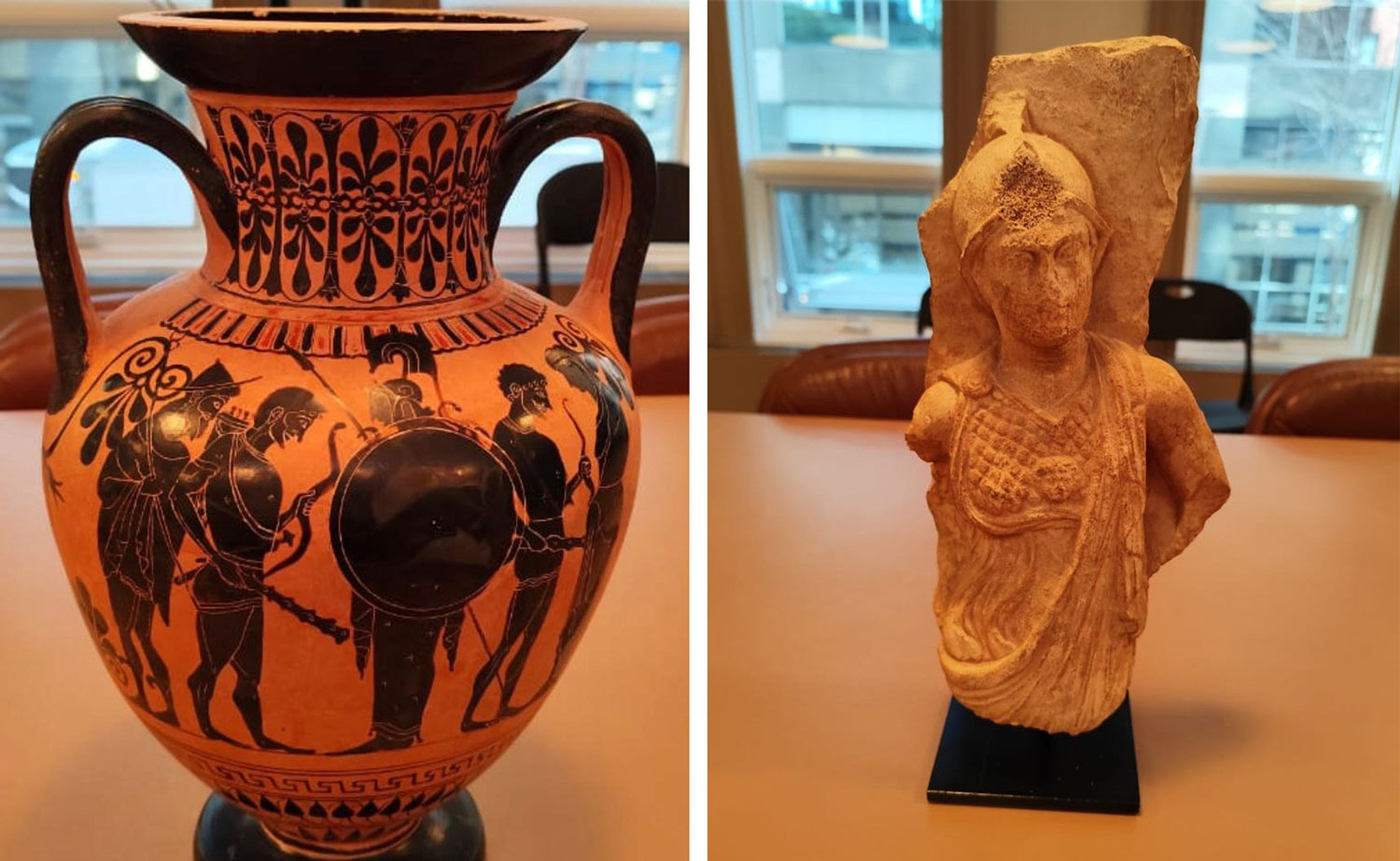
BERLIN, GERMANY—DW reports that Germany will return artifacts housed in more than 20 German museums to Nigeria, Cameroon, Tanzania, and Namibia. Most of the more than 1,100 Benin Bronzes to be repatriated were looted by British forces who conquered Nigeria’s city of Benin in 1897. A statue of Ngonnso, a mother deity of the Nso people, will be returned to Cameroon. This artifact was taken from Kumbo, the capital of the Nso kingdom, by colonial officer Kurt von Pavel, who was accompanied by armed soldiers. He donated the statue to Berlin’s Ethnological Museum in 1903. An additional 23 objects will be handed over to Namibia, and an unnamed number of items to Tanzania that were taken during the Maji-Maji War, an uprising against German colonial rule from 1905 to 1907. To read about honey production among central Nigeria's Nok people, go to "Around the World: Nigeria."
DNA Study Offers Clues to the Peopling of Remote Pacific Islands
CAMBRIDGE, MASSACHUSETTS—According to a statement released by Harvard University, a new study of the genomes of 164 people who lived between 2,800 and 300 years ago, and 112 modern individuals, has identified five migrations across open water in long-distance canoes to Remote Oceania between 2,500 and 3,500 years ago. Three of these migrations to Micronesia and other remote Pacific islands came from East Asia, one came from Polynesia, and the last came from the northern edge of mainland New Guinea. The study, conducted by geneticists David Reich and Yue-Chen Liu of Harvard University, Ron Pinhasi of the University of Vienna, and independent researcher Rosalind Hunter-Anderson, also determined that mitochondrial DNA sequences obtained from remains unearthed in Guam, Tonga, and Vanuatu were almost completely different, even though they shared some of the rest of their DNA. This suggests that the early seafarers lived in matrilocal systems, in which women remained in their communities after marriage, since mitochondrial DNA is inherited only through the maternal line. This pattern of leaving the community must have been nearly unique to males in order to explain why genetic differentiation is so much higher in mitochondrial DNA than in the rest of the genome, Reich explained. Read the original scholarly article about this research in Science. To read about plants that the Lapita Culture brought to Oceania, go to "Around the World: Vanuatu."
Update from Albania’s Lost City
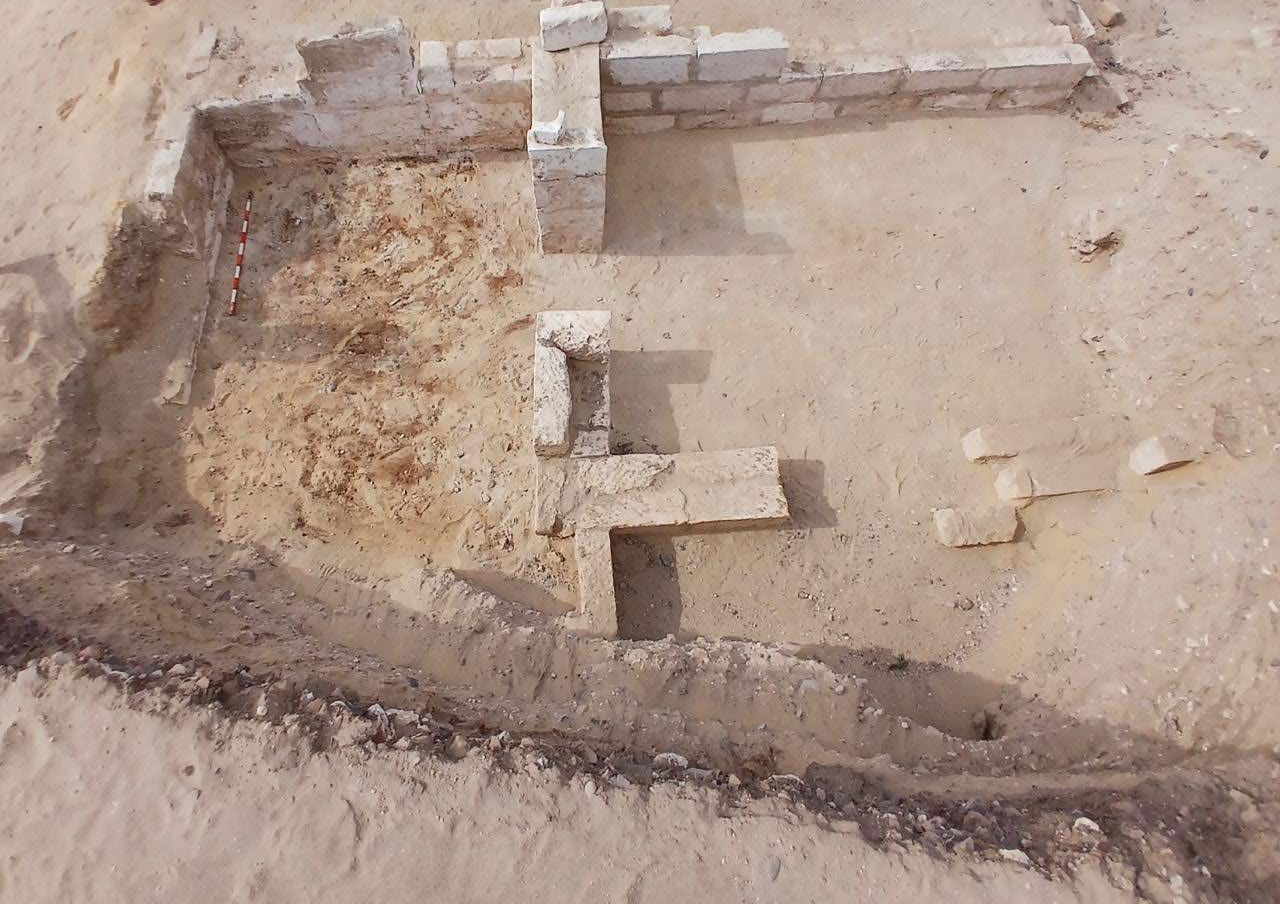
SHKODER, ALBANIA—Science in Poland reports that two of the three unusual buildings discovered on a hill in northwestern Albania in 2018 have been excavated by a team of researchers led by Piotr Dyczek of the University of Warsaw and Saimir Shpuza of the Institute of Archaeology in Tirana. The fortified site of Bushat was located between Scodra, the capital of Illyria, and the Greek city of Lissos. The surviving walls were made from large blocks of local stone, which were later reused in surrounding structures or had slid down the side of the hill as it eroded over the past 2,000 years. But no signs of violence or fire have been uncovered to explain the abandonment of the city, Dyczek said. Analysis of pottery at the site suggests that the hill was first occupied in the second millennium B.C. Fragments of amphoras from Italy dated to the third and second centuries B.C., and Greek two-handled wine cups were also recovered. “Most of them are very small,” Dyczek said. “In antiquity, such miniature vessels were either toys or cult items. It is difficult to determine the functions they had in this place.” He thinks the structures were not used as residences. “We could make different guesses, but we have to wait for the results of further research,” he concluded. The team members are still looking for any evidence to support the idea that the site could be Bassania, a city mentioned by the Roman historian Livy in his description of battles between the Romans and Gentius, the last Illyrian king. For more on Albania's archaeological history, go to "Letter from Albania: A Road Trip Through Time."
Advertisement