Genomes Offer Clues to Korea’s Three Kingdoms Period
GIMHAE, SOUTH KOREA—According to a statement released by the University of Vienna, the genomes of eight people who lived some 1,700 years ago in the Gaya confederacy of small city-states in what is now southern South Korea have been analyzed by a team of researchers from the University of Vienna, Ulsan National Institute of Science and Technology, and the National Museum of Korea. One of the sets of remains belonged to a child that had been buried in the Yuha-ri shell mound. The others were recovered from the tomb complex at the Daesung-dong tumuli. The study suggests that the population living in the Gaya confederacy was more diverse than the present-day Korean population. Isolation of the Korean peninsula following the Three Kingdoms period probably led to the mixing of its populations, the researchers explained. The study also revealed that the genetic differences found between the eight individuals were not related to their social status. “We have observed that there is no clear genetic difference between the grave owners and the human sacrifices,” said Pere Gelabert of the University of Vienna. To read about finds from tombs that researchers believe belonged to Gaya leaders, go to "Deerly Departed."
What Happened to the Waterloo Dead?
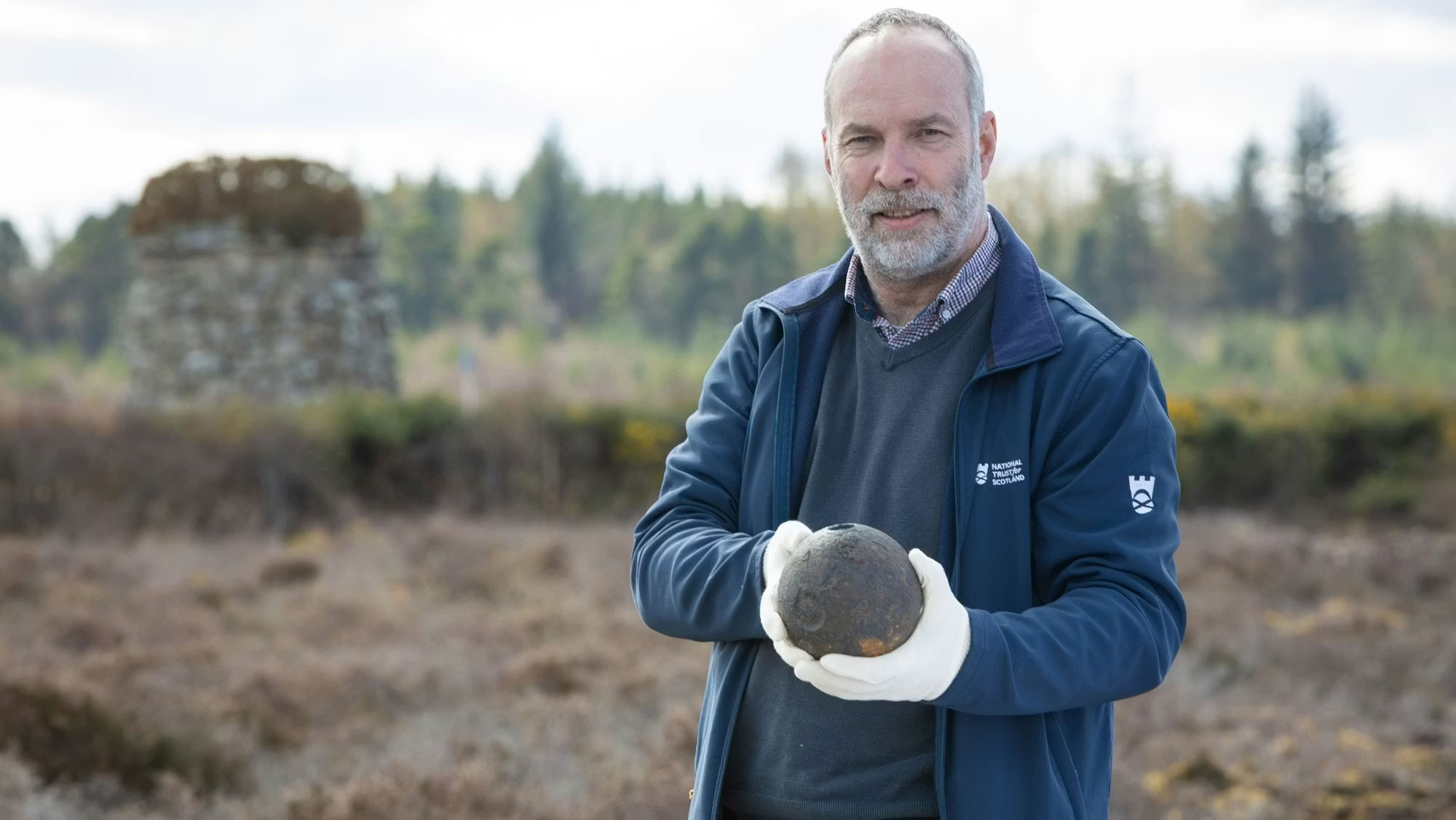
GLASGOW, SCOTLAND—According to a statement released by Taylor & Francis, Tony Pollard of the University of Glasgow Center for Battlefield Archaeology will be assisted by veterans in a new geophysical survey in Belgium, at the site of the Battle of Waterloo. The researchers will look for traces of mass graves, beginning with an analysis of early visitor accounts of the battlefield. Although tens of thousands died in the battle, which was fought on June 18, 1815, by a French army commanded by Napoleon, an army made up of soldiers from Britain and its allies, and a Prussian army, very few human remains have been recovered in the area. But Pollard said that at least three newspaper articles from the 1820s referenced the importation of human bones from European battlefields to the British Isles for use as fertilizer. Guidebooks, travelogues, and local people could have revealed the locations of such mass graves to an agent of a purveyor of bones, he explained. On the basis of these accounts and the known importance of bone meal in the practice of agriculture, Pollard said, the removal of bodies from mass graves at Waterloo to obtain bones seams feasible. The new research could offer a picture of what happened to the dead, he concluded. Read the original scholarly article about this research in the Journal of Conflict Archaeology. For more on the Battle of Waterloo, go to "A Soldier's Story."
Bronze Age Fortress Identified in Ireland
COUNTY GALWAY, IRELAND—RTÉ News reports that archaeologist Michael Gibbons has dated the remnants of an ancient fortress in a rural park in the Burren Lowlands region of western Ireland to the Bronze Age, between about 800 and 1200 B.C. The fortress would have been large enough to shelter hundreds of people at a time, Gibbons explained. Seasonal lakes would have been part of its defenses, he added. An aerial lidar survey of the now-wooded site could reveal traces of roundhouses within the ramparts. For more on Ireland during this period, go to "Bronze Age Ireland's Taste in Gold."
New Dates Obtained for Indigenous Council House in Georgia
ATHENS, GEORGIA—According to a statement released by the University of Georgia, members of the Muscogee Nation, archaeologist Victor Thompson of the University of Georgia Laboratory of Archaeology, and their colleagues suggest that people gathered at a council house at the Cold Springs site in central Georgia some 1,500 years ago to practice collective decision making. The Cold Springs site was excavated in the early 1970s before it was partially submerged by Lake Oconee. New radiocarbon dates for artifacts from the site housed in the University of Georgia’s collections indicate that the council house, marked by concentric circles of postholes on a platform mound, was first built about A.D. 500. It had been previously thought that such structures served ceremonial purposes until about A.D. 1000, when they became political structures inhabited by the sole ruler of a chiefdom. This view, however, is in conflict with the traditional knowledge of the Muscogee Nation. “We still have a National Council in our council house, which meets within it and passes national laws—it's been this way for hundreds of generations,” explained Muscogee (Creek) National preservation officer Turner Hunt. Read the original scholarly article about this research in American Antiquity. To read about Native American rock mounds along the Oconee River, go to "Letter from Georgia: Soaring With Stone Eagles."
Evidence of Early Domesticated Fruit Trees Found in Israel
TEL AVIV, UNIVERSITY—According to a statement released by Tel Aviv University, domesticated olive and fig trees were planted in the Jordan Valley some 7,000 years ago by the people who lived in the wealthy village of Tel Zaf. Dafna Langgut of Tel Aviv University identified lumps of charcoal unearthed by Yosef Garfinkel of Hebrew University at the site of Tel Zaf as the wood of olive and fig trees. Because olive trees did not grow naturally in the Jordan Valley, the researchers suggest that they were planted intentionally. Garfinkel and his colleagues also found large houses with courtyards and large-capacity granaries, pottery imported from Mesopotamia, obsidian from Anatolia, and a copper awl from the Caucasus at the site. Groves of domesticated trees would have contributed to a luxurious life, the researchers explained, since they yield crops for many years once the trees have been established. Olives, olive oil, and dried figs, which have a long shelf life, could have been offered as goods in long-distance trade. Stamps unearthed at Tel Zaf suggest that this accumulation of wealth was accompanied by the development of administrative procedures and perhaps even taxation, the researchers concluded. Read the original scholarly article about this research in Scientific Reports. To read about evidence for early production of olive oil in Sicily, go to "World Roundup: Italy."
New Thoughts on Eastern Europe's Medieval Source of Ivory
TRONDHEIM, NORWAY—According to a statement released by the Norwegian University of Science and Technology (NTNU), researchers led by James Barrett of the NTNU University Museum analyzed nine walrus snout bone fragments unearthed in 2007 during a construction project in Kyiv, an important trading city in the medieval period. In 2019, Barrett and his colleagues determined that Western Europe obtained most of its walrus products from Norse settlers in Greenland, although it was still thought that the ivory used in Eastern Europe came from the Barents Sea, which is located off the northern coasts of Norway and Russia. The researchers determined that five of the nine bone fragments had a genetic signature indicating they came from a genetic group of walruses only found in Greenland, while the chemical analysis of isotopes from the bones suggests that seven of the nine animals could have come from the region of Greenland. “The animals might have also come from Iceland, but not from the Barents Sea,” Barrett explained. Lastly, six of the bones had been worked in the manner observed in samples from Greenland. The other three pieces were too fragmented to determine how they had been modified. “Of course, this conclusion isn’t definitive either, since these techniques could have been copied,” Barrett added. When taken together, the results of the study suggest that ivory probably traveled from Greenland to a Scandinavian trading hub, and then to Kyiv, where it could have been sent on to the Islamic world and Asia. Read the original scholarly article about this research in Proceedings of the Royal Society B: Biological Sciences. To read about the extinction of Iceland's walruses in the wake of Viking settlement, go to "The Time Had Come, the Walrus Said."
16th-Century E. coli Sample Extracted from Italian Mummy
HAMILTON, ONTARIO—According to a statement released by McMaster University, researchers led by Hendrik Poinar have reconstructed a 400-year-old E. coli genome from a sample of a gallstone taken from the well-preserved body of an Italian noble discovered in Naples in the 1980s. E. coli is a commensal, a type of bacteria that lives in a host and can become a threat when the host is stressed or experiencing an underlying disease or immunodeficiency. Understanding the genome of the 400-year-old bacteria will help scientists see how the pathogen has evolved and adapted. Today, some strains of E. coli are resistant to treatment and can cause fatal food poisoning and bloodstream infections. Read the original scholarly article about this research in Communications Biology. For more on identifying bacteria by their DNA, go to "Diagnosis of Ancient Illness."
Advertisement