2,100-Year-Old Farmstead Found in Israel
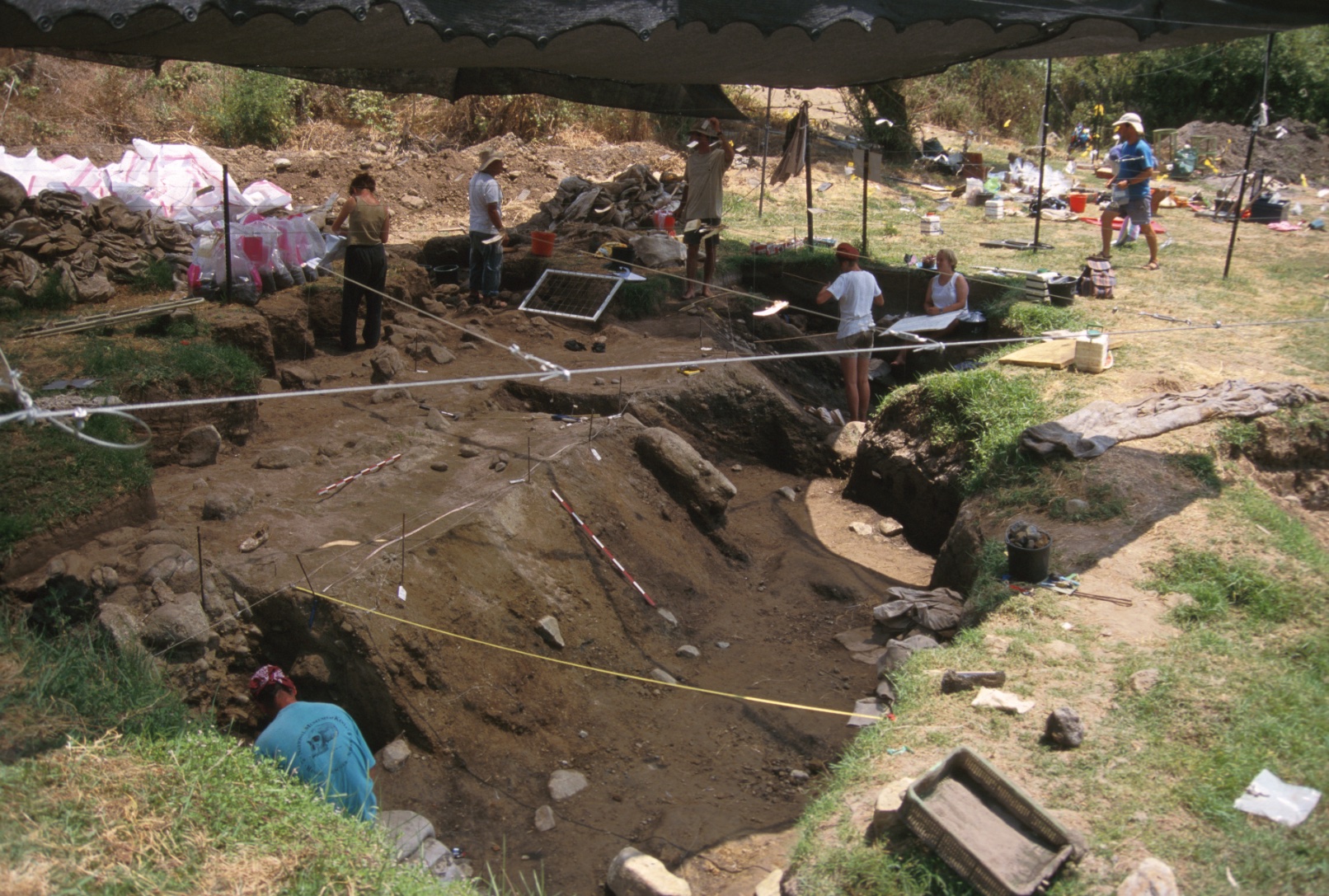
HORBAT ASSAD, ISRAEL—According to a Live Science report, a farmstead thought to have been abandoned in the late second century B.C. has been found in northern Israel, near the Sea of Galilee. Archaeologist Amani Abu-Hamid of the Israel Antiquities Authority said that during this period, the Judean Hasmonean kingdom expanded from the south into the Galilee. The farmers may have been subjects of the Seleucid Empire who fled the invasion, since the researchers uncovered intact storage jars, loom weights kept on a shelf, farm tools including iron picks and scythes, and coins. The farmers may have raised sheep or goats, and used their fleece or hair for weaving cloth, based upon the large number of loom weights, he added. To read about a purple dye industry that thrived for nearly three millennia on the Mediterranean Coast, go to "Letter from Israel: The Price of Purple."
Maya City Discovered in Mexico
MÉRIDA, MEXICO—A Maya city including palaces, pyramids, and plazas has been discovered at a construction site on private land near the coast of the southern Yucatán peninsula, according to a report in The Guardian. Archaeologist Carlos Peraza said that the site, known as Xiol, was home to more than 4,000 people from about 600 to 900 A.D. Burial grounds holding the remains of adults and children were also found. “With time, urban sprawl [in the area] has grown and many of the archaeological remains have been destroyed … but even we as archaeologists are surprised, because we did not expect to find a site so well preserved,” Peraza said. The landowners say they will preserve the city, although the construction project will continue. To read about the only Maya city with an urban grid, go to "The City at the Beginning of the World."
Viking-Era Structures Explored in Iceland
ODDI, ICELAND—According to a report in Iceland Review, a series of caves carved out of sandstone in South Iceland is older and larger than previously thought. Archaeologist Kristborg Þórsdóttir said that the structures, which were first discovered in 2018, date to the middle of the tenth century A.D. But the investigation has been slowed by dangerous conditions. “The rock is so porous that it just crumbles before our eyes,” Þórsdóttir said. The caves were probably not used for very long for this reason, she added. The structure currently under investigation may be Nautahellir, or Bull Cave, mentioned in an early thirteenth-century manuscript recording the collapse of a cave where 12 bulls were held. Only one of them was rescued from the rubble. “Although it’s older than that, it’s likely that [the cave] was used for livestock,” Þórsdóttir explained. For more, go to "The Blackener's Cave."
Pompeii Victim’s Genome Sequenced
LECCE, ITALY—The Guardian reports that Gabriele Scorrano of the Lundbeck GeoGenetics Center, Serena Viva of the University of Salento, and their colleagues have mapped the genome of a man whose remains were unearthed in 1933 at the Craftsman’s House in Pompeii, which was destroyed and covered in ash during the eruption of Mount Vesuvius in A.D. 79. The researchers also attempted to map the genome of a woman whose remains discovered in the same room, but her DNA was not as well preserved. She was over the age of 50 at the time of her death, and may have had osteoarthritis. The positions of the bodies suggest that the two did not attempt to flee to safety. Traces of DNA from the bacteria that causes tuberculosis were detected in the man’s remains, along with bone lesions associated with the disease on one of his vertebrae. Comparison of his genome with more than 1,000 other ancient genomes and hundreds of modern people from western Eurasia found that his DNA shared similarities with people living today in central Italy and his Roman contemporaries living in the region, while analysis of mitochondrial DNA, inherited through the maternal line, and Y-chromosome DNA, inherited through the paternal line, carried genes commonly found in people who lived on the island of Sardinia. To read more about the archaeology of Pompeii and families who lived in the city, go to "Family History."
Pre-Columbian City in Bolivia Investigated With Airborne Lasers
BONN, GERMANY—A pre-Columbian landscape inhabited by the people of the Casarabe culture between A.D. 500 and 1400 has been mapped in Bolivia’s Amazon rain forest by archaeologist Heiko Prümers of the German Archaeological Institute and his colleagues, according to a Science News report. Prümers said that the lidar survey of more than 1,700 square miles revealed traces of an urban system of 26 interconnected sites, including campsites, villages, towns, monumental centers, canals, reservoirs, and straight, raised causeways under the layers of dense trees and ground cover. This type of city plan allowed for plenty of room for farming, he explained. The two largest sites in the system, Cotoca and Landívar, were protected by curved moats and defensive walls. They also had rectangular and U-shaped platform mounds, and artificial terraces supporting cone-shaped pyramids made of earth. Causeways radiated out from both sites as well, Prümers explained, which connected them to smaller sites with fewer platform mounds, and other areas that may have been reserved for specific activities, such as butchering prey. Read the original scholarly article about this research in Nature. To read about sites in northern Bolivia where hunter-gatherers settled seasonally as far back as 10,600 years ago, go to "Home on the Plains."
Prehistoric Artifacts Discovered in a Vietnam Cave
HANOI, VIETNAM—According to a Vietnam Plus report, more than 700 artifacts were discovered in a cave in northeastern Vietnam’s Bac Kan province by a team of researchers from the Institute of Archaeology, the Vietnam Archaeology Association, and the Bac Kan Museum. Team member Trinh Nang Chung estimates that Tham Un Cave was used as a residence for about 4,000 years, beginning some 5,000 to 6,000 years ago by people of the Bac Son Culture, and ending in the late Neolithic period. Many of the artifacts, he explained, are stone tools crafted from river pebbles. The researchers will return to the cave for excavations and additional study. For more on the archaeology of Vietnam, go to "World Roundup: Vietnam."
Advertisement