Subscribe to Archaeology
Archaeological Headlines By JESSICA E. SARACENI
Friday, May 20

Did Dog Jaws Adapt to a Domesticated Diet?

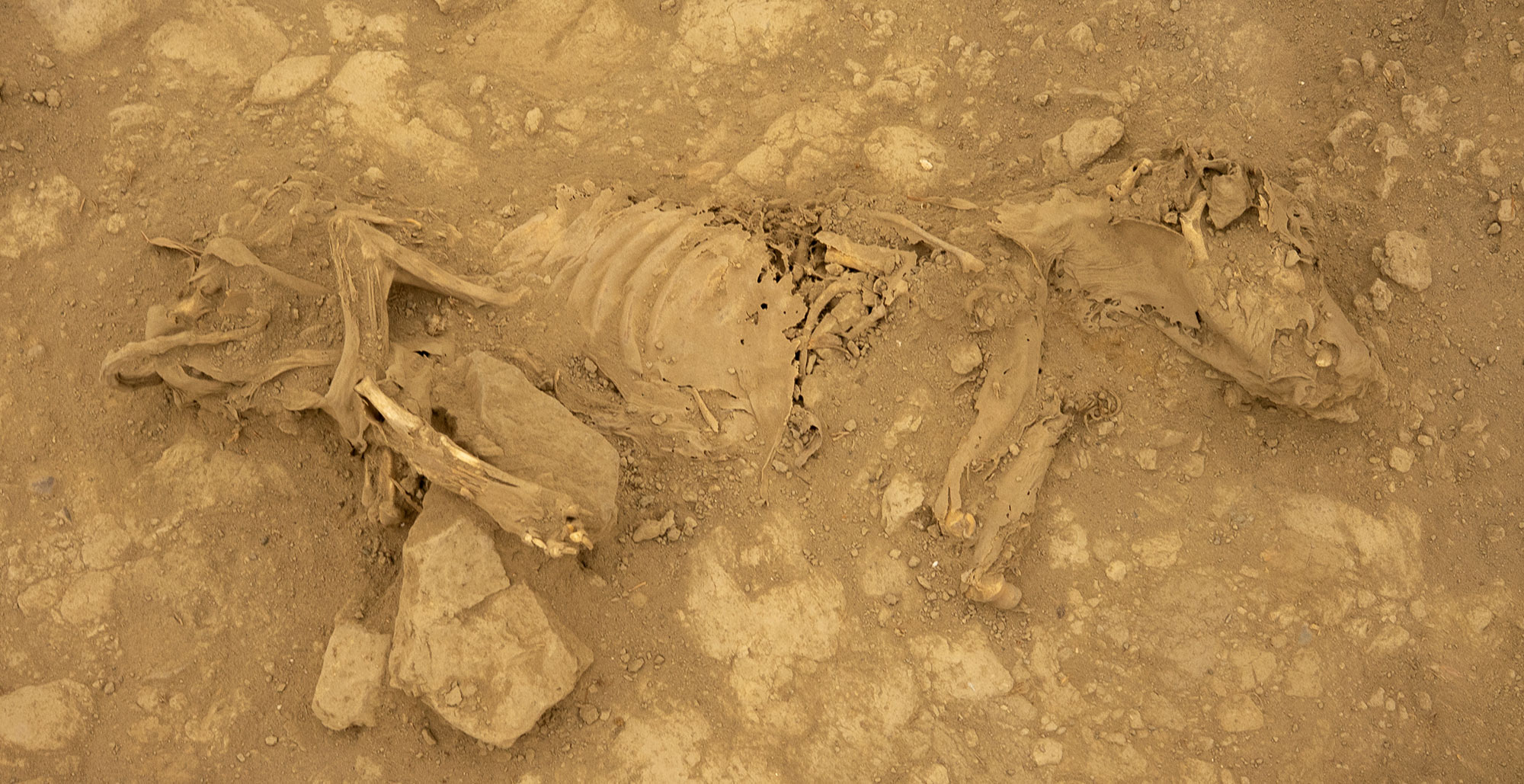
PERTH, AUSTRALIA—According to a statement released by Murdoch University, the muscle action required to consume a carnivorous or omnivorous diet may have influenced the shape of the lower jaw of domesticated dogs over time. Colline Brassard of Murdoch University and her colleagues examined the lower jaws of more than 500 European dogs who lived between 5,000 and 10,000 years ago, and compared their structure with the jaws of modern dogs, wolves, and Australian dingoes. The shapes of the ancient European dogs’ jaws indicate that they ate tougher, harder foods than most modern dogs, Brassard said. Their greater biting force would have been useful for defense and hunting, she explained. She thinks the shape of domesticated dogs’ jaws likely shifted as they began to eat plant foods provided by humans. Modern dogs have also developed multiple copies of a gene that increases their ability to digest starches. Team member Trish Fleming of Murdoch University added that the shape of the lower jaws of dingoes falls between that of wolves and modern dogs. Dingoes arrived in Australia between 5,000 and 3,600 years ago, and they still consume a diet mainly made up of kangaroos and wallabies. Additionally, dingoes have just a single copy of the gene for digesting starches, which suggests they separated from the modern dog lineage before domesticated dogs adapted to an omnivorous diet, Fleming concluded. To read about specialized dog breeds that the Inuit introduced to North America 2,000 years ago, go to "Around the World: Arctic."  

Artifacts Hint at Chinese American Life in Early 20th-Century Oregon

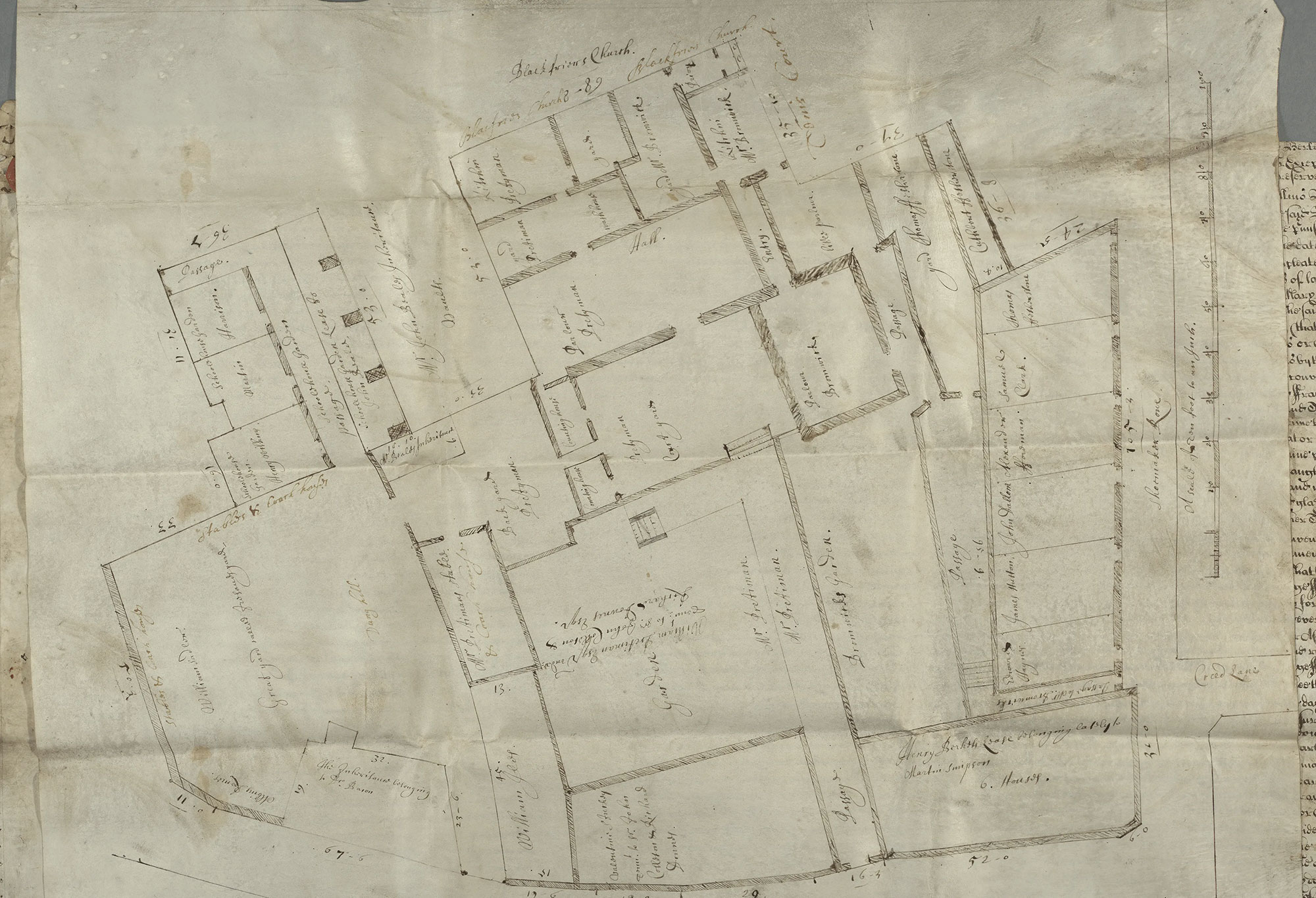
EUGENE, OREGON—According to a statement released by the University of Oregon, an archaeological investigation conducted by archaeologists Chris Ruiz, Marlene Jampolsky, and Jon Krier ahead of a construction project in downtown Eugene identified pieces of a Chinese stoneware bowl, a porcelain teacup, three Chinese brown stoneware liquor bottles, and a Japanese porcelain vessel. A 1912 fire insurance map indicates that a Chinese restaurant and a gift shop stood in the area where the artifacts were found. The restaurant, the Smeede Hotel Grill, served Chinese food and was owned by Wing Kee, who was born in Oregon to Chinese parents in 1875. Kee’s father applied for U.S. citizenship in 1886, but was denied under the Chinese Exclusion Act. In 1914, Wing Kee and his wife, Marie Westfall, opened the Hung Wo Chang & Co gift shop, which sold Chinese products to non-Chinese consumers. Historical documents also show that Wing Kee volunteered as a member of the United States food administration during World War I, while Marie Westfall worked as a Red Cross volunteer. The couple’s move out of the area in the 1920s was also recorded in local newspapers. For more on the first Chinese Americans, go to "America's Chinatowns."

Thursday, May 19

Hunter-Gatherer Land Management Studied in Germany

TÜBINGEN, GERMANY—According to a statement released by the Senckenberg Research Institute and Natural History Museum (S-HEP) at the University of Tübingen, a team of scientists including Shaddai Heidgen analyzed pollen, charcoal, and other materials in two sediment cores taken from southwestern Germany’s Ammer Valley for clues to the local vegetation over the past 11,500 years. The data suggests that between 10,100 and 9,800 years ago, there was plenty of moisture in the region to support grazing animals and the Mesolithic settlements uncovered nearby. The fires that occurred were likely brought about by natural causes, Heidgen explained. Then, about 9,500 years ago, the levels of pollen and charcoal in the sediment cores indicate that fires became more frequent, but were less intense. Mesolithic hunter-gatherers may have set the fires to clear the increasing numbers of deciduous trees. Read the original scholarly article about this research in the Journal of Quaternary Science. To read about excavations of a 4,000-year-old ringed sanctuary in central Germany, go to "Letter from Woodhenge: Stonehenge's Continental Cousin."

3,500-Year-Old Spearhead Found in England

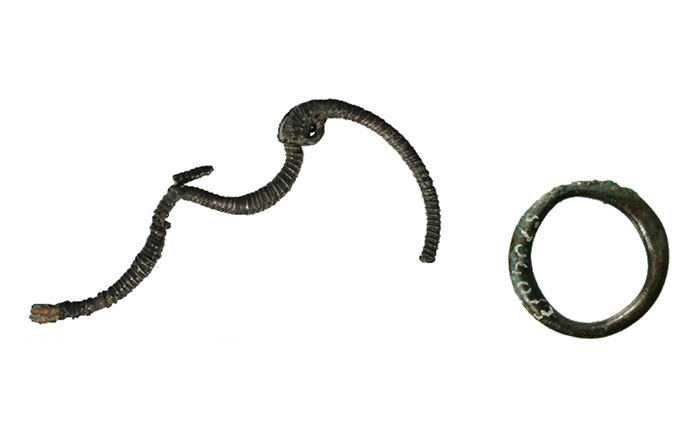
CIRENCESTER, ENGLAND—BBC News reports that a Bronze Age spearhead was found with fragments of pottery and flint tools in a southwestern England wetland. The items appear to have been placed in a pit. “Items like this are quite rare and during the Bronze Age they would have been equally as rare and quite special,” commented Alex Thomson of Cotswold Archaeology. The items may have been deposited by someone who lived in a settlement found in the area in the 1990s, he added. To read more about arms of the past, go to "Weapons of the Ancient World."

Study Suggests Herds Fueled Changes in Ancient Mongolia

ANN ARBOR, MICHIGAN—According to a statement released by the University of Michigan, Alicia Ventresca Miller of the University of Michigan and her colleagues from the Max Planck Institute for the Science of Human History, the University of Mongolia, and the National Museum in Mongolia tracked the Bronze Age consumption of dairy products in the Altai Mountains through the analysis of proteins recovered from human dental calculus. The researchers then compared what they found in the ancient plaque to archaeological evidence for the size of the population, the use of structured cemeteries, and the construction of large monuments. The study identified the consumption of milk from sheep, goats, and cattle in the beginning of the Bronze Age. The dietary changes brought about by keeping these herds then led to population growth. The development of more complex social systems in the region followed at about 1350 B.C., at about the same time that evidence for the earliest consumption of horse milk was detected. Initially, the researchers added, the consumption of horse milk was rare, and may have been limited to rituals. Read the original scholarly article about this research in PLOS ONE. For more on archaeological research in Mongolia, go to "Around the World: Mongolia."

Wednesday, May 18

Herod the Great’s Bathtubs Were Locally Sourced

RAMAT GAN, ISRAEL—According to a statement released by Bar-Ilan University, a new study conducted by Ayala Amir, Boaz Zissu, and Aren Maeir of Bar-Ilan University and Amos Frumkin of the Hebrew University of Jerusalem and their colleagues suggests that high-quality calcite-alabaster vessels were produced in the Levant. It had been previously thought that all ancient calcite-alabaster vessels discovered in the region were made of stone imported from Egypt. The scientists analyzed the chemical composition and crystalline structure of modern and ancient samples of calcite-alabaster from Egypt, calcite-alabaster chips from a recently discovered quarry in Te'omim cave in the Jerusalem hills, and a block of calcite-alabaster from Umm el-‘Umdan, an archaeological site situated near the cave. They then compared the results of the tests with the composition of two high-quality bathtubs found in the Kypros fortress and the palace of Herod the Great. The study indicates that the bathtubs were made from local calcite-alabaster, and suggests that the calcite-alabaster industry in Judea was developed enough in the second half of the first century B.C. to meet Herod’s exacting standards, Maeir explained. Read the original scholarly article about this research in Scientific Reports. To read about a Roman basilica complex unearthed in Ashkelon that was built during Herod's reign, go to "Herodian Hangout."

Genomes of Ancient Uruguayans Mapped

ATLANTA, GEORGIA—According to a statement released by Emory University, John Lindo of Emory University and Gonzalo Figueiro of The University of the Republic in Montevideo, Uruguay, sequenced the genomes of two people who lived in what is now eastern Uruguay before the Indigenous people of the region came into contact with Europeans in the early sixteenth century. The first sample came from a man who lived about 800 years ago, and the second from a woman who lived about 1,500 years ago. Lindo explained that the study revealed a connection between the ancient Uruguayans and individuals who lived in Panama, the land bridge connecting North and South America, and to people in eastern Brazil, but not to modern Amazonians. Separate migrations to South America could account for these differences, Lindo explained. For more on migrations to the Americas, go to "America, in the Beginning."

Possible Denisovan Tooth Discovered in Laos

CHAMPAIGN COUNTY, ILLINOIS—A molar thought to have belonged to a Denisovan girl between the ages of four and eight at the time of her death has been discovered by an international team of researchers in a cave in the Annamite Mountains in Laos, according to a Gizmodo report. The cave is only the third location where Denisovan remains have been found, and the first in southeast Asia. Traces of Denisovan DNA have been found in living populations in southeast Asia, however. Sediments around the tooth have been dated to between 164,000 and 131,000 years ago. Team member Clément Zanolli of the University of Bordeaux explained that the child’s molar resembles the teeth in a partial Denisovan mandible discovered in a cave on the Tibetan Plateau, and has features that distinguish it from other Homo species that lived in southeast Asia at the time. If the tooth belonged to a Neanderthal, the researchers added, it would be the “southeastern-most” Neanderthal fossil ever found. The discovery shows that Denisovans were widespread and able to adapt to a wide range of environments, commented team leader Laura Shackelford of the University of Illinois at Urbana-Champaign. Read the original scholarly article about this research in Nature Communications. For more on the Denisovan mandible uncovered on the Tibetan Plateau, go to "Denisovans at Altitude," one of ARCHAEOLOGY's Top 10 Discoveries of 2019.

Advertisement