Subscribe to Archaeology
Archaeological Headlines By JESSICA E. SARACENI
Tuesday, May 17

Cattle May Have Been Domesticated in the Central Nile Valley

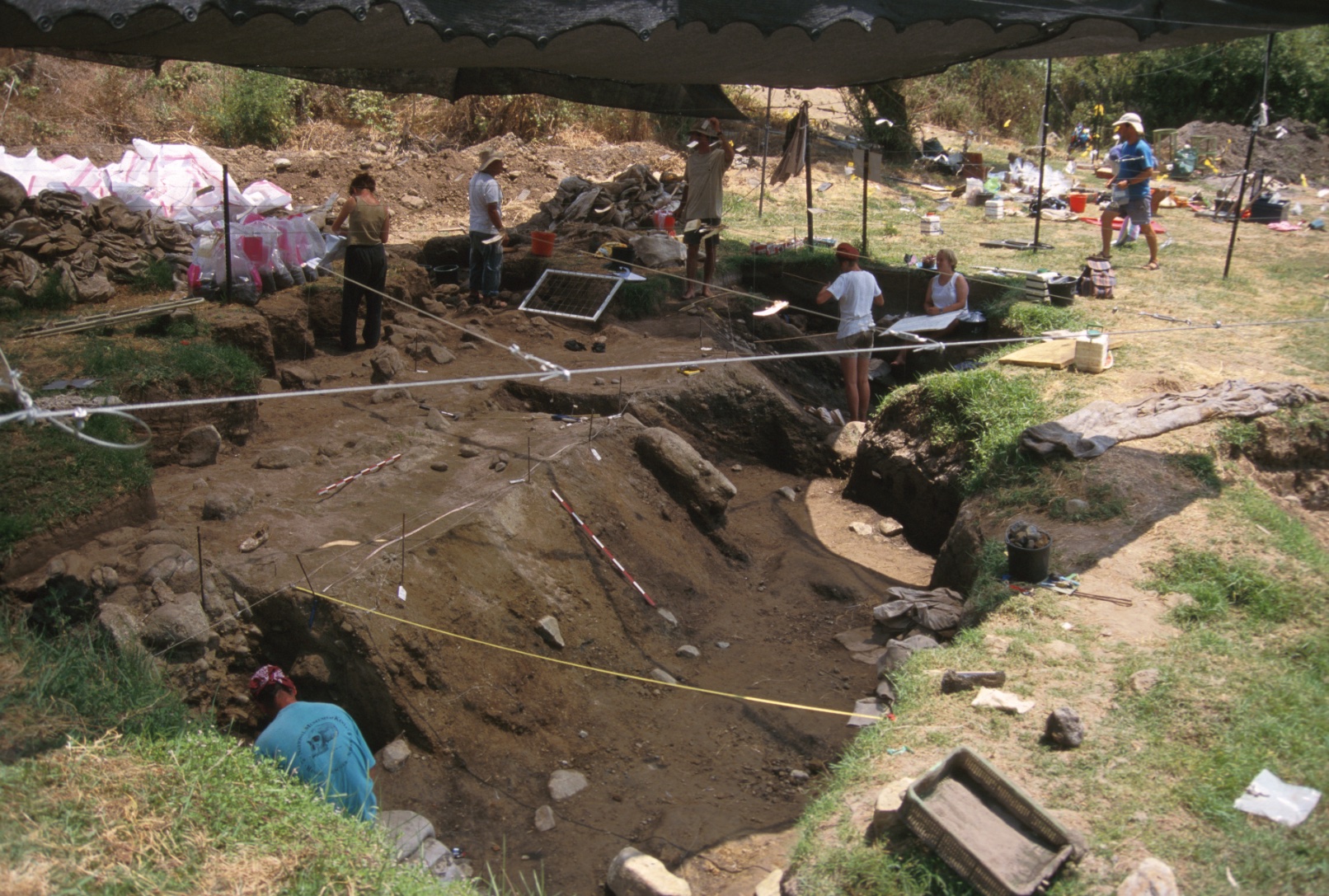
WROCŁAW, POLAND—Cattle may have been domesticated in the Letti Basin of what is now Sudan some 10,000 years ago, according to a Science in Poland report. It had been previously thought that cattle were first domesticated from the wild aurochs in Turkey and Iraq, and then arrived in East Africa in the fifth millennium B.C. But Piotr Osypiński of the Polish Academy of Sciences and Marta Osypiński of the University of Wrocław said that they have found the remains of domesticated cattle with “aurochs-like” features in the Letti Basin, along with the bones of other wild species. The researchers are waiting for precise dating results of samples to confirm the age of the bones. “That group of people already knew ceramic vessels, used quern-stones to grind cereal grains (wild varieties of millet), so they can be called early-Neolithic communities,” Marta Osypiński said. “They still hunted wild savannah animals, with one only exception—cattle at an early stage of domestication.” To read about efforts to recover the aurochs genome, go to "Raise a Toast to the Aurochs."

Sixth Dynasty Official’s Tomb Discovered in Saqqara

WARSAW, POLAND—Live Science reports that a 4,300-year-old tomb has been found in the Saqqara necropolis next to the Step Pyramid of Djoser, Egypt’s first pyramid, which had been built about 400 years earlier. Hieroglyphs on the tomb indicate that Mehtjetju, the high-status official buried there, served as inspector of the royal estate, a priest of the mortuary cult of the pharaoh Teti (r. 2323–2291 B.C.), and had access to sealed royal documents, explained Kamil Kuraszkiewicz of the University of Warsaw. Mehtjetju may have also served the pharaohs Userkare (r. 2291–2289 B.C.) and Pepi I (r. 2289–2255 B.C.). The tomb of Mehtjetju may be part of a larger complex of tombs holding the remains of his family, Kuraszkiewicz added. The researchers plan to return to the site in the fall. To read about monuments built by pharaohs of the Fifth Dynasty at nearby Abusir, go to "In the Reign of the Sun Kings."

Ancient Underground City Excavated in Turkey

MARDIN PROVINCE, TURKEY—The Anadolu Agency reports that a small section of an underground city complete with dwelling areas, grain storage silos, wells, tunnels, and a possible Christian church and a possible Jewish synagogue has been unearthed in southeastern Turkey. An entrance to the underground city was discovered two years ago in a cave at the open-air museum of the ancient settlement of Midyat. Gani Tarkan of the Mardin Museum said that the 49 underground rooms explored so far are thought to represent only about three percent of the city, which may have sheltered as many as 70,000 people. Some of the rooms may have been used by Christians who were hiding from the Roman authorities in the second and third centuries, he added. To read about rare theater masks discovered under a Roman fortress in Mardin, go to "Masked Men."

Monday, May 16

Restoration Reveals Engravings in Egypt’s Temple of Esna

CAIRO, EGYPT—According to an Ahram Online report, Egyptian and German archaeologists have cleaned the walls and ceilings of Luxor’s Temple of Esna from dust, salts, and bird droppings, revealing images of 46 birds arranged in two rows. Mostafa Waziri of the Supreme Council of Antiquities said that it is the first time that the artworks have been seen in 2,000 years. Some of the birds have the head of the Upper Egypt goddess Nekhbet, and others have the head of the Lower Egypt goddess Wadjet. The conservators also found a Roman engraving on the western side of the temple. The construction of the building, which is dedicated to the Egyptian god Khnum and his consorts, is thought to have been started during the reign of the Roman emperor Claudius, from A.D. 41 to 54, and completed by the emperor Domitian during his rule from A.D. 81 to 96. Decoration of the temple continued into the reign of the emperor Decius, from A.D. 249 to 251. To read about a New Kingdom settlement recently discovered at Luxor, go to "Golden City," one of ARCHAEOLOGY's Top 10 Discoveries of 2021.

Possible Traces of Calming Drug Found in Sacrificed Inca Children

WARSAW, POLAND—Science News reports that bioarchaeologist Dagmara Socha of the University of Warsaw and her colleagues have detected traces of harmine and harmaline in the hair and fingernails of two Inca children who were sacrificed some 500 years ago and buried on Peru’s Ampato Mountain. The presence of these chemicals in the children’s remains suggest that they may have ingested the vine Banisteriopsis caapi in the days or weeks before their deaths, Socha explained. Tests of the effects of harmine in rodents suggest that it may work like an antidepressant, so a drink made with Banisteriopsis caapi may have been given to the children in order to calm their nerves as they traveled from their homes to the capital city of Cuzco for official ceremonies and then on to Ampato Mountain, Socha said. To read about an Inca ritual box found in Lake Titicaca, go to "Artifact."

California Museum Repatriates Remains and Artifacts

SANTA BARBARA, CALIFORNIA—The Santa Barbara Independent reports that the Santa Barbara Natural History Museum has handed over a collection of human remains and artifacts to the Santa Ynez Band of Chumash Indians. The bones included the partial remains of more than 1,000 Chumash and pre-Chumash people, along with some 4,000 funerary objects. The oldest remains in the collection have been dated to 13,000 years ago. These three femurs were discovered on Santa Rosa Island and support the idea that humans traveled by sea, following the coastline of northeastern Asia and Beringia into North America and on to South America. To read about shell beads that the Chumash may have used as currency, go to "Around the World: California."

Friday, May 13

Well-Preserved Iron Age Arrow Discovered in Norway

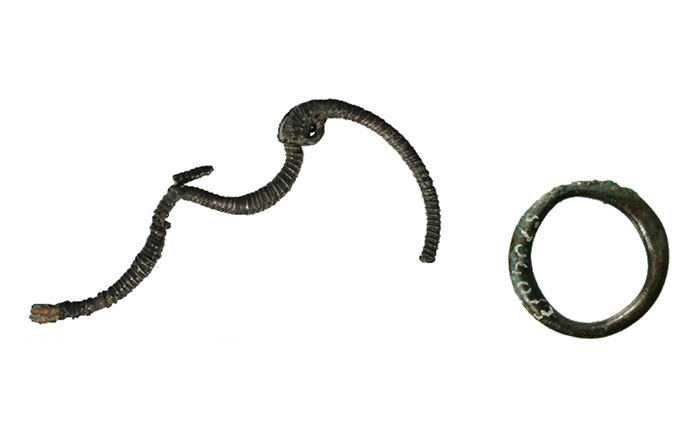
OSLO, NORWAY—An ancient arrow complete with iron arrowhead, tightly wrapped sinew, tar, thread, and feather fletching has been recovered from a glacier in southern Norway, according to a Live Science report. The arrow, thought to have been lost by a hunter who had traveled to the mountains in search of reindeer, measures more than 30 inches long. “It is probably the best-preserved arrow we have found so far,” commented archaeologist Lars Pilø of the Innlandet County Council Glacier Archaeology Program. Researchers will attempt to determine the type of wood used to make the arrow shaft, and what species contributed the feathers and sinews, but they have decided against taking samples for radiocarbon dating. Instead, the artifact has been dated to between A.D. 300 and 600, based upon comparisons with similar weapons recovered from bogs in Denmark and graves in southern Norway, Pilø added. To read about other artifacts that have emerged from Norway's icy mountains, go to "Letter from Norway: The Big Melt."

Remains of 19th-Century Soldiers Uncovered in India

CHANDIGARH, INDIA—Zee News reports that the remains of 282 Indian soldiers who fought in the First War of Independence in 1857 against the rule of the British East India Company have been uncovered in the Amritsar district of Punjab in northern India. JS Sehrawat of Punjab University said that the bones were found in a well underneath a religious structure, along with some coins and medals. The remains will be radiocarbon dated and analyzed, Sehrawat added. To read about excavations at a British East India Company colonial fort in George Town, go to "World Roundup: Malaysia."

Genetic Study Clarifies Spread of Farming Into Europe

BERN, SWITZERLAND—Nature News reports that population geneticist Laurent Excoffier of the University of Bern and his colleagues sequenced the high-quality genomes of 15 hunter-gatherers and early farmers whose remains were recovered in southwest Asia, along the migration route of the Danube River, and in western Anatolia, and found that the ancient Anatolian farmers descended from the repeated mixing of hunter-gatherer groups from Europe and the Middle East. Some of these groups nearly died out some 25,000 years ago, at the height of the last Ice Age, but as the climate warmed, the populations recovered. Then, some 8,000 years ago, early farmers began to spread from Anatolia into Europe, where they occasionally mixed with local hunter-gatherers. “It’s really the spread of people, of farming communities, that brought farming further west,” Excoffier explained. Read the original scholarly article about this research in Cell. For more, go to "Europe's First Farmers."

Advertisement