Subscribe to Archaeology
Archaeological Headlines By JESSICA E. SARACENI
Thursday, May 12

Prehistoric Pits Found at Stonehenge

WILTSHIRE, ENGLAND—BBC News reports that pits that may have been dug by prehistoric hunters as early as some 10,000 years ago have been discovered near Stonehenge by researchers from the University of Birmingham and Ghent University. The team members combined traditional archaeological methods with a noninvasive technique called electromagnetic induction survey, which makes use of the electrical conductivity of the soil to investigate what rests beneath the surface. “The traces we see in our data span millennia, as indicated by the 7,000-year time frame between the oldest and most recent prehistoric pits we’ve excavated,” said Paul Garwood of the University of Birmingham. The largest one measures about 13 feet wide and more than six feet deep. “[This] discovery of the largest known Early Mesolithic pit in north-west Europe shows this was a special place for hunter-gatherer communities thousands of years before the first stones were erected,” commented archaeologist Nick Snashall of the Stonehenge and Avebury World Heritage Site. For more on recent research at Stonehenge, go to "Epic Proportions."

Early Neo-Assyrian Rock Art Discovered in Turkey

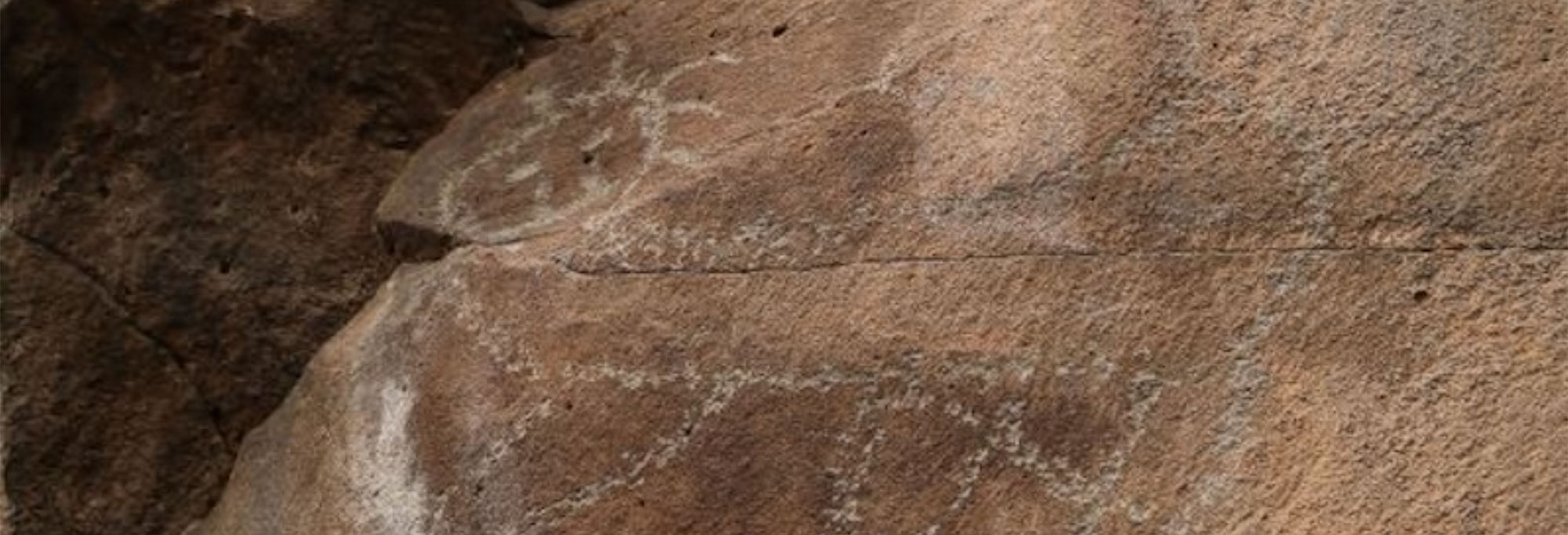
ANKARA, TURKEY—Live Science reports that researchers are investigating a subterranean complex made up of an entrance chamber and an upper and lower gallery carved out of limestone bedrock in what is now southeastern Turkey’s village of Başbük. Although looters first entered the structure through a hole cut through the floor of a house in the village, police intervened and alerted archaeologists at the Şanlıurfa Archaeological Museum. The structure is thought to have been used by a fertility cult in the ninth century B.C. that combined local and Assyrian elements. For example, drawings on the walls carry Assyrian religious themes, according to Selim Ferruh Adalı of the University of Ankara, but were adapted to the local Aramaean style. Aramaic inscriptions label images of Hadad, the Assyrian god of storms, rain, and thunder; Atargatis, northern Syria’s goddess of fertility and protection and consort of Hadad; Sîn, the moon god; and Šamaš, the sun god. “They reflect an earlier phase of Assyrian presence in the region when local elements were more emphasized,” Adalı explained. Another inscription in the complex may refer to Mukīn-abūa, a Neo-Assyrian official during the reign of the Assyrian king Adad-nirari III (r. 811–783 B.C.), who may have come to govern the region. Once the site has been stabilized, further excavation will take place. Read the original scholarly article about this research in Antiquity. To read about writings by Neo-Assyrian scholars, go to "Ancient Academia."

Wednesday, May 11

18th-Century Bones of Sick Soldiers Identified in the Netherlands

VIANEN, THE NETHERLANDS—BBC News reports that forensic anthropologist April Pijpelink has identified the remains of eighteenth-century soldiers who died of illness among 82 sets of human remains recovered in 2020 from a mass grave outside the old city wall of the Dutch city of Vianen. Isotope analysis of the bones of six of the young men revealed that one of them had grown up in southern England, perhaps in Cornwall; another in southern Cornwall; and one in an English city. Two of the men may have grown up in the Netherlands but had English ancestors, while the last had come from Germany. Pijpelink said the men may have traveled to the area to fight in the First Coalition War, which was fought from 1792 to 1797 by France and Britain, Russia, Prussia, Spain, the Netherlands, and Austria. She thinks the soldiers may have contracted meningitis in cramped, unhygienic conditions at the field hospital at Batestein Castle. For more on archaeological research in the Netherlands, go to "Return to Sender."

Indus Valley Civilization Site Investigated in Northern India

HARYANA, INDIA—According to an India.com report, recent excavations at Rakhigarhi, a 7,000-year-old planned city in northern India with straight streets, fired-brick walls, drainage systems, corner garbage containers, and multistory houses, have been conducted by researchers from the Archaeological Survey of India (ASI). The excavation team have now uncovered the graves of two women who had been buried with tools and jewelry, and a 5,000-year-old jewelry workshop. “Copper and gold objects were also found, along with artifacts, beads, sealed scripts with motifs, and ceilings with Harappan script and elephant depictions,” commented Sanjay K. Manjul of ASI. To read about a Harappan burial uncovered near Rakigarhi, go to "A Plot of Their Own."

Tuesday, May 10

Two More “Giants” Discovered in Sardinia

MONT’E PRAMA, ITALY—ANSA.it reports that fragments of two monumental limestone statues of boxers that once stood more than six feet tall have been discovered in the necropolis at Cabras, which was discovered on farmland in the 1970s in the central-western area of the island of Sardinia. The 3,000-year-old pieces include the torsos of two boxers; a large, curved shield that would have covered an abdomen and arm; a head; legs; and other body parts. The researchers also unearthed traces of a road that flanked the more than 170 tombs of young men and a few young women, explained team leader archaeologist Alessandro Usai. In all, fragments of more than 40 such statues, known as the “Giants of Mont’e Prama,” have been recovered. But why were the monuments reduced to rubble? “My opinion is that the giants fell down one at a time on their own, as the way they were made was overbalanced forwards,” Usai concluded. To read about evidence for trading on Sardinia between the Iron Age Nuragic and Villanovan cultures, go to "Tyrrhenian Traders." 

Traces of Hyde Abbey Found in England

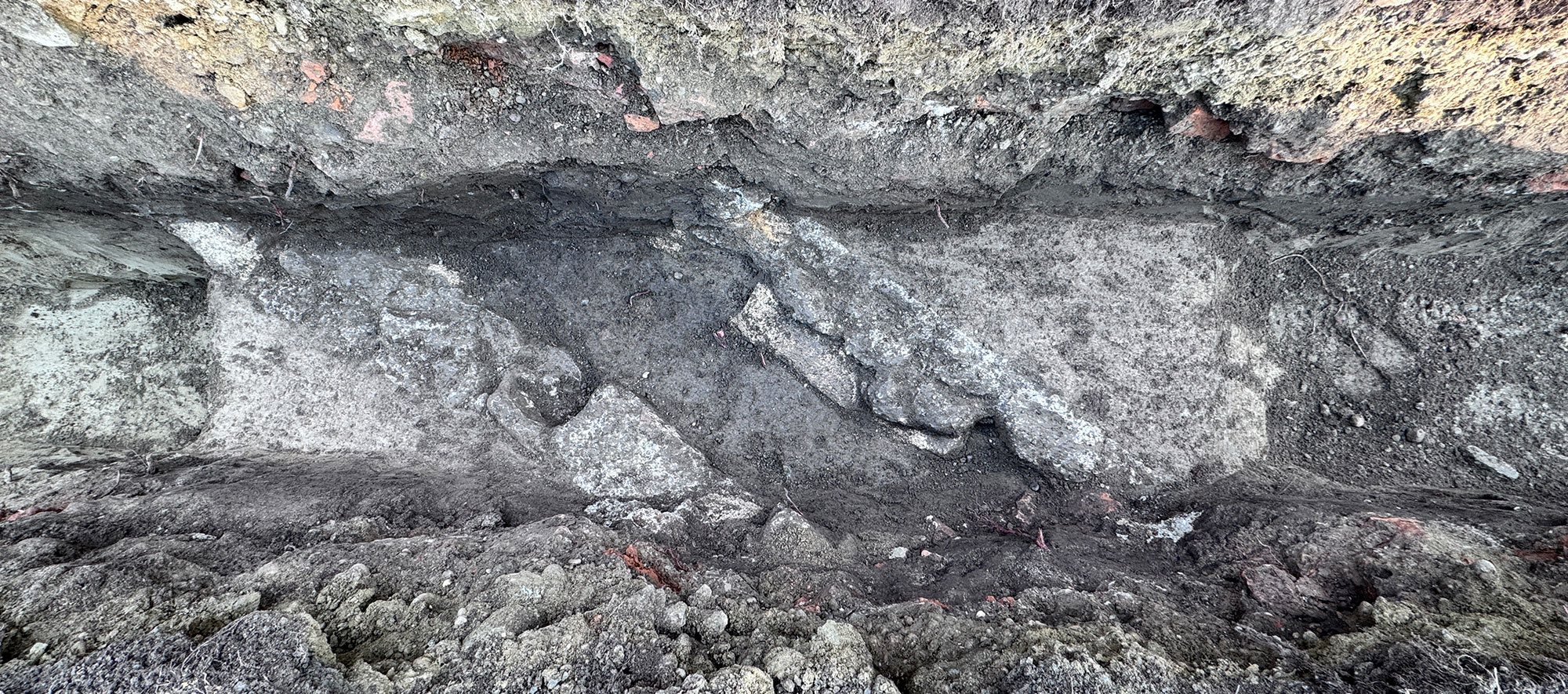
WINCHESTER, ENGLAND—The Hampshire Chronicle reports that the remains of a twelfth-century wall and some floor surfaces have been unearthed at the site of Hyde Abbey in southeastern England by HYDE900, a community archaeology project. The remains of Alfred the Great (r. 871–899), who died in 899, were moved to the abbey church when it was completed. After the abbey was torn down in 1538 by King Henry VIII, the stone was reused in other buildings. The newly unearthed wall and floors, which are located in the yard of a private home, are thought to be the only traces of the 260-foot-long structure ever to be found. “The excavation now confirms the exact location of the abbey nave,” commented homeowners Paul and Kat McCulloch. “In addition, the find of a rare sculptured beakhead, perhaps representing a mythical beast, such as a Griffin, was a bonus. It is most likely to be a fragment of a voussoir (the wedge-shaped stone which is part of an arch) forming one of the orders of the arch over the doorway to the church,” they added. The beakhead will be displayed at Winchester Museum. To read about efforts to find Alfred's tomb, go to "In Search of History's Greatest Rulers: Alfred, King of Wessex."

Advertisement