Carvings in Southern Mexico May Represent Ritual Ballcourts
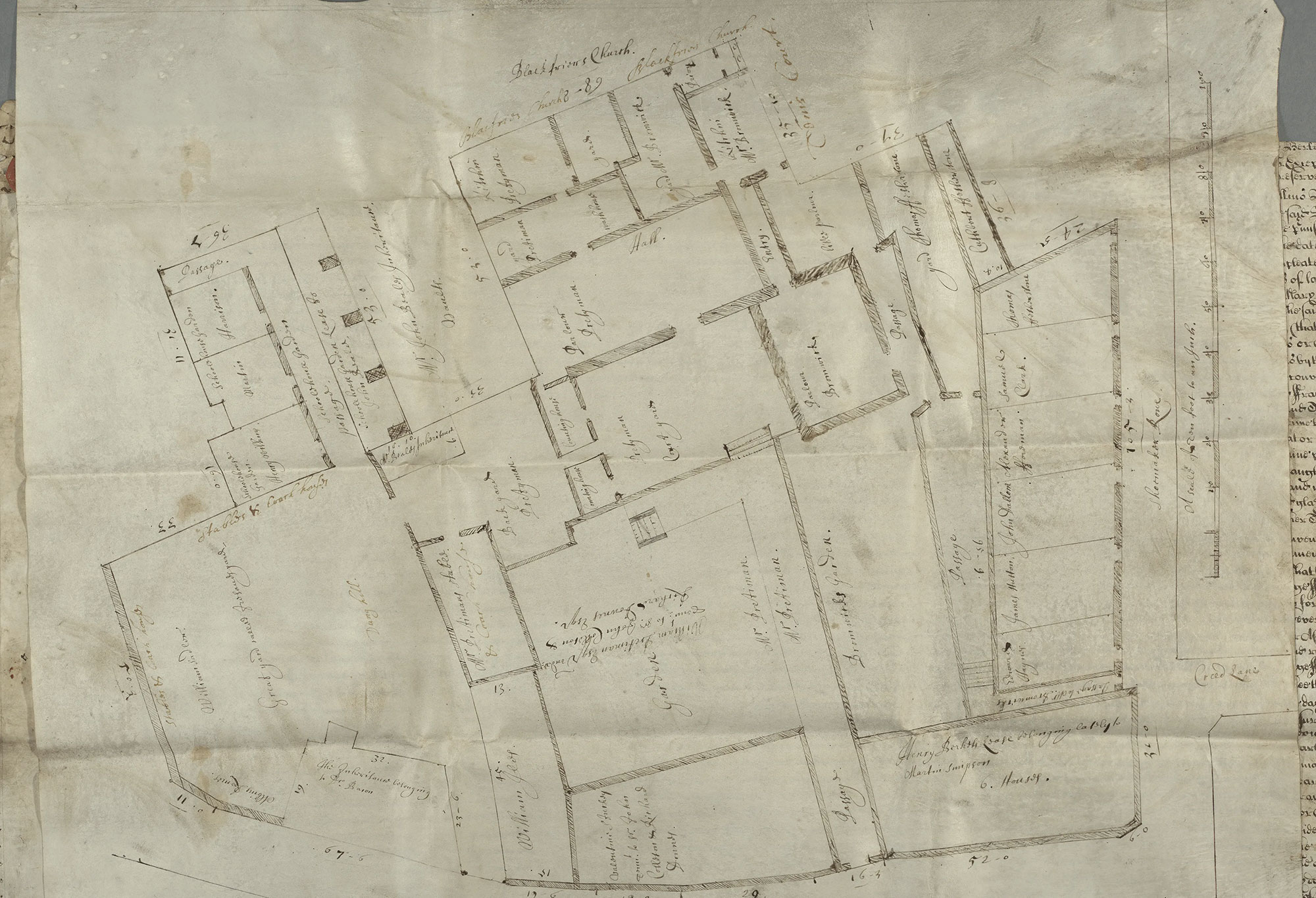
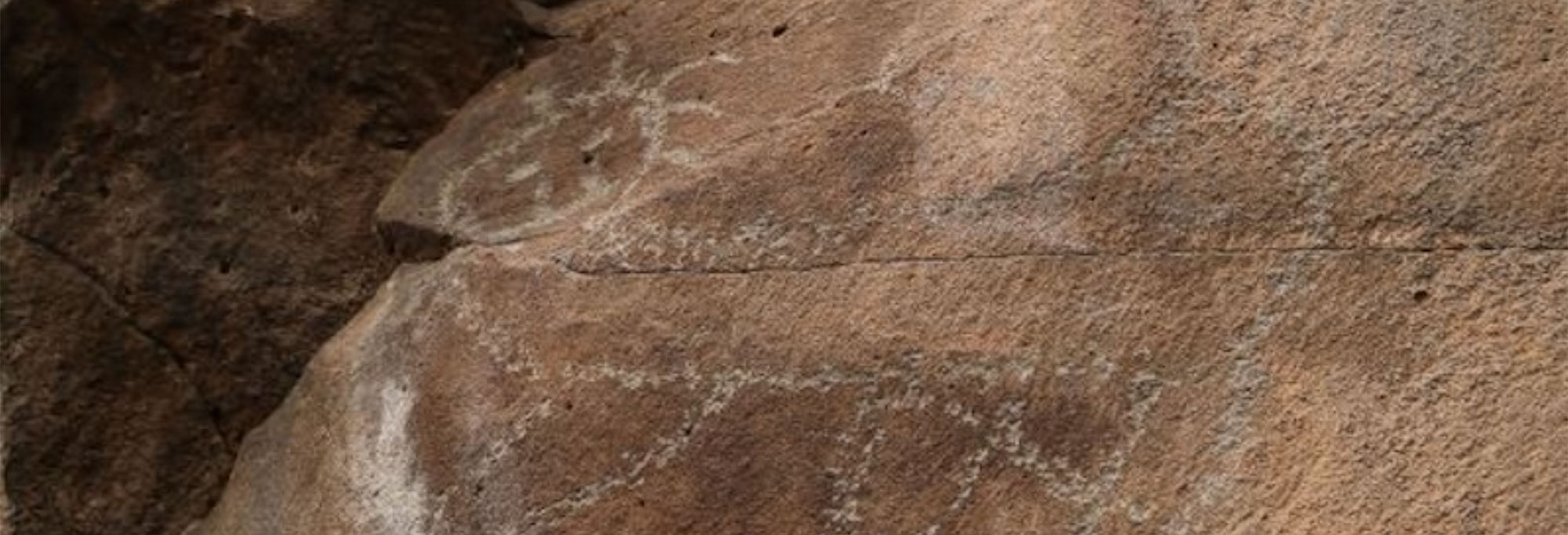
OAXACA, MEXICO—Thirty carvings depicting possible I-shaped ritual ball courts have been found in natural rock outcrops at the site of the ancient settlement of Quiechapa, according to a Live Science report. The settlement, which is located in southern Mexico, dates back to about 2,300 years ago, said Alex Elvis Badillo of Indiana State University. The carvings, he added, are thought to date to sometime after 100 B.C., based upon the shape of the ball courts. In the sixteenth century, Spanish priest Ruiz de Alarcón wrote of rituals in which Mesoamerican people spilled their blood into small cavities cut into rock. Badillo suggests that these ball court–shaped carvings may have been used in this way. He and his colleagues documented the carvings with structure-from-motion (SfM) photogrammetry to produce 3-D representations of them. He notes that further study is needed, however. Read the original scholarly article about this research in Ancient Mesoamerica. To read about a 3,400-year-old ball court discovered in Oaxaca, go to "Play Ball!"
Possible Ringfort Spotted in Satellite Imagery of Southern Ireland
COUNTY TIPPERARY, IRELAND—Tipperary Live reports that a previously unidentified circular enclosure and a tree line following the curvature of the mark was spotted on satellite imagery of land in southern Ireland by volunteer map contributor Anne-Karoline Distel, who alerted Ireland’s National Monuments Service. Jean Farrelly of the National Monuments Service said the enclosure may have held animals, or it may have been a ringfort where a farmer’s family lived. The tree line is located on the current border of the town of Cashel and may mark a boundary dating back to the time of the enclosure, she added. To read about mounds, barrows, and ringforts at another site in western Ireland, go to "Off the Grid: Rathcroghan, Ireland."
12th-Century Carving Discovered in Cambodia
SIEM REAP, CAMBODIA—The Khmer Times reports that pieces of a carving dated to the twelfth century A.D. have been unearthed at Angkor Archaeological Park, which is located in northwestern Cambodia. The sculpture was found at the causeway of the Angkor Thom temple's Takav Gate, and depicts an apsara, a type of dancing fairy or spirit of the clouds and waters. To read about laser scanning of Angkor's surrounding areas, go to "Laser Scanning," one of ARCHAEOLOGY's Top 10 Discoveries of the Decade.
6,000-Year-Old Slate Rings May Have Symbolized Relationships
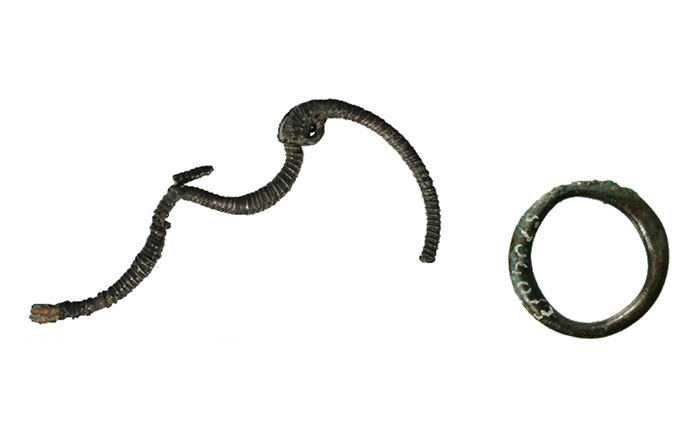
HELSINKI, FINLAND—Fragments of stone ring ornaments recovered at hunter-gatherer sites across northeastern Europe may have served as friendship pendants some 6,000 years ago, according to a Live Science report. It had been previously thought that these rings broke into pieces naturally after they had been buried, but Marja Ahola of the University of Helsinki and her colleagues analyzed the geochemical composition of the pieces of slate, and checked their surfaces to look for traces of how they may have been used and how they had been worked. The researchers found that the rings may have been broken in order to be shared—one fragment recovered from a settlement was found to have a match unearthed from a nearby burial site. The ring, Ahola explained, may have served as a connection between the living and the dead. And because they have been found over a wide area, there may have been a large exchange network for the slate rings, she added. Read the original scholarly article about this research in the Journal of Archaeological Method and Theory. To read about a 4,400-year-old carved wooden snake figurine unearthed from a wetland site in southwestern Finland, go to "Snake Guide."
When Did Early Humans Begin to Hunt?
HOUSTON, TEXAS—According to a statement released by Rice University, a new study of 1.5-million-year-old fossilized animal remains conducted by Manuel Domínguez-Rodrigo and his colleagues suggests that saber-toothed cats devoured all of their prey, and sometimes even consumed some of the bones. Such rich protein sources are thought to have been vital to early human brain development, he explained, and it had been previously suggested that early humans may have fed on meat from the abandoned kills of large predators. Early humans, Domínguez-Rodrigo commented, would have had to rely on different approaches to procure their protein, and may have already been successful hunters. Read the original scholarly article about this research in Scientific Reports. To read about 300,000-year-old spears that were among the earliest known hunting tools, go to "Weapons of the Ancient World: Hunting Equipment."
Defensive Gate Uncovered in Slovakia
TRNAVA, SLOVAKIA—The Slovak Spectator reports that a fortified gateway constructed in the sixteenth century as an added defense against the threat of the Ottoman Empire has been uncovered in western Slovakia, near the well-preserved medieval defensive walls surrounding the town of Trnava. “The current masonry find is located south of the Lower Gate near Strelecká Street,” commented Peter Grzná of the Monuments Board Office of Trnava. The structure was torn down in the early nineteenth century to facilitate the town’s expansion, he explained. To read about a bronze waterbird lamp unearthed in northern Slovakia, go to "Swan Songs."
Tests Indicate Bronze Age Daggers Had a Practical Purpose
NEWCASTLE UPON TYNE, ENGLAND—According to a statement released by Newcastle University, an international team of researchers has developed a new technique to analyze residues on Bronze Age daggers, which have been found in weapon-rich burials throughout Europe, Britain, and Ireland. The technique involves staining the residues with Picro-Sirius Red solution, and then observing them under optical, digital, and scanning electron microscopes. Team leaders Andrea Dolfini and Isabella Caricola and their colleagues employed the technique to test ten daggers from Pragatto, a Bronze Age settlement site in Italy, and they detected the presence of collagen and fibers from bones, muscles, and tendons from multiple kinds of animals. Experiments involving processing animal carcasses with replica daggers revealed that the tools were well-suited to the job. Residues from the replica daggers were also analyzed, and found to match residues on the ancient ones, Dolfini explained. It had been previously thought that Bronze Age daggers were primarily ceremonial objects placed in warriors’ graves as symbols of their identity and status. Read the original scholarly article about this research in Scientific Reports. To read about a Bronze Age dagger from Denmark, go to "Artifact."
New Thoughts on the Pre-Stonehenge Landscape
WILTSHIRE, ENGLAND—Analysis of animal remains, pollen, fungal spores, and traces of DNA in ancient sediments indicates that the area surrounding Stonehenge was a partially open woodland where large herbivores grazed in the 4,000 years before the monument was constructed, according to a BBC News report. It had been previously thought that the region was heavily forested. Mesolithic hunter-gatherers living at Blick Mead, which is located on the edge of the Stonehenge World Heritage Site, would have had access to red deer, elk, wild boar, and aurochs, explained Samuel Hudson of the University of Southampton. And in the Neolithic period, large-scale land clearance would not have been required to build large-scale structures. Read the original scholarly article about this research in PLOS ONE. For more on recent research in the area surrounding Stonehenge, go to "Stonehenge's New Neighbor."
Advertisement