Subscribe to Archaeology
Archaeological Headlines By JESSICA E. SARACENI
Friday, April 29

Roman Coin Cache Discovered in Switzerland

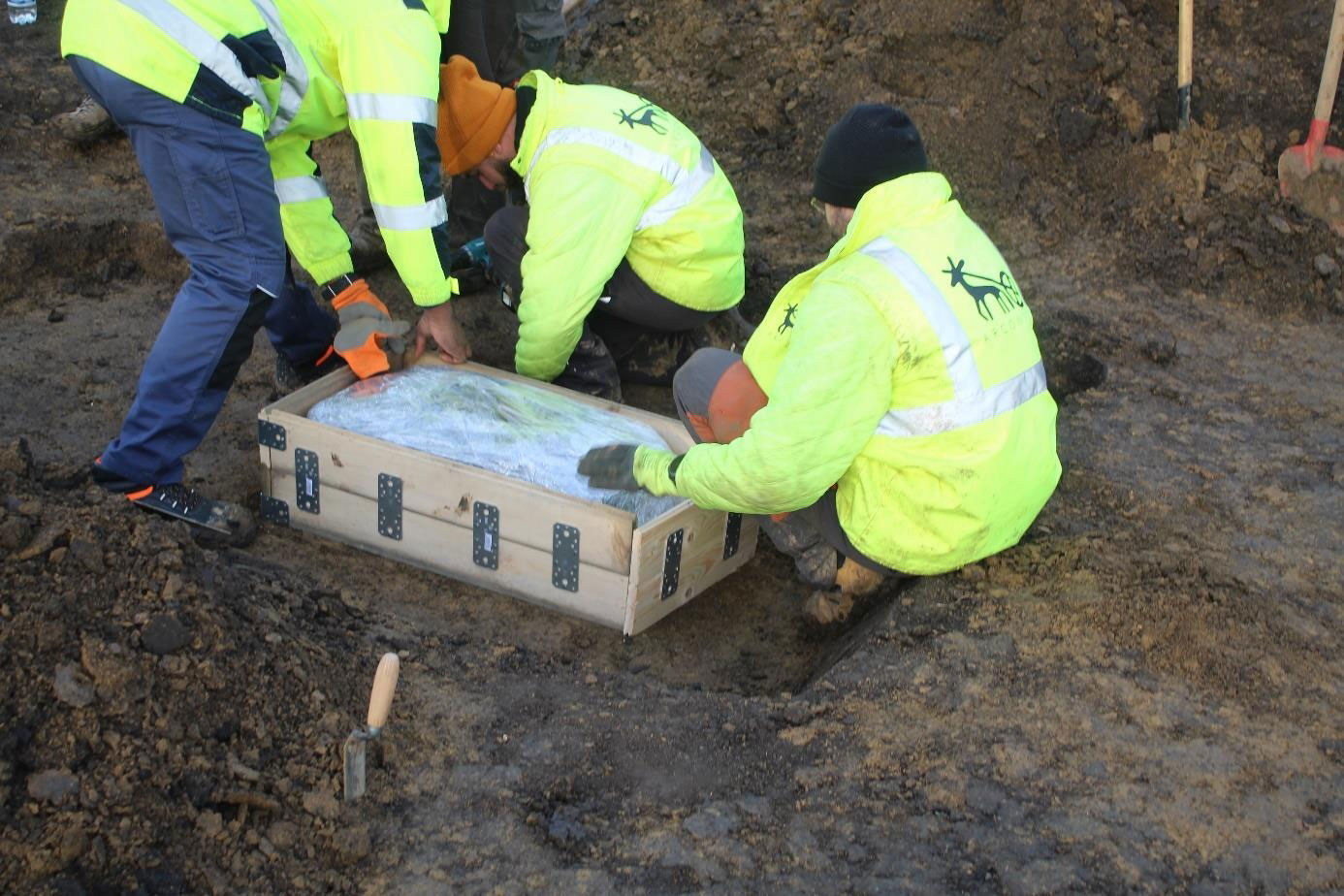
BASEL-LANDSCHAFT, SWITZERLAND—Live Science reports that a nine-inch-tall clay pot filled with more than 1,200 Roman coins was discovered in northern Switzerland by a metal detectorist who alerted Archaeology Baselland, the canton’s archaeological department. Reto Marti, head of the department, and his colleagues were able to remove the pot in a block of soil and send it for a CT scan, which revealed a piece of cowhide dividing the coins into two piles within the pot. All of the coins were minted during the reign of the emperor Constantine (A.D. 306–337), when the area where the coin hoard was found once bordered three Roman estates. “There are two types of coins in the pot, but the exact denomination of these late antique bronze coins is not known,” Marti said. Coins were usually buried in times of distress in order to protect them, Marti explained, but these coins, worth about two months of a soldier’s salary, appear to have been buried between A.D. 330 and 340—a time of relative peace and economic recovery. The coin cache may have been buried as an offering to the gods, or it may have had something to do with the boundary, he added. Study of the coins will help researchers understand the use of money and circulation of coins during Constantine’s rule, Marti concluded. To read about a clump of coins of Constantine found underwater in Caesarea, go to "Sun and Moon."

Collection of Ancient Toothless Skulls Analyzed in Mexico

CHIAPAS, MEXICO—According to a statement released by Mexico’s Ministry of Culture, researchers from Mexico’s National Institute of Anthropology and History (INAH) have analyzed some 150 skulls and other bones discovered about 10 years ago in southeastern Mexico’s Comalapa Cave, which is located near the border with Guatemala. Police in the region had initially thought the remains could represent people killed in recent violence and collected the remains. But the examination of the bones indicates that the people had been ritually decapitated between A.D. 900 and 1200, and the heads may have been displayed on poles as part of an altar known as a tzompantli, explained INAH researcher Montes de Paz. “Many of these structures were made of wood, a material that disappeared over time and could have collapsed all the skulls,” he said. The researchers also noted that none of the skulls had any teeth, as has been found in other caves in Chiapas, and there were more women than men among the victims. Archaeologists plan to visit Comalapa Cave to look for additional information. To read about the discovery of a long-lost Maya city in Chiapas, go to "Around the World: Mexico."

Irish Civil War Hideout Investigated

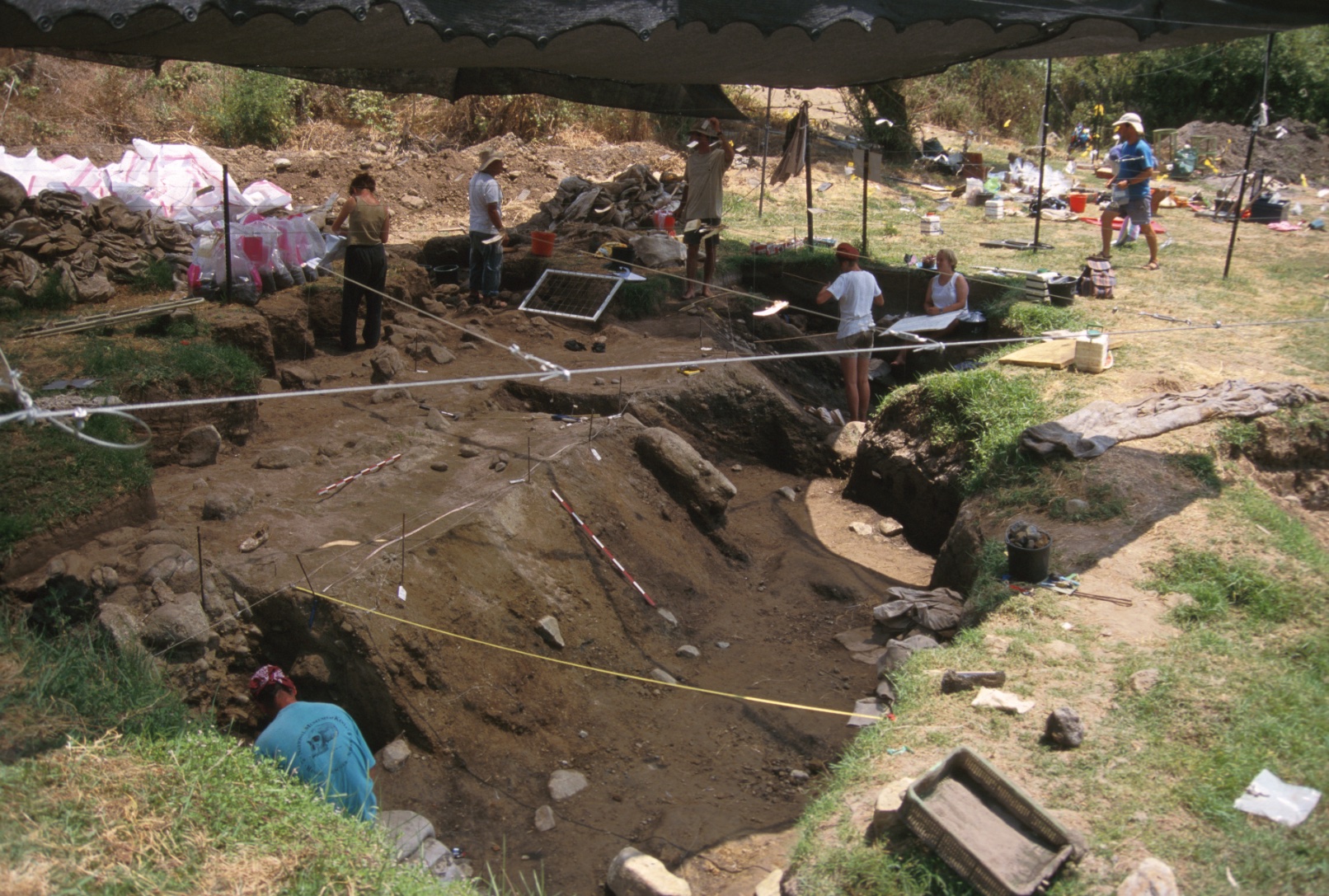
SLIGO, IRELAND—RTÉ reports that more than 200 artifacts were recovered by archaeologists investigating a cave in northwestern Ireland where 34 men hid for six weeks in the fall of 1922. The Irish War of Independence between the Irish Republican Army (IRA) and British forces ended with the signing of the Anglo-Irish Treaty in December of 1921, but a faction of the IRA rejected the agreement and fought against the Irish Free State in the Irish Civil War. The artifacts recovered from Tormore Cave include pottery, glass, a boot lace, and a pipe thought to have belonged to some of these so-called “Irregulars,” or anti-treaty men. Archaeologist Marion Dowd of Atlantic Technological University explained that the cave had been modified for habitation, probably during the years of the War of Independence. A large boulder had been placed at the entrance, a series of steps and a wall had been installed, and flagstones were mortared to the floor to create a cleaner, warmer living surface. Two sods of turf found in the cave may have been used to light the living area, she added. Dowd said no graffiti has been found, and little evidence of the identities of the men who lived there, indicating that they were disciplined and well organized. To read about other recent archaeological disscoveries in Ireland, go to "Around the World: Ireland."

Thursday, April 28

Possible Viking Boat Burial Detected in Norway

OSLO, NORWAY—According to a Live Science report, a ground-penetrating radar survey of an area slated for road construction near the town of Kvinesdal, which is located in southwest Norway, has detected a possible Viking boat burial and several other mounds. Jani Causevic of the Norwegian Institute for Cultural Heritage Research (NIKU) said that the boat measured between 26 and 30 feet long. “The soil in the area is not preferable for the conservation of organic materials, and most likely only the nails and other metallic objects remain,” he explained. It appears that the boat was buried and then a burial mound was placed on top of it, added team member Frans-Arne Hedlund Stylegar. The mounds may have served as a display of control over the area, Causevic concluded. To read about a massive cache of objects that includes Viking silver, go to "Secrets of Scotland's Viking Age Hoard." 

Study Suggests Neanderthals Adapted to a Changing Climate

LEIPZIG, GERMANY—According to a statement released by the Max Planck Institute for Evolutionary Anthropology (MPI-EVA), Neanderthals living in what is now northern Germany were able to adapt to changing climate conditions. Researchers including Michael Hein of MPI-EVA and Marcel Weiß of the University of Erlangen-Nuremberg combined information obtained through luminescence dating, sedimentology, and the analysis of pollen and phytoliths to recreate conditions at what was once a lakeshore area in the Wendland region of Lower Saxony. The study found that at the end of a warm phase some 90,000 years ago, Neanderthals used specialized stone tools to process plants and work with wood in what had been a heavily forested area in a temperate climate. As the climate grew colder and the forest thinned, Neanderthals adapted their stone tools. Then some 70,000 years ago, at beginning of the first cold maximum of the last Ice Age, Neanderthals are thought to have made short visits to the northern lakeside, perhaps to hunt during the summer months. To read about a site on the island of Jersey that Neanderthals occupied for 200,000 years despite changing environmental conditions, go to "A Traditional Neanderthal Home."

Wednesday, April 27

Flammable Residues Detected in Medieval Vessels from Jerusalem

QUEENSLAND, AUSTRALIA—According to a Cosmos Magazine report, some of the eleventh- and twelfth-century vessels unearthed in Jerusalem’s Armenian Garden in the 1960s may have been used as a sort of hand grenade. Carney Matheson of Griffith University analyzed residues from the vessels and found that some had held mercury, oil, and medicines, and some had been used for drinking beer. But traces of a flammable and possibly explosive material was found in some of the containers, which are spherical in shape and have conical bases. The researchers also noted that some of these vessels had been sealed with resin. “These vessels have been reported during the time of the Crusades as grenades thrown against Crusader strongholds, producing loud noises and bright flashes of light,” Matheson said. Similar vessels, dated from the ninth through the fifteenth centuries, have been found throughout the Middle East, and the explosive material, Matheson added, is thought to have been invented locally. To read more about archaeological finds from the Crusades in Israel, go to "An Unexpected Cemetery."

Traces of a World War II Battle Uncovered in the Marshall Islands

KWAJALEIN ATOLL, MARSHALL ISLANDS—The Shawnee News-Star reports that remnants of a World War II battle have been uncovered on an atoll in the Marshall Islands by archaeologist Matt Griffin during an investigation conducted ahead of a construction project on a U.S. Army base. More than 8,000 Japanese soldiers died in Operation Flintlock, a four-day battle fought in 1944. “We found the remains of a Japanese Asakazemarn [rifle], which was followed by the discovery of ammunition, a bayonet, and a knife,” Griffin said. He believes the site was a Japanese firing nest targeted by the U.S. Navy. “It was a major, tactical spot, hence finding stuff like shrapnel from a 16-inch naval round,” Griffin explained. The remains of two Japanese soldiers were found where they had fallen, probably during the naval bombardment. The remains of an additional three or four soldiers who had been buried in a crater caused by the bombing were also recovered. All of the remains will be repatriated. For more on the archaeology of World War II in the Pacific, go to "Letter from the Marshall Islands: Defuzing the Past."

Colonial-Era Shipyard Unearthed in Philadelphia

PHILADELPHIA, PENNSYLVANIA—CBS News reports that traces of a shipyard and warehouses that may date to the late seventeenth century have been uncovered at a construction site in Philadelphia that was once situated along the banks of the Delaware River. The colony of Pennsylvania was founded in 1681 by William Penn with a land grant from England’s King Charles II. Some of the features and artifacts will be incorporated into the new building, while others will be housed at the State Museum of Pennsylvania in Harrisburg. To read about excavations of a nineteenth-century glassworks in the city, go to "Letter from Philadelphia: Empire of Glass."

Temple Dedicated to Zeus Discovered in Egypt

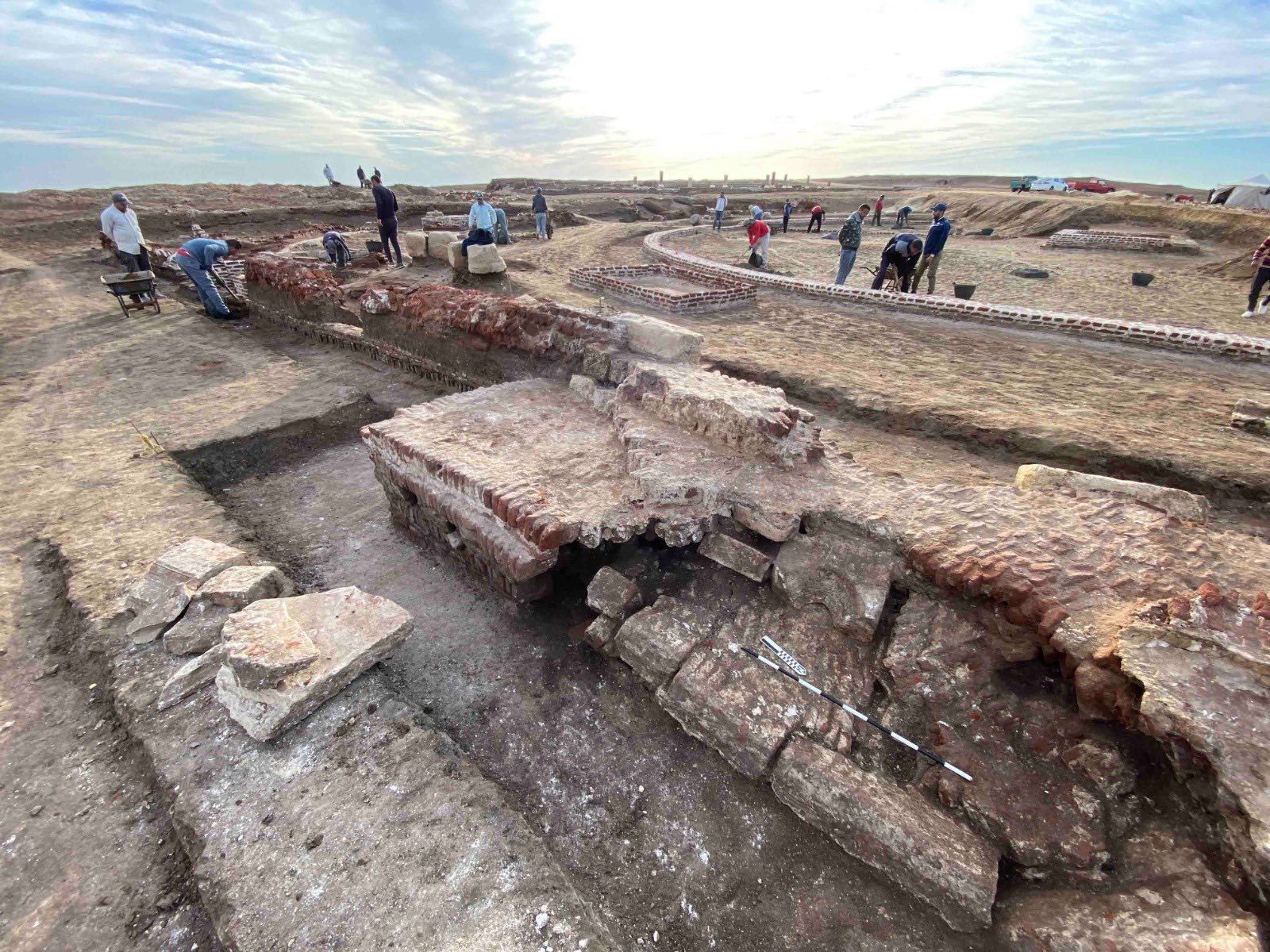
CAIRO, EGYPT—According to an Associated Press report, a temple dedicated to Zeus-Kasios has been discovered at the Tel el-Farma site, which is located in the northwestern Sinai Peninsula. Zeus-Kasios refers to Zeus, the ancient Greek god of the sky, and Syria’s Mount Kasios. Mostafa Waziri of the Supreme Council of Antiquities said that in 1910, French Egyptologist Jean Cledat found engraved blocks suggesting that a temple once stood in the area. Waziri explained that an Egyptian research team recently discovered red granite blocks, columns standing more than 25 feet tall, and a lintel that had been used to build the temple’s entrance gate. Marble blocks at the site may have served as steps leading to the mudbrick temple. Inscriptions indicate that the structure was renovated by the Roman emperor Hadrian in the early second century A.D. A photogrammetry survey of the building blocks will help researchers understand its design, Waziri concluded. To read about an inscribed block bearing an excerpt from the Odyssey that was found outside the sanctuary of Zeus at Olympia, go to "Epic Find," one of ARCHAEOLOGY's Top 10 Discoveries of 2018.

Advertisement