Subscribe to Archaeology
Archaeological Headlines By JESSICA E. SARACENI
Thursday, April 21

Prehistoric Artworks May Have Been Carved by Firelight

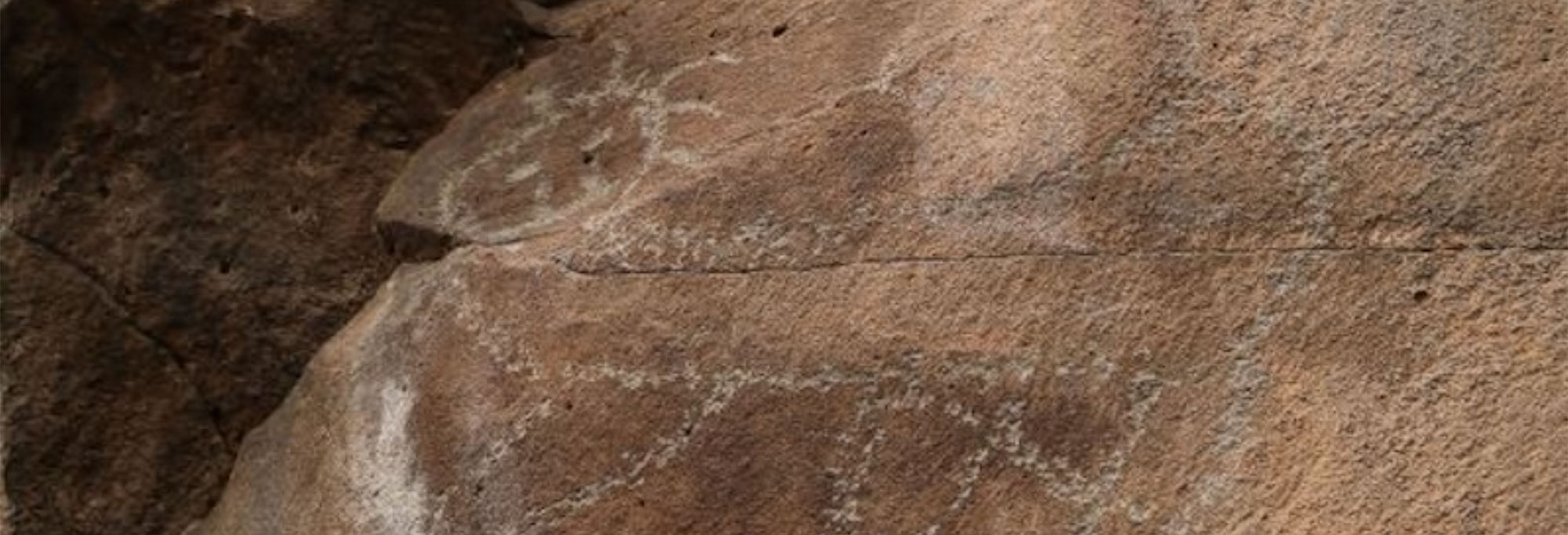
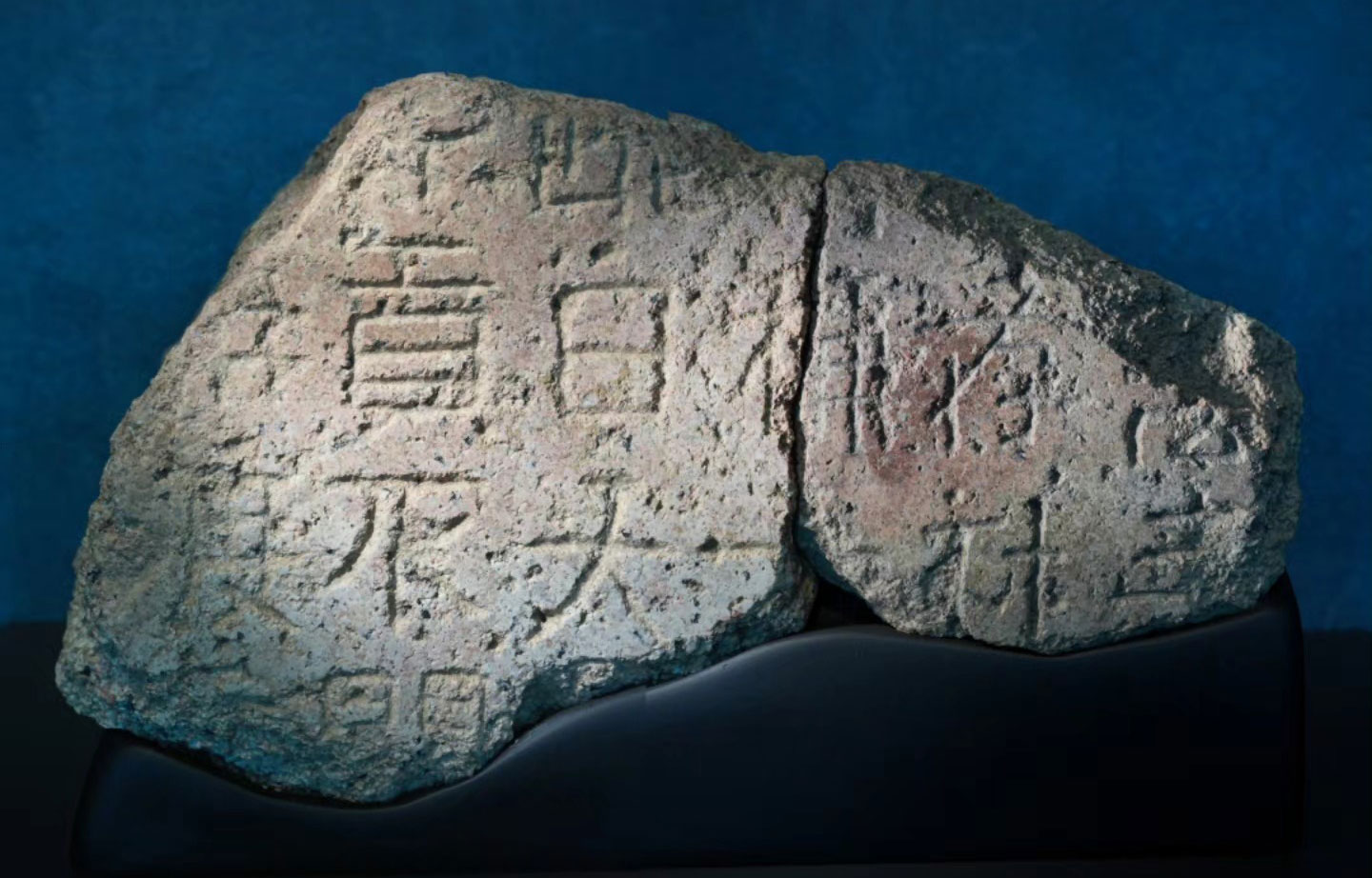
YORK, ENGLAND—A collection of 15,000-year-old stone carvings may have been created by firelight, according to a statement released by the University of York. Held at the British Museum, the carvings, known as plaquettes, were discovered in France and are thought to have been made by Magdalenian hunter-gatherers. Researchers led by Andy Needham of the University of York replicated the artworks using stone tools, and then employed virtual reality software to produce 3-D images of them. It had been previously thought that patterns of pink markings on some of the 50 plaquettes had been caused by accidental heat damage, but the study suggests that the marks on the stones are more consistent with having been positioned close to fire. The artists may have carved the marks into the stones while gathered around a fire at night, among the shadows, Needham explained. The flickering light and forms may have simulated movement of the figures in the artworks and activated parts of the brain associated with identifying patterns and learning to avoid predators, he added. Read the original scholarly article about this research in PLOS ONE. To read about rock art found deep within caves in the American South, go to "Artists of the Dark Zone."

Wednesday, April 20

Roman-Era Burials Unearthed in Wales

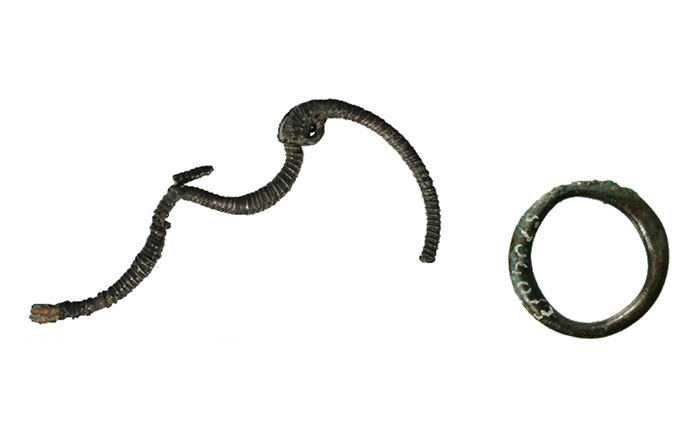
VALE OF GLAMORGAN, WALES—Live Science reports that two Roman-era burials have been uncovered at a site in southeastern Wales by a team of researchers led by archaeologist Mark Collard. One of the burials was found near a Roman villa in a field with a view of the valley and the sea. The man was buried face down in a coffin that had been closed with iron nails. This burial also contained hobnail boots, and a long iron sword and a silver crossbow brooch in styles worn in continental Europe in the late fourth or early fifth century A.D. The condition of the man’s remains suggest he died in his early 20s from a possible ear infection that spread to his skull. Collard suggests this man may have been hired as a mercenary, or may have been an invader who took over the Roman villa. Genetic analysis of the remains may provide additional insight into his identity, Collard explained. The second burial held the remains of another man who had died in his 20s. This man’s head was placed at his feet, suggesting that he had been decapitated and perhaps executed. Traces of wood and iron nails indicate that he was buried in a coffin or on a board with a shroud placed over it. Collard said the practice of decapitation may have also been used to separate the soul from the body, or to prevent the body from rising again. To read about a study of the remains of decapitated men who were buried in a Roman cemetery in York, England, go to "Off with Their Heads."

Remains of 19th-Century Bridge Found in New Zealand

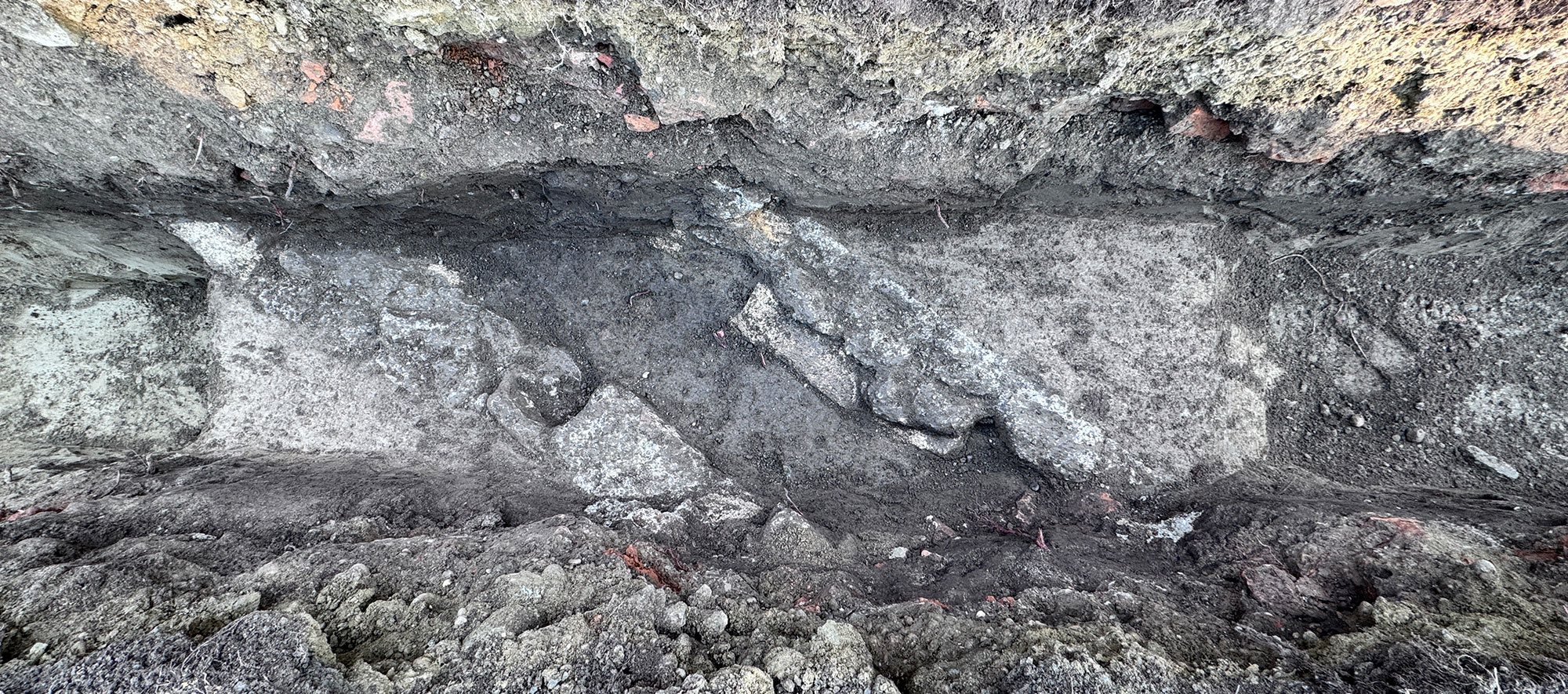
PICTON, NEW ZEALAND—Stuff.co.nz reports that traces of what may be a nineteenth-century wooden bridge have been found in the northeastern region of New Zealand’s South Island. Archaeologist Kirsty Sykes spotted the possible bridge foundations near the Waitohi Stream while playing with her daughter. “In 1866, there was a whole lot of people complaining about the disgrace that Picton doesn’t have a nice big bridge,” Sykes said. She also found a newspaper article published in 1913 expressing concern over the condition of the structure and limiting speed on the bridge to a walking pace. Some of the nineteenth-century piles were left in the ground when a new bridge was built at the site in the early twentieth century, she added. A sample of the old wood will be analyzed. To read about a recent DNA study of some of New Zealand's first settlers, go to "Kiwi Colonists."

Tuesday, April 19

Bone Analysis Offers a Glimpse of 19th-Century Working Mothers

LONDON, ONTARIO—According to a statement released by PLOS, Andrea L. Waters-Rist of the University of Western Ontario and her colleagues analyzed the chemical composition of the bones of 277 people, including some 90 infants and children, who were buried in a rural dairy farming region of the northwestern Netherlands in the nineteenth century. The levels of carbon and nitrogen isotopes in the bones indicate that very few had been breastfed as infants. The researchers suspect that the nineteenth-century mothers either chose not to breastfeed or weaned their infants at a young age because their labor as dairy farmers was in high demand. Cow’s milk would have also been readily available to feed their children, the researchers explained. Read the original scholarly article about this research in PLOS ONE. To read about how researchers used digital technology to virtually unfold and read seventeenth-century letters from The Hague, go to "Return to Sender."

Possible 18th-Century Tavern Uncovered in Eastern Virginia

KING WILLIAM COUNTY, VIRGINIA—The Daily Press reports that traces of a brick structure have been unearthed in the area of the King William County Courthouse, which was built in 1725. Dave Brown of the Fairfield Foundation and his colleagues think the structure may be the remains of an eighteenth-century tavern. “We found a substantial rubble deposit of handmade brick and oyster shell mortar with some evidence of burning,” Brown said. “We think it might be the Quarles Tavern.” The researchers will measure the building’s outline and see if it corresponds with records of a tavern once owned by John Quarles. Researchers learned of the Quarles Tavern, a hotel, and a brick stable from an historic map of the courthouse area, which was then surveyed with ground-penetrating radar. Fine ceramics recovered at the possible tavern site suggest that its clientele belonged to the elite of King William County. To read about a 3-D printed model of Virginia's Fairfield Plantation, go to "Fairfield's Rebirth in 3-D."

Advertisement